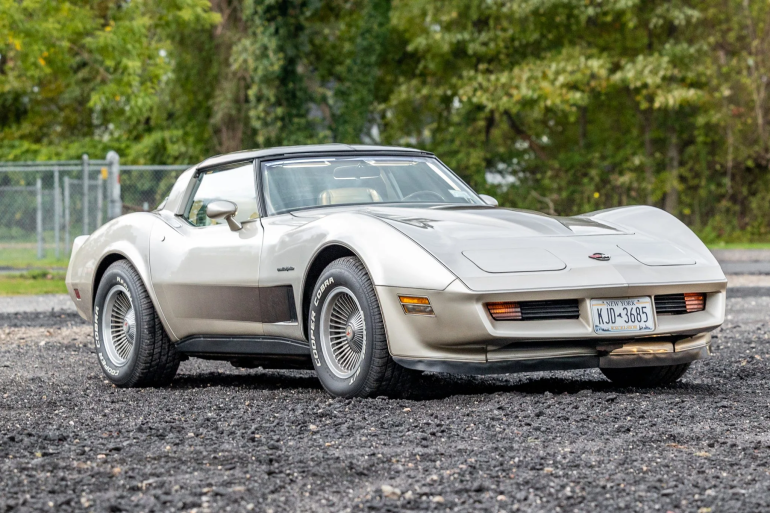
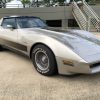
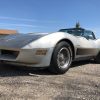
To celebrate the departure of the third-generation Corvette, Chevrolet decided to offer a final commemorative “Collectors Edition” model. However, recalling their experience with the 1978 Pace Car Replicas it was decided that the 1982 Collector Edition Corvettes would be built only “as needed” to satisfy customer orders and that they would get unique vehicle identification plates to help deter someone from turning a standard car into a Collectors Edition knock-off.
Quick Nav: Story · Specials · Collector Edition · Price & Options · VIN · Specs · Technical · Pics & Videos · The Market · All · FAQs
The Basics
Model & Gen: 1982 Corvette (C3)
Body Type: Fastback Sport Coupe (T-top) and Collector Edition hatchback coupe; the last C3
VIN: 1G1AY8786C5100001 – 1G1AY8786C5125408 (Bowling Green)
Original Price: $18,290.07 (Collector Edition $22,537.59)
Colors: 12 solid colors plus four two-tones (RPO D84); Silver Beige reserved for the Collector Edition
Engine: 350 ci L83 with Cross-Fire Injection, 200 hp: the first fuel-injected Corvette since 1965 and the C4’s engine a year early
Transmission: 700-R4 four-speed automatic with overdrive and lock-up converter (MX0), the only transmission; the first Corvette since 1954 with no manual
Units Produced: 25,407 (18,648 coupes + 6,759 Collector Edition hatchbacks)
The Overview
The 1982 Corvette is the last of the Sharks and the first of the C4s, because Dave McLellan put the next car’s powertrain under the old body a year early: ‘We’re doing the power team this year. Next year, we add complete new styling.’ The engine was the L83, the 350 fitted with Cross-Fire Injection, two throttle-body injectors on a crossover manifold under a Computer Command Control module that made eighty corrections a second, the first fuel-injected Corvette since the 1965 Rochester unit. It made 200 hp, ten more than the 1981 L81, on cleaner exhaust, with an in-tank electric pump, a solenoid-opened air door in the hood at full throttle and a smaller catalytic converter. Behind it was the only gearbox: the new 700-R4 four-speed overdrive automatic with an ECM-controlled lock-up converter. For the first time since 1954 no Corvette could be had with a clutch pedal.
The rest of the car was the 1981 built at Bowling Green only, with ‘Cross-Fire Injection’ emblems on the fenders, a clock now marked QUARTZ, four two-tones including a silver-over-claret that recalled the 1978 Pace Car, and the last 8-track tape player ever offered in a Corvette. To send the generation off, Chevrolet built the Collector Edition: Silver Beige paint with graduated shadow stripes, bronze-tinted glass roof panels, finned aluminum wheels in the spirit of the 1967 bolt-ons, Silver Beige leather, cloisonné emblems and, for the first time on a Corvette, a lifting rear-glass hatch that previewed the C4. Mindful of the 1978 Pace Car clones, Chevrolet built it only to order, gave it its own body code (07, the 0 in the sixth VIN position) and priced it at $22,537.59, the first Corvette past $20,000; 6,759 were sold.
Production fell to 25,407, the lowest since 1967, because the base coupe cost $18,290.07, the economy was poor and everyone knew the C4 was coming; it arrived as a 1984 after a model-year gap. Road & Track’s 1982 ran 0–60 in 7.9 seconds and the quarter in 16.1, slower than an L82 four-speed of three years earlier but cleaner, smoother and better on fuel. Today the Collector Edition is the collectible, with low-mileage examples the most valuable late C3s short of the 1978 Pace Car, and the standard coupe sits with the 1980–81 cars; both are the easiest C3s to live with, and the Cross-Fire system, once understood, is more reliable than its reputation.
The 1982 Corvette Story
After General Motors opened the Corvette manufacturing plant in Bowling Green, Kentucky in the summer of 1981, many enthusiasts began to suspect that the arrival of a next-generation Corvette was imminent. Their suspicions were correct.
While most of the design specifics surrounding the new C4 Corvette model were still a carefully kept secret from the general public, it was known among automotive enthusiasts that a new model was coming, and that it would be another front-engine design keeping in the tradition of Corvette since 1953.
Of course, it wasn't only the introduction of a new manufacturing plant that indicated a coming change in Corvette's near future.
Certain design changes to the 1981 C3 had already unveiled clues – such as the introduction of fiberglass mono-leaf springs – about what enthusiasts might expect from the next-generation Corvette.
Despite the certainty that the next-generation Corvette was close at hand, a decision was made by General Motors brass to continue production of the existing Corvette for one final year.
Chevrolet executives knew that testing out new manufacturing machinery and developing standardized assembly procedures made more sense when working on a familiar design, rather than trying to develop all of these production standards while simultaneously attempting to manufacture an all-new vehicle. Hence, the 1982 Corvette would, for one last model year, continue to be a third-generation model.
Ironically, while the 1982 model would continue to carry forward traits from older-generation Corvettes – the 1982 Corvette was the last of a generation which dated its basic body structure to the 1968 model and its chassis back to 1963 – it would also continue to be a “test bed” for technology destined for the fourth-generation Corvette.
Chevrolet recognized that it did not make sense to release a new drivetrain at the same time as a new overall design, so it was decided that the 1982 C3 Corvette would be fitted with the revised engine and transmission developed for the new C4.
Did you know? Sometimes, it's all in the details… In the 1982 Corvette, console mounted clocks were quartz units and had the word QUARTZ printed on the face of the clock. While this may seem a small detail to most, this is nonetheless a unique characteristic of the 1982 Corvette. While the 1980 and 1981 Corvettes had console mounted clocks, they were not quartz units and were therefore not labeled as such, making the QUARTZ clock a defining characteristic of the last model of the C3 Corvettes.
“It's a harbinger of things to come” said David McLellan, Chief Engineer for Corvette, “For the 1982 model is more than just the last of a generation; it's stage one of a two-stage production. We're doing the power team this year. Next year, we add complete new styling and other innovations.”
Although Corvette fans would actually end up waiting nearly 18 months before they'd finally be able to see the re-designed fourth-generation Corvette, they were able to see the future Corvette's engine and drivetrain immediately.
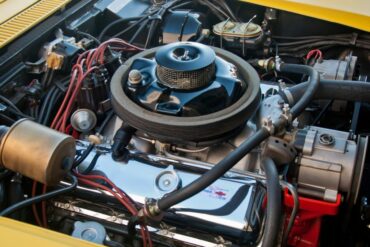
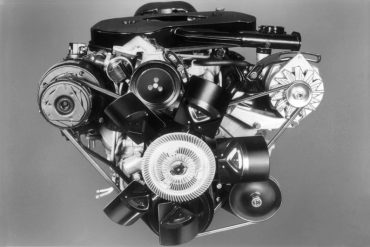
The new engine was essentially the time-proven 350 cubic-inch V-8 that had powered Corvettes since the mid-1950's, though it now came equipped with a newly developed twin throttle-body fuel-injection system instead of a carburetor.
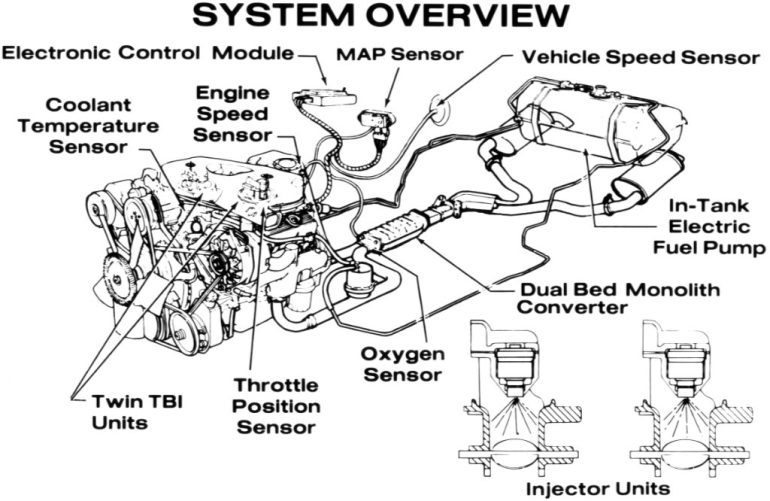
The result of this change was the introduction of the first production Corvette “fuelie” since 1965. However, this wasn't fuel injection of the type that had been available like that of 1957 through 1965. Instead, it featured an injector unit within a carburetor-like throttle body for each cylinder bank (a total of two injectors), while a crossover intake manifold fed the air/fuel mixture to the bank on its opposite side. This process sped up mixture velocity for more complete combustion, which resulted in greater thermal efficiency and power, plus the added benefit of reduced emissions.
Improved Computer Command Control (CCC) electronics, a technology that first appeared along with the LG4 California V-8 engine in 1980, governed the duration of injector opening in response to signals from various engine-mounted sensors.
The new CCC was capable of making eighty adjustments per second (compared to just ten adjustments per second on earlier versions of the system). The fuel delivery system was given the name “Cross-Fire Injection.”
The “Cross Fire” 350 was given the engine designation L83, and was rated at a respectable 200 bhp at 4,800 rpm, which was a 10 horsepower increase over the 1981 Corvette's L81 engine.
The engine also delivered a peak torque of 285 lb-ft at 2,800 rpm. While neither of these numbers was overly impressive, the modest increases in horsepower and torque were still an improvement over the 1981 Corvette. More important, though, was the fact that this horsepower increase was achieved while emission outputs were reduced at the same time. Interestingly, the L83 engine was the only engine offered to consumers during production of the 1982 Corvette.
Similarly, only a single transmission option was offered in 1982. While a manual gearbox had been available in every Corvette built since 1955, the 1982 Corvette was only offered with a standard four-speed automatic transmission.
Designated 700-R4, the four-speed automatic was basically a variation of the three-speed Turbo-Hydra-Matic with a long striding overdrive fourth gear added on. The 700-R4 automatic was electronically linked to the car's ECM (Engine Control Module). Shifts and the torque converter's lockup clutch feature were precisely controlled by the ECM, depending on varying speed and load data inputs.
As before, there was a torque converter lockup effective on all forward gears except first. It used a higher first gear ratio (3.07:1) for improved acceleration.
This synchronization between transmission and ECM was one of the most advanced setups ever developed for use in any Corvette to that point.
Other mechanical changes to the 1982 Corvette included the addition of an in-tank electric fuel pump as well as a new fuel metering system which included a positive fuel cutoff to prevent engine run-on (dieseling.)
A new solenoid-operated trap door was installed in the hood that opened at full throttle to allow the engine to “breathe” better. The charcoal air filtering element of the 1981 model was replaced with a paper element. The exhaust system was extensively redesigned around a significantly smaller and lighter catalytic converter.
The exhaust pipes leading into the converter were redesigned to deliver hotter exhaust gases to the converter to increase its efficiency.
Outwardly, the base coupe model received few cosmetic alterations. The most notable outward changes were the addition of “Cross Fire Injection” labels above the front fender vents and a two-tone paint option – silver over a deep burgundy – that was reminiscent of the 1978 Pace Car Replica models (though those earlier cars were painted silver and black).
Similarly, the interior of the base coupes remained nearly the same. Although not a unique feature to the newest Corvette, 1982 would mark the last year that an 8-track radio (RPO UM4) would be available in a Corvette.
To celebrate the departure of the third-generation Corvette, Chevrolet decided to offer a final commemorative “Collectors Edition” model. However, recalling their experience with the 1978 Pace Car Replicas – namely, the number of bogus Pace Cars that were created by consumers who converted base level coupes into Pace Car “clones” - it was decided that the 1982 Collector Edition Corvettes would be built only “as needed” to satisfy customer orders. Additionally, unique vehicle identification plates were affixed to help further deter someone from turning a standard car into a Collectors Edition knock-off.
For many enthusiasts and critics alike, the 1982 Collectors Edition Corvette was the best C3 of them all. David McLellan stated that it was “a unique combination of color, equipment and innovation (resulting in) one of the most comprehensive packages ever offered to the Corvette buyer.”
First and foremost, the 1982 Collectors Edition Corvette introduced a frameless lifting rear-glass hatchback – a Corvette first – in place of the customary fixed backlight (which had been standard on the C3 since its introduction in 1968).
The introduction of the rear hatch on the Collectors Edition C3 was a definite precursor to the next-generation C4 Corvette. Aside from the glass hatch, the Collectors Edition also featured many unique accouterments that set it apart from other 1982 Corvettes.
Outwardly, the car featured cloisonné emblems – including a special crossed-flag emblem on the hood that read “Corvette Collector Edition” around the rim. Additional emblems were located on the rear deck, and steering wheel.
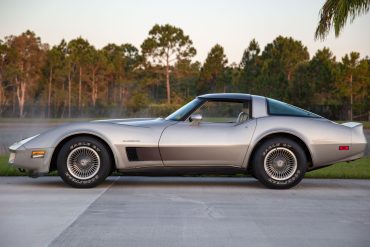
The car was finished in a special silver-beige metallic paint with graduated shadow-like contrast striping on the hood, fenders, and doors. It received special bronze-tinted glass T-tops. It also featured finned “turbine” alloy wheels like the ones first introduced on the 1963 split-window Stingray.
Within the interior of the Collectors Edition, the car featured a silver-beige leather upholstery and door trim that matched the car's exterior paint color. In addition to the leather upholstery, the steering wheel also received a matching hand-sewn leather wrap including the horn cap.
High end, color-matched, luxury carpeting was also installed in all Collector coupes. An optional radio was also offered at a reduced price to consumers purchasing the Collectors Edition package. RPO UN5, a Delco ETR AM/FM stereo with cassette deck and CB radio, could be purchased at a discounted $695.00 instead of the regular price of $755.00.
The 1982 Collector Edition Corvette Coupe carried a special VIN code (which could be used to uniquely identify a real car from a clone). It was represented with the number ZERO in the sixth digit, though the collectors edition Corvettes did not have a separate serial number sequence.
In addition to its unique VIN number, the 1982 Collector Edition Corvette was the first Corvette to break the $20,000 price barrier. The new coupe, which listed at $22,537.59, was considerably more advanced – and more expensive – than a well equipped 1968 coupe, which would have retailed for around $4,600. In all, Chevrolet sold 6,759 of the Collector Edition Corvette.
The base coupe, while less expensive than the more coveted Collector Edition Coupe, still commanded a hefty price of $18,290.07, and that was without any additional options added to it. Chevrolet sold only a modest 18,648 of these. Some speculated that it was because of the Corvette's steadily rising price tag, while others stated that the decline in sales was the result of an ailing economy, but most critics and enthusiasts alike agreed that it was most likely the result of GM's announcement that a fourth-generation Corvette was on its way and that the 1982 Corvette would officially mark the last of the third-generation model.
Due in large part to the Cross-Fire Fuel Injection system and the improved horsepower output of the 350 cubic-inch engine, the final C3 small-block Chevy engine showed definite performance improvements. This occurred despite its performance limitations as the result of Corvette not offering a manual transmission in 1982. Road & Track magazine timed the '82 Corvette's quarter mile time at 16.1 seconds, running at a speed of 84.5 miles per hour and accelerating from 0 to 60 miles per hour in just 7.9 seconds.
Throughout its fifteen-year production run, the third-generation C3 Corvette solidified itself as a true survivor. Throughout the sixties and seventies, the Corvette had been plagued with a number of challenging events – including oil embargoes and increasing emissions standards – yet the car persevered. While the “Shark” model of Corvette underwent a number of mechanical, and cosmetic changes, it never lost sight of the car's essential mission and character.

The Cross-Fire Injection system was developed for the fourth-generation Corvette, but was actually introduced in the 1982 Corvette.
The interior of the 1982 Collectors Edition Corvette.
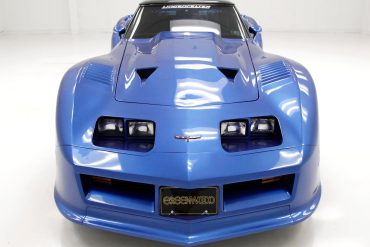
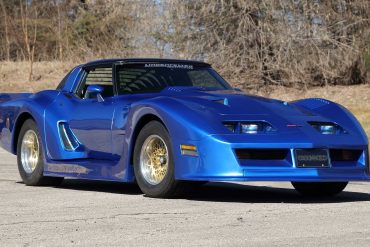
1982 Greenwood Daytona Corvette.
Chevrolet Advertisement for the 1982 Collectors Edition Corvette. (Image courtesy of GM Media.)The 1982 Collector Edition was the first Corvette to break $20,000, at $22,537.59, and Chevrolet was so wary of a repeat of the 1978 Pace Car clone problem that it built the car only to order and gave it its own body code: a 0 in the sixth position of the VIN where every other 1982 has an 8. It was also the first Corvette whose rear window opened, two years before the C4 made the glass hatch standard.
DID YOU KNOW
Price & Options
Core Features & Factory Options
The Sport Coupe listed at $18,290.07, about $2,000 above 1981, with the L83, the 700-R4 automatic, leather, air conditioning, the tilt-telescopic column, power windows, sport mirrors, an AM-FM radio, a quartz clock, the convenience group, power steering and brakes, the alarm and Positraction all standard; 18,648 were built.
The Collector Edition hatchback listed at $22,537.59 with its paint, glass hatch, bronze glass roof panels, finned aluminum wheels, Silver Beige leather, power seat, power locks, defogger, electric mirrors, speed control, cassette stereo, power antenna and P255/60R15 tires included, the cassette-and-CB set discounted to $695.00; 6,759 were built to order. Two-tone paint (RPO D84, $428.00) went on 4,871 standard coupes, the Gymkhana suspension (RPO FE7, $61.00) under 5,457 cars, the new heavy-duty cooling (RPO V08, $57.00) into 6,006 and California certification (RPO YF5, $46.00) onto 4,951.
On the standard coupe, speed control (RPO K35, $165.00) went into 24,313 cars (counts include the Collector Editions), power door locks (RPO AU3, $155.00) into 23,936, the power seat (RPO AG9, $197.00) into 22,585, electric mirrors (RPO DG7, $125.00) into 20,301, the defogger (RPO C49, $129.00) into 16,886, aluminum wheels (RPO N90, $458.00) onto 16,844 coupes, the power antenna (RPO U75, $60.00) into 15,557 and glass roof panels (RPO CC1, $443.00) onto 14,763. Radios: 20,355 cassette stereos (RPO UM6, $423.00), 1,987 cassette-and-CB sets (UN5, $755.00), 1,533 plain stereos (U58, $101.00), 923 of the last 8-track decks (UM4, $386.00) and 150 radio-delete credits (UL5, $124.00).
The P255/60R15 tires with matching spare (RPO QXH, $542.52) went on 19,070 cars, standard on the Collector Edition, and the P225/70R15 white-letters (QGR, $80.00) on 5,932; the roof-panel carrier (RPO V54, $144.00) on 1,992. A typical coupe with power seat, locks, glass tops, defogger, electric mirrors, speed control, aluminum wheels, wide tires, cassette and antenna came to about $21,000, and a Collector Edition with the CB set about $23,900.
The published color totals add up to 25,398, nine short of production.
MORE: PRICING, OPTIONS & COLORS / RPO CODES
| CODE | DESCRIPTION | QUANTITY | RETAIL PRICE |
|---|---|---|---|
| 1YY87 | Base Corvette Sport Coupe | 18,648 | $18,290.07 |
| 1YY07 | Collector Edition Hatchback Coupe (Silver Beige with shadow stripes, lifting rear glass, bronze-tinted glass roof panels, finned aluminum wheels, Silver Beige leather, cloisonné emblems, power seat, locks, defogger, mirrors, speed control, cassette stereo, antenna, P255/60R15 tires) | 6,759 | $22,537.59 |
| AG9 | Six-Way Power Driver Seat | 22,585 | $197.00 |
| AU3 | Power Door Locks | 23,936 | $155.00 |
| C49 | Rear Window Defogger (electric) | 16,886 | $129.00 |
| CC1 | Removable Glass Roof Panels | 14,763 | $443.00 |
| D84 | Two-Tone Paint (four combinations) | 4,871 | $428.00 |
| DG7 | Electric Sport Mirrors | 20,301 | $125.00 |
| FE7 | Gymkhana Suspension (heavy-duty springs and shocks, rear anti-roll bar, thicker front bar) | 5,457 | $61.00 |
| K35 | Speed Control with Resume | 24,313 | $165.00 |
| L83 | 350ci, 200HP Cross-Fire Injection Engine (standard, the only engine) | 25,407 | no charge |
| MX0 | 700-R4 4-Speed Automatic with Overdrive (standard, the only transmission) | 25,407 | no charge |
| N90 | Cast Aluminum Wheels (set of 4, steel spare; standard coupe) | 16,844 | $458.00 |
| QGR | White Letter Steel-Belted Radial Tires, P225/70R15 | 5,932 | $80.00 |
| QXH | White Letter Steel-Belted Radial Tires, P255/60R15 (with matching spare) | 19,070 | $542.52 |
| U58 | AM-FM Stereo (upgrade from the standard AM-FM radio) | 1,533 | $101.00 |
| U75 | Power Antenna | 15,557 | $60.00 |
| UL5 | Radio Delete | 150 | $124.00 credit |
| UM4 | AM-FM ETR Stereo with 8-Track Tape (last year) | 923 | $386.00 |
| UM6 | AM-FM ETR Stereo with Cassette | 20,355 | $423.00 |
| UN5 | AM-FM ETR Stereo with Cassette and 40-Channel CB ($695.00 on the Collector Edition) | 1,987 | $755.00 |
| V08 | Heavy Duty Cooling (new) | 6,006 | $57.00 |
| V54 | Roof Panel Carrier (rear luggage rack for the T-tops) | 1,992 | $144.00 |
| YF5 | California Emission Certification | 4,951 | $46.00 |
| CODE | EXTERIOR | TOTAL | INTERIOR |
|---|---|---|---|
| 59 | Silver Beige Metallic (Collector Edition only, with shadow stripes) | 6,759 | Silver Beige leather |
| 10 | White | 2,975 | Charcoal, Camel, Dark Blue, Dark Red, Silver Green, Silver Gray |
| 19 | Black | 2,357 | Charcoal, Camel, Dark Red, Silver Green, Silver Gray |
| 70 | Red | 2,155 | Charcoal, Camel, Dark Red, Silver Gray |
| 24 | Silver Blue Metallic | 1,124 | Charcoal, Camel, Silver Gray |
| 39 | Charcoal Metallic | 1,093 | Charcoal, Dark Red, Silver Gray |
| 99 | Dark Claret Metallic | 853 | Camel, Dark Red, Silver Gray |
| 40 | Silver Green Metallic | 723 | Charcoal, Silver Green |
| 13 | Silver Metallic | 711 | Charcoal, Dark Blue, Dark Red, Silver Gray |
| 56 | Gold Metallic | 648 | Charcoal, Camel |
| 31 | Bright Blue Metallic | 567 | Charcoal, Camel, Dark Blue, Silver Gray |
| 26 | Dark Blue Metallic | 562 | Camel, Dark Blue, Silver Gray |
| 24/26 | Two-tone Silver Blue / Dark Blue (RPO D84) | 1,667 | Dark Blue, Silver Gray |
| 13/99 | Two-tone Silver / Dark Claret (RPO D84) | 1,301 | Dark Red, Silver Gray |
| 13/39 | Two-tone Silver / Charcoal (RPO D84) | 1,239 | Charcoal, Dark Red, Silver Gray |
| 10/13 | Two-tone White / Silver (RPO D84) | 664 | Charcoal, Silver Gray |
Specifications & Performance
Engine & Transmission
The L83 was the C4’s engine delivered a year early: the 350 at 9.0:1 with Cross-Fire Injection, a pair of Rochester throttle-body injector units on a crossover intake manifold that fed each bank from the opposite side to speed the mixture, metered by a Computer Command Control module reading engine sensors eighty times a second instead of ten. It made 200 hp net at 4,200 rpm and 285 lb-ft at 2,800, with an in-tank electric fuel pump, positive fuel cut-off against dieseling, a solenoid-operated hood door that opened at full throttle to feed the air cleaner, a paper filter in place of the charcoal element, and a smaller, lighter catalytic converter fed by pipes shaped to keep the gas hot. It ran HEI ignition on casting 14010207 with 462624 heads.
The 700-R4 (RPO MX0) was the three-speed Turbo Hydra-Matic with a 3.06 first gear and a 0.70 overdrive fourth, its shifts and converter lock-up, active in every gear but first, managed by the same ECM; the axle was 2.87:1. Road & Track measured 0–60 in 7.9 seconds, the quarter mile in 16.1 at 84.5 mph, 0.826 g on the skidpad and 21.5 mpg.
The chassis was the 1981 car’s, with the fiberglass rear spring on standard cars and steel with the Gymkhana suspension (RPO FE7, $61.00), the aluminum differential housing and crossmember, four-wheel discs and power steering.
The Collector Edition’s frameless lifting rear glass, on gas struts with a release in the cabin, was engineered for the C4 and tried here first; its finned aluminum wheels were the only wheels on the car, and the P255/60R15 tires and matching spare were standard on it and went on three-quarters of the standard coupes too. Curb weight was about 3,425 lb, up a little on 1981 with the injection and the overdrive gearbox.
MORE: FULL SPECIFICATIONS / ENGINE
| SPEC | 1982 CORVETTE |
|---|---|
| Engine | 350 ci (5.7 L) small-block V-8, RPO L83, the only engine: Cross-Fire Injection with two Rochester throttle-body injectors on a crossover manifold under Computer Command Control (80 adjustments per second), in-tank electric fuel pump, solenoid-operated hood air door at full throttle, smaller and lighter catalytic converter, redesigned exhaust |
| RPO L83 | 350/200 hp net @ 4,200 rpm, 285 lb-ft @ 2,800 rpm, 9.0:1, hydraulic lifters, cast crank, aluminum intake, HEI; casting 14010207 with 462624 heads, throttle bodies 17082053 (front) and 17082052 (rear); up 10 hp on the 1981 L81; the same engine powered the 1984 C4 |
| RPO FE7 | Gymkhana suspension: higher-rate springs, firmer shocks, thicker front anti-roll bar and rear bar; 5,457 cars, $61.00 |
| Transmission | 700-R4 four-speed automatic with overdrive (RPO MX0), the only transmission, with a 3.06:1 first gear, 0.70:1 fourth and an ECM-controlled lock-up converter in second, third and fourth; the first Corvette without a manual option since 1954 |
| Axle ratio | 2.87:1; Positraction standard; aluminum differential housing |
| Front suspension | Independent; short-long arm, coil springs, anti-roll bar; aluminum crossmember; FE7 heavy-duty |
| Rear suspension | Independent; frame-mounted differential, half-shafts, trailing arms; single fiberglass transverse leaf spring on standard-suspension cars, steel on FE7 |
| Brakes | Four-wheel disc, 11.75-in rotors, four-piston calipers, dual-circuit master cylinder, power assist standard |
| Steering | Saginaw recirculating ball, power assist standard, 16.1:1; tilt-telescopic column standard |
| Body | 1980–81 body with ‘Cross-Fire Injection’ emblems above the fender vents; two-tone paint (RPO D84, $428.00) in four combinations on 4,871 cars; glass roof panels (RPO CC1, $443.00) on 14,763 coupes; Collector Edition adds a frameless lifting rear glass hatch, bronze-tinted glass roof panels, Silver Beige paint with graduated shadow stripes on hood, fenders and doors, and cloisonné crossed-flag emblems on hood, deck and steering wheel |
| Interior | Quartz clock (now marked ‘QUARTZ’), ETR radios, leather standard, cloth and leather at no cost; six-way power driver’s seat (RPO AG9, $197.00; 22,585 cars); Collector Edition in Silver Beige leather with matching door trim, hand-sewn leather-wrapped wheel and horn cap, and deep-pile carpet |
| Wheels & tires | 15 x 8 in steel Rally wheels or 15 x 8 cast aluminum (RPO N90, $458.00; 16,844 coupes); Collector Edition on 15 x 8 finned ‘turbine’ aluminum wheels recalling the 1967 bolt-ons; P225/70R15 radials standard, raised-white-letter on 5,932 (RPO QGR); P255/60R15 white-letter tires with matching spare (RPO QXH, $542.52) on 19,070, standard on the Collector Edition |
| Fuel tank | 24 gal; unleaded fuel only; in-tank electric pump |
| Wheelbase | 98 in |
| Overall length / width / height | 185.3 in / 69.0 in / 48.4 in |
| Track, front / rear | 58.7 in / 59.5 in |
| Curb weight | approx. 3,425 lb |
| 0–60 mph | 7.9 sec (Road & Track, November 1982); 8.1 sec (Chevrolet) |
| Quarter mile | 16.1 sec @ 84.5 mph (Road & Track); 15.9 sec @ 86 mph (Chevrolet) |
| Top speed | 125 mph (Chevrolet) |
| Lateral acceleration | 0.82 g; 70–0 mph braking 194 ft |
| Production | 25,407: 18,648 Sport Coupes and 6,759 Collector Edition hatchbacks, all at Bowling Green; the lowest total since 1967 and the last C3 |
| Assembly | Bowling Green, Kentucky; engines from Flint |
Vehicle Identification Numbers (VIN)
25,407 (18,648 coupes + 6,759 Collector Edition hatchbacks) Cars, 1G1AY8786C5100001 TO 1G1AY8786C5125408 (Bowling Green)
The 1982 Corvette carries the 17-character VIN with two body codes: 1G1AY8786C5 for the Sport Coupe and 1G1AY0786C5 for the Collector Edition, followed by a sequence number from 100001 to 125408 shared by both. The 1 is the United States, G General Motors, 1 Chevrolet, A the manual-belt restraint system, Y the Corvette series, 87 the coupe with fixed rear glass or 07 the Collector Edition hatchback, 8 the L83 (the only engine), the ninth character a check digit, C the 1982 model year and 5 the Bowling Green plant, now the only one. The VIN plate is on the left front hinge pillar, with the trim tag on the same pillar carrying the body build date (C10 for October 1981 through C10 for October 1982), the trim code (592 Silver Beige leather on a Collector Edition) and the paint code or, on two-tone cars, both codes.
The engine pad on the right front of the block carries the Flint V prefix, the build date and a suffix: ZBA or ZBN for the L83 with the 700-R4, ZBC for early California cars. Every engine is casting 14010207 with 462624 heads, the throttle bodies are 17082053 at the front and 17082052 at the rear, and the distributor is 1103479. A Collector Edition must show the 0 in the sixth VIN position; the paint code 59, trim 592, the glass hatch, the bronze roof panels and the finned wheels can all be added to a coupe, but the VIN cannot, and the sequence number, the trim-tag date and the engine date should fall in order.
MORE: VIN DECODER / PRODUCTION
| POSITION | MEANING |
|---|---|
| 1G1 (First through Third) | Country, maker, make: 1 = built in the USA, G = General Motors, 1 = Chevrolet |
| A (Fourth) | Restraint system: A = manual belts |
| Y (Fifth) | Series: Y = Corvette |
| 87 or 07 (Sixth & Seventh) | Body: 87 = Sport Coupe with fixed rear glass; 07 = Collector Edition hatchback coupe (the 0 in the sixth position is the Collector Edition’s identifier) |
| 8 (Eighth) | Engine: 8 = 350/200 L83 Cross-Fire Injection, the only engine |
| x (Ninth) | Check digit, calculated from the other sixteen characters |
| C (Tenth) | Model year: C = 1982 |
| 5 (Eleventh) | Assembly plant: 5 = Bowling Green, Kentucky (the only plant from now on) |
| 100001–125408 (Twelfth through Seventeenth) | Production sequence number, shared by coupes and Collector Editions; 25,407 built |
Pictures, Videos, Wallpapers & Galleries
Twelve solid colors and four two-tones: Silver Beige (6,759, Collector Edition only), White (2,975), Black (2,357), Red (2,155), Silver Blue (1,124), Charcoal (1,093), Dark Claret (853), Silver Green (723), Silver (711), Gold (648), Bright Blue (567) and Dark Blue (562), plus 4,871 two-tones led by Silver Blue over Dark Blue (1,667); seven interior colors in standard leather or no-cost cloth and leather.
Market & Buying Guide
For Sale & What They Bring
The 1982 is two markets. The Collector Edition is the late-C3 collectible after the 1978 Pace Car, and because it was built to order for people who meant to keep it, low-mileage examples are common: mileage and originality set the price, with the shadow-stripe paint and the bronze glass panels the expensive things to replace. The standard coupe sits with the 1980–81 cars, a little above them for the injection, the overdrive and the last-year status, with two-tones and glass-top cars at the top. Neither is a performance car by C3 standards, and the lack of a manual keeps driver-enthusiasts away, which is why a good 1982 is still cheaper than the car it previewed. Check the Cross-Fire system is complete and original; converted cars with carburetors or later port injection are worth less to collectors.
Results tracked by Classic.com from September through October 2026: Collector Editions sold for $27,000 on Bring a Trailer (21,000 miles), $26,000 at Richmond Auctions (5,000 miles), $23,100 at Mecum Nashville (26,000 miles), $20,900 and $17,600 at Mecum Fort Worth for 10,000- and 30,000-mile cars, $18,750 on Bring a Trailer (33,000 miles) and $14,000 at Hemmings for a 50,000-mile car. Standard coupes sold for $33,000, $22,000 and $20,900 at Mecum Nashville, the top figure a 37,000-mile car, and a modified coupe for $9,000 on Bring a Trailer; a stretched four-seat custom made $26,400 at Mecum Fort Worth after being bid to $20,000 at Nashville. Dealers’ last asking prices on cars that sold or were withdrawn ran $21,900 to $31,950 for Collector Editions and $18,995 to $28,900 for coupes, and in autumn 2026 Collector Editions were offered at $15,900 to $37,220 and coupes at $17,995 to $31,995. Check whether a result includes the buyer’s premium (Mecum and Barrett-Jackson results do, Bring a Trailer bids do not), and treat asking prices and unsold high bids separately from completed sales.
Verification is the VIN: a Collector Edition has 1G1AY07 at the start and a 0 in the sixth position, a coupe 1G1AY87; the paint code on the trim tag should be 59 with trim 592 on a Collector Edition, and the car should have the glass hatch, bronze-tinted roof panels, finned wheels, Silver Beige leather and cloisonné emblems, with the shadow stripes under clear coat rather than decals. Every 1982 has an 8 in the eighth position and a 5 in the eleventh, so engine and plant are never in question; the engine pad should carry a V prefix and ZBA, ZBN or ZBC on a 14010207 block with the partial VIN matching the car, two throttle bodies on the crossover manifold and the hood air door and solenoid in place. The 700-R4 should have its lock-up working; a converter that never locks is an electrical fault, not a transmission fault.
The C3 body sits on the C2’s birdcage and rusts in the same places: the windshield frame, the door hinge pillars, the frame kickups over the rear wheels and around the trailing-arm mounts, the lower doors and the steel floor pan, which rusts where carpet holds water. The thin 1980–82 hood and door skins stress-crack, the urethane bumper covers crack and sag as their hardware corrodes, the headlights run on vacuum, which leaks at the actuators and check valves until nothing works, and early Bowling Green clear coat peels. The T-top seals leak, glass panels more than fiberglass ones, the Collector Edition’s hatch struts sag and its seals leak at the lower corners, and the bonded rear glass can delaminate. Cross-Fire Injection suffers from throttle-body gasket leaks, failed injectors and an ECM that nobody stocks; the early 700-R4 is the weakest part of the car and most have been rebuilt or should be. Trailing-arm bushings, half-shaft U-joints and the four-piston calipers (weeping unless sleeved) are the usual mechanical work. Budget for the bumper covers, the vacuum system, seals, the transmission and the injection on any 1982 that has sat.
MORE: THE MARKET
FAQs
How many 1982 Corvettes were built?
Chevrolet built 25,407 Corvettes for 1982 at Bowling Green, Kentucky: 18,648 Sport Coupes and 6,759 Collector Edition hatchbacks, built to order. It was the lowest total since 1967 and the last year of the C3. Of the cars, 24,313 had speed control, 22,585 the power seat, 20,355 the cassette stereo, 19,070 the 60-series tires, 14,763 coupes glass roof panels, 5,457 the Gymkhana suspension and 4,871 two-tone paint. All had the L83 Cross-Fire engine and the 700-R4 automatic.
How much is a 1982 Corvette worth today?
In autumn 2026, 1982 Collector Editions sold for $14,000 to $27,000 at auction, with mileage setting the order, and dealers asked $15,900 to $37,220 for them; standard coupes sold for $20,900 to $33,000 at Mecum Nashville, the top figure for a 37,000-mile car, and were offered at $17,995 to $31,995. The Collector Edition is the most valuable late C3 after the 1978 Pace Car; the standard coupe is priced a little above the 1980–81 cars.
What engine did the 1982 Corvette have?
One: the 200-hp L83 350 with Cross-Fire Injection, two throttle-body injectors on a crossover manifold under Computer Command Control, the first fuel-injected Corvette since 1965 and the engine the 1984 C4 would use. It made 285 lb-ft at 2,800 rpm and came only with the new 700-R4 four-speed overdrive automatic with a lock-up converter; no manual transmission was offered for the first time since 1954. Road & Track’s test car did 0–60 in 7.9 seconds.
What colors did the 1982 Corvette come in?
Twelve solid colors and four two-tones. Silver Beige (6,759 cars) was reserved for the Collector Edition; the coupe colors were White (2,975), Black (2,357), Red (2,155), Silver Blue (1,124), Charcoal (1,093), Dark Claret (853), Silver Green (723), Silver (711), Gold (648), Bright Blue (567) and Dark Blue (562), with two-tones of Silver Blue/Dark Blue (1,667), Silver/Dark Claret (1,301), Silver/Charcoal (1,239) and White/Silver (664). Interiors came in silver gray, charcoal, dark blue, silver green, camel and dark red leather or cloth; the Collector Edition was Silver Beige leather only.
How much did the 1982 Corvette cost when new?
The Sport Coupe was $18,290.07 and the Collector Edition $22,537.59, the first Corvette past $20,000, with the L83, automatic, leather, air conditioning, tilt column, power windows, mirrors, radio and quartz clock standard on both and most other options included on the Collector Edition. On the coupe, two-tone paint was $428.00, aluminum wheels $458.00, glass roof panels $443.00, the 60-series tires $542.52, the power seat $197.00, the cassette stereo $423.00 and the cassette-CB set $755.00 ($695.00 on the Collector Edition). A typical well-optioned coupe came to about $21,000 and a Collector Edition with the CB set about $23,900.
What changed on the 1982 Corvette?
The powertrain: the 200-hp L83 with Cross-Fire Injection replaced the carbureted L81, with an in-tank fuel pump, a hood air door and a smaller converter, and the 700-R4 four-speed overdrive automatic became the only transmission, ending the manual option. ‘Cross-Fire Injection’ emblems went on the fenders, the clock face gained the word QUARTZ, four two-tones were offered, heavy-duty cooling joined the options and the 8-track had its last year. The Collector Edition added the first opening rear window on a Corvette, its own paint, wheels, interior and body code. Production was Bowling Green only, and the year closed the C3 after fifteen seasons.
How do I tell a real 1982 Collector Edition from a clone?
The VIN: a Collector Edition starts 1G1AY07 with a 0 in the sixth position, where every standard 1982 starts 1G1AY87. The trim tag should show paint code 59 and trim 592, and the car should have the frameless lifting rear glass, bronze-tinted glass roof panels, finned aluminum wheels, Silver Beige leather with a leather-wrapped wheel, cloisonné crossed-flag emblems and shadow stripes painted under the clear coat. Chevrolet built the 6,759 cars only to order, specifically to avoid the clone problem it had with the 1978 Pace Car, so the body code is the proof and the parts are not.
All The Research
1982 Corvette Advertisements / 1982 Corvette Collectors Edition / 1982 Corvette Colors / 1982 Corvette Engine / 1982 Corvette Factory Options / 1982 Corvette For Sale / 1982 Corvette Maintenance / 1982 Corvette Mods / 1982 Corvette Owners Manual / 1982 Corvette Performance / 1982 Corvette Posters / 1982 Corvette Pricing / 1982 Corvette Production / 1982 Corvette Recalls / 1982 Corvette Research / 1982 Corvette RPO Codes / 1982 Corvette Sales Brochures / 1982 Corvette Special Model Overview / 1982 Corvette Specifications / 1982 Corvette Technical Research / 1982 Corvette Service Bulletins / 1982 Corvette VIN Numbers