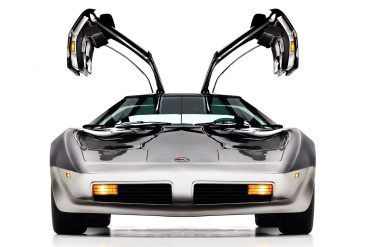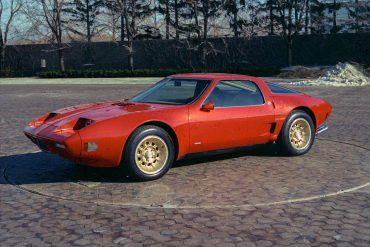
GM wanted the $3 million rotary Corvette forgotten; it sat crated on a Luton rooftop for a decade until Tom Falconer talked Chuck Jordan out of crushing it. The survival story.


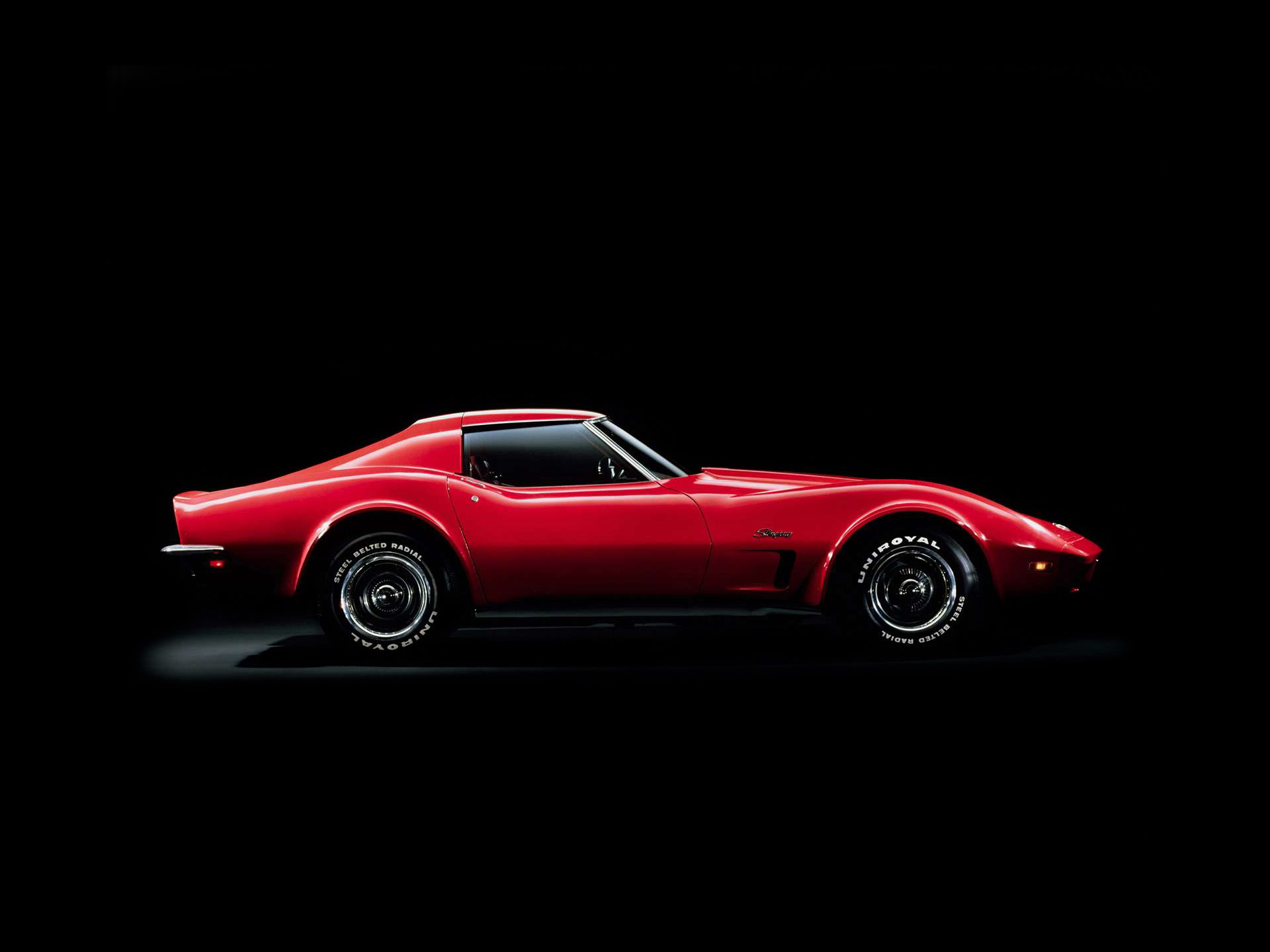
C3 CORVETTE - 1973
The Shark gets a body-color urethane nose, a fixed rear window, radial tires and door beams for its 20th anniversary, the solid-lifter engines are gone and the L82 arrives. The last chrome rear bumper, and 30,464 built.
Quick Nav: Story · Specials · Price & Options · VIN · Specs · Technical · Pics & Videos · The Market · All · FAQs
Model & Gen: 1973 Corvette (C3)
Body Type: Sport Coupe (T-top) or Convertible
VIN: 1Z37J3S400001 – 1Z37J3S434464
Original Price: $5,561.50 coupe / $5,398.50 convertible
Colors: 10 (Classic White, Silver, Medium Blue, Dark Blue, Blue-Green, Elkhart Green, Yellow, Metallic Yellow, Mille Miglia Red, Orange)
Engine: 350 ci V-8, 190 hp (L48) or 250 hp (L82, new); 454 ci big block, 275 hp (LS4); all hydraulic-lifter, SAE net
Transmission: Muncie 4-speed standard (M20 wide or M21 close ratio at no charge); 3-speed Turbo Hydra-Matic (M40) at no charge, in 59 percent of cars
Units Produced: 30,464
The 1973 Corvette is the first Shark that looks different, and the reason was the law. The federal five-mile-per-hour bumper rule arrived for 1973, and Chevrolet met it with a body-color urethane cover over a steel bumper on a nose two inches longer and 35 pounds heavier, blended into the fenders so well that most people took it for a facelift. The chrome rear bumpers stayed for one more year. The fender gills gave way to a single recessed vent, a longer hood hid the wipers and brought back cowl induction through a solenoid-operated flap, the coupe’s rear window was fixed in place to gain two inches of luggage room, steel beams went into the doors, radial tires became standard, the body went onto rubber-in-steel mounts and an asphalt sound-deadener, a hood pad and thicker carpet cut cabin noise by a claimed forty percent. The 20th-anniversary Corvette was quieter, softer and heavier than any before it.
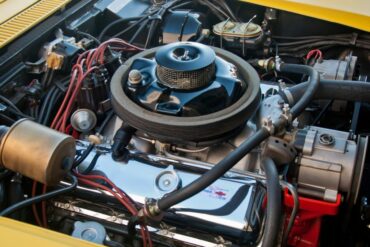
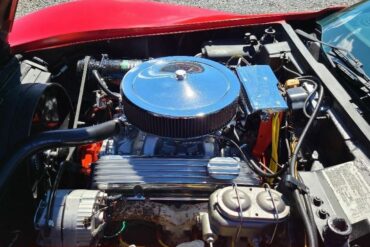
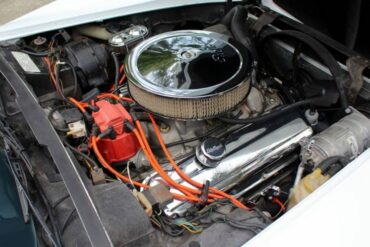
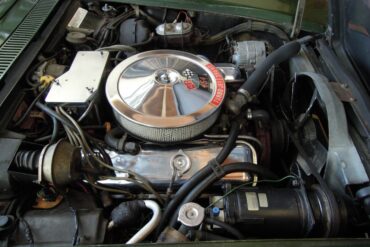
The engines lost their solid lifters for the first time since 1956. The base L48 350 made 190 hp net; the new L82, with a forged crank, four-bolt mains and a hotter hydraulic cam, made 250 and cost $299, and the LS4 454 made 275 for $250, the only year the big block was cheaper than the hot small block. The Z07 off-road suspension and brake package went into 45 cars, and the first Corvette aluminum wheels, RPO YJ8, were sold to four buyers before porosity problems forced a recall. Car and Driver still saw 60 mph in 6.7 seconds and the quarter in 15.1, and the new radials, rated for 120 mph, set the top speed.
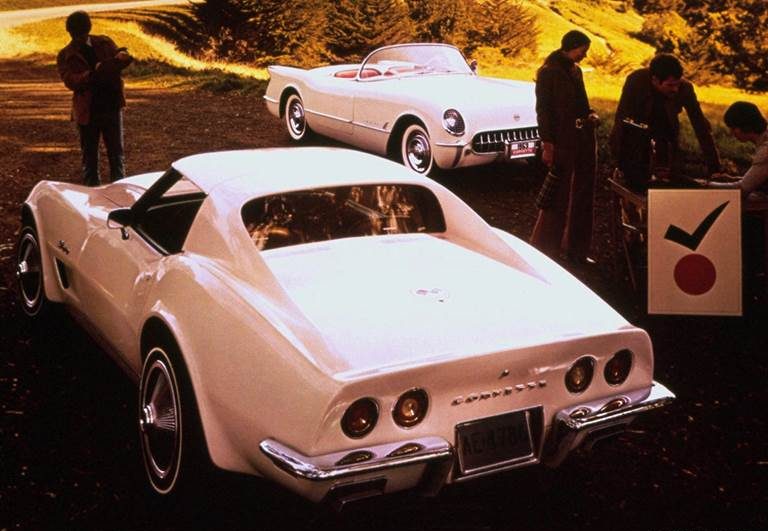
Buyers liked the civilized car: production rose to 30,464, 25,521 coupes and 4,943 convertibles, the open car down to sixteen percent, with the automatic in 59 percent, air conditioning in 71 percent and the custom interior in 44 percent. Prices rose only $28 to $5,561.50 and $5,398.50. For collectors the 1973 is the transition year, the only Corvette with a soft nose and a chrome tail, and because that makes it neither a chrome-bumper car nor a full rubber-bumper car it is one of the least expensive ways into a C3 with the early interior and a 454 still on the option list.
Almost from its start, 1973 was a year full of both great accomplishments and even greater controversies. Technological feats, including the launch of Skylab and the Mariner Programs, the opening of the Sydney Opera House, and the start of the Alaska Pipeline all announced to the world that we were capable of reaching farther – of doing more.
At the same time, it saw the start of the Watergate scandal, an event that would gain international notoriety given advances in technology that allowed television media to beam its signals around the globe - an event that was ushered in, ironically, by Elvis Presley, whose second concert from Hawaii became the first worldwide telecast – and an event watched by more people than the Apollo moon landings.
Perhaps most significant of all, it saw the end of the United States’ involvement in the Vietnam War with the signing of the Paris Peace Accords.
It is perhaps ironic then that the 1973 Corvette, which would celebrate the 20th anniversary of Corvette's introduction by Harley Earl in 1953, would also be the first redesign of the C3 since its introduction in 1968. It was also a testimony to the staying power of Corvette that the car continued into 1973 despite the extensive engineering and tooling cost that GM would incur in bringing the car in line with the latest safety standards.
The world was once more growing up, and with it, the new Corvette was maturing and becoming more civilized. Its subtle revisions and new design elements would serve to enhance its image while catering to a more discriminating group of consumers and enthusiasts alike.
The changes to the 1973 Corvette, especially when compared to the earlier C3 models, were obvious. For 1973, the Corvette received a new nose treatment on both the coupe and convertible models. The nose was longer (by about two inches), slightly heavier (by about thirty-five pounds), and featured a steel bumper that was covered by deformable urethane plastic that was matched to the body color of the rest of the car.
Although this new nose was the first major appearance change since the introduction of the C3 in 1968, the design was more than just a cosmetic enhancement. To the contrary, the new nose was one of the first examples in engineering design where the styling was dictated by function.
The rest of the front end saw other modifications to its earlier design as well. The 1973 Corvette front fender molds were made to incorporate a simple, recessed air vent design on each side of the car in lieu of the separate cast vent grilles that had been seen on the 1970–1972 models.
This provided a simpler, more streamlined look for the fenders once mounted to the car. Additionally, a new longer hood panel shrouded the parked wiper blades and brought back a cowl-induction system which supplied cool air to the carburetor. The air supply was controlled, according to engine operating conditions, by a solenoid-operated valve that was built into the hood.
While not as notable as the new front end, the 1973 Corvette received a number of other design and safety enhancements that followed the mantra of “form follows function” (a statement that would become synonymous with the Corvette throughout this and all future generations). The rear window, which had been removable on earlier models of the C3 Corvette, was now fixed in place. A benefit of this design change was that it provided an additional two inches of rear storage space due to the removal of the rear window storage shelf.
Another enhancement that was implemented – this time at the direction of a federal mandate – was the introduction of a longitudinal steel beam in each door to help protect occupants in side impacts. Inside the Corvette's doors, the heavy fluted steel beams were installed, extending from the door hinges to the lock plates. A design that had been pioneered by General Motors, the beams tied together the body's steel “birdcage”, and provided an improved method of safely protecting the car's occupants from injury.
Still another performance enhancement that was included (though not federally mandated) was the introduction of standard radial-ply tires. By using radial-ply tires, engineers were able to achieve longer tread wear, better wet-weather grip, and added stability when operating the Corvette at speed. At the same time, there was a tradeoff for using radial-ply tires. For one, the new Corvette demonstrated longer stopping distances despite the fact that the 1973 Corvette's braking system went unchanged from the previous year. Additionally, the new radial-ply tires had lower lateral-G figures on the skidpad, and were rated to operate a maximum speed of just 120 miles per hour.
An option to consumers, the Corvette's new tires could now be mated to new wheels that would follow the dual “form and function” philosophy. The wheel's “form” was revised to include an all-new design that was patterned directly from the XP-882 mid-engine Corvette prototype. They featured an eight-inch rim width, a deep-dish section, and eight cooling vents (instead of the ten vents on the experimental car's original wheels).
The design was considered striking and more sophisticated by many Corvette enthusiasts than those seen on the earlier C3s. “Function” was enhanced by the use of aluminum as the component material, which aided in reducing Corvette's curb weight by eight pounds per wheel (or 40 pounds per car) without compromising structural strength. Available to consumers as RPO YJ8, only four sets of wheels (five wheels per set) were ordered in 1973, although it is rumored that Chevrolet manufactured a total of 800 sets in all. Early in their production run, Chevrolet rejected the wheels for porosity issues, and recalled the wheels that had been released.
Other design changes to the 1973 Corvette were more successfully introduced and helped to further enhance the overall quality of the car. For one, the body mounts were changed to include a rubber/steel design that helped eliminate annoying vibrations experienced during various driving conditions.
The mounts, which actually utilized a rubber mount encased in a steel sleeve, provided additional cushioning without a loss in rigidity – helping Corvette to maintain a lower level of body roll while improving the ride experience for the car's occupants. Up front, the problem-prone pop-up wiper panel was replaced by a single rear-hood extension. Elsewhere, engine noise was reduced by adding extra sound dampening insulation in strategic areas throughout the car. Some of this sound deadening material – specifically an asphalt-based compound – was sprayed on to several inner body panels. Additionally, a new, sound-dampening pad was installed under the Corvette's hood. Inside the cockpit of the car, thicker carpeting and heavier mats were installed in the dash, console and the rear quarters. As a result of this additional damping material, Chevrolet ads that year claimed a forty percent reduction in cabin noise levels.
Did you know? The 1973 Corvette's optional wheels (RPO YJ8) were limited to a single year of production, due to a design flaw in the material that caused Chevrolet to recall the wheels that had been sold. Although only 4 sets of wheels were ever recorded as being sold to consumers during the time of vehicle production, it is believed that Chevrolet manufactured as many as 800 sets of these unique aluminum wheels. These rare aluminum wheels carry the casting number 329381, and featured lug nuts with a recessed center area that had been painted black. While many of these rare wheels ended up in the hands of consumers, it is unknown how many sets of these YJ8 aluminum wheels still exist today.
While concerns about engine noise were certainly addressed, concerns about engine performance continued to linger. For the 1973 model year, federal regulations again emasculated the performance capabilities of every Corvette engine, including the optional upgrades. For the first time since 1956, Chevrolet did not offer a mechanical-lifter engine in the Corvette line. Instead, a choice of three hydraulic-lifter units was available.
The base 350 engine (RPO L48), which came standard with the 1973 Corvette, offered consumers a relatively unimpressive output at 190 horsepower. An optional, uprated small block (L82) was also offered with an engine output rating of 250 horsepower. Lastly, a single optional 454 big block (LS4) was offered, producing an engine output of 275 horsepower. Although all three of these engine outputs were diminished from previous years, they did not deter the Corvette from running a quarter-mile time in the mid-15-second range, which was comparable to many of the European cars that were being built at that time – including the Porsche 911E and the De Tomaso Pantera.
Given the changes in the design, and despite the steadily decreasing power of the engines being offered in all versions of the Corvette, the sales numbers for the 1973 model year actually improved over previous years. In all, Chevrolet sold 30,464 Corvettes in 1973, with more than 80% (or 25,521) of those sold being coupes. Prices increased only slightly for 1973, with a base coupe selling for $5,561.50 and a convertible selling for $5,398.50. Interestingly, 4,000 serial numbers were never used during the 1973 model year. The last 1973 Corvette's serial number ended with 34,464, although total production of the 1973 Corvette only totaled 30,464 units. The unused numbers were 424001 through 428000.
During its first six years of development, the C3 Corvette had been transformed from the apogee of high performance represented by the ZL-1 in 1968 to a vehicle more recognized for its higher level of luxury, as portrayed in the 1973 model. While these extremes made many enthusiasts and critics alike begin to debate what kind of car the Corvette should be, it was this same debate that had fueled the continuation of the Corvette since its introduction in 1953.

 1973 Corvette front fenders
 Credit: corvetteforum.com

The 1973 Corvette’s first aluminum wheels, RPO YJ8 at $175 a set, were patterned on the XP-882 mid-engine show car and recalled for porosity before most reached customers. Chevrolet recorded just four sets sold, though as many as 800 were cast, and a set of correct 1973 wheels with casting number 329381 is now worth more than some 1973 Corvettes.
DID YOU KNOW
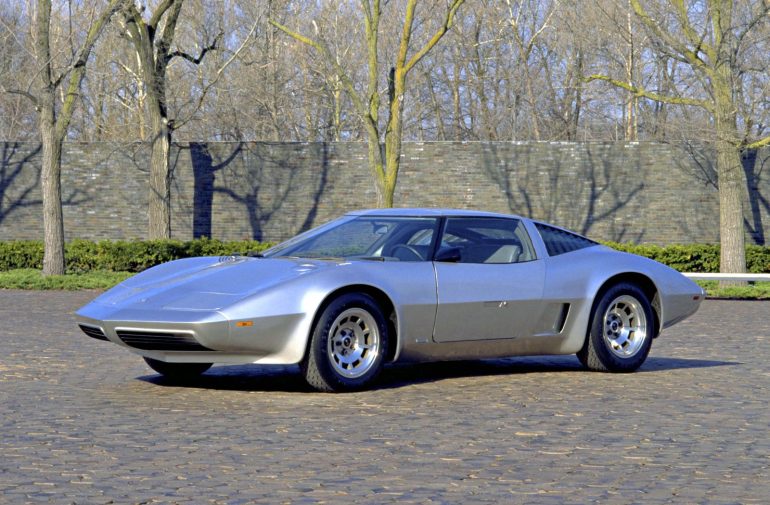
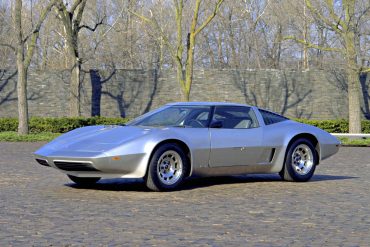
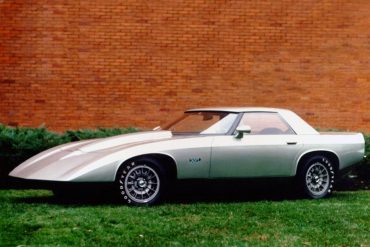
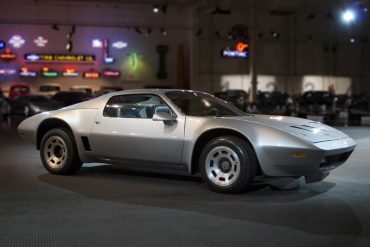
1973’s specials are the 45 Z07 cars and the four YJ8 wheel sets, the Motion Manta Ray GT, and the mid-engine show cars of the Corvette’s 20th-anniversary year: the Four-Rotor XP-882 Aerovette, the Reynolds aluminum XP-895 and the XP-898.

The Sport Coupe listed at $5,561.50 and the convertible at $5,398.50, up $28 on 1972, with radial tires, the alarm, Positraction and the four-speed or Turbo Hydra-Matic included. The engine list was three long: the new 250-hp L82 at $299.00 went into 5,710 cars and the 275-hp LS4 454 at $250.00 into 4,412, leaving about 20,342 cars with the 190-hp L48.
The Turbo Hydra-Matic went into 17,927 cars, 59 percent, the close-ratio M21 into 3,704 and the standard M20 into about 8,833. The Z07 off-road suspension and brake package ($369.00) went into 45 cars, the optional axle ratio (RPO ZQ1, $12.00) into 1,791, the California emission test (RPO YF5, $15.00) into 3,008 and the cast aluminum wheels (RPO YJ8, $175.00) onto four cars before the recall.
Power steering (RPO N40, $113.00) reached 27,872 cars, 91 percent, power brakes (RPO J50, $46.00) 24,168, air conditioning (RPO C60, $452.00) 21,578, the tilt-telescopic column (RPO N37, $82.00) 17,949 and power windows (RPO A31, $83.00) 14,024. The AM/FM radio (RPO U69, $173.00) went into 17,598 cars and the stereo (RPO U58, $276.00) into 12,482, and the new $5 map light on the mirror (RPO UF1) into 8,186.
The custom interior ($154.00) went into 13,434 cars, 44 percent. White-stripe radials (RPO QRM, $32.00) went on 19,903 cars against 4,541 raised-white-letter (RPO QRZ, $45.00), and the deluxe wheel covers (RPO P02, $62.00) on 1,739. The hardtop (RPO C07, $267.00) went onto 1,328 of the 4,943 convertibles with 323 vinyl-covered (RPO C08, $62.00), the rear defogger (RPO C50, $41.00) into 4,412 cars, shoulder belts (RPO A85, $41.00) into 788 convertibles and the heavy-duty battery (RPO T60, $15.00) into 4,912 small-block cars.
Ten colors were offered with black or white tops; Chevrolet did not record production by color, and about 30 cars left St. Louis in special-order black.
MORE: PRICING, OPTIONS & COLORS / RPO CODES
| CODE | DESCRIPTION | QUANTITY | RETAIL PRICE |
|---|---|---|---|
| 1YZ37 | Base Corvette Sport Coupe | 25,521 | $5,561.50 |
| 1YZ67 | Base Corvette Convertible | 4,943 | $5,398.50 |
| 404–425 | Custom Interior Trim (leather seats, cut-pile carpet, wood-grain trim) | 13,434 | $154.00 |
| A31 | Power Windows | 14,024 | $83.00 |
| A85 | Custom Shoulder Belts (standard on coupes; convertibles) | 788 | $41.00 |
| C07 | Auxiliary Hardtop (convertible) | 1,328 | $267.00 |
| C08 | Vinyl Covering for Auxiliary Hardtop | 323 | $62.00 |
| C50 | Rear Window Defogger | 4,412 | $41.00 |
| C60 | Air Conditioning | 21,578 | $452.00 |
| J50 | Power Brakes | 24,168 | $46.00 |
| L82 | 350ci, 250HP Engine (new) | 5,710 | $299.00 |
| LS4 | 454ci, 275HP Engine | 4,412 | $250.00 |
| M21 | 4-Speed Manual Transmission, Close Ratio | 3,704 | no charge |
| M40 | Turbo Hydra-Matic 3-Speed Automatic | 17,927 | no charge |
| N37 | Tilt-Telescopic Steering Column | 17,949 | $82.00 |
| N40 | Power Steering | 27,872 | $113.00 |
| P02 | Deluxe Wheel Covers | 1,739 | $62.00 |
| QRM | White Stripe Steel-Belted Radial Tires, GR70x15 | 19,903 | $32.00 |
| QRZ | White Letter Steel-Belted Radial Tires, GR70x15 | 4,541 | $45.00 |
| T60 | Heavy Duty Battery (standard with LS4) | 4,912 | $15.00 |
| U58 | AM-FM Radio, Stereo | 12,482 | $276.00 |
| U69 | AM-FM Radio | 17,598 | $173.00 |
| UF1 | Map Light on Rearview Mirror | 8,186 | $5.00 |
| YF5 | California Emission Test | 3,008 | $15.00 |
| YJ8 | Cast Aluminum Wheels (set of 5; recalled) | 4 | $175.00 |
| Z07 | Off-Road Suspension and Brake Package (L82/LS4, 4-speed) | 45 | $369.00 |
| ZQ1 | Optional Rear Axle Ratio | 1,791 | $12.00 |
| CODE | EXTERIOR | SOFT TOP | INTERIOR |
|---|---|---|---|
| 910 | Classic White | Black, White | Black, Midnight Blue, Medium Saddle, Dark Saddle, Dark Red |
| 914 | Silver | Black, White | Black, Midnight Blue, Medium Saddle, Dark Saddle, Dark Red |
| 922 | Medium Blue | Black, White | Black, Midnight Blue, Medium Saddle |
| 927 | Dark Blue | Black, White | Black, Midnight Blue, Medium Saddle, Dark Red |
| 945 | Blue-Green | Black, White | Black, Medium Saddle, Dark Saddle, Dark Red |
| 947 | Elkhart Green | Black, White | Black, Medium Saddle |
| 952 | Yellow | Black, White | Black, Midnight Blue, Dark Saddle |
| 953 | Metallic Yellow | Black, White | Black, Midnight Blue |
| 976 | Mille Miglia Red | Black, White | Black, Midnight Blue, Medium Saddle, Dark Saddle, Dark Red |
| 980 | Orange | Black, White | Black, Medium Saddle |
Every 1973 engine ran hydraulic lifters, which had not been true since 1956. The base L48 350 kept 8.5:1 compression and made 190 hp net at 4,400 rpm with 270 lb-ft, fed by a Quadrajet under the new cowl-induction hood, whose flap opened at full throttle to draw cool air from the base of the windshield.
The L82 replaced the LT-1 as the performance small block: 9.0:1 compression, a forged steel crank, four-bolt main caps, impact-extruded pistons and a hotter hydraulic camshaft, rated at 250 hp at 5,200 rpm and 285 lb-ft, with finned aluminum valve covers to tell it apart; it would carry the Corvette through 1980. The LS4 454 ran 8.25:1 and made 275 hp at 4,400 with 395 lb-ft, was certified for California again, and at $250 cost less than the L82.
The chassis carried over with new rubber-in-steel body mounts and, for the first time, radial tires: GR70-15 steel-belted radials that wore longer and gripped better in the wet but stopped the car in a longer distance, pulled less on the skidpad and were rated for 120 mph. The Z07 package ($369.00) put heavy-duty springs, shocks, stabilizer bars and power brakes under L82 and LS4 four-speed cars for SCCA use; 45 were built.
Car and Driver’s test car ran 0–60 in 6.7 seconds and the quarter in 15.1, Road & Track’s 7.2 and 15.5. The nose added two inches and 35 pounds, and the door beams, insulation and hood pad added more, so the 1973 is the heaviest Corvette to that point; the trade was a quieter, better-riding car, which was what Chevrolet wanted.
MORE: FULL SPECIFICATIONS / ENGINE
| SPEC | 1973 CORVETTE |
|---|---|
| Engines | 350 ci (5.7 L) small-block V-8 in two versions, including the new L82; 454 ci (7.4 L) Mark IV big-block V-8 as the LS4; all hydraulic-lifter, the first Corvette line without a mechanical-lifter engine since 1956; SAE net ratings |
| Base engine (L48) | 350/190 hp net @ 4,400 rpm, 270 lb-ft @ 2,800 rpm, 8.5:1, hydraulic lifters, Rochester Quadrajet, cowl-induction hood; about 20,342 cars |
| RPO L82 | 350/250 hp net @ 5,200 rpm, 285 lb-ft @ 4,000 rpm, 9.0:1, hydraulic lifters, forged crank, four-bolt mains, high-performance camshaft, Quadrajet, finned aluminum valve covers; 5,710 cars, $299.00; new this year and the Corvette’s performance small block through 1980 |
| RPO LS4 | 454/275 hp net @ 4,400 rpm, 395 lb-ft @ 2,800 rpm, 8.25:1, hydraulic lifters, Quadrajet; 4,412 cars, $250.00; heavy-duty battery standard; available again in California |
| RPO Z07 | Off-road suspension and brake package: heavy-duty front and rear springs, shocks and stabilizer bars and heavy-duty power brakes; L82 or LS4 with four-speed only; 45 cars, $369.00 |
| Transmission | Muncie 4-speed standard: wide-ratio M20 (about 8,833 cars) or close-ratio M21 (3,704) at no charge; 3-speed Turbo Hydra-Matic (RPO M40) at no charge in 17,927 cars, 59 percent |
| Axle ratio | 3.36:1 standard with manuals, 3.08:1 with Turbo Hydra-Matic; Positraction standard; optional ratios (RPO ZQ1, $12.00) on 1,791 cars |
| Front suspension | Independent; short-long arm, coil springs, anti-roll bar; new rubber-in-steel body mounts; heavy-duty with Z07 |
| Rear suspension | Independent; frame-mounted differential, half-shafts, trailing arms, nine-leaf transverse spring; heavy-duty with Z07 |
| Brakes | Four-wheel disc, 11.75-in rotors, four-piston calipers, dual-circuit master cylinder; power assist (RPO J50, $46.00; 24,168 cars); heavy-duty with Z07 |
| Steering | Saginaw recirculating ball, 16.0:1; 15-in wheel; tilt-telescopic column (RPO N37, $82.00; 17,949 cars); power steering (RPO N40, $113.00; 27,872 cars) |
| Body | Body-color urethane front bumper cover over a steel bumper, new longer hood with cowl induction and no wiper door, recessed fender vents, fixed coupe rear window, steel door guard beams, chrome rear bumpers for the last year; extra sound insulation and a hood pad |
| Wheels & tires | 15 x 8 in slotted steel Rally wheels with trim rings and caps; GR70 x 15 steel-belted radial tires standard for the first time, white-stripe (RPO QRM, 19,903 cars) or raised-white-letter (RPO QRZ, 4,541); cast aluminum wheels (RPO YJ8, $175.00) sold to 4 buyers before a porosity recall; deluxe wheel covers (RPO P02, $62.00; 1,739 cars) |
| Fuel tank | 20 gal; 91-octane low-lead fuel |
| Wheelbase | 98 in |
| Overall length / width / height | 184.7 in / 69.0 in / 47.8 in (coupe); 2.2 in longer than 1972 |
| Track, front / rear | 58.7 in / 59.4 in |
| Curb weight | approx. 3,400 lb small block, about 35 lb heavier than 1972 at the nose; 454 cars roughly 150 lb heavier |
| 0–60 mph | 6.7 sec (Car and Driver); 7.2 sec (Road & Track) |
| Quarter mile | 15.1 sec (Car and Driver); 15.5 sec (Road & Track) |
| Top speed | approx. 120 mph, the limit of the standard radial tires; 125–130 mph (LS4) |
| Production | 30,464: 25,521 coupes and 4,943 convertibles; 4,412 big blocks; 4,000 serial numbers skipped |
| Assembly | St. Louis, Missouri; small blocks from Flint, big blocks from Tonawanda |
The 1973 Corvette carries a thirteen-character VIN: 1Z37J3S for the base Sport Coupe and 1Z67J3S for the convertible, followed by a sequence number from 400001 to 434464; the sequence covers 34,464 numbers for 30,464 cars because 424001 through 428000 were never used. The 1 is Chevrolet, Z the Corvette series, 37 or 67 the body, the fifth character the engine (J for the 190-hp L48, T for the L82, Z for the LS4), 3 the model year and S the St. Louis plant. The VIN plate is on the left front hinge pillar, with the trim tag on the same pillar carrying the body build date, the trim code and the paint code; the number is stamped on the frame and as a partial VIN on the engine and transmission.
The engine pad on the right front of the block carries the plant prefix (V for Flint small blocks, T for Tonawanda big blocks), the build date and a suffix: CKZ and CLA for the L48 with manual and automatic (CLB and CLC with California emissions), CLR and CLD for the L82 with manual and automatic (CLS and CLH California), and CWM and CWR for the LS4 with manual and automatic (CWT and CWS California). The 350 block is casting 3970010 or 3970014 with 3998993, 333881 or 333882 heads on the L48 and 330545 on the L82; the 454 is 3999289 with 353049 heads. All three engines run Quadrajets numbered 70432xx. The VIN engine letter, the pad suffix and the casting dates should agree, and the transmission, axle and distributor should all be dated before the build date.
MORE: VIN DECODER / PRODUCTION
| POSITION | MEANING |
|---|---|
| 1 (First Digit) | Manufacturer: 1 = Chevrolet |
| Z (Second Digit) | Series: Z = Corvette |
| 37 / 67 (Third & Fourth Digits) | Body: 37 = Sport Coupe, 67 = Convertible |
| J / T / Z (Fifth Digit) | Engine: J = 350/190 L48, T = 350/250 L82, Z = 454/275 LS4 |
| 3 (Sixth Digit) | Model year: 3 = 1973 |
| S (Seventh Digit) | Assembly plant: S = St. Louis, Missouri |
| 400001–434464 (Eighth through Thirteenth Digits) | Production sequence number, shared by coupes and convertibles; 424001–428000 never used |
Ten colors, with Silver, Classic White and Medium Blue the favorites: Classic White, Silver, Medium Blue, Dark Blue, Blue-Green, Elkhart Green, Yellow, Metallic Yellow, Mille Miglia Red and Orange, with black or white soft tops and five interior colors. Chevrolet did not record production by color; about 30 cars were painted black to special order.
The 1973 is the cheapest way into a C3 with the early dash, a 454 on the option list and a soft nose that still looks like the 1968 car, and the market prices it that way: below the 1972, above the 1974–77 cars, with the convertible and the LS4 carrying the premiums. The order is the Z07 cars (45 built, rarely offered), then the LS4 convertibles, the LS4 coupes, the L82 and the L48 cars, with four-speeds over automatics at each level. Original cars with the custom interior and air sell best because that is how most were built. An original YJ8 wheel set, if one turns up, is a collectible in its own right.
Results tracked by Classic.com through October 2026: at Mecum Nashville in September an original four-speed coupe sold for $55,000 and an automatic for $26,400, and a 6,000-mile LS4 four-speed was bid to $60,000 without selling. At Kissimmee in January an LS4 convertible sold for $32,450, an LS4 coupe for $23,100 and a modified car for $24,200, and LS4 convertibles with hardtops were bid to $40,000 at GAA and $34,000 at Mecum Fort Worth in November 2025 without selling. L82 convertibles sold for $30,975 at ACC in December 2025 and were offered at $35,900 to $39,997, while an automatic L82 coupe was bid to only $14,400 on Bring a Trailer. Ordinary cars sold for $12,000 to $24,200 at Mecum, GAA, Hagerty and Bring a Trailer in late 2025, modified cars for $12,650 to $19,750, and a convertible for $15,000 at Cars & Bids. In autumn 2026 dealers asked $34,900 to $55,000 for LS4 cars, $27,900 to $50,000 for convertibles and $24,000 to $48,900 for original coupes. Check whether a result includes the buyer’s premium (Mecum and Barrett-Jackson results do, Bring a Trailer bids do not), and treat asking prices and unsold high bids separately from completed sales.
Verification is simple on a 1973 because the VIN names the engine: J is a base car, T an L82 and Z a 454, so a car with L82 valve covers and a J in the VIN is a dress-up. The engine pad should carry a V prefix and CLR or CLD (CLS or CLH in California) on a 3970010 or 3970014 block with 330545 heads for an L82, and a T prefix with CWM, CWR, CWT or CWS on a 3999289 block with 353049 heads for an LS4, with the partial VIN beside the suffix matching the car. A Z07 car needs the heavy-duty springs, shocks, bars and brakes and the L82 or LS4 with a four-speed, and the build sheet or tank sticker to prove it. Original 1973 urethane noses have usually been repainted or replaced because the early urethane cracked and faded; a car with the correct nose and the flex-agent paint mismatch the factory produced is a plus, not a flaw.
The C3 body sits on the C2’s birdcage and rusts in the same places: the windshield frame, the door hinge pillars and the frame kickups over the rear wheels and around the trailing-arm mounts; the 1973 added steel door beams, which hold water and rust the lower doors. The urethane nose cover cracks with age and sags where the mounting bolts corrode, and the headlights still run on vacuum, which leaks at the actuators and check valves until nothing works; the wiper door is gone, which removes the worst of it. The cowl-induction flap solenoid and the T-top seals are the other usual leaks. Trailing-arm bushings, half-shaft U-joints and the four-piston calipers (weeping unless sleeved) are the usual mechanical work, and the low-compression engines are happy on modern fuel. Budget for the nose, the vacuum system, seals and brakes on any 1973 that has sat.
MORE: THE MARKET

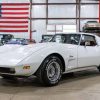
Chevrolet built 30,464 Corvettes for 1973 at St. Louis, Missouri, 25,521 T-top Sport Coupes and 4,943 convertibles, up from 27,004 in 1972 and the Corvette’s best year since 1969. Of those, 4,412 had the 454 LS4 and 5,710 the new L82; 17,927 had the Turbo Hydra-Matic, 21,578 air conditioning, 27,872 power steering and 13,434 the custom interior. Only 45 had the Z07 package and four the YJ8 aluminum wheels.
In 2026, original 1973 Corvettes sold for $12,000 to $26,400 as ordinary coupes and up to $55,000 for a documented four-speed car at Mecum; LS4 454 cars sold for $23,100 to $32,450 with bids to $60,000 for a 6,000-mile example, and dealers asked $34,900 to $55,000; L82 convertibles sold around $31,000 and were offered at $36,000 to $40,000; convertibles generally were offered at $27,900 to $50,000. Modified cars ran $12,650 to $19,750.
Three, all hydraulic-lifter and rated in SAE net horsepower: the 350 L48 at 190 hp (base), the new 350 L82 at 250 hp with a forged crank and four-bolt mains, and the 454 LS4 at 275 hp. The solid-lifter LT-1 and the ZR1 package were gone, and the LS4 was cheaper than the L82 at $250 against $299. The four-speed was standard in wide or close ratio and the Turbo Hydra-Matic was a no-cost option that went into 59 percent of cars.
Ten: Classic White, Silver, Medium Blue, Dark Blue, Blue-Green, Elkhart Green, Yellow, Metallic Yellow, Mille Miglia Red and Orange, with black or white soft tops. Interiors came in black, midnight blue, medium saddle, dark saddle and dark red, with leather in the custom interior that 44 percent of buyers chose. Chevrolet did not record production by color for 1973, and about 30 cars were painted black to special order.
The Sport Coupe was $5,561.50 and the convertible $5,398.50, with radial tires, the alarm, Positraction and the four-speed or Turbo Hydra-Matic included. The L82 added $299.00, the LS4 454 $250.00 and the Z07 package $369.00; power steering was $113.00, power brakes $46.00, air conditioning $452.00, the custom interior $154.00, the AM/FM radio $173.00 and the stereo $276.00. A typical automatic, air-conditioned L48 coupe with power steering and brakes, the custom interior and the stereo came to about $6,600.
A body-color urethane front bumper on a nose two inches longer, to meet the new five-mph rule; a longer hood with cowl induction and no wiper door; recessed fender vents in place of the grilles; a fixed rear window on the coupe; steel door beams; radial tires; rubber-in-steel body mounts and extra sound insulation; and new wheel covers and the short-lived YJ8 aluminum wheels. The LT-1 and ZR1 gave way to the hydraulic-lifter L82, the 454 returned to California, and the Z07 package arrived. The chrome rear bumpers stayed for one last year.
Half of one. The 1973 is the only Corvette with a body-color urethane nose and chrome rear bumpers, because the federal bumper standard applied to the front first; the matching urethane tail came in 1974. Collectors group 1968–72 as the chrome-bumper Sharks and 1974–82 as the rubber-bumper cars, which leaves the 1973 on its own, usually priced below a 1972 and above a 1974 for the same engine, and often called the best value of the early C3s for exactly that reason.
1973 Corvette Advertisements / 1973 Corvette Colors / 1973 Corvette Engine / 1973 Corvette Factory Options / 1973 Corvette For Sale / 1973 Corvette Maintenance / 1973 Corvette Mods / 1973 Corvette Owners Manual / 1973 Corvette Performance / 1973 Corvette Posters / 1973 Corvette Pricing / 1973 Corvette Production / 1973 Corvette Recalls / 1973 Corvette Research / 1973 Corvette Sales Brochures / 1973 Corvette Special Model Overview / 1973 Corvette Specifications / 1973 Corvette Technical Research / 1973 Corvette Service Bulletins / 1973 Corvette VIN Numbers / 1973 Corvette XP-987 GT Two Rotor Prototype