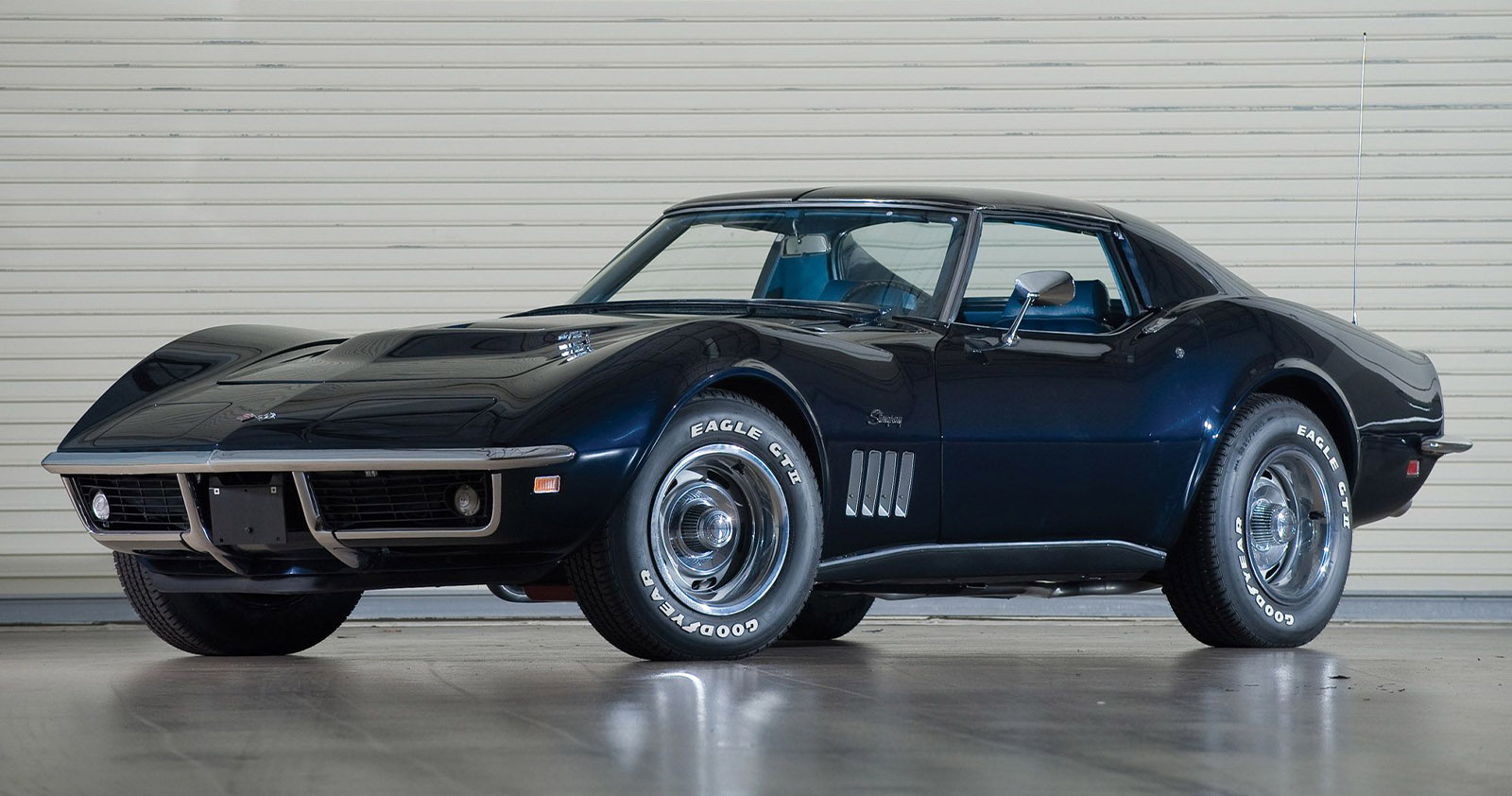
Considering its creation in the early 1970s, the Corvette 2-Rotor was an idea ahead of its time. Other designers would take note and adopt its ideas.
GM’s Design Staff created the Corvette 2-Rotor to flaunt the Wankel-type rotary engines that the Corporation was developing in the early 1970s. Ultimately lacking both an engine and an in-house sponsor, however, a brilliant design was lost.
It was the summer of ’73 and GM’s Wankel fever was in full flush. At the General’s Milford Proving Grounds a gaggle of its top executives clustered around a gorgeous silver two-seater coupe. It was a petite mid-engined sports car, slope-nosed and obviously mid-engined. Though it looked like the latest prototype from Porsche or Maserati, this was in fact a concept car for Chevrolet dubbed the “GT”. And under its glazed rear deck was a two-rotor version of the power unit on which GM’s president Ed Cole was preparing to bet his company, the rotary Wankel engine.
Germany’s NSU, which worked with Felix Wankel to produce a commercial version of his rotary power unit, created this illustration of a two-rotor engine.
Two and a half years had passed since GM signed (on November 10, 1970) an historic agreement with the companies that held the patent rights to the power unit invented by Felix Wankel. His ingenious engine has three working chambers around each of its near-triangular rotors. In each chamber the four-stroke cycle takes place while the rotor both turns and “orbits,” on an eccentric shaft, within its housing. Its path-breaking concept makes this happen without valves of any kind, since the rotor’s edges are used to open and close the inlet and exhaust ports.
The Wankel rotary engine was also adopted by Mazda maker Toyo Kogyo, which showed its four-cycle operation in this series of illustrations.
After GM paid $40 million for rights to the Wankel it renamed it the GMRCE (General Motors Rotary Combustion Engine) and started its development at the Tech Center’s Engineering Staff in 1970 and, more intensively, in 1971. Early in 1972 the responsibility of adapting the GMRCE to production was assigned to Chevrolet. Chevy in turn worked with the Hydra-Matic Division, which built the prototype GMRCEs.
Members only$35 / year
Keep going. This is where it gets good.
CorvSport Membership is for people who'd rather spend an hour inside one engine option than skim ten headlines. The rest of this story — and every other one like it — is a few seconds away.
Every members-only story
Deep history, market reports, buyer's guides, and the full archive back to 2010.
No ads. None.
The whole site reads like a magazine, on every device.
Every model year, 1953 to today
Production numbers, VINs, RPO codes, colors, options — one page per year.
30% off the shop
Every CorvSport shirt and piece of merch, all year.