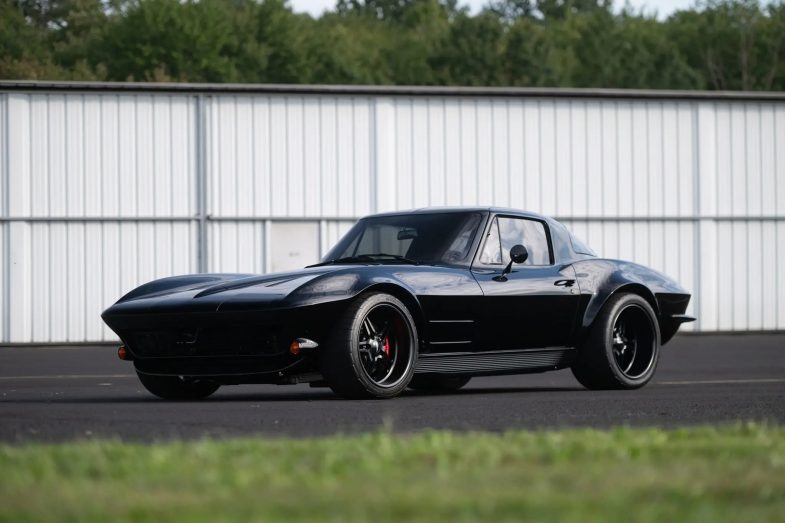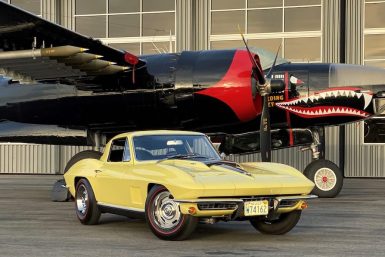
C2 Corvette L88 (1967): The Complete Guide Quick Nav: The Story · The...


CORVETTE BUYER’S GUIDES
Buying a 1963–67 Corvette Sting Ray? This guide covers the five years and every engine, what each costs in today’s market from the results the site tracks, the best buys and the ones to leave alone, how to verify a real fuelie, big block or L88, the model guides and the cars for sale beside it.
Quick Nav: Overview · Why Buy · Year by Year · Year Details · Variants · Values · Price Ladder · What Moves the Price · Model Guides · Driving · Costs to Own · Considerations · Problems · Inspection · Verification · Market Reports · For Sale · FAQs · All Research
The Car: The second-generation Corvette Sting Ray, 1963–1967: Bill Mitchell’s body on Zora Arkus-Duntov’s new chassis with the Corvette’s first independent rear suspension and its first coupe
Years and Built: 117,964 over five model years: 21,513 (1963), 22,229 (1964), 23,562 (1965), 27,720 (1966), 22,940 (1967); 45,546 coupes and 72,418 convertibles
Bodies: Sport Coupe (fastback; split rear window in 1963 only) and convertible with an optional auxiliary hardtop
Engines: 327 small block, 250 to 375 hp, fuel injection through 1965; 396 big block, 425 hp, from mid-1965; 427 big block, 390 to 435 hp, 1966–67; the 430-hp L88, 1967, 20 built
Brakes: Drums in 1963–64 (J65 sintered-metallic optional); four-wheel discs standard from 1965
What One Costs Today: Driver-grade 300-hp cars $45,000–$75,000; L79s, fuelies and L36 427s $75,000–$135,000; 1963 split-window coupes and solid-lifter 427s $135,000–$300,000; L88s, Z06 tankers and Grand Sports in the millions (results tracked September–October 2026)
The Pick: A 1965–67 L79 or 300-hp four-speed coupe with a clean birdcage and its paperwork for a driver; a documented fuelie or 427 for the collection; the 1963 coupe for the icon
Related: The C2 hub, the five year pages, the C2 Sting Ray and C2 L88 model pages, the 1963 Z06 and Grand Sport guides, the colors, production, VIN and RPO pages
When most people picture a Corvette they picture a 1963 split-window coupe, and the five years of the Sting Ray are the most collected Corvettes there are: the shortest production run of any generation, the first independent rear suspension, the first coupe, the first disc brakes, the first big block, and the cars that hold the records, from the 1967 L88 coupe that sold for $3.85 million to Grand Sport 003 at $18.7 million in August 2026.
That makes the C2 an unusual purchase. The market is a ladder with the engine on every rung, the same body hides a 250-horsepower Powerglide convertible and a 435-horsepower Tri-Power coupe, and more fakes, tributes and re-bodied cars have been built from these five years than from any other Corvette. The buying questions are therefore different from a C5 or a C7: not what breaks, but what the car really is, what the steel under the fiberglass looks like, and whether the paperwork supports the price.
This guide walks through all of it: the five years and what changed, the variants and specials, what each tier of the market costs from the auction and dealer results the site tracks, what moves the price, what the cars are like to drive and to own, the problems they have at sixty years old, the inspection step by step, how to verify each year’s engine, and the questions readers ask most. The year pages and the model pages go deeper on each car; this page is where to start.
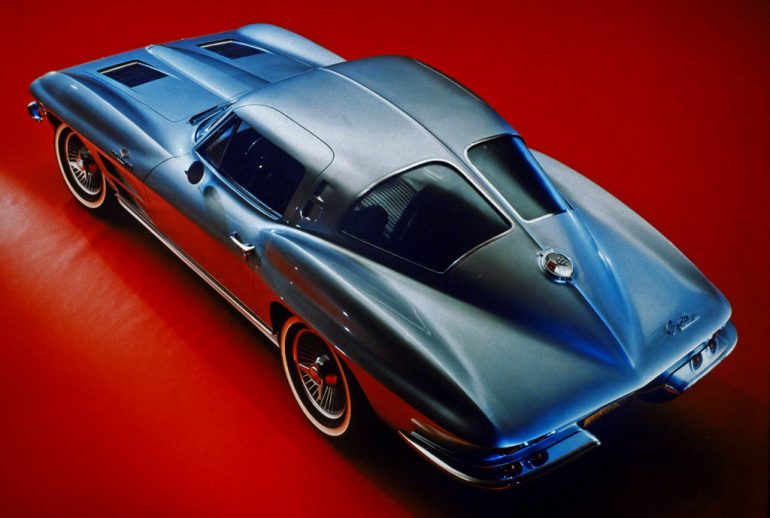
The Sting Ray is the Corvette that made the Corvette. The C1 was a boulevard roadster that grew into a sports car; the C2 was designed as one from the start. Bill Mitchell’s body came from his 1959 Stingray racer and Larry Shinoda’s hand, Zora Arkus-Duntov’s chassis put a transverse-leaf independent rear suspension under it on a 98-inch wheelbase, and for the first time there was a coupe, the fastback with the split rear window that Mitchell fought for and Duntov hated. It was the most advanced American production car of 1963 and it looked it, and it put the Corvette on the world racing stage with the Z06 and the Grand Sport even though GM was officially observing the AMA ban on factory racing.
Nothing about the C2 stood still. 1964 removed the split and the fake hood vents and found 375 horsepower in the fuel-injected 327. 1965 added four-wheel disc brakes, the 350-horsepower L79 that is still the best-driving small block, and at mid-year the 396 Mark IV big block with 425 horsepower under a bulged hood. 1966 enlarged it to 427 cubic inches in 390- and 425-horsepower form, and a third of buyers took one. 1967, a year Chevrolet had not planned to build, got Tri-Power 427s with 400 and 435 horsepower, the twenty L88s, and the cleanest body of the run. Every year is a different car with the same silhouette, which is why collectors argue about them and why there is a C2 for most budgets.
The C2 is the most valuable production Corvette generation and has been for forty years. It is the Corvette that NCRS judging was built around, the one whose fuelies, big blocks, Z06s and L88s set the auction records, and the one whose values have held through every cycle because the supply of real, documented cars only shrinks. Driver-grade cars track the collector market rather than the used-car market: a 300-horsepower convertible bought right in 2026 is unlikely to be worth less in 2031, which no C4, C5 or C6 can promise.
A sorted Sting Ray is a usable classic: every mechanical part is reproduced down to the last clip, any shop that knows a small-block Chevrolet can service it, a 300-hp or L79 four-speed keeps up with modern traffic, and the independent rear and the 1965-on discs make it a far better road car than any C1. The cars that are hard to live with are the ones bought for the wrong reason: a fuelie for a daily driver, an L88 for the road, a tribute for a collection. The rest of this guide is about buying the right one.
MORE: THE C2 HUB / THE C2 STING RAY MODEL PAGE / ALL THE GENERATIONS
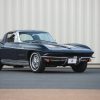
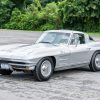
 The 1963 Split-Window Corvette
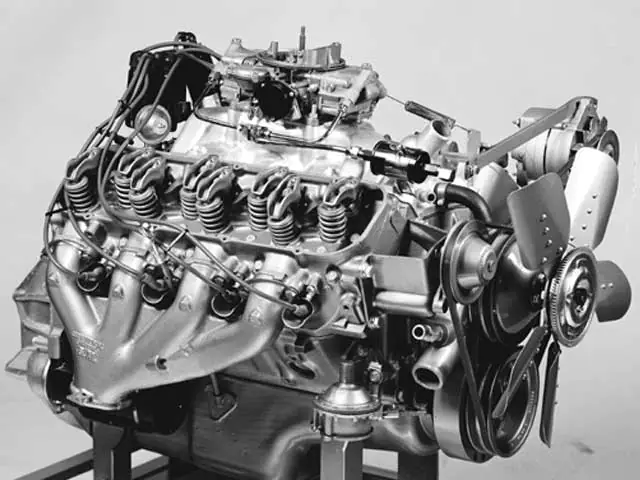
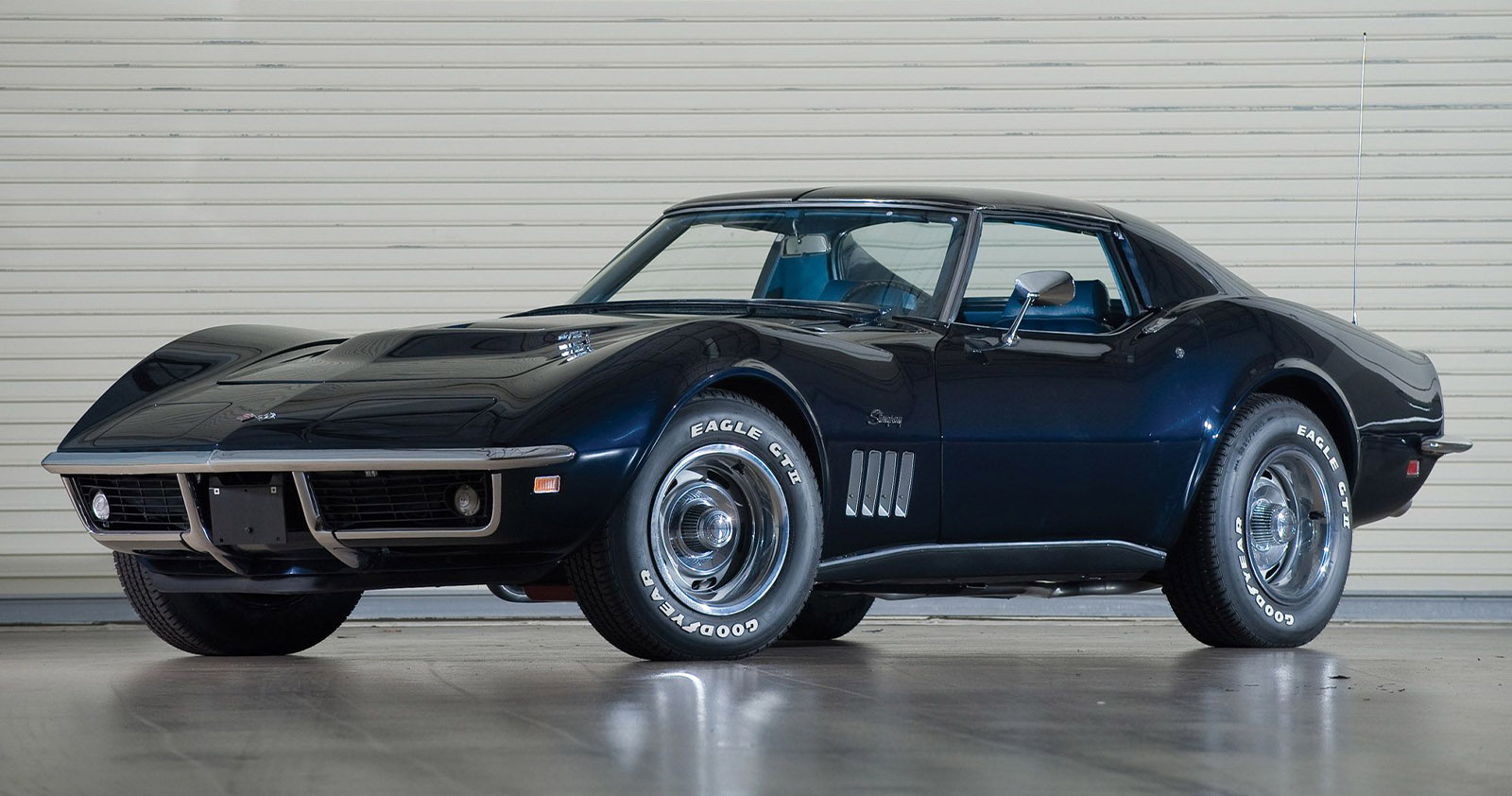
 The 1967 Corvette featured an optional 400 or 435 horsepower 427 cubic inch engine.
 1967 L88 Corvette
The Sting Ray changed every year, and the changes decide what a car is worth and how it drives. The 1963 is the collector year for its split window and its Z06s; the 1964 is the same car without the premium; 1965 brought discs, the L79 and the first big block; 1966 and 1967 are the 427 years, with 1967 the cleanest and the most valuable at every level. The table gives the changes, the production, the engines and the verdict for each; the year pages have the full story, the specs, the options, the colors and the current market for that year.
Three rules hold across all five. Coupes carry a premium over convertibles in every year, biggest in 1963. The engine matters more than the year: a 1964 fuelie is worth more than a 1967 300-horsepower car. And a four-speed is worth more than a Powerglide in every combination, with the 1963 three-speed the rarest and least wanted transmission of the run.
MORE: THE 1963 PAGE / THE 1964 PAGE / THE 1965 PAGE / THE 1966 PAGE / THE 1967 PAGE / THE C2 HUB
| YEAR | WHAT CHANGED | BUILT | ENGINES | THE VERDICT |
|---|---|---|---|---|
| 1963 | All new: the ladder frame, the independent rear, the coupe with the split rear window, hideaway headlights, four 327s to 360 hp (fuel injection), the Z06 race package (199 built, 63 with the 36.5-gallon tank) and five Grand Sports. Drum brakes; three-speed, Borg-Warner four-speed or Powerglide. | 21,513 | 327 ci V-8, 250 to 360 hp (fuel injection optional) | The icon and the most valuable small-block year. Coupes are the collector car and the most faked; convertibles are the driver’s 1963 at a fraction of the price. Buy the split window and the engine pad first. |
| 1964 | One-piece rear window, the fake hood vents gone (the recesses stay), driver’s-side roof vent made functional, 375-hp fuelie and 365-hp L76 on a Holley, Muncie four-speeds, knock-off wheels finally delivered. Convertibles now outsell coupes. | 22,229 | 327 ci V-8, 250 to 375 hp (fuel injection optional) | The value C2: the same chassis and engines without the split-window premium or the big-block cachet. A 365-hp L76 or a 300-hp four-speed coupe is the quiet buy of the generation. |
| 1965 | Four-wheel disc brakes standard, smooth hood, three functional fender vents, new seats and flat-black gauges, side exhaust and the 350-hp L79 added, the 396/425 L78 big block from mid-year under a bulged hood. The last year of fuel injection until 1982. | 23,562 | 327 ci V-8, 250 to 375 hp; 396 ci big block, 425 hp (from mid-year) | The year the Sting Ray grew up: discs, the L79, side exhaust and the 396 at mid-year. The widest spread of values of any year, from Powerglide 250s to the 2,157 first-year big blocks. |
| 1966 | The 427 in 390-hp L36 and 425-hp L72 form (badged 400 and 450 early in the year), small blocks cut to the 300 and the 350, egg-crate grille, roof vents deleted, backup lights standard, extra seat pleats, vinyl headliner. A record 27,720 built. | 27,720 | 327 ci V-8, 300 or 350 hp; 427 ci big block, 390 hp (L36) or 425 hp (L72) | The 427 arrives and a third of buyers take one. The L72 is the muscle-car C2 and a documented early “450-hp” car the one collectors chase; the L36 is the same look for less. |
| 1967 | Trim removed and rockers flattened, five fender louvers, Rally wheels, a single center backup light, parking brake moved between the seats; Tri-Power 400-hp L68 and 435-hp L71, 16 aluminum-head L89s and 20 L88s. Bolt-on alloys replace the knock-offs. | 22,940 | 327 ci V-8, 300 or 350 hp; 427 ci big block, 390 hp (L36), 400 hp Tri-Power (L68), 435 hp Tri-Power (L71/L89), 430 hp L88 (20 built) | The most valuable year at every level: five louvers, Rally wheels, the Tri-Power 427s, the L89 and the L88. The L71 Tri-Power coupe is the C2 most buyers picture, and the most reproduced. |
The table gives the headlines; this is the detail a buyer uses at the viewing, because the small changes are how you tell a real 1965 hood from a 1964 with the recesses filled, a 1966 grille from a 1967, and a car that is what it claims to be from one that has been dressed. The year pages carry the full specifications, options, colors and production for each.
While nobody could have predicted it then, the C2 Corvette has become one of the most desirable Corvettes of them all, and none more so than the 1963 model year. The original 1963 Sting Ray Coupe is considered to be one of the most collectible Corvettes of all time because of its unique split rear window design. Surprisingly, many split-window coupes were modified by customizers, some of whom replaced the small, individual panes of glass with a one-piece window made of Plexiglass. Even more surprising is that Chevy began offering replacement one-piece windows through its dealerships. As a result, a good many 1963 Corvette coupes lost a considerable amount of their collector value.The Sting Ray had a newly designed chassis that featured a shorter wheelbase and a faster “Ball-Race” steering (a name that was developed by the ad copy (advertisement) writers in 1963,) both of which attributed to providing the car with improved maneuverability and handling.A number of items did carry over from the C1 Corvette.
This included all four of the small-block, 327C.I. V-8 engines, a trio of transmissions, and six different axle ratios. The engines that were offered for the 1963 Corvette included three carbureted versions; a 250-, 300-, and 340-horsepower variants, as well as a 360-horsepower fuel-injected engine. The car’s standard three-speed transmission also carried over from the 1962 model year and remained available in 1963 though neither it nor the optional Powerglide automatic transmission were installed into many second-generation Corvettes. Instead, the preferred gearbox continued to be the Borg-Warner manual four-speed transmission.The 1963 Corvette came equipped (standard) with wider, four-wheel cast-iron 11-inch drum brakes, which provided a more effective braking area, which, in turn, produced shorter stopping distances.
Optionally, consumers had the ability to order special, sintered-metallic linings that were segmented for better cooling. They also had the option of ordering finned aluminum (“Al-Fin”) drums, which not only provided faster heat dissipation, but also less unsprung weight. Optional power assist was available for both braking packages.For the 1963 model year, Zora Arkus-Duntov had made it possible to turn any Corvette into a racer by informing consumers which options to order when buying their cars. When he and Bill Mitchell completed the design and development of the second-generation Corvette, he had become more determined than ever to ensure that anyone who wanted to race his sophisticated new Sting Ray should have the ability to do so.
It was with this rationale in mind that he developed RPO Z06 – a new competition-oriented package. Corvettes equipped with the Z06 option received the top-line Al-Fin power brakes with sintered metallic brake linings, a heavy-duty front stabilizer bar, stronger shocks, much stiffer springs, a dual master cylinder, and a long-distance 36.5-gallon fuel tank.
The 1964 Corvette featured a handful of functional changes and a few minor cosmetic refinements, but for the most part, it retained much of the ingenuity and design cues that had contributed to the second-generation Corvette’s success the previous year.Most of the styling refinements that were made to the exterior of the 1964 model were subtle. The most notable change involved the replacement of the rear split-window that had been introduced in 1963.
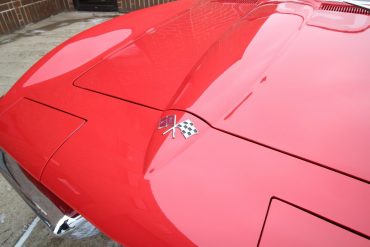
The split-window was abandoned completely by General Motors in 1964, replaced instead by a rear window that was constructed of a single piece of glass. Another notable change that was made to the body lines on the 1964 model involved the removal of the faux hood vents that had adorned the 1963 model. Although the vents themselves were stripped from the design, the recessed areas where they had been mounted remained, giving the 1964 Corvette hood a distinctive look all its own.
The coupe’s rear pillar panel vents, which had been cosmetic just a year before, was now made fully functional, but only on the driver’s side. The car’s rocker panel trim was replaced by a new panel that featured a black divider that ran the length of the car. The car’s wheel covers were simplified. The fuel filler neck cover/deck emblem was redesigned to include concentric circles around its crossed-flags insignia.The drivetrain choices remained pretty much the same as they had in 1963: four 327 cubic inch diameter V-8 engines were mated to either a three-speed, a four-speed manual transmission, or the Powerglide automatic transmission. Of these engines, the two least-powerful engines returned with 250 and 300 horsepower at a 10.5:1 compression ratio. The high-performance engines, however, did receive some noteworthy upgrades.
To start, the carbureted engine was improved upon with the introduction of a Holley carburetor instead of the original base engine’s Carter unit. The engine, now fed through the big four-barrel Holley carburetor duration camshaft that helped to produce 365 horsepower. The fuel-injected variant gained an additional fifteen horsepower over the previous year. Now rated at 375 horsepower (at 6,600 rpm), this last engine introduced a re-profiled camshaft with greater life and a longer dwell, as well as improved ports and valve gear.Starting with the 1964 model year (and lasting thru 1967), some Corvette bodies were supplied by Dow-Smith (located in Ionia, Michigan.) Dow-Smith is a division of the A.0. Smith Company. Also, while it is true that the C2 Corvette did introduce the factory installation of bodyside exhaust pipes, they were not a factory option until 1965.
Positraction was not a standard option at the onset of the C2. While commonplace in Corvettes today, positraction was still an option in 1964 – though a very affordable one. More than 80 percent of all 1964 Corvettes included the option. A “Special Sintered Brake Package” option was introduced in the 1964 Corvette. It was specifically aimed at performance-focused drivers and required a number of other options – including the Positraction rear axle – before these brakes could even be installed. Only 29 Corvettes included this option in 1964.
The focus for the 1965 Corvette was focused on some significant mechanical upgrades that would vastly improve the Corvette’s already impressive handling and drivability.The most notable change to the outward appearance of the car was the removal of the former scoop indentations, which had carried over in the 1964 model (after the faux hood scoops were removed from the 1963 design.)
The new hood, which was now a single, smooth surface, became one of the major differentiating characteristics of the 1965 model year. Additionally, the front fenders were redesigned to feature a trio of working exhaust vents (which replaced the previous model’s non-functional horizontal “speedline” coves.) Another notable design change involved refinements to the front grill. For the 1965 model treatment, the inner, horizontal grill bars were painted black, but the outer grill remained a bright chrome color, making the overall design unique to the 1965 Corvette. Lastly, the wheel covers and rocker-panel moldings were re-designed for the 1965 model year. The optional knock-off wheel covers now featured a dark gray paint color between the fins.The interior of the car also received some minor design refinements as well. In the driver’s dashboard, all of the instrument displays were redesigned to include flat black faces.
The areas around the radio and speaker bezel were painted instead of utilizing vinyl coverings, which had been standard on previous models. A more notable improvement involved changes in the design of the car’s driver and passenger seats. The new seating surfaces were designed to be slightly larger and more supportive, and the seatbacks were encased in hard plastic backing shells. The inner door panels were redesigned and now included fully integrated armrests. Lastly, the interior received new seat belt retractors, a feature that was never before been seen in a Corvette.
Mechanically, the brakes on the 1965 Corvette featured a four-piston design with two-piece calipers mated to a newly designed brake rotor which utilized cooling fins. The cooling fins helped to dissipate the massive amount of heat being generated during hard braking. The car came equipped with all new semi-metallic brake pads. These pads were designed to remain in constant contact with the brake rotors which aided in keeping the braking surfaces on the rotor free from rust and debris (both of which cause pitting and diminish the lifespan of any brake rotor.) Another significant improvement and mechanical milestone arrived midway through the 1965 model year. Officially titled the Mark IV, Chevrolet introduced a new, optional, big-block V-8 engine for the first time in a production Corvette. The engine featured 11:1 compression, impact-extruded alloy pistons with chrome rings, solid lifters, a bigger carburetor (and corresponding double-snorkel air cleaner), and an oversized oil pump, all of which helped make this more radical Mark IV engine capable of producing an impressive 425 horsepower. Aside from the late-entry Mark IV, several other engines had remained available for the 1965 model year including a 375 horsepower, 327 cubic-inch small-block V8 that came equipped with fuel injection.
Additionally, GM introduced the L79 small block, which was essentially an L76 327 engine featuring a slightly milder hydraulic cam in place of the solid-lifter stick. Operating on an 11:1 compression ratio, the L79 engine was rated at 350 horsepower, and was deemed nearly identical to the L76 on the outside with its chromed air cleaner and finned cast-aluminum valve covers.
For the 1966 Corvette, the new 427 big-block engine came in two forms: the relatively mild L36, which featured a hydraulic-cam and produced 390 horsepower on 10.25:1 compression, and the truly awesome L72, a 425 horsepower engine with 11:1 compression, larger intake valves, a bigger Holley four-barrel carburetor on an aluminum manifold, mechanical lifters, and four-hole (instead of two-hole) main bearing caps. Corvettes equipped with this type of engine received a special bubble hood first seen on the 1965 Corvettes equipped with the 396 cubic inch engine.
Although initially listed as a 450hp engine, the solid lifter 427ci engine’s rating was later reduced to 425hp shortly after its introduction for reasons unknown. Similarly, the 390 horsepower engine was initially rated at 400 horsepower. When the official ratings were reduced, the decision to make this change was purely administrative and was not the result of any changes made to the engines. The small-block engine options were reduced from five to two for the 1966 model year, with only the 300-horsepower (L75) and 350-horsepower (L79) versions remaining available to prospective consumers.
There were minor modifications made to the 1966 Corvette’s appearance. For one, the Sting Ray’s front end was mildly altered with the introduction of an “egg-crate” grille insert which replaced the previously installed horizontal bars. Restyled wheel covers were introduced along with an all-new rocker trim. Also, the coupe lost its roof-mounted extractor vents, which had proven to be inefficient in earlier model years. Lastly, less notable upgrades like the addition of “Corvette Sting Ray” scripts to the hood and the introduction of standard backup lights were introduced.The interior went largely unaltered from 1965 Corvette.
The interior electric ventilation system was dropped, extra pleats were added to the Sting Ray’s bucket seats, chrome door pull handles were introduced, headrests were made optional, and a vinyl-covered foam headliner replaced the previously used fiberboard.
The 1967 Corvette proved to be the most sophisticated of all the Sting Ray models. The second-generation Sting Ray had been refined to its evolutionary limits – the result of which was a car that was clearly the best model of its five-year run. Much of the trim (including hood script emblems and fender flags) were removed. The front fenders now featured five smaller air vents in place of the three larger ones that had originally been introduced in 1965. The rocker panels were given a flat finish without any ribbing, which gave the car a lower, smoother outward appearance.
In the rear of the car, a new, single backup light was introduced (unique only to the 1967 model) over the license plate. Lastly, the earlier models’ wheel covers were replaced with slotted six-inch Rally wheels with chrome beauty rings and lug nuts that were concealed behind small chrome caps.The 1967 Corvette only received minor updates to its interior. The upholstery was revised and the seats were a new design. The hand brake (parking brake) was relocated from beneath the dashboard to between the seats – a Corvette first. The lock buttons were moved further forward and an attaching screw was added at the rear. Perhaps the most notable change to the 1967 Corvette’s interior was the removal of the passenger hand-hold above the glovebox, a feature that had been part of the Corvette since 1958.As with the previous year, the two small-block V-8 engines returned, as did the 390 horsepower big-block, though this last engine was fitted under a redesigned hood scoop.
The biggest changes involved the pair of big-block 427 engines, which now produced 400 and 435 brake horsepower respectively, due to the introduction of triple two-barrel carburetors. Like last year’s model, these new 427 cubic inch engines differed in compression ratios – 10.25:1 and 11.0:1 respectively. The latter of these two engines, RPO L71, also included optional specialized aluminum heads (instead of cast iron) and larger-diameter exhaust valves like those included in RPO L89. Based on the already impressive L89 engine, Chevrolet decided to introduce the “ultimate” Corvette engine in 1967 by introducing an engine coded with the designation L88. The L88 engine was an immensely powerful production engine and was about as close to a pure racing engine as any Chevrolet had introduced in a commercial vehicle up to that point in time.
The L88 equipped Corvette was limited to a mere 20 units.A blue, “GM Mark of Excellence” label was attached to the back of each 1967 Corvette door above the latch. This initiative was the direct result of General Motor’s quality awareness program. Additionally, safety legislation required a modification of the knock off wheel option. For the 1967 model year, the wheels were changed to a bolt-on, cast alloy style with a clip-on center cap to conceal the lug nuts.
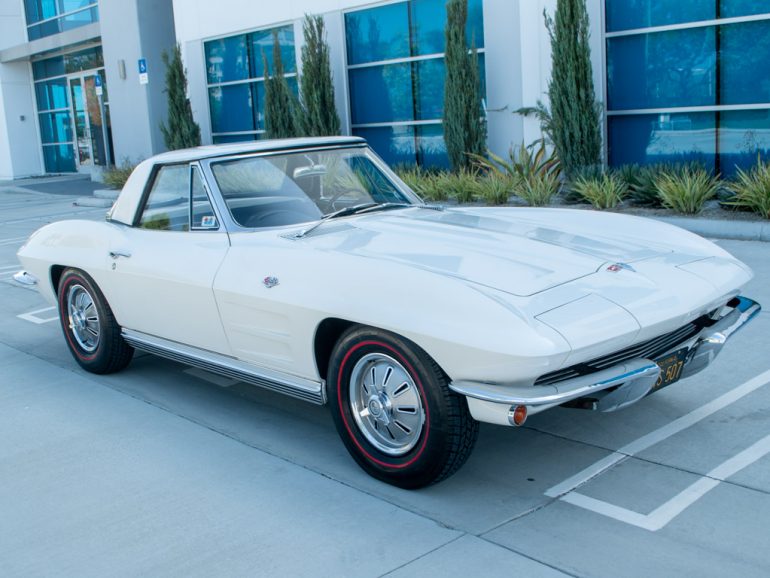
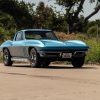
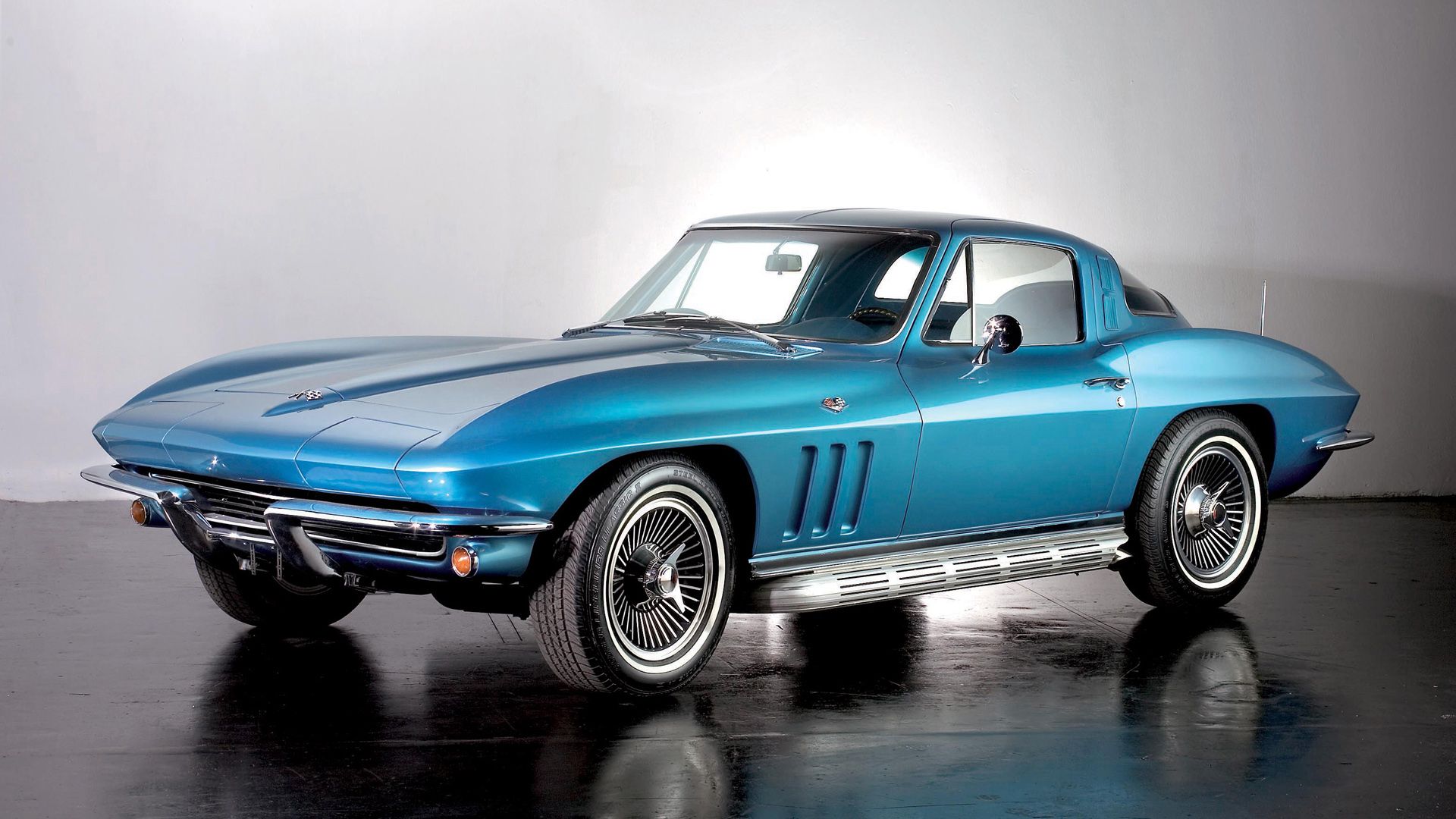
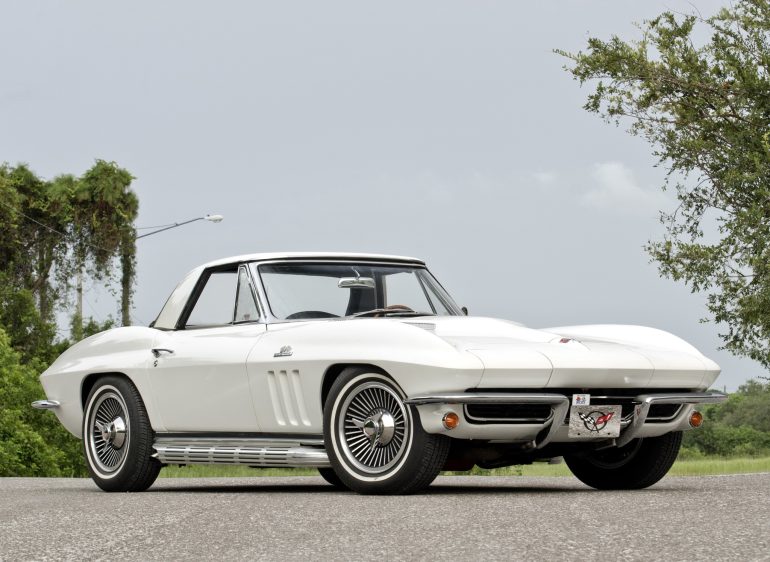 1965 Chevrolet Corvette Sting Ray

 1967 Corvette
Chevrolet sold one model in two bodies, and the option sheet made everything else. That is why a C2 is bought by its engine code and its RPOs rather than by a badge, and why the paperwork matters so much: a 1966 427 coupe and a 1966 300-hp coupe wore the same body, and the hood, the badges, the side pipes and the knock-offs that tell them apart have all been reproduced. The table sorts what was built into the tiers the market uses; the engine list on the C2 hub has every RPO with its output and its years, and the model pages carry the full guides to the Z06, the Grand Sport and the L88.
A word on names. Chevrolet wrote it “Sting Ray” on every C2 and “Stingray” on the C3 from 1969, so a “Stingray” in a 1963–67 listing is a seller’s spelling, not a different car. “Mid-year” is the collector shorthand for the generation.
MORE: THE C2 STING RAY GUIDE / THE 1963 Z06 GUIDE / THE GRAND SPORT GUIDE / THE C2 L88 GUIDE / EVERY C2 ENGINE
| VARIANT | WHAT IT IS | BUILT | WHAT A BUYER SHOULD KNOW |
|---|---|---|---|
| Coupe | The fastback Sport Coupe, new for 1963; the split rear window in 1963 only, one-piece glass from 1964 | 45,546 | The design icon and the premium body in every year. A 1963 coupe is verified at the rear window first; many were converted to one-piece glass in period and converted back since. |
| Convertible | The roadster, with an optional auxiliary hardtop (C07) and an optional power top | 72,418 | The driver’s C2 and the entry point: more were built, they trade at a discount to the coupe at every engine level, and the hardtop adds value when original to the car. |
| Small blocks | 327 ci: base 250, L75 300, L76 340/365, L79 350 (1965–67) | Most cars | The 300-hp L75 is what most cars have and the easiest to live with; the L79 is the best-driving engine of the generation; the solid-lifter L76 is the enthusiast’s small block. |
| Fuel injection (L84) | Rochester mechanical injection on the 327, 360 hp (1963) then 375 hp (1964–65); the last fuelie until 1982 | 2,610 (1963) · 1,325 (1964) · 771 (1965) | A large premium with the original, correct-series unit; the most faked small block. Many were converted to carburetors in period; a documented original unit is worth real money on its own. |
| Big blocks | 396/425 L78 (mid-1965); 427 L36 390 hp and L72 425 hp (1966); 427 L36 390, L68 400 Tri-Power, L71 435 Tri-Power (1967) | 2,157 (1965) · 10,374 (1966) · 9,723 (1967) | The collector engines below the L88. L36 and L72 share a bore and a hood, so the L72 is proved at the pad, the four-bolt block and the intake; the 1967 L71 is the C2 most buyers picture and the most reproduced. Positraction was mandatory with every 427 and the four-speed with the solid-lifter L72, L71 and L88. |
| Z06 (1963) | Duntov’s race package: the fuelie, the four-speed, Positraction, heavy-duty brakes and suspension, the 36.5-gallon tank; coupe only | 199 (63 “tankers”) | A six-figure-plus car bought on its tank sticker or build documentation, because every Z06 part has been reproduced. The 1963 Z06 guide covers verification. |
| Grand Sport (1963) | Five lightweight racers on a tube frame with an aluminum 377, built before GM shut the program | 5 | A world of its own: chassis 003 sold for $18,705,000 at RM Sotheby’s Monterey in August 2026, the most ever paid for a Corvette. The Grand Sport guide has each car’s history. |
| L89 (1967) | The L71 with aluminum heads, about 75 lb lighter | 16 | Rarer than the L88 and verified the same way: casting numbers on the heads, the pad and the paperwork. |
| L88 (1967) | The 427 race engine: aluminum heads, 12.5:1, 850-cfm Holley, cowl-induction hood; radio, heater and choke deleted | 20 | All twenty are known by VIN. A seven-figure car bought on provenance, not inspection; a VIN not on the registry is a tribute whatever the parts. The C2 L88 page is the guide. |
| Big tank (N03) | The 36-gallon fuel tank, coupe only, 1963–67 | A few dozen a year | A premium when documented; the tank has been reproduced, so the build sheet or tank sticker decides it. |
The C2 market sorts by year, body and engine in that order, and then documentation, matching numbers and originality move a car a tier in either direction. The 1963 split-window coupes and the 1967 big blocks are the bookends; 1964 and 1965 are the value years; coupes carry a premium over convertibles at every level; within a year the engine sets the price, a fuelie or a solid-lifter 427 on top and the 300-horsepower cars most of the 117,964 are at the bottom. The specials (Z06, Grand Sport, L88) are markets of their own.
The results the site tracked on Classic.com in September and October 2026 show the ladder. 1963 split-window coupes sold for about $170,000 to $250,000 original or restored and $125,000 to $300,000 as restomods; 1963 convertibles $50,000 to $60,000. Fuel-injected 1964 and 1965 cars brought $89,000 to $135,000, 1965 L79s $65,000 to $84,000, an original 396 convertible $82,500. 1966 L72s sold for $121,000 to over $200,000 and L36s $76,000 to $125,000. 1967 L71 Tri-Power convertibles brought $111,000 and $185,000 at auction with dealers asking $290,000 and up, and 1967 L79s $105,000 to $150,000. Driver-grade 300-horsepower cars of any year ran $50,000 to $75,000, modified and restomod cars $53,000 to $121,000, and projects $20,000 to $77,000 depending on the year. Above all of it, the 1967 L88 coupe record of $3.85 million (Barrett-Jackson Scottsdale, 2014) and Grand Sport 003 at $18.7 million.
Two cautions that apply to every figure on this page. Check whether an auction result includes the buyer’s premium, and treat asking prices and unsold high bids separately from completed sales: a 1967 L71 bid to $142,500 without selling is not a $142,500 car. The year pages carry each year’s results and are updated as the site tracks new sales; the price ladder below puts the whole generation in five tiers.
MORE: 1963 MARKET / 1964 MARKET / 1965 MARKET / 1966 MARKET / 1967 MARKET / CORVETTE AUCTION COVERAGE
What the money buys at each level of the 1963–67 market, from the results above. The ranges are for the generation as a whole; a 1963 coupe sits a tier higher than the same condition of 1964, and a Tri-Power 1967 a tier higher than a 300-horsepower 1967. Where a car is modified, the build sets the price more than the engine code.
$20,000 – $50,000
Disassembled restorations, long-stored cars with unknown engines, convertibles with rotten birdcages and coupes with converted windows. Recent sales: a 1967 project coupe at $20,250, a 1966 L36 project convertible at $24,500, a '63 split-window project at $76,563. This point only for someone who will do or oversee a restoration: the birdcage and body work costs more than the car at this level.
$45,000 – $75,000
300-horsepower cars in both bodies, older restorations, repaints in a non-original color, mild restomods and non-matching small blocks that run and drive well. Recent sales: 300-hp convertibles at $49,000 to $70,000, modified coupes at $62,700 and $67,100, a 1965 L76 coupe at $73,500. The best value in the generation for someone who wants to drive a Sting Ray; buy the body and the chassis, not the engine code.
$75,000 – $135,000
Documented L79s and 365-hp L76s, correct-color restorations with judging history, the hydraulic-cam L36 427s and the fuel-injected 1964–65 cars at the lower end of their range. Recent sales: 1965 L79 convertibles at $65,000 to $84,000, 1967 L79s at $104,500 to $150,000, 1964–65 fuelies at $89,100 to $134,200, 1966 L36s at $76,000 to $125,000. The tier where most serious buyers end up: a real car with the paperwork, usable and appreciating.
$135,000 – $300,000
Original or correctly restored 1963 split-window coupes, 1966 L72s, 1967 L71 Tri-Power cars, documented big tanks and the best fuelies, with NCRS Top Flight or Bloomington Gold history. Recent sales: split-window coupes at $172,500 to $250,000, L72s at $121,000 to $202,720, L71 convertibles at $111,000 and $185,000 with dealers asking $290,000 to $315,000. Bought on the engine pad, the trim tag and the judging sheets; every one of these has been faked.
$300,000 – $18.7 million
The 1963 Z06s and their 63 tankers, the 16 L89s, the 20 L88s, the five Grand Sports and the cars with a period racing record. The 1967 L88 coupe at $3.85 million (2014) and convertible at $3.2 million (2013), recent L88 estimates of $3 million and up, Grand Sport 003 at $18,705,000 in August 2026. These trade privately or at the headline auctions, and the work is done before the car is seen: the registry, the history, the restorer, the photographs.
Engine code. The ladder on this page is an engine ladder. A fuelie, an L72, an L71 or an L88 at the top; the L79, the L76 and the L36 in the middle; the 250s, the 300s and the Powerglides at the bottom. Within a year the difference between a 300-hp and a 435-hp car of the same condition is a factor of two to three, and the difference between a real 435 and a tribute is the same again.
Body and year. Coupes over convertibles in every year, the 1963 coupe over everything else with a small block, 1967 over 1966 at the same engine, 1964 and 1965 as the value years. A convertible with its original hardtop is worth more than one without.
Documentation and judging. Matching numbers (the engine pad’s VIN derivative and suffix, the transmission and rear axle stampings), the trim tag agreeing with the paint and interior, a tank sticker or Protect-O-Plate, and NCRS Top Flight or Bloomington Gold sheets with dates and scores. A documented car brings 20 to 30 percent more than the same car without, and on a big block or fuelie the paperwork is most of the value.
Originality versus modification. An original-color car with its original drivetrain leads; a correct restoration follows; a color change costs real money at resale; a restomod is priced on its build and sells to a different buyer. Side exhaust, knock-offs and the big tank add value only when documented, because all three are easy to add.
Condition of the steel. A clean birdcage and frame are worth more than a fresh paint job, because the paint is a cost and the birdcage is a project. The inspection section explains where to look.
Color and options. Riverside Red, Rally Red, Nassau Blue, Marina Blue and the silvers sell quickly; the rare colors (Sebring Silver in 1963, Trophy Blue in 1966) carry a premium among collectors; air conditioning, rare in every year, adds to a driver’s car; a power top, leather and the teak wheel are nice to have rather than price movers. The colors pages have the counts by year.
MORE: C2 COLORS BY YEAR / RPO CODES & OPTIONS / PRODUCTION NUMBERS
The C2 has been the blue-chip Corvette for forty years, and the ingredients that made it one do not change: the shortest run of any generation, the most desirable shape, the first of everything that made the Corvette a sports car, and a shrinking supply of real, documented cars as more become restomods and more tributes are exposed. Driver-grade cars have tracked the broader collector market, rising through the 2010s, pausing in 2023–24 and firming again in 2025–26 at the quality end; the record cars have kept setting records.
The realistic expectation is steady appreciation at the documented end and stability below it. A 300-horsepower convertible bought at $60,000 in 2026 should hold its value and may gain modestly; a documented L79 coupe or a 1964–65 fuelie has the best risk-and-reward in the generation, because it is a real car with real paperwork at a price well below the big blocks; a 1963 split-window or a Tri-Power 1967 is already fully priced and moves with the top of the market, up and down.
The cars with the strongest case are the ones the next generation of collectors will want and can verify: 1963 coupes with original split windows, documented 1966 L72s, 1967 L71s with the right pad and the right paperwork, and clean L79 four-speeds in original colors. The weakest case is a tribute at a real car’s price, a color-changed car with a story, or a restomod bought as an investment rather than as a car to drive.
Buy the car you want to own and drive and let the market be a bonus. The site’s auction coverage and market reports track every notable C2 sale; the year pages are updated as they come in.
MORE: AUCTION RESULTS / WHOLESALE MARKET REPORTS / BARGAIN HUNTING
The charts below from our friends at Classic.com track recent sales and trends in the 1963–67 Corvette market: the generation as a whole, then the 1963 split-window coupe, the 1965–67 big blocks and the 1967 L88. For any other year or engine, the year pages carry the results the site tracks and Classic.com has the rest.
The model pages carry a full buyer’s guide for each car: which year to buy, what one costs from the tracked results, how to verify a real one, the inspection list, the known issues and the options that carry a premium.
MORE: THE 1963 Z06 / THE 1963 GRAND SPORT / THE FULL MODEL LIST
A Sting Ray drives like what it is: a 3,100-pound, 98-inch-wheelbase sports car from the early 1960s with a lot of engine and, by the standards of its time, excellent suspension. The independent rear is the thing you notice first after a C1, because the car stays planted over bumps mid-corner where a solid-axle Corvette would hop. The steering is a recirculating ball, slow by modern standards (the “fast” ratio was an option), heavy at parking speeds without power assist and light and accurate once rolling. The ride is firm but not harsh on standard springs; F41 cars are noticeably stiffer.
Small blocks. A 300-horsepower L75 with a four-speed is the all-rounder: a smooth idle, strong torque from 2,000 rpm, happy at 70 mph with a 3.36 axle, and it will run on pump premium. The L79 adds a hydraulic cam with real top-end and is the best-driving C2 engine. The solid-lifter L76 and the fuelies are different: a lumpy, uneven idle that is correct, valve lash to set, a 6,500-rpm habit, and in the fuelie’s case a Rochester unit that wants a specialist and clean fuel. They are wonderful at full throttle and less wonderful in traffic.
Big blocks. A 427 changes the car: the nose is heavier, the steering heavier still, the understeer at the limit more pronounced, and the torque makes the gearing irrelevant. The hydraulic L36 is the usable one, a 390-hp engine that idles, runs cool and pulls from anywhere. The solid-lifter L72 and L71 idle lumpily, come on hard above 3,500 rpm (a Tri-Power car should idle on the center carburetor and open the outers with a definite step) and will overwhelm the tires in the first three gears. An L88 is a race engine with no choke, no heater and 12.5:1 compression; it is bought for the collection, not the road.
Brakes. 1963–64 drums stop the car adequately when adjusted and pull straight when the shoes are matched; the J65 sintered-metallic linings are poor when cold. The 1965-on four-piston discs are the single biggest reason to prefer a later car: a firm pedal, no fade, and modern stopping distances on good pads. Original calipers weep fluid unless they have been sleeved in stainless steel, and nearly every driven car has had this done.
Daily driver or weekend car? A 300-hp or L79 four-speed with discs can be driven as often as you like; it starts, stops and keeps up, and parts are a phone call away. A solid-lifter small block or any big block is a weekend car, and a fuelie or an L88 is a collector’s car that gets driven to shows. Coupes are quieter, stiffer and hotter inside (the 1963–65 roof vents helped little); convertibles are the better car in summer and the worse one on the highway.
Drive several before buying one. The five years feel different, a 1963 drum-brake 250 and a 1967 L71 disc-brake coupe most of all, and the car that suits you is as likely to be the quiet 1964 300-horsepower coupe as the Tri-Power you came for.
MORE: C2 PERFORMANCE FIGURES / SPECS BY YEAR / EVERY C2 ENGINE
A sorted Sting Ray is one of the cheapest collector cars to keep running and one of the most expensive to restore, and the gap between the two is where buyers get hurt. Routine costs are low: a 327 or 427 takes conventional oil and ordinary tune-up parts, tires are standard sizes (reproduction bias-ply or modern radials), and brakes, suspension bushings, U-joints, weatherstrips and trim are all reproduced and in stock. In owners’ experience a driven car on a modest budget runs $1,500 to $3,000 a year in parts and labor at an independent shop that knows the cars, plus insurance and storage.
The large bills are structural and specialist. A birdcage repair, which means the body coming off or at least the windshield and door posts being cut out and new steel let in, runs well into five figures and sometimes beyond; a frame repair at the rear kickups and trailing-arm mounts is a body-off job; a correct repaint on fiberglass that has been prepared properly is $20,000 and up; a fuel-injection rebuild by one of the few specialists is several thousand dollars; a numbers-correct engine rebuild on a solid-lifter 427 is more again. None of this is a reason not to buy a C2; all of it is a reason to buy one that has had it done, with the receipts, rather than the cheaper one that will need it.
Insurance is the easy part: a classic-car policy on an agreed value, with the mileage limits most owners never reach, costs a fraction of what a modern Corvette costs to insure. Get the agreed value right and revisit it every couple of years, because the market moves. Storage matters more than on a modern car; a Sting Ray that lives outside loses its weatherstrips, its interior and eventually its birdcage.
Budget, in other words, for the car plus the inspection, plus whatever the inspection finds, plus a first-year refresh of tires, brakes, fuel system and fluids on any car that has sat. Most of these cars see a few hundred miles a year, and that is what wears them.
MORE: C2 MAINTENANCE SCHEDULES / C2 COMMON ISSUES / OWNER’S MANUALS
Beyond price, condition and mileage, a C2 purchase turns on a handful of judgments that the inspection alone cannot make: what the car is for, whether the specialist support exists where you live, how much of the value is paperwork, where the steel stands, and where the car sits in a market that has already decided what it likes. Think these through before the first viewing.
Decide first whether this is a car to drive, to show or to hold. A driver wants a 300-hp or L79 four-speed with discs, a good body and a clean chassis, and the engine code barely matters; a show car wants originality, matching numbers and judging history; an investment wants the documented fuelie, big block or 1963 coupe and the patience to find the right one. Most regrets come from buying one kind of car for the other purpose: the fuelie that will not idle in traffic, the restomod that will not win a class, the tribute that will not sell.
The drivetrains are simple and any competent shop can service a small-block Chevrolet, but the fuel injection, the Tri-Power, the birdcage and the fiberglass are specialist work, and the specialists are not everywhere. Before buying a fuelie or a big block, know who will look after it. Ask what has been done rather than what has been “gone through”: a receipts file for the brakes, the suspension, the fuel system and the cooling system is worth more than a seller’s description, and a recent oil leak, a weeping caliper or a hot-running 427 each has a known cause and a known cost.
These next two items are more subjective to the buyer’s individual preference. However, they are worth considering. First, verify engine casting numbers, transmission casting numbers, and VIN numbers.
If you are looking for a numbers-matching car or, put another way, an original, unmolested example of a particular Corvette, this will be of particular importance to you. Because so many Corvettes have had engines swapped, replaced, modified, etc., many of the early examples of these cars now feature a powertrain that is different from what originally came in the car. Even if the engine is the same displacement, it could be a crate engine that replaced an engine that failed sometime in the past.
A “numbers matching” car (the VIN and engine serial numbers match) is worth 20-30 percent more than a Corvette that has been altered. It is important to keep this in mind when negotiating a price for your would-be Corvette.
Second, keep in mind that many vintage Corvettes will NOT be numbers-matching, and that’s also completely okay! Number matching Corvettes became a bigger deal as the NCRS (National Corvette Restorers Society) began judging Corvette restorations based on their completeness. Over time, the stigma of a “numbers matching” car became one of the highest judging criteria of that organization.
It is important to remember the reason YOU are purchasing a Corvette. If you are looking for a car strictly to compete in car shows or the like, then having a numbers-matching car may be the way to go. However, if you are looking for a weekend cruiser, or a project car to restore and call your own, then the significance of having a numbers-matching car goes down appreciably. There are plenty of non-numbers matching cars out there that are well-built cars that promise an amazing driving experience that will bring a smile to your face for many years to come.
One item that tends to cause issue/concern among Corvette enthusiasts is coming across a Corvette that has been re-painted a different color. Once again, this is not necessarily a deal-breaker, but color change on a Corvette is a major detractor from the standpoint of re-sale, so it should be taken into consideration prior to purchasing.
One of the “unseen” problems with a car that includes a fiberglass body is that they don’t rust – on the surface. Why is this a problem? Because the outward appearance of the car may not represent what’s going on inside/beneath the surface. Just because Corvette bodies don’t rust doesn’t mean that their frames won’t. The steelwork on these cars is extensive and is definitely rust-prone, especially on cars from northern climates that may have been exposed to years of salt on icy roadways or cars from areas near the ocean where airborne saltwater may have accelerated the corrosion process.
When evaluating a C2 Corvette, start with an inspection of the undercarriage. Have the car put on a lift so that a thorough examination of the undercarriage can be completed. Remove trim panels where possible and look for potential damage and for frame integrity. Inspect the chassis, the door frames, and the “birdcage” – the area that links the sills, doorposts, screens, and roof bridge assembly. Make sure to take the time to examine each piece closely, looking for rust debris, fatigue around weld points, and overall structural rigidity of the steel itself. On cars equipped with T-tops, look at the center bar that replaces the cross braces at the windows.
Make sure to inspect the trailing arms. They can gather dirt and debris and are prone to rust. Additionally, take the time to perform a visual inspection of the internal side of the body panels as well. Make sure each panel is properly mated to the other, that each sits square and appear to be bonded properly to its appropriate sub-structures. Ensure that all sub-structure assemblies appear to be in good condition, especially at the bottom of the windshield posts, the radiator support, and front body and bumper-support structures.
The chassis is also vulnerable to corrosion, especially in the boxed side rails beneath and behind the doors.
While you’ve got the car up on a lift, take time to inspect the internal side of the car’s fiberglass body panels. Also, take time to inspect the body panel bonding strips. When the fiberglass body of the Corvette is assembled, many of the body pieces are held together via the use of lengths of fiberglass commonly referred to as bonding strips. Inspection of the bonding strips is another easy way to determine if a car has had bodywork done to it. In such cases, the strips holding the panels together will appear mismatched, and/or you’ll see areas where bonding strips may have been removed entirely.
In addition to the bonding strips, look closely at the interior of the body panels. If you see a discrepancy between the fit and finish of the fiberglass, it could be an indicator that the car has had some bodywork done. This doesn’t necessarily mean it’s been in an accident, but it is worth investigating further if your findings do indicate that panels have been removed and replaced.
Moving to the exterior of the car, look closely at the gaps between various body panels. Uneven gaps between doors and fenders, fenders and hood, etc., are strong indicators that the car has had bodywork done to it. It is often an indicator that the car has been involved in an accident.
That said, it is equally important to remember that these cars are 50+ years old. Many of the precision standards used in manufacturing today did not exist when these cars were being assembled. It is possible that the individual Corvette you are looking to purchase may have variances in the width of the body panel gaps. It is also possible that, over the course of time, panels have shifted due to less dramatic events – heat expansion (from sitting in the sun), contraction (from exposure to cold), aging of the bonding strips, etc. Anyone or more of these can cause panel fitment to shift over time.
Additionally, the current owner of the car may not know the complete history of the vehicle (especially if he/she is not the original owner.) It is important not to accuse the owner of misconduct as they may be unaware of any bodywork ever being done to the car since it came into their possession. As most owners take great pride in their Corvettes, it is important to remember to address these types of items with a degree of discretion when questioning the history of the car.
We mentioned the impact that environmental factors can have on body panel fitment above. The same holds true for the aging of fiberglass. Like all materials, fiberglass is prone to age over time. Due to the chemicals available at the time the early Corvettes were being produced, the ability to seal fiberglass was also limited, meaning it was more prone to pitting and cracking than more contemporary examples of the car.
When inspecting any C2 Corvette, look closely for pitting, cracking, or other imperfections in the fiberglass body. Be thorough and look underneath the lips of the cars wheel wells, along the leading edges of the doors, windshield posts, underneath the rear decklid, etc. Take time to examine every component thoroughly.
Keep in mind that some aging is bound to occur on any car from this era. Even cars stored in climate-controlled environments could show indications of body panel aging. It should definitely not be a deal-breaker. Where caution comes into play is directly related to the number of stress cracks or blemishes that are found during an inspection. Should an inspection reveal the significant deterioration of the car’s body, it could indicate that the car was exposed to the elements for a prolonged period of time. Long exposure to UV radiation, extreme heat and cold, even prolonged exposure to moisture (over years) can lead to the eventual deterioration of the car’s body panels and, as such, it is important to be thorough in your examination of the car.
Know where the car sits before you pay for it. Driver-grade small blocks are the stable, liquid end of the market and the easiest to resell; documented L79s and 1964–65 fuelies are the undervalued tier; 1963 coupes and Tri-Power 1967s are fully priced and move with the top of the market; tributes and color changes sell at a discount to the car they imitate and always will. Price against the site’s tracked results and the year pages, not against the asking prices around it, and remember that an unsold high bid at auction is a ceiling the market declined to pay.
Sixty-year-old cars have sixty-year-old problems, and the Sting Ray’s are well known, well documented and, with one exception, all fixable at a known price. The exception is structure: a rotten birdcage or frame is the one fault that turns a purchase into a restoration. Everything else on this list should be on the inspection checklist and in the negotiation, and a car with paperwork for the fixes is the one to buy.
The year pages carry the common-issues posts for each year; the list below is the generation’s.
MORE: C2 COMMON ISSUES / C2 RECALLS / C2 SERVICE BULLETINS
| PROBLEM | YEARS | WHAT HAPPENS | THE FIX AND THE COST |
|---|---|---|---|
| Birdcage rust | 1963–67 | The steel structure the body is bonded to rusts from inside at the windshield frame (water from the cowl and the vent grilles), the door hinge pillars and, on coupes, the rear window frame; the first signs are bubbling at the windshield pillars, water in the footwells, and doors that sag or will not latch. | Cut-and-weld repair with the glass out and the body partly lifted; the most expensive C2 repair, well into five figures. Inspect with a light, a mirror and a magnet under the windshield trim and inside the door posts. |
| Frame rust | 1963–67 | The ladder frame rusts at the kickups over the rear wheels, around the trailing-arm mounts and in the boxed side rails under and behind the doors; cars from the salt states worst. | A body-off repair or a replacement frame. Look from below with the car on a lift; a repaired frame should be disclosed and photographed. |
| Engine originality | 1963–67 | Pads have been decked and restamped, blocks and heads swapped for later castings, fuelies converted to carburetors, 390s dressed as 435s. | Casting dates before the build date, the right suffix and VIN derivative on the pad, the right carburetor or injection unit for the year; the NCRS and the year pages give the codes. A non-original engine is fine at a non-original price. |
| Trailing arms, bushings and half-shafts | 1963–67 | The trailing-arm bushings and the half-shaft and driveshaft U-joints wear; the rear wanders, clunks on the throttle and squats unevenly. Trailing arms also rust where the shims sit. | A known job, parts in stock, a few hundred to a couple of thousand depending on what has gone. The trailing arms themselves are reproduced. |
| Brakes | 1963–67 | The 1963–64 drums pull and fade when out of adjustment or mismatched; the 1965–67 four-piston calipers weep fluid past the pistons once the bores pit, and the pedal sinks. | Adjust and match the drums; sleeve the calipers in stainless (most driven cars have been done) and fit new pistons and seals. Check for a firm pedal and look for fluid on the inside of the wheels. |
| Fuel injection | 1963–65 | The Rochester unit stalls, floods, runs rich or lean and starts hard when its diaphragms, cranking-signal valve and plunger wear or when it is fed ethanol fuel. | A specialist rebuild, several thousand dollars, and non-ethanol fuel; many cars were converted to carburetors in period and the original unit sold separately. A correct, working unit is worth real money. |
| Tri-Power carburetion | 1967 | The outer carburetors open on vacuum; when the diaphragms or linkage fail the car stumbles or does nothing above 3,500 rpm, or the outers hang open and flood. | Diaphragms, linkage and a proper setup; a Tri-Power specialist knows the drill. A car that idles cleanly and comes in hard with a definite step is set up right. |
| Big-block cooling | 1965–67 | A 396 or 427 runs hot in traffic when the radiator is tired, the shroud is missing or the fan clutch is weak; owners often blame the engine. | A recored or correct aluminum radiator, the right shroud and fan clutch. A big block that holds temperature in traffic has a healthy system. |
| Body panel bonding and fit | 1963–67 | The two dozen fiberglass panels are glued to bonding strips; accident repairs show as mismatched or missing strips, filler at the seams, uneven gaps and doors that need lifting to close. | Cosmetic if the structure is sound, a full body job if not. Inspect the bonding strips from below and inside the wheel wells and the gaps from outside. |
| Fiberglass stress cracks | 1963–67 | Crazing and cracks at the wheel arches, the headlight buckets, the door edges, under the decklid and around the windshield posts, from age, poor repairs and UV. | Grind, re-glass and repaint; a few cracks are normal, a car covered in them has been outside for years or repaired badly. |
| Headlights and wipers | 1963–67 | The hideaway headlights are electric motors with a plastic gear that strips; the doors stall half-open. Wiper motors tire and the washer pumps fail. | Reproduction gears and rebuilt motors are inexpensive. The lights should open together without hesitation. |
| Interior and weatherstrips | 1963–67 | Seat covers split at the bolsters, the dash pad cracks, the door panels warp, the carpet rots where the weatherstrips let water in; coupes leak at the rear window and the door glass. | Everything is reproduced; a full interior is a few thousand in parts. Wet carpet is a warning about the floors and the birdcage, not just the weatherstrips. |
| Re-bodied and tribute cars | 1963–67 | Convertibles made into coupes, 1964s into 1963 split windows, small blocks into big blocks, 427s into L88s, Powerglides into four-speeds. | The trim tag and VIN plate (and their rivets), the body seams, the transmission and axle stampings, the paperwork and, for a Z06 or L88, the registry. A tribute sold as one is a fine car; sold as the real thing it is fraud. |
Take your time, bring a flashlight, a mirror, a magnet and a camera, and see the car on a lift. Most of what follows takes an hour; the rest of it is paperwork you can do before you travel.
1. Start with the paperwork. The title and the VIN plate (on the 1963–67 the plate is riveted to the brace under the glovebox, and the rivets should be original); the trim tag on the body under the glovebox, with its paint and trim codes against the car; any tank sticker, Protect-O-Plate, build sheet, window sticker or dealer paperwork; the ownership history; NCRS or Bloomington judging sheets with dates and scores; restoration photographs and receipts. The VIN decoder, production and RPO pages tell you what the numbers should be for the year.
2. The engine pad and the castings. The machined pad on the front of the block, ahead of the passenger-side cylinder head, carries the assembly date and suffix code and, from 1960, a VIN derivative. The suffix must match the engine the car claims, the pad should show the original broach marks (a smooth, bright pad has been decked), and the block casting date, on the bellhousing flange, must precede the car’s build date. Then the heads, the intake, the carburetor or injection unit, the distributor and the exhaust manifolds, each with its own casting number and date. The year pages list the codes.
3. The birdcage. With the car on the ground, look under the windshield trim at the base of the pillars and along the cowl for bubbling, scale or fresh paint; open the doors and look at the hinge pillars and the lower door posts with a light and a mirror; push a magnet along the windshield frame to find filler. On a coupe, check the rear window frame from inside the car and under the decklid. Doors that drop when opened or need lifting to latch are telling you about the hinge pillars.
4. The frame and underside. On the lift, look at the frame kickups over the rear wheels, the trailing-arm mounts and shim stacks, the boxed side rails under and behind the doors and the crossmembers. Tap for scale, look for plating and fresh undercoat, and photograph everything. Check the trailing arms themselves, the half-shaft and driveshaft U-joints, the differential and its mounts, the transverse spring and the brake and fuel lines.
5. The body. Inside the wheel wells and from below, look at the bonding strips where the panels join: mismatched, missing or filled strips mean repairs. Outside, sight down the panels for ripples and check the gaps at the doors, hood, headlight doors and decklid; uneven gaps are either accident history or sixty years of movement, and the seller may not know which. Look for stress cracks at the wheel-arch lips, the headlight buckets, the door edges and the windshield posts. Check the rotating hideaway headlights open together and seat properly.
6. The drivetrain. Start it cold if you can: a small block should fire quickly and settle (a solid-lifter engine idles lumpily but evenly), a fuelie should start without flooding, a Tri-Power should idle on the center carburetor. Look for blue smoke, oil leaks at the rear main and the valve covers, coolant weeping at the pump and the heater core. Check the transmission stamping on the case (Muncie codes and a VIN derivative) and the rear-axle code on the housing. A compression and leak-down test by a shop that knows the cars is money well spent.
7. Brakes and steering. On the 1965–67 discs, look for fluid on the inside of the wheels and feel for a sinking pedal; sleeved calipers are a plus and should be in the receipts. On drums, check the adjustment and look for pulling. The steering should have little play; check the idler arm, the tie-rod ends and the steering box for leaks.
8. Interior and electrics. Lift the carpet and check the floors for damp and rust; check the seats, dash pad and door panels; run every gauge, light, the wipers, the heater and, if fitted, the air conditioning and the power windows and top. Water in the footwells is a birdcage question before it is a weatherstrip question.
9. The test drive. Drive it yourself and make the owner stop talking. Listen for clunks from the rear on and off the throttle, feel for wander and for brake pull, work the gearbox through every gear and reverse, watch the temperature in traffic on a big block, and take it to highway speed. A high, soft clutch pedal means a clutch; a shudder on take-up on a four-speed means the clutch or the U-joints.
10. Get a second opinion. A pre-purchase inspection by a Corvette specialist or an NCRS judge who knows the year is a few hundred dollars against a six-figure purchase, and on a fuelie, a big block or anything with a story it is not optional. Then price the car against the site’s tracked results, not the asking prices, keep the emotion out of the decision as far as is humanly possible, and be prepared to walk away: there is always another Sting Ray, and half the fun is the hunt.
MORE: THE VIN DECODER / PRODUCTION NUMBERS / RPO CODES / COLORS & TRIM CODES
What the engine pad, the block and the parts should say for each year, and the thing most often faked. The year pages carry the full code lists and the verification notes for every engine; this is the short version to take to the viewing. In every year the block casting date must precede the car’s build date, the suffix must match the equipment, and a big block should carry a Tonawanda “T” prefix on the pad.
MORE: 1963 VERIFICATION / 1964 VERIFICATION / 1965 VERIFICATION / 1966 VERIFICATION / 1967 VERIFICATION / THE VIN DECODER
| YEAR | THE PAD, THE CASTINGS, THE PARTS | WHAT IS FAKED MOST, AND WHAT TO CHECK |
|---|---|---|
| 1963 | Suffixes RC (250), RD (300), RE (340), RF (360 fuelie), SC/SD for Powerglides; a 3782870 block; a 1963-series Rochester 7017375 unit on a fuelie; Borg-Warner T-10 four-speed; drums, with J65 sintered-metallic optional. | The split window itself: many coupes were converted to 1964-and-later one-piece glass in period and converted back since, so look for the original split-bar structure and trim from inside and under the decklid. A Z06 needs its tank sticker or build documentation, because every brake and suspension part has been reproduced. |
| 1964 | Suffixes RC, RD, RE (365 L76), RF (375 L84) with transistor-ignition and air-conditioning variants, SC/SD Powerglides; a 1964-series Rochester 7017380 unit on a fuelie; the Holley and solid-lifter cam on a 365; Muncie wide-ratio behind a 250 or 300 and close-ratio behind a 365 or 375. | Knock-off wheels are the most faked option of the year: check the date codes on the wheels and the spinners against the car, and the P48 on the paperwork. A 365 and a 300 share a block, so the cam, intake and carburetor decide which is which. |
| 1965 | The small-block suffixes change to the H series for 1965 (HT is the L79, HH the fuelie; the year page lists them all); a 396 carries a T prefix, an IF suffix and the 3855962 casting; L79 and L76 share a block, so the cam, intake and carburetor decide; an L84 needs a 1965-series Rochester 7017380/7017385 unit; four-piston discs standard, J61 drum-brake delete needs its documentation. | The 1965 fuelie is the rarest and most faked engine of the year (771 built); the first-year 396 is the second. Side exhaust (N14), knock-offs (P48) and the big tank (N03) are easy to add, so they add value only with paperwork. The original calipers should be present, usually sleeved. |
| 1966 | Small blocks HE (300), HT (350); 427s with a T prefix, IH/IK (L36) or IL (L72) suffix, 3869942 casting and a block date before the build; the L72 needs the four-bolt block, the aluminum intake and the 780 Holley, and K66 transistor ignition was required with it; Positraction and F41 were required with the 427 and the four-speed with the L72 (an L36 could have the Powerglide). | L36 and L72 share a bore and the bulged hood, so a 390 dressed as a 425 is the year’s tribute; the “450-hp” badging of the early cars is reproduced and proves nothing alone. A 427 with a Powerglide or without Positraction is wrong somewhere. |
| 1967 | Small blocks HE (300), HT (350); 427s with a T prefix, IM (L36), IR (L68), JE (L71), JD (L89), IT (L88) and the 3904351 casting; an L71 needs the four-bolt block and a 1967-series Tri-Power intake, an L89 the aluminum heads with the correct casting number, an L88 the aluminum heads, the cowl-induction hood, the radio and heater delete plates and a known history; Positraction and the four-speed mandatory with the L71 and L88. | Verification is everything in a 1967 big block: the Tri-Power setup, the hood, the badges and the side pipes are all reproduced and a 390 is easily dressed as a 435. All twenty L88s are known by VIN; a VIN not on the registry is a tribute whatever the parts. The L71 convertible with hardtop, side exhaust and the N89 wheels is the most reproduced car of the generation. |
What CorvSport has written about buying, selling and valuing the 1963–67 Corvette: the auction results, the wholesale lanes, the split-window and L88 stories and the common-issues posts, newest first. The year pages carry the current results for each year.
The BaT Mid-Year Battle: No-Reserve & Reserve C2 Corvettes Fight For Top Dollar Supremacy — 2026
What's Moving In 2026: How Hot Are Mid-Year Corvettes On Bring a Trailer? — 2026
The 1963 Split Window Wonder in 2025: Top 7 Sales From The Corvette With a Story — 2026
Mid-Year Beauties Dominate Mecum Texas & The '66 Corvette That Met Its Demise — 2025
The Top & Bottom Of The Mid-Year Corvette Market On Bring a Trailer For Q2 2025 — 2025
CorvSport Curates: Hagerty's Buyer's Guide For The C2/Mid-Year Corvette — 2025
Listings We Love: These Mid-Year Corvettes Are Selling Soon On Bring a Trailer — 2025
5 Recent Corvette Auction Sales We Think You'll Like: Split Window Steals The Show — 2024
Mid-Year Corvette Listings We Love: Our Favorites Have Garnered Over 16,000 Views — 2024
The Hottest Mid-Year Corvettes To Hammer At Barrett-Jackson's Scottsdale Fall Auction — 2024
Top 5 Most Interesting Corvette Sales: LS3-Powered 1963 'Vert Brings Big Money — 2024
Mecum Magic? How Did The Historic Collection Of 1963 Split Windows Do? — 2024
1967 Corvette Common Issues — 2021
1966 Corvette Common Issues — 2021
The site’s recall, service-bulletin and maintenance-schedule posts for the 1963–67 Corvette.




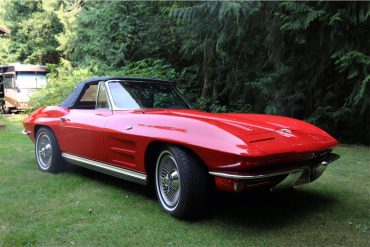
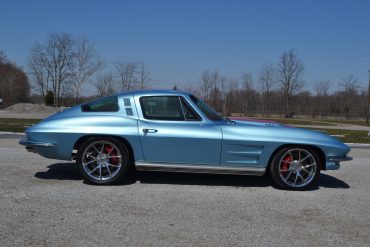


The C2s the site has listed for sale, newest first: owners’ cars, dealer stock and the auction consignments worth watching, with the asking price and what we make of it. The for-sale page has every Corvette the site is following and the auctions tag the results.
It depends on what the car is for. For a driver, a 1965–67 for the four-wheel disc brakes and the L79 engine option, with the 1964 the value year if you can live with drums; for the icon, a 1963 coupe; for the collection, a documented fuelie or 427, with 1967 the most valuable year at every level. The engine matters more than the year: a 1964 fuelie is worth more than a 1967 300-horsepower car, and an L79 four-speed is the sweet spot of the whole generation for someone who wants to drive it.
If you want one answer: a 1965–67 L79 or 300-horsepower four-speed coupe in an original color with a clean birdcage and its paperwork. It is the C2 that does everything, it is the easiest to resell, and it costs a third of a Tri-Power.
From about $20,000 for a project to $18.7 million for a Grand Sport, which is why the price ladder on this page has five tiers. In the results the site tracked in September and October 2026, driver-grade 300-horsepower cars ran $45,000 to $75,000; L79s, 1964–65 fuelies and L36 427s $75,000 to $135,000; 1963 split-window coupes, 1966 L72s and 1967 L71 Tri-Power cars $135,000 to $300,000 with dealers asking more; and the L88s, Z06 tankers and Grand Sports sell in the millions.
Every figure moves and every figure depends on documentation, so use the year pages, which carry the current results for each year, and check whether an auction result includes the buyer’s premium.
Start at the engine pad on the front of the block: the suffix code must match the engine the car claims, the pad should show its original broach marks rather than a smooth decked surface, the VIN derivative should match the car, and the block casting date on the bellhousing flange must come before the car’s build date. Then the parts: a fuelie needs the right-series Rochester unit, an L72 or L71 the four-bolt block and the correct intake and carburetion, an L89 or L88 the aluminum heads with the right casting numbers, and a big block a Tonawanda “T” prefix. Then the paperwork: the trim tag, a tank sticker or Protect-O-Plate, NCRS judging sheets with dates and scores.
For a Z06 or an L88, the registry and the documentation are the car: all twenty 1967 L88s are known by VIN, and every Z06 part has been reproduced. The verification table above gives the codes year by year, and the year pages have the full lists. When in doubt, pay an NCRS judge for an afternoon.
Rust in the steel birdcage under the fiberglass (the windshield frame, the door hinge pillars and, on coupes, the rear window frame) and in the ladder frame at the rear kickups and trailing-arm mounts are the expensive ones and the first things to inspect. After those: worn trailing-arm bushings and half-shaft U-joints, weeping four-piston calipers on 1965–67 cars, fuel-injection units that need a specialist, Tri-Power linkage and diaphragms on 1967s, big blocks that run hot when the radiator and shroud are tired, stripped headlight-motor gears, accident repairs hidden in the bonding strips, and fiberglass stress cracks.
All of them are known, documented and fixable at a known price except the structure, which is why the inspection on this page starts there. The common-issues posts for each year go deeper.
It has been the blue-chip Corvette for forty years and the ingredients have not changed: the shortest run of any generation, the most desirable shape, the first of everything, and a shrinking supply of real documented cars. Driver-grade cars have tracked the collector market and held their value through every cycle; documented fuelies, big blocks and 1963 coupes have appreciated; the L88s and the Grand Sports keep setting records.
Realistic expectations: steady appreciation at the documented end, stability below it, and nothing at all for a tribute bought at a real car’s price or a restomod bought as an asset rather than as a car to drive. The best risk-and-reward in the generation is a documented L79 coupe or a 1964–65 fuelie, real cars with real paperwork priced well below the 427s. Buy the car you want and let the market be a bonus.
Buy for how you will use it. A numbers-matching car with its original drivetrain and color is the one collectors, judges and the resale market want, and it brings 20 to 30 percent more than the same car altered; on a fuelie or a big block the originality is most of the value. A non-matching driver, a correct-looking car with a later crate 350, or a mild restomod with modern brakes and overdrive is a better car to drive for less money, as long as it is priced as what it is.
The two mistakes are paying a matching-numbers price for a car that is not, which the engine pad and the castings will tell you, and buying a restomod as an investment: restomods sell on their build to a different buyer and do not follow the collector market. A color change is the one modification that hurts resale on every C2, however well done.
As an object and as an investment, yes: it is the single most recognizable Corvette, one year only, and it has led the small-block C2 market for decades, with original and correctly restored coupes selling for $170,000 to $250,000 in the site’s tracked results and restomods for as much or more. As a car to drive, no: a 1963 has drum brakes, the 1963-only three-speed and T-10 four-speed, the least developed suspension of the five years and the hot, blind coupe cabin, and a 1964 coupe with one-piece glass is the same car for a third less.
If you buy one, buy the window first. Many split-window coupes were converted to 1964-style one-piece glass in the 1960s and many have been converted back since, so a 1963 coupe is verified at the rear window structure before anything else, and a 1964 re-bodied as a 1963 is the generation’s oldest trick.
Coupes carry a premium over convertibles in every year, biggest in 1963 and smallest in 1964–65, because fewer were built (45,546 against 72,418), because the fastback is the design icon, and because the collector market has always preferred them. Convertibles are the better car to drive in summer, the worse one on the highway, and the entry point to every tier of the market; a convertible with its original auxiliary hardtop is worth more than one without.
A coupe is also the body with more to inspect: the rear window frame is a birdcage rust point, the roof vents on 1963–65 cars leak, and a 1963 coupe has the split window to verify. Buy the coupe for the shape and the value, the convertible for the price and the summer.
A sorted car on a few thousand miles a year costs $1,500 to $3,000 in parts and labor at an independent shop that knows the cars, plus a classic-car policy on an agreed value, which is cheap, and dry storage, which is not optional. Every mechanical part is reproduced and a small block or a hydraulic big block is easy to service; a fuelie, a Tri-Power or a solid-lifter engine wants a specialist and costs more to keep right.
The big bills are structural and specialist: a birdcage or frame repair, a correct repaint on properly prepared fiberglass, a fuel-injection rebuild, a numbers-correct rebuild of a solid-lifter 427. Buy the car that has had them done with the receipts rather than the cheaper one that will need them, and budget a first-year refresh of tires, brakes, fuel system and fluids on anything that has sat.
The for-sale section above and the site’s for-sale page gather the C2s we are following from owners, dealers and the auctions, newest first, with what we make of each asking price. The year pages carry the current tracked results for each year, the auctions tag has the sale-by-sale coverage, and the wholesale market reports follow what dealers pay in the lanes. Classic.com, Bring a Trailer, Mecum, Barrett-Jackson, Hagerty and the NCRS classifieds are the places the cars change hands.
Use the results, not the asking prices, and remember that a Sting Ray listed at a number is not a Sting Ray worth the number: dealers were asking $290,000 for 1967 L71s in October 2026 while the same cars were selling for $111,000 to $185,000 at auction.