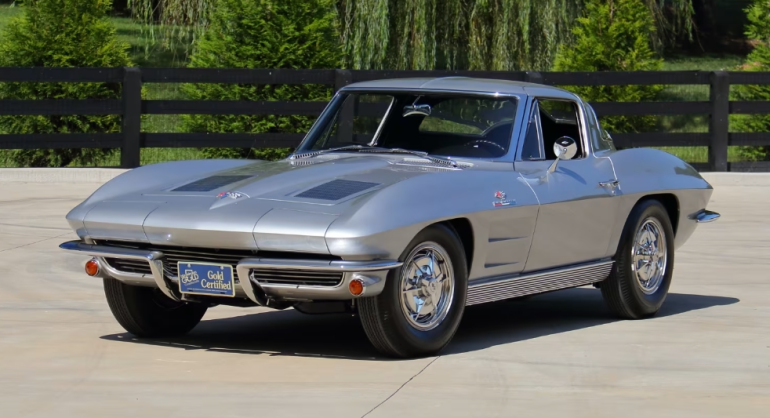
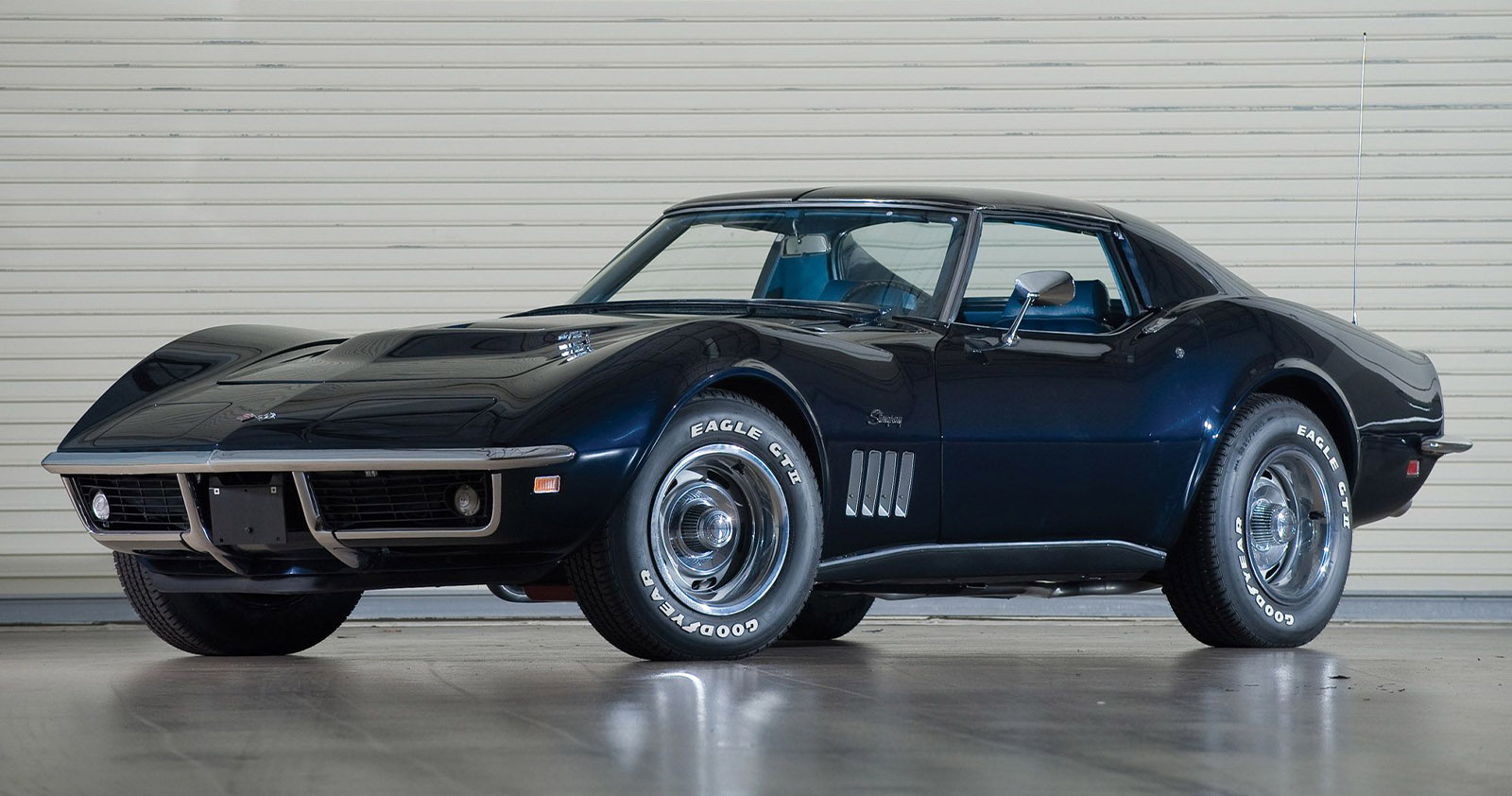
Our top Split Window Coupe for 2025! Photo Credit: Mecum
The 1963 Corvette Split Window Coupe stands alone in Corvette history—a one-year-only design decision so bold, so controversial, that it instantly became legend. In a single model year, Chevrolet introduced the all-new second-generation Corvette and, just as quickly, walked away from its most dramatic styling feature: the split rear window. For today’s market feature, CorvSport kept the lens “pure,” eliminating customs and restomods to focus strictly on authentic, factory-correct Split Window Coupes. What remains is a story of rarity, ambition, and a design that dared to put form over function—only to be cancelled almost as soon as the public laid eyes on it.
A Radical Break From The C1, And The Birth Of The Spine
1963 was not just a redesign—it was a revolution. The C2 Sting Ray marked the first clean-sheet Corvette since the original, carrying over only its engine while everything beneath and above it changed. Zora Arkus-Duntov engineered an entirely new chassis, featuring a fully independent rear suspension that transformed ride quality, traction, and stability. Weight distribution shifted to a more balanced 48/52 percent, a meaningful improvement over the C1’s 53/47 split. Shorter wheelbase, revised track, and modern suspension geometry signaled that the Corvette was no longer just America’s sports car—it was a world-class one. And visually, it arrived with a statement down the middle.
What Were They Thinking? Form Over Function Takes Center Stage
That statement—the now-iconic rear window spine—was the brainchild of Bill Mitchell, General Motors’ Vice President of Design, and his young prodigy, Peter Brock. At just 19 years old and still a student at ArtCenter, Brock sketched the foundation of what would become the Sting Ray in November 1957. Influenced by European exotics like the Bugatti 57SC Atlantique and experimental concepts such as Harley Earl’s Golden Rocket, Mitchell insisted on a spine motif that ran through the car—right through the rear glass. Larry Shinoda helped translate those ideas into clay and metal, refining the shape into something dramatic, muscular, and unforgettable. But while the coupe created a sensation, the split window itself quickly became a lightning rod for criticism.
This is an early full-size clay that combined the Stingray Racer in a coupe configuration. Tufts of yarn were taped to a pre-production Sting Ray Coupe body to see how air flowed over the surface while in the wind tunnel. While designers were focused on how air flowed OVER the String Ray, there was no attention to how air flowed UNDER the car. This caused a front-end lift that got worse the faster the car went. Image Credit: GM Archives
Praise, Pushback, And A Design Error That Made History
The complaints were loud and immediate. Poor rear visibility wasn’t just inconvenient—it was seen as unsafe. Some dealers even replaced split windows with single-pane glass at customer request. Zora Arkus-Duntov strongly opposed the design from the start, valuing function over visual drama, and within a year, he won the argument. When the 1964 coupe arrived, the split was gone. Ironically, that cancellation transformed the 1963 coupe into instant mythology. With Chevrolet producing just 21,513 Sting Rays total for the model year—and only a portion of those being coupes—the Split Window became a one-year unicorn. Demand was so strong in 1963 that Chevrolet added an extra shift at the St. Louis plant, yet the design still didn’t survive past its debut.
Join 45,000+ Corvette Owners Who Read Our Newsletter
Our newsletter delivers all the Vette news, rumors, deals and events directly to you each week
Members only$35 / year
Keep going. This is where it gets good.
CorvSport Membership is for people who'd rather spend an hour inside one engine option than skim ten headlines. The rest of this story — and every other one like it — is a few seconds away.
Every members-only story
Deep history, market reports, buyer's guides, and the full archive back to 2010.
No ads. None.
The whole site reads like a magazine, on every device.
Every model year, 1953 to today
Production numbers, VINs, RPO codes, colors, options — one page per year.
30% off the shop
Every CorvSport shirt and piece of merch, all year.