C6 Corvette Grand Sport (2010–2013): The Complete Guide Quick Nav: The Story...


CORVETTE BUYER’S GUIDES
Buying a 2005–13 Corvette? This guide covers the nine years and the five models, what each costs in today’s market from the results the site tracks, the best buys and the ones to leave alone, the LS7 valve-guide question, what else goes wrong and the full inspection, with the model guides and the cars for sale beside it.
Quick Nav: Overview · Why Buy · Year by Year · Year Details · Variants · Values · Price Ladder · What Moves the Price · Model Guides · Driving · Costs to Own · Aftermarket · Considerations · Problems · Inspection · Verification · Market Reports · For Sale · FAQs
The Car: The sixth-generation Corvette, 2005–2013: the C5’s hydroformed frame and rear transaxle under a tighter body with exposed headlamps, in five models by the end: coupe, convertible, Z06, ZR1, Grand Sport, plus the one-year 427 Convertible
Years and Built: 215,123 over nine model years: 37,372 / 34,021 / 40,561 / 35,310 / 16,956 / 12,194 / 13,596 / 11,647 / 13,466; 27,994 Z06s, 4,684 ZR1s, 28,004 Grand Sports, 2,552 427 Convertibles
Engines: 6.0 L LS2, 400 hp (2005–07); 6.2 L LS3, 430 hp, 436 with the dual-mode exhaust (2008–13); 7.0 L LS7, 505 hp, hand-built at Wixom (Z06 2006–13, 427 Convertible 2013); 6.2 L supercharged LS9, 638 hp (ZR1 2009–13)
Transmissions: Tremec six-speed manual (T56, then TR6060 from 2006); four-speed automatic in 2005, six-speed paddle-shift automatic from 2006; the Z06, ZR1 and 427 Convertible manual only
What One Costs Today: Clean coupes and convertibles $17,500–$30,000 and high-mileage cars from $10,000; Grand Sports $29,000–$61,000 (benchmark $40,635); Z06s $38,000–$57,000 driven, $69,000–$82,500 at delivery mileage; 427 Convertibles $45,000–$93,500; Carbon Limited Editions to $123,750; ZR1s $74,000–$151,250 (benchmark $100,221). Results tracked October 2025–October 2026
The Pick: A 2010–13 Grand Sport six-speed coupe for the money, a Z06 with head paperwork for the pace, a ZR1 for the keeper; a 2005 is the cheapest 400-hp Corvette made
Related: The C6 hub, the nine year pages, the C6 Z06, Grand Sport and ZR1 model pages, the special editions guide, the C6 bolt-on mods guide, the production, VIN and RPO pages
The C6 is the Corvette for someone who wants a track-capable car with 400 to 638 horsepower at a used-car price, and it has been that since the C7 arrived and the prices started down. It was an evolution of the C5 rather than a clean sheet: the same front-engine, rear-transaxle layout on the same hydroformed frame, with a tighter, more chiseled body (five inches shorter on a longer wheelbase), the first exposed headlamps since 1962, a modern interior with keyless access and push-button start, and an engine lineup that went from the 400-hp LS2 to the 430-hp LS3, the hand-built 505-hp LS7 in the Z06 and the 638-hp supercharged LS9 in the ZR1, the first six-figure Corvette.
That spread is what makes the C6 a different purchase from the C5 before it. A buyer is choosing between five models that share a body and little else: the coupe and convertible on the steel frame, the Z06 and ZR1 on an aluminum frame with carbon panels, the Grand Sport with the Z06’s wide body on the LS3, and a run of special editions (Ron Fellows, Pace Car, 427 Limited, GT1 Championship, Carbon, Centennial, 60th, the 427 Convertible) that the market now treats as collectibles. The Z06 and ZR1 were the first modern Corvettes to appreciate; delivery-mileage examples bring more than they cost new, while a tidy 2005 coupe costs less than a new compact car.
This guide covers all of it: the nine years and what changed, the models and editions, what each tier of the market costs from the results the site tracks on Classic.com, what moves the price, what the cars are like to drive and to own, the LS7 valve-guide question and the rest of the known problems, the inspection step by step, how to verify each year’s cars and editions, and the questions readers ask most. The year pages and the model pages go deeper on each car; this page is where to start.
Spring is here at long last, and you're ready to take the plunge and purchase a Corvette! You've pondered your choices and you are prepared to purchase a sixth-generation Corvette because you've seen the prices drop steadily since the C7 was introduced a few years back, and you recognize that the C6 is truly a track-capable beast that offers incredible power at an increasingly affordable price.
If this sounds like you, and if you are now trying to navigate the hundreds of sixth-generation Corvettes that are for sale to find the one that's right for you, then we've found each other at the perfect moment. If you're still considering your options - maybe even considering something other than a Corvette (gasp!) for your summer fun - then we've caught up with you just in time too!
For everyone else - from current C6 owners to prospective Corvette owners of any generation, this article is intended to provide some insight into the experience of Corvette ownership, and give you some valid reasons why a sixth-generation Corvette might be right for you!
The sixth-generation (C6) Corvette was introduced in 2005 as a follow-up to the wildly-successful fifth-generation platform. The fifth-generation Corvette, which had been first introduced in 1997, was the generation that catapulted the Corvette platform from moderate sports car to a vehicle that rivaled some of the best European sports cars on the market, and at a fraction of the price.
When developing the sixth-generation Corvette, Chevrolet adopted the mantra, If it ain't broke, don't fix it.
For all intents and purposes, the C6 wasn't a re-design or re-imaging of the earlier model, but rather an evolution of it. Everything that helped make the C5 platform a commercial success was carried forward into the new C6 model, and the rest of the design simply improved upon the earlier model, eliminating those flaws which were deemed outdated or undesirable.
Chevrolet retained the same front engine/rear transaxle design that had been introduced in the C5, and instead turned their focus to the car's body and exterior. Where the C5 featured a soft, rounded design on virtually every surface of the car, the C6 featured a more chiseled appearance with better defined surfaces. This included sharper-edge coves behind each of the front wheels, more defined bodylines throughout the platform, and steeper, more pronounced fender peaks like those previously seen on the third-generation Corvette.
The wheelbase of the C6 was increased to 105.7 inches (compared to the C5 Corvette's 104.5 inch wheelbase) but the car's overall length was actually decreased from 179.7 inches (C5) to 174.6 inches (C6.) This decision was made to make the platform more attractive to European customers as well as to reduce some of the bulk of the earlier design which would, in turn, aid in the car's overall performance.
The C6 was also the first Corvette to feature exposed headlights since the first-generation Corvette. While this design change was initially met with considerable resistance by Corvette enthusiasts, the decision was based on data captured from the racing program and proved to improve aerodynamics during more extreme driving conditions. Today, exposed headlights on a Corvette are commonplace, and several aftermarket manufacturers have even developed exposed headlight conversion kits for older-gen Corvettes. In 2005 however, (the year the C6 was introduced,) even loyal fans questioned Chevrolet's decision to break with more than 40 years of tradition.
When Chevrolet developed the sixth generation its mantra was “if it ain’t broke, don’t fix it”. The C5 had taken the Corvette from a moderate sports car to one that rivaled the best of Europe at a fraction of the price, and the C6 kept everything that made it work, the front-engine, rear-transaxle layout, the hydroformed frame, the composite body over a drivable chassis, and improved the rest. The body gained sharper edges, defined coves behind the front wheels and the fender peaks of a C3; the wheelbase grew to 105.7 inches while the car shrank from 179.7 to 174.6 inches, partly for European buyers and partly to cut bulk; and the headlamps were exposed for the first time since 1962, a decision the racing program drove for aerodynamics and the faithful argued about for a year before everyone got used to it.
A 2005 coupe has 400 horsepower, a six-speed and a chassis that ran with a C5 Z06 in Z51 form, and clean ones sell for less than $30,000. A 2008–13 LS3 car has 430 and the better interior for a few thousand more. A Grand Sport has the Z06’s wide body, brakes and wheels on the LS3 for the price of a coupe and a half. A Z06 is a hand-built 505-horsepower 427 in a 3,130-pound aluminum-framed car, and most of them trade in the $40,000s and $50,000s. A ZR1 was the first 200-mph Corvette and the first to cost six figures, and driven ones sell for less than they did new. Nothing else offers this much performance for this little, and the parts and know-how are everywhere.
The C6 is the first modern Corvette the collector market has taken seriously. The Z06 and ZR1 bottomed out years ago, and delivery-mileage cars now bring more than their stickers; the Carbon Limited Edition, the 427 Convertible, the Centennial and 60th Anniversary cars and the Ron Fellows and 427 Limited Z06s have their own Classic.com benchmarks well above the standard cars; and the 2009–13 model years, built in the bankruptcy and recession at the lowest volumes since the early 1960s, are scarce in a way no C5 is. A good C6 bought now is unlikely to be worth less in five years, which is more than can be said for most cars with 400 horsepower.
An LS2 or LS3 is a pushrod small block that any competent shop can service, parts are shared across 215,000 cars and the aftermarket is enormous; the companion guide to C6 bolt-on mods shows how far an LS3 goes for little money. The known problems are known: the LS7’s exhaust-valve guides on the Z06, the electronic column lock on early cars, the roof panel bond, the headlamps that yellow, the dash that bubbles, the tires that last 15,000 miles. None of them is a reason not to buy a C6; all of them are a reason to buy the right one, which is what the rest of this guide is about.
MORE: THE C6 HUB / THE C6 Z06 / THE C6 GRAND SPORT / THE C6 ZR1 / C6 BOLT-ON MODS
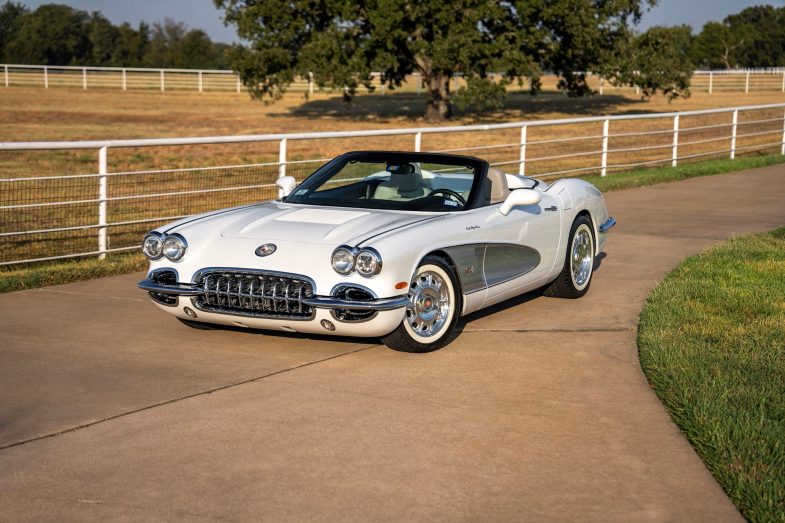
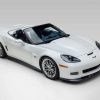
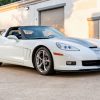
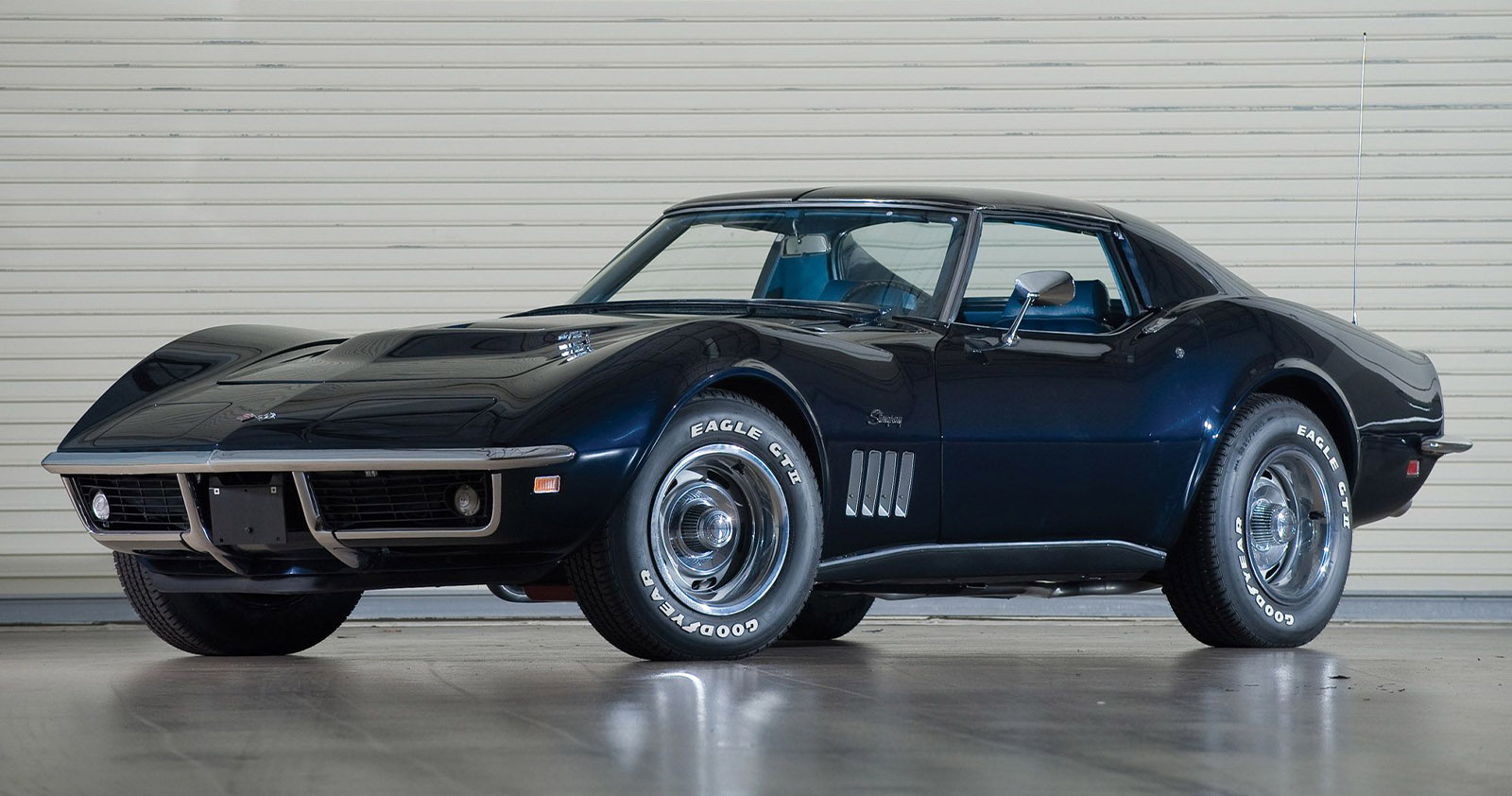
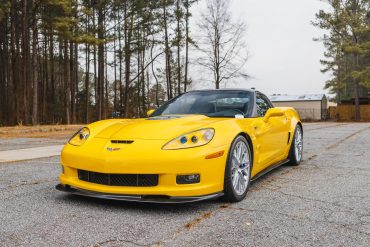
 2011 Corvette Grand Sport
 2006 Corvette Z06 cutaway view.
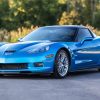
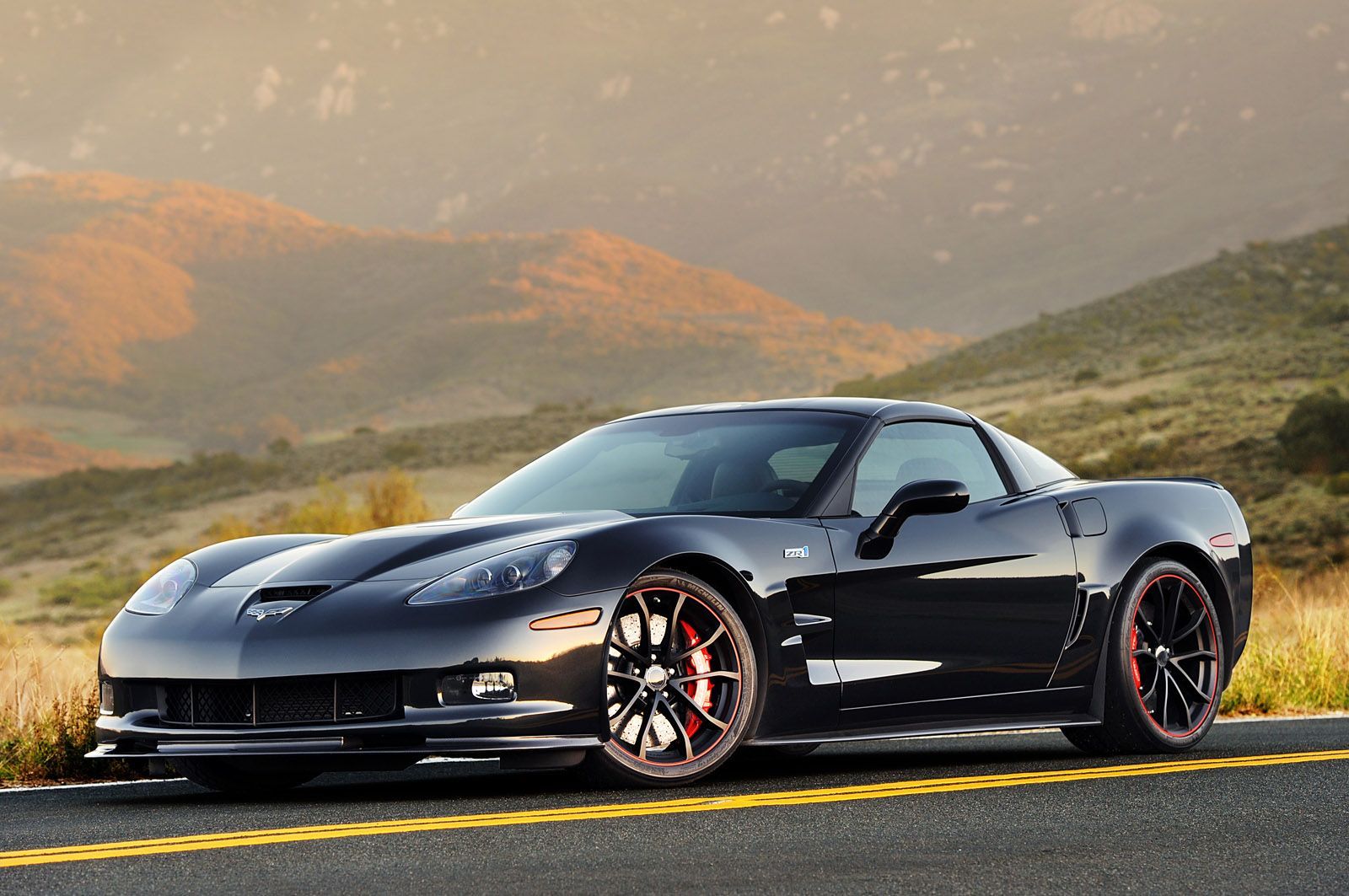
 The 2009 Corvette ZR1
 The C6 Corvette (right) was actually an evolution of the C5 Corvette (left.) Many consumers believed that the C5 was the pinnacle of all Corvettes and doubted that Chevrolet would be able to top itself with the next-generation model. What do you think?
The C6 changed in steps: the LS2 years (2005–07) with the Z06 arriving in 2006, the LS3 years from 2008, the ZR1 in 2009, the Grand Sport in 2010, and the special editions of the last three years as production fell to the lowest levels since 1961. The table gives what changed, the production, the engines and the verdict for each; the year pages have the full story, the specs, the options, the colors and the current market for that year.
Three rules hold across all nine. The model matters more than the year: a 2006 Z06 is worth more than a 2013 coupe. Mileage counts for more than the year within a model, and the six-speed adds to everything except the ZR1, which only came with one. And the 2008-on LS3 cars are the ones to buy among the coupes and convertibles, for the extra 30 horsepower, the later interior and prices only a little above the LS2 cars.
MORE: THE 2005 PAGE / THE 2006 PAGE / THE 2007 PAGE / THE 2008 PAGE / THE 2009 PAGE / THE 2010 PAGE / THE 2011 PAGE / THE 2012 PAGE / THE 2013 PAGE / THE C6 HUB
| YEAR | WHAT CHANGED | BUILT | ENGINES | THE VERDICT |
|---|---|---|---|---|
| 2005 | All new on the C5’s frame: five inches shorter on a 105.7-inch wheelbase, exposed headlamps, keyless access and push-button start, electric door releases, a power-closing hatch, navigation available, a power convertible top; the 400-hp LS2; standard, Magnetic Selective Ride Control or Z51 suspension; six-speed manual or four-speed automatic. Coupe and convertible only. | 37,372 | 364 ci (6.0 L) LS2 V-8, 400 hp and 400 lb-ft, standard on every car | The entry ticket: the first year, the lowest prices and the cheapest 400-hp Corvette made. Buy a six-speed Z51 with 1SB; check the column lock and the roof bond. |
| 2006 | The Z06 returns: 505-hp 7.0-liter LS7 with a dry sump, aluminum frame, carbon fenders, fixed roof, manual only, $65,800. Coupe and convertible get the six-speed paddle-shift automatic, XM radio with Bose, Velocity Yellow and Monterey Red. | 34,021 | 364 ci (6.0 L) LS2, 400 hp and 400 lb-ft (coupe, convertible); Z06: 427 ci (7.0 L) LS7, 505 hp and 470 lb-ft, hand-built in Wixom | The year the market splits: the Z06 is the collector car in the making (ask about the valve guides), the coupe and convertible are 2005s with the paddle-shift automatic. |
| 2007 | A carryover year with steering-wheel radio controls, two-tone seats and chrome wheels; the Ron Fellows ALMS GT1 Champion Z06 (399, Arctic White, the first signed factory Corvette) and the Atomic Orange Indy 500 Pace Car Replica convertible (500). Z06 price rises to $70,000. | 40,561 | 364 ci (6.0 L) LS2, 400 hp and 400 lb-ft (coupe, convertible); Z06: 427 ci (7.0 L) LS7, 505 hp and 470 lb-ft | The Z06’s volume year and its first collectible, the Ron Fellows; the Pace Car Replica is the convertible to keep. The most C6s built in a year. |
| 2008 | The 6.2-liter LS3 replaces the LS2 (430 hp, 436 with the new dual-mode exhaust), split-spoke wheels, the revised console trim and metal sill plates, the 4LT leather-wrapped interior; the Crystal Red 427 Limited Edition Z06 (505, signed by Wil Cooksey), a black-and-silver Pace Car replica (500) and 500 Velocity Yellow Hertz ZHZ coupes. | 35,310 | 376 ci (6.2 L) LS3, 430 hp and 424 lb-ft, 436 and 428 with the NPP dual-mode exhaust (coupe, convertible); Z06: 427 ci (7.0 L) LS7, 505 hp and 470 lb-ft | The LS3 arrives: the coupe and convertible to buy among the pre-Grand Sport years. The 427 Limited Edition Z06 is the one to put away; mind the 500 Hertz rental cars. |
| 2009 | The ZR1: 638-hp supercharged LS9, carbon bodywork, carbon-ceramic brakes, 205 mph, $103,300. The Z06 gets a bigger dry sump and spider wheels, the LS3 cars Bluetooth and a 1LT convertible; GT1 Championship Edition (125), Competition Sport (72), 375 Hertz convertibles. Production falls to 16,956. | 16,956 | 376 ci (6.2 L) LS3, 430 hp / 436 with NPP (coupe, convertible); Z06: 427 ci LS7, 505 hp; ZR1: 376 ci supercharged LS9, 638 hp and 604 lb-ft, the most powerful GM production engine ever | The ZR1, now the collectible C6, and the lowest production since 1962. The Z06 gains the bigger dry sump; the GT1 Championship Editions are thin on the market. |
| 2010 | The Grand Sport returns: the Z06’s wide body, brakes and wheels on the LS3, coupe or convertible, with a dry-sump engine and rear battery on manual coupes; launch control on every manual, side airbags on every car, Performance Traction Management on the ZR1. The fewest built since 1961. | 12,194 | 376 ci (6.2 L) LS3, 430 hp / 436 with NPP (coupe, convertible, Grand Sport); Z06: 427 ci LS7, 505 hp; ZR1: 376 ci supercharged LS9, 638 hp | The Grand Sport returns and is the C6 most people should buy: a manual coupe with the dry-sump LS3 above all. The 518 Z06s are the rarest C6 Z06 year. |
| 2011 | The Z07 Ultimate Performance Package (carbon-ceramic brakes, Magnetic Ride, 20-spoke wheels) and the CFZ carbon package for the Z06, combined in the Z06 Carbon Limited Edition (252, Supersonic Blue or Inferno Orange); Magnetic Ride optional on the Grand Sport; larger cross-drilled rotors on the base car. | 13,596 | 376 ci (6.2 L) LS3, 430 hp / 436 with NPP (coupe, convertible, Grand Sport); Z06: 427 ci LS7, 505 hp; ZR1: 376 ci supercharged LS9, 638 hp | The Z07 package and the Carbon Limited Edition (252 built) for the Z06; a Z07 standard Z06 is the value, a Grand Sport with Magnetic Ride the spec to look for. |
| 2012 | New seats and steering wheel; the Centennial Edition on all six models in Carbon Flash Metallic with satin-black wheels, red calipers, Louis Chevrolet badges and red stitching (2,201 built); Cup tires on the Z07 Z06 and the new PDE ZR1; full-length spoiler and carbon hood options for the Z06. | 11,647 | 376 ci (6.2 L) LS3, 430 hp / 436 with NPP (coupe, convertible, Grand Sport); Z06: 427 ci LS7, 505 hp; ZR1: 376 ci supercharged LS9, 638 hp | The Centennial Edition on every model and the new seats that fixed the C6’s oldest complaint; the most comfortable C6 to drive far. The second-lowest total. |
| 2013 | The 427 Convertible Collector Edition: the Z06’s LS7 and wide body in a convertible, manual only (2,552); the 60th Anniversary Design Package in Arctic White with Blue Diamond leather (2,059); “60 Years” badges on every car; Night Race Blue; black wheels. The last C6 left Bowling Green on February 28, 2013. | 13,466 | 376 ci (6.2 L) LS3, 430 hp / 436 with NPP (coupe, convertible, Grand Sport); 427 ci (7.0 L) LS7, 505 hp (427 Convertible, Z06); 376 ci supercharged LS9, 638 hp (ZR1) | The last year: the 427 Convertible (2,552) and the 60th Anniversary package, with the 60th 427 the collectible of the generation’s last years. Every 2013 wears 60th badges. |
The table gives the headlines; this is the detail a buyer uses at the viewing, with the production breakdown by model for each year, from the site’s original C6 buyer’s guide. The year pages carry the full specifications, options, colors and production for each (and GM’s final counts where these differ), and the model pages the Z06, Grand Sport and ZR1 in depth.
2005 was the inaugural year for the C6 Corvette. For its first year, the Corvette was only offered as a coupe or convertible in base trim. The car included a number of new features over the outgoing C5 including push button start, an available navigation system, electric door releases, an improved interior, a power-closed rear hatch and exposed headlights.
Where the outgoing C5 featured an LS1 engine that produced 350 horsepower, the 2005 C6 introduced the LS2 engine, which increased the Corvette's engine output to 400 horsepower. The 2005 Corvette was offered with either a manual or automatic transmission. Even after its initial introduction in 2005, most automotive critics agreed that the 2005 Corvette was superior in performance and handling over its fifth-generation predecessor.
The C6's suspension package was revised and calibrated to provide excellent handling and a comfortable ride. Three suspension packages were offered:
The standard suspension which featured a careful balance between comfort and handling,
The selectable Magnetic Selective Ride Control, which gave drivers the option to adjust how the car handled via a selector switch mounted on the car's center console,
The Z51 Performance package, which provided the new Corvette a level of suspension and handling on par with the outgoing C5 Z06 Corvette.
Chevrolet built a total of 37,372 ‘Corvettes during the 2005 model year including 26,728 Coupes and 10,644 Convertibles.
While there were few additions to the 2006 model year, the option that were added included a 6-speed automatic transmission with paddle shifters and XM Satellite Radio in Corvettes equipped with a Bose stereo system. Additionally, two new colors were introduced for 2006 - Velocity Yellow and Monterey Red Metallic.
The big announcement for the 2006 model year was the return of the highly-anticipated Z06 Corvette. The Z06 featured a 7.0 liter, 427 cubic inch LS7 small-block V8 engine rated at 505 horsepower and 470 lb-ft of torque. When introduced in 2006, it was the most powerful production Corvette available on the market. It was also a fixed-roof Corvette (unlike the base coupe model, all of which have a removable top) for added structural rigidity and improved aerodynamics.
Total production for 2006 was 34,021 units, of which 16,598 were coupes, 11,151 were convertible and 6,272 were Z06 edition Corvettes.
The 2007 model year saw few changes to any of the available Corvette models. A couple of new options were introduced including steering-wheel-mounted radio controls on the right spoke of the steering wheel. These controls enabled drivers to adjust volume, seek radio channels up and down the AM and FM bands, and to scroll thru selected preset stations.
Two limited-edition Corvettes were introduced in 2007:
The Ron Fellows ALMS (American Le Mans Series) GT1 Z06 Corvette which was built to honor famed Corvette Racing driver Ron Fellows. It was the first-to-be-signed special-edition Corvette in the history of the brand - with each unit carrying Ron Fellows autograph. The car was finished in Arctic White with a Monterey Red interior, fender stripes and trim.
The second was the Indy Pace Car Replica Corvette. This special edition model was limited to 500 units and was finished in Atomic Orange.
For 2007, a total of 40,561 Corvettes were built, including a total of 21,484 coupes, 10,918 convertibles and 8,159 Z06 Corvettes.
The most significant update to the 2008 model year was the introduction of the LS3 engine to all base model coupes and convertibles. The LS3 increased engine size from a 6.0L to a 6.2L V8, and increased engine output from 400 horsepower and 400 lb-ft of torque to 430 horsepower and 424 lb-ft of torque.
The 2008 also featured a new split-spoke wheel package on coupes and convertibles. An optional five-spoke wheel was also offered for the 2008 model year. The wheels came in a number of color options including Competition Gray, a polished finish or a chromed finish.
The interior of the 2008 Corvette also received some upgraded trim. All models received a revised cybergraphic pattern console trim plate, bright surrounds for the cupholder and manual shifter and brushed aluminum shifter and door release trim. Metal door sill plates were new (introduced late in 2007), and the floor mat retainers were simplified.
Lastly - this is an important item for anyone considering a 2008 Corvette - Hertz Fun Rental division ordered 500 RPO ZHZ Corvette coupes for the vehicle rental program. All 500 of these cars were finished in Velocity Yellow with black stripes and featured seven-spoke chrome wheels. (NOTE: These Corvettes are often available for sale across the country and may be listed at a lower asking price than other Corvettes. Please remember that these vehicles were used as part of Hertz's rental fleet and may have been prone to more aggressive drivers than privately owned Corvettes.)
The most notable addition to the 2009 line-up was the introduction of the new Corvette ZR1.
The program had been announced by General Motors in December, 2007 and began production for the 2008 model year.
The car featured a supercharged LS9 engine which was rated at 638 horsepower. While the engine carried the same displacement as the LS3 engine (6.2 Liters), the LS9 was a new design with a 10.5-quart dry-sump oil lubrication system and an Eaton supercharger that pumped out 638 horsepower and 604 lb-ft of torque, making the LS9 the most powerful production engine ever built by General Motors.
The 2009 ZR1 Corvette was also the first Corvette in the brand's history to carry a price tag of more than $100,000. Despite this sizable price tag, both Corvette enthusiasts and the automotive press recognized that the car was a bargain for the amount of power it produced, and it quickly became accepted as the new King of the Hill throughout the Corvette community.
Despite being widely accepted by fans and the press, the 2009 ZR1 Corvette accounted for just over 10% of total Corvette sales that year. In fact, all Corvette sales dropped by almost 50% over the previous model year with a total of just 16,956 units sold in 2009. Of these, 8,737 were coupes, 3,343 were convertibles, 4,400 were Z06's and just 1,847 were ZR1 Corvettes.
The 2010 model year saw the return of another Corvette moniker which had been absent since 1996.
The Grand Sport model, which was essentially a wide-body version of the base coupe with most of the styling/design cues of the Z06 was introduced as yet another alternative to the ever-growing Corvette stable. Although the Grand Sport featured the same 6.2 liter LS3 as the base coupe and convertible, the car provided owners with the Z51 suspension package that had been an option on older variants of the C6 as well as the a number of styling tweaks. Arguably, the Grand Sport model was one of the best looking Corvettes of the C6-generation.
As in 2009, unit sales of the 2010 Corvette continued to decline significantly over the previous year. For 2010, a total of just 12,194 units were sold, which included 3,053 coupes, 3,703 Grand Sport coupes, 1,003 Grand Sport convertibles, 518 Z06's and 1,577 ZR1 Corvettes.
Little changed for the 2011 model year. There were a few additions including larger, cross-drilled brake rotors (13.4 inches in the front and 12.8 inches in the rear) which were offered as an option on the Corvette coupe and convertible, or included as part of the Magnetic Selective Ride Control package (RPO F55). Z06 Corvettes included the Z07 performance package.
The 2011 model year introduced another special edition model - the Corvette Z06 Carbon Limited Edition. This latest entry into the special-edition portion of the collector’s market was designed to celebrate Corvette’s 50th anniversary at Le Mans.
The Z06 Carbon Limited Edition Corvette featured the Z07 Performance Package, plus the introduction of a painted carbon fiber raised hood, a carbon fiber splitter and rockers. The cars mirrors and headlights were finished in black, and the exterior of all of the Carbon Limited Edition Corvettes were finished either in Supersonic Blue or Inferno Orange. The interiors of both cars included matching body-color stitching.
Sales improved just marginally over the 2010 model year with a total of 13,956 units which included 3,112 coupes, 780 convertibles, 5,212 Grand Sport coupes, 2,782 Grand Sport convertibles, 904 Z06's and 1,720 ZR1 Corvettes.
Although the seventh-generation Corvette Stingray was still two years away, GM's focus on the next-generation Corvette's development meant less time and effort was invested in refining the current-generation Corvette.
While the changes to the 2012 model year were somewhat limited, the base model Corvettes did receive and upgraded interior with improved driver and passenger seats. The Z06 model was offered to consumers with an optional full-length rear spoiler and carbon fiber hood options. It also received new wheels as part of the Z07 Performance Package. The ZR1 received an optional performance package and revised gear ratios.
The most significant product development for 2012 was the introduction of a Centennial Edition Corvette, which was available to consumers in all variants of the car, including the base coupe and convertible, as well as the Grand Sport, Z06 and the ZR1.
The Centennial Edition came finished exclusively in a Carbon Flash Metallic finish with satin-black graphics. Special badging graphics signifying Chevrolet’s racing history - including an image of Louis Chevrolet on the B-pillars - were added as accents to the cars finish. The number “100” replaced the traditional fluer-de-lis symbol on many of the Corvette hood and rear bumper emblems, but only on cars built with the Centennial Edition package.
The wheels were also finished in a satin black, and were sized specifically to the respective Corvette models – 18-inch front and 19-inch rear for the Coupe, Convertible and Grand Sport, and 19-inch front and 20-inch rears for the Z06 and ZR1 models. All models also received red brake calipers.
With the imminent arrival of the C7 Corvette just over a year in the future, sales of the 2012 Corvette were down once more. For 2012, Chevrolet sold just 11,467 Corvettes, which was approximately 25% of the total units sold just five year earlier in 2007. Of these, 2,820 were base coupes, 5,056 were Grand Sport coupes, 621 base convertibles, 2,268 Grand Sport convertibles, 478 Z06's and just 404 ZR1 Corvettes.
The 2013 model year marked the final year for the sixth-generation Corvette. It's arrival was greeted with a lot of grandeur by Corvette owners and enthusiasts around the world, partly because it marked the 60th anniversary of Corvette and partly because it was the C6's swan song, meaning that the C7 was about to become a reality.
Ultimately, the 2013 Corvette represented the pinnacle of the C6 generation, and in keeping with tradition of earlier generations that had come and gone before it, the final C6 Corvette would celebrate its departure with a very special, “special edition” model.
Evoking the heritage of early 427-powered Corvettes from generations past, the 427 Convertible Collection Edition model was built to take Corvette convertible performance to an entirely new level. It combined the convertible found in the base model and Grand Sport editions with elements from the Z06 and the ZR1 Corvettes, making it the fastest and most-capable convertible in Corvette’s history (at least until the introduction of the 2015 Z06 Corvette Convertible.) The car’s powertrain was the same as the Z06 coupe, including its 505 horsepower, 427 cubic-inch LS7 engine with dry sump. Also like the Z06 Corvette, the 427 Convertible was only offered with a manual transmission.
All Corvettes built in 2013, regardless of vehicle type or trim level, received special front and rear badging that replaced the fleur-de-lis portion of the crossed flags with a 60 Years logo. While a special 60 Years graphics package (RPO Z60) could be ordered that included optional side emblems on the front fenders and special floor mats with the 60th anniversary logo embroidered on them, GM included the special front and rear badging on all 2013 Corvettes to celebrate this significant milestone.
While the 2013 model year marked the end of the C6, it is interesting to note that the 2013 model year also offered five distinct models to consumers, the most models available in a single year in the history of the Corvette program. Sales remained flat in 2013 with a total of 13,466 units produced, including 2,597 base coupes, 4,908 Grand Sport coupes, 720 base convertibles, 1,736 Grand Sport convertibles, 2,552 427 convertibles, 471 Z06's and 482 ZR1 Corvettes.
MORE: 2005 / 2006 / 2007 / 2008 / 2009 / 2010 / 2011 / 2012 / 2013 / THE C6 TIMELINE
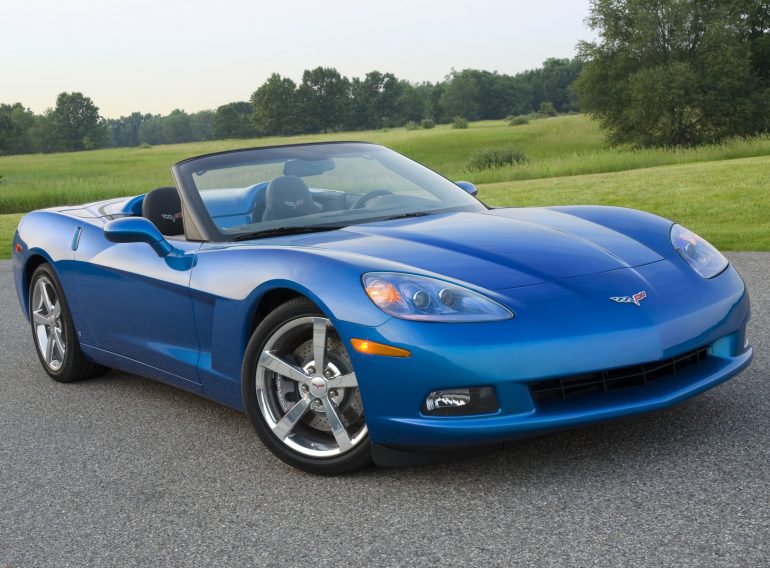 2005 Chevrolet Corvette
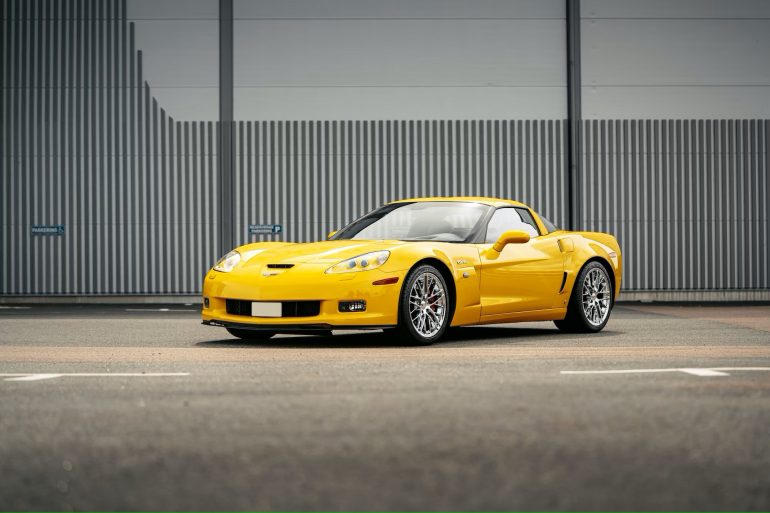
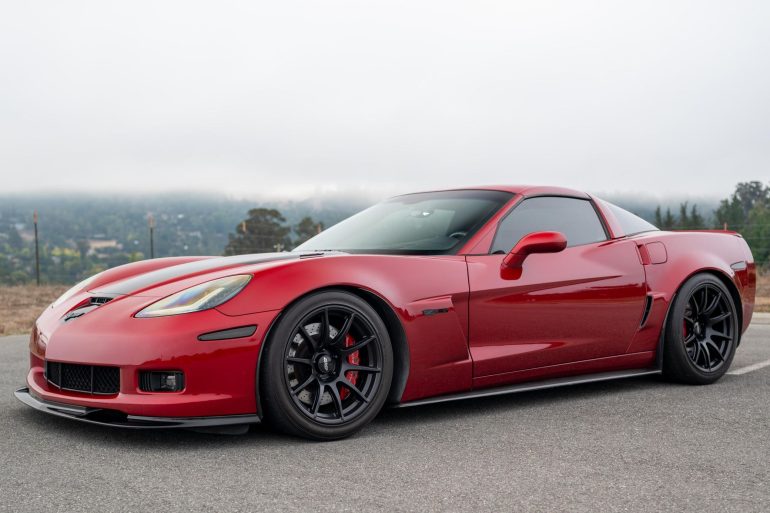
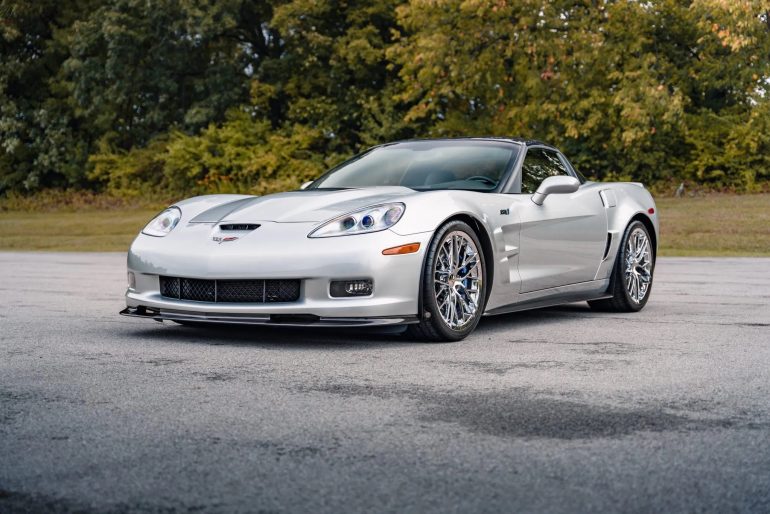

Five models share the C6 body and very little else, and the market prices them in order: ZR1, then the Carbon Limited Edition and the 427 Convertible, then the Z06 by year and edition, then the Grand Sport, then the coupes and convertibles by year and engine, with the 2005–07 LS2 cars at the bottom. The table sorts what was built into those tiers; the model pages carry the full guides to the Z06, the Grand Sport and the ZR1, and the specials guide every edition.
A note on the specials. Every one of them is verified by the service parts label in the console and, for most, a VIN list the site publishes: the graphics, badges, stripes and hash marks are all reproduced, the VIN and the label are not.
MORE: THE C6 Z06 GUIDE / THE C6 GRAND SPORT GUIDE / THE C6 ZR1 GUIDE / THE SPECIAL EDITIONS / EVERY C6 ENGINE
| MODEL OR EDITION | WHAT IT IS | BUILT | WHAT A BUYER SHOULD KNOW |
|---|---|---|---|
| Coupe | The hatchback coupe with the removable roof panel on the steel frame; LS2 to 2007, LS3 from 2008 | 88,194 | The volume car and the cheapest C6. A 2008–13 LS3 six-speed with Z51 (or F55) and 3LT/4LT is the one to want; a 2005–07 LS2 is the same chassis for less. Check the roof-panel bond and the column lock. |
| Convertible | The power-top convertible on the steel frame; 1LT trim from 2009 | 44,239 | A small premium over the coupe at the same mileage, less than its new-price gap. The power top’s trunk switch and hydraulics are its own inspection items; a 2007 Pace Car Replica is the collectible convertible of the early years. |
| Grand Sport (2010–13) | The Z06’s wide body, brakes, wheels and tires on the LS3; coupe or convertible; dry-sump engine and rear battery on manual coupes (Z52) | 28,004 | The C6 most people should buy: Z06 looks and chassis without the LS7’s valve-guide history, at a coupe-and-a-half price. The manual dry-sump coupe is the one enthusiasts want; the Heritage hash marks add a little. Benchmark $40,635. |
| Z06 (2006–13) | The 505-hp hand-built LS7 in a fixed-roof coupe on an aluminum frame with carbon fenders; manual only | 27,994 | The collector car in the making, trading on mileage first, then 2LZ/3LZ equipment, then color. The LS7’s exhaust-valve guides are the first question on any 2006–11 car; a documented head job or wiggle test sells a car. Benchmark about $48,600. |
| ZR1 (2009–13) | The 638-hp supercharged LS9, carbon bodywork, carbon-ceramic brakes, Magnetic Ride; manual only; PDE package from 2012 | 4,684 | The collectible C6 and the first 200-mph Corvette. Trades on mileage above all; delivery-mileage cars are a market apart above $120,000, driven cars $74,000–$110,000. The rotors (five figures) and the carbon panels are the walk-around checks. Benchmark $100,221. |
| 427 Convertible (2013) | The Z06’s LS7 and wide body in a convertible, manual only, with a 60th Anniversary version | 2,552 | The LS7 convertible that exists in one year and one count, and the 2013 the market wants. 60th cars have cleared $80,000–$93,500 at delivery mileage; driven cars trade in the $45,000s–$60,000s. Benchmark $63,280. |
| Ron Fellows Z06 (2007) | Arctic White with red fender hashes, Monterey Red trim and the driver’s signature; the first signed factory Corvette | 399 | Mechanically a standard Z06; carries roughly $5,000–$10,000 over one of the same mileage. The numbered, signed plaque and the site’s Z33 VIN list verify it; an unrepainted white nose matters. |
| Pace Car Replicas (2007, 2008) | 2007: Atomic Orange convertibles; 2008: black-and-silver coupes and convertibles, with Z51 and 3LT content | 500 + 500 | The collectible convertibles of the early years, mostly dealer-listed in the $30,000s and $40,000s; the only early C6 on which the automatic costs nothing. The site’s Z4Z posts list every VIN. |
| 427 Limited Edition Z06 (2008) | Crystal Red, 427 stripes and badges, Dark Titanium interior, chrome spider wheels, signed and numbered by Wil Cooksey | 505 | The collectible Z06 of the LS2/early LS3 years, about $10,000 over a standard Z06; recent sales $50,000–$58,500. The signature under the console lid and the Z44 VIN list verify it. |
| GT1 Championship Edition and Competition Sport (2009) | GT1: Velocity Yellow or black with Jake graphics on coupe, convertible or Z06; Competition Sport: the track-day coupe and Z06 | 125 + 72 | Thin on the market and hard to price; the graphics are reproduced and the VIN lists are not. Buy on the label and the documentation, not the decals. |
| Z06 Carbon Limited Edition (2011) | Z07 and CFZ together: carbon-ceramic brakes, Magnetic Ride, painted carbon hood, carbon splitter and rockers, Supersonic Blue or Inferno Orange, its own VIN series | 252 | The collectible Z06: driven cars from the mid-$60,000s, delivery-mileage cars above $120,000 (benchmark $86,277). A Z06 in either color with Z07 and CFZ but a standard VIN is a well-optioned Z06, not a Carbon. |
| Centennial (2012) and 60th Anniversary (2013) packages | Centennial: Carbon Flash with satin-black wheels, red calipers and Louis Chevrolet badges, on all six models; 60th: Arctic White with Blue Diamond leather, on any 2013 | 2,201 + 2,059 | A few thousand on a Grand Sport, the version collectors want on a Z06 or ZR1 (a Centennial ZR1 sold for $151,250). Neither has a VIN marker: the label (ZLC; Z25) is the proof, and both sets of badges are sold as accessories. |
| Hertz ZHZ (2008–09) | 500 Velocity Yellow coupes with black stripes (2008) and 375 convertibles (2009) built for Hertz’s rental fleet | 875 | A curiosity with a story and a hard early life; service history matters more than mileage. Cheaper asking prices are common, and so is the reason. |
The C6 market sorts by model first and mileage second, and the year matters less than either: a 2013 coupe and a 2006 coupe with the same miles trade within a few thousand dollars of each other, while a 2006 Z06 is worth twice a 2013 coupe. The six-speed adds to everything except the ZR1, which only came with one; the 2011–13 cars bring a small premium for the later interior and the low production of the bankruptcy years; and the special editions have their own benchmarks well above the cars they were built from. The Z06 and ZR1 were the first modern Corvettes to appreciate, and delivery-mileage examples now bring more than they cost new.
The results the site tracked on Classic.com between October 2025 and October 2026 show the spread. Coupes and convertibles sold for $10,250 (a 67,000-mile 2006) to $39,600, with most clean cars between $17,500 and $30,000 and the 2005 the cheapest 400-horsepower Corvette; Grand Sports for $28,750 to $61,000, most between $33,000 and $53,000 (benchmark $40,635); Z06s for $25,300 to $82,500, most driven cars between $38,000 and $57,000 and delivery-mileage cars $69,000 to $82,500 (benchmark about $48,600); Ron Fellows Z06s $49,500 to $55,000, 427 Limited Editions $50,000 to $58,500, Carbon Limited Editions $63,800 to $123,750 (benchmark $86,277); 427 Convertibles $45,000 to $93,500 (benchmark $63,280); and ZR1s $73,700 to $151,250, most between $88,500 and $130,000 (benchmark $100,221), with the Centennial and 60th Anniversary cars on top.
Two cautions that apply to every figure on this page. Auction figures are hammer prices, so add the buyer’s premium when comparing them with asking prices, and treat unsold high bids separately from completed sales: a Z06 bid to $40,000 without selling is not a $40,000 car. Dealers asked well above the auction results all year ($169,900 for a 2009 ZR1 against $73,700–$147,400 at auction). The year pages carry each year’s results, by model, and are updated as the site tracks new sales; the price ladder below puts the whole generation in five tiers.
MORE: 2005 MARKET / 2006 MARKET / 2007 MARKET / 2008 MARKET / 2009 MARKET / 2010 MARKET / 2011 MARKET / 2012 MARKET / 2013 MARKET / CORVETTE AUCTION COVERAGE
What the money buys at each level of the 2005–13 market, from the results above. The ranges are for the generation as a whole; within each tier the six-speed, the equipment group and above all the mileage move a car up or down, and a special edition sits a tier above the car it was built from.
$10,000 – $17,500
Coupes and convertibles over 100,000 miles, cars with salvage or rebuilt titles, tired ex-rental ZHZs and automatics with deferred maintenance. Recent sales: a 67,000-mile 2006 automatic at $10,250, a 118,000-mile 2005 six-speed at $14,850, a 198,000-mile 2009 at $14,232, with 100,000-mile-plus cars bid to $8,750–$14,500. A 400-horsepower car for compact-car money, if the column lock, roof bond and history check out.
$17,500 – $32,000
The bulk of the LS2 and LS3 coupes and convertibles with 20,000 to 70,000 miles, in both transmissions. Recent sales: 2005 six-speeds at $20,500–$29,000, 2006–07 automatics at $21,500–$33,000, 2008–09 LS3 cars at $22,000–$35,200. A 2008-on LS3 six-speed with Z51 and 3LT is the best buy in this tier and the most car per dollar in the whole Corvette market.
$30,000 – $55,000
The 2010–13 Grand Sports in both bodies, the lowest-mileage LS3 coupes and the Pace Car Replicas. Recent sales: Grand Sports at $28,750–$61,000 with most between $33,000 and $53,000 (benchmark $40,635), a 9,000-mile 2009 coupe at $40,150, a 3,000-mile 60th Grand Sport at $60,500. The manual dry-sump Grand Sport coupe with Magnetic Ride and 3LT is the pick of the generation for an owner.
$45,000 – $90,000
Driven Z06s of every year, the 427 Convertibles, the Ron Fellows and 427 Limited cars and the lower-mileage Carbons. Recent sales: Z06s at $38,000–$57,000 driven and $69,000–$82,500 at delivery mileage, 427 Convertibles at $47,000–$93,500, Ron Fellows at $49,500–$55,000, 427 Limiteds at $50,000–$58,500, Carbons from $63,800. Bought on the LS7’s head paperwork first.
$90,000 – $150,000+
The ZR1s, the delivery-mileage Carbon Limited Editions and the Centennial and 60th Anniversary ZR1s and Z06s. Recent sales: ZR1s at $73,700–$151,250 with most between $88,500 and $130,000 (benchmark $100,221), a 3,000-mile Centennial ZR1 at $151,250, a 60-mile 2009 at $147,400, a 33-mile Carbon at $123,750. Mileage sets the price more than any option; the rotors and the carbon are the checks.
The model. The ladder on this page is a model ladder: ZR1, then the Carbon and the 427 Convertible, then the Z06 by edition, then the Grand Sport, then the coupes and convertibles, with the LS2 cars at the bottom. The difference between a 2008 coupe and a 2008 Z06 of the same mileage is a factor of two; between the coupe and a ZR1 a factor of four.
Mileage. Within a model it counts for more than the year. Delivery-mileage Z06s and ZR1s are a market of their own, bringing more than they cost new, while the same car with 50,000 miles trades at half the price; on the coupes the gap is smaller but still the biggest single factor after the engine.
Transmission and equipment group. The six-speed adds to every car but the ZR1 (which only came with one) and the Pace Car Replicas (where the automatic costs nothing); 3LT/4LT and 2LZ/3LZ/3ZR add a few thousand and sell faster, and the 4LT leather-wrapped interior is the cure for the bubbling dash. Z51 or Magnetic Ride (F55) on a coupe, Z52 (the dry sump) on a Grand Sport, Z07 on a Z06 and PDE on a ZR1 are the performance codes that carry premiums.
Edition and documentation. The specials trade on their labels and VIN lists: the Ron Fellows and 427 Limited plaques and signatures, the Carbon’s VIN series, the Centennial’s ZLC code, the 60th’s Z25. Graphics, stripes and badges are all sold as accessories; the console service parts label and the window sticker are the proof, and a car with its original paperwork and a clean history report brings more than one without.
Condition of the known items. A Z06 with a documented head rebuild or a recent wiggle test sells faster and for more than one without, because every buyer knows the LS7’s history; a ZR1 with its original carbon-ceramic rotors measured and healthy saves the next owner a five-figure bill; a coupe with a sound roof bond, a clear column lock and clear headlamps is worth a premium over one that needs the work.
Color and year. Colors matter less than on the C5: Velocity Yellow, Atomic Orange, LeMans Blue and Jetstream Blue draw interest on a Z06 or ZR1, Carbon Flash and Arctic White belong to the editions, and silver and black are the discount colors. The 2009–13 cars, built at the lowest volumes since the early 1960s, bring a small premium that is likely to grow.
MORE: C6 COLORS BY YEAR / RPO CODES & OPTIONS / PRODUCTION NUMBERS
The C6 is the first modern Corvette the collector market has moved on, and the evidence is in the results: Z06s and ZR1s with delivery mileage now sell above their stickers, the Carbon Limited Edition carries a benchmark nearly double a standard Z06’s, the 427 Convertible sits between them, and the Centennial and 60th cars lead their models. The old post on this page predicted in 2018 that prices would keep falling as the C8 arrived; they did for the coupes, and then the performance models turned.
The realistic expectation is appreciation at the top and stability below it. A ZR1, a Carbon, a 427 Convertible or a low-mileage early Z06 bought at the 2026 results should hold and gain modestly, because the supply of unmodified, low-mileage cars shrinks every year and the C6 was the last Corvette with a hand-built, naturally aspirated 427 and a manual only. A Grand Sport or a Z06 with 30,000 miles should hold its value with inflation. A coupe or convertible is a used car that has finished depreciating: it will not lose much, and it will not gain much either.
The cars with the strongest case are the ones the next collector will want and can verify: a 2009 ZR1 with under 10,000 miles, a Carbon Limited Edition, a 60th Anniversary 427 Convertible with the stripes, a Ron Fellows or 427 Limited Z06 with its signature intact, and the 518 2010 Z06s. The weakest case is a modified car, a high-mileage Z06 without head paperwork, a Centennial that has been repainted, or an ex-rental ZHZ bought as a collectible rather than as a cheap yellow Corvette.
Buy the car you want to drive and let the market be a bonus. The site’s auction coverage and market reports track every notable C6 sale, and the year pages are updated as they come in.
MORE: AUCTION RESULTS / WHOLESALE MARKET REPORTS / BARGAIN HUNTING
The charts below from our friends at Classic.com track recent sales and trends in the 2005–13 Corvette market: the generation as a whole, then the Z06, the Grand Sport and the ZR1. For any other year or edition, the year pages carry the results the site tracks and Classic.com has the rest.
The model pages carry a full buyer’s guide for each car: which year to buy, what one costs from the tracked results, how to verify a real one, the inspection list, the known issues and the options and editions that carry a premium.
A C6 drives like a modern car with an old-fashioned amount of engine. The rear transaxle gives it near-equal weight distribution, the aluminum double wishbones and composite leaf springs give it a ride that is firm but not punishing on the standard suspension, and the steering is quick and accurate if a little light. Every C6 is fast: the 400-horsepower LS2 coupe runs to 60 in the low fours with a six-speed, and the chassis has more grip than most drivers will use on the road. Visibility is good for a sports car, the hatch swallows luggage, the convertible top is powered on most cars, and 26 mpg on the highway is routine.
LS2 and LS3 cars. The 2005–07 LS2 is a smooth, torquey 6.0-liter that pulls from idle and sounds right; the 2008–13 LS3 adds 30 horsepower and a harder top end, and with the NPP dual-mode exhaust it is the best-sounding base Corvette made. Both are happy in traffic, start every time and run on premium. The four-speed automatic in the 2005 is the dullest C6 drivetrain; the six-speed paddle-shift automatic from 2006 is quick and well matched, and most cars have it (nearly 70 percent in 2006). The six-speed manual’s skip-shift and long throws are the usual complaints; the shifter and clutch are light and the car is more engaging for it.
Grand Sport. The same LS3 in the Z06’s wide body with the Z06’s brakes and 325-section rear tires, and it is the C6 that feels most complete on a back road: more grip, more brake, more stance, without the LS7’s cost or the Z06’s fixed roof. The dry-sump manual coupe is the enthusiast’s version; the convertible and automatic are just as good on the road.
Z06. A different animal: 505 horsepower in a 3,130-pound car with an aluminum frame, a 7,000-rpm redline and a manual only. The LS7 idles with a little lope, pulls hard everywhere and sounds like the 427 it is; the chassis is stiffer and the ride harder, the fixed roof makes it quieter and more rigid, and the 325 rears will still break loose in second. It is a usable car every day, which is part of why so many were driven hard; it is also the one that needs the valve-guide question answered.
ZR1. The 638-horsepower LS9 makes the ZR1 a supercar: 0–60 in the mid-threes, 205 mph, and the supercharger whine and twin-disc clutch rattle at idle that owners learn to love. Magnetic Ride makes it the best-riding C6 in Tour mode and the sharpest in Sport; the carbon-ceramic brakes are tireless and expensive; the PDE cars on Cup tires are track cars first. Most ZR1s have led easy lives, which is why delivery-mileage examples are common.
Daily driver or weekend car? An LS2 or LS3 coupe or Grand Sport can be driven every day: reliable, economical for what it is, comfortable on the 2012–13 seats and merely adequate on the earlier ones, with the removable roof for summer. A Z06 can be too, with the fuel bill and the tires to match; a ZR1 and the editions are weekend and collection cars, if only because of what they are now worth. Tires are the running cost nobody mentions: a set lasts 15,000 to 20,000 miles on any C6, and the Z06 and ZR1’s 325 and 335 rears less.
Drive the model, not the year. A 2005 Z51 six-speed and a 2013 Grand Sport feel more alike than a 2008 coupe and a 2008 Z06, and the right C6 for you is as likely to be the LS3 coupe with the good seats as the Z06 you came to see.
MORE: C6 PERFORMANCE FIGURES / SPECS BY YEAR / EVERY C6 ENGINE
A C6 is the cheapest high-performance Corvette to own, and the costs are predictable if you know where they fall. The LS2 and LS3 are pushrod small blocks that any competent shop can service; oil changes, brakes, suspension bushings and the usual wear items are shared across 215,000 cars and the aftermarket is enormous. In owners’ experience a driven coupe or Grand Sport runs $1,000 to $2,500 a year in parts and labor at an independent shop that knows the cars, plus insurance, plus tires. A Z06 adds the dry-sump oil changes (Mobil 1, about eight quarts), premium fuel at a serious rate and the 325-section rear tires; a ZR1 adds the LS9’s ten-quart dry sump, 335 rears and whatever ZR1-specific part wears out next.
Tires are the running cost that surprises new owners. Every C6 came on Z-rated run-flats, the compound that gives it its grip wears them out in 15,000 to 20,000 miles, and a set is expensive; sellers routinely list a car when the tires are gone, so use bare tread as leverage rather than a reason to walk. Most owners switch to conventional tires, which ride better, run quieter and last longer, but the C6 has no spare, so a conventional tire means a plug kit or a tow. Brakes are the second: pads and rotors on a Z06 or Grand Sport cost more than on a coupe, and the carbon-ceramic rotors on a ZR1 or Z07 car wear by weight and cost five figures to replace, which is why they should be weighed before a price is agreed.
The large bills are specific and mostly avoidable by buying right. An LS7 head job (new guides, often new heads) is a four-figure bill that can run to five with a full rebuild, so price it into any 2006–11 Z06 without paperwork; a clutch on a Z06 or ZR1 is a torque-tube-out job; Magnetic Ride dampers are costly to replace and leak on older cars; the removable roof panel, the headlamp assemblies and the 4LT leather-wrapped dash are expensive cosmetic repairs; and a collision costs more than the panel because the SMC body is bonded to the chassis and the Z06 and ZR1 are aluminum and carbon. A dealer or GM-trained technician can run the full electronic diagnostic in an hour, and a service history from one is worth paying a little more for.
Insurance is ordinary on a coupe, convertible or Grand Sport; a Z06 costs more, and a ZR1, a Carbon, a 427 Convertible or any delivery-mileage car is worth an agreed-value classic policy, because the market now values them above what a standard policy will pay. Garage it: a C6 that lives outside loses its headlamps, its roof seals and its interior first.
MORE: C6 MAINTENANCE SCHEDULES / C6 SERVICE BULLETINS / OWNER’S MANUALS / C6 BOLT-ON MODS
With the arrival of the 2020 Mid-Engine Corvette and all that it brings to the table, there are a lot of people who are looking to unload their current Corvettes in favor of buying into the latest iteration of America’s Favorite Sports Car. Because of this, there is an in-flux of used Corvettes appearing in the marketplace, and as the used car market availability of C6 Corvettes increase, the price on these cars continues to gradually go down.
This is good news for the prospective Corvette owner. While the availability of used Corvettes has always made it possible to find a plethora of good deals both at your local dealership and online, the opportunity to own a higher-performance model like the C6 has become increasingly affordable thanks to the evolution of the C7 and now, the C8.
What makes these cars even more appealing to some consumers is the massive availability of aftermarket components for these cars. While a base-model C6 is already impressive with its 400hp (LS2) or its 430hp (LS3) factory engines, the opportunity exists to quickly bolster those horsepower numbers into the stratosphere at a price far more palatable then the sticker shock normally associated with the newer Corvettes available today.
While we won’t fully delve into the broad range of aftermarket bolt-on and performance mods available on all variants of the C6 Corvette, we do encourage you to read our companion piece “The Guide to C6 Corvette Bolt-On Mods.” While this article doesn’t cover everything you can potentially do to improve upon the performance of your Corvette, it will give you some insights on how you can quickly increase engine performance without breaking the bank – and it offers insight into what types of performance gains you can realistically expect when purchasing aftermarket bolt-ons for your C6 Corvette.
MORE: C6 BOLT-ON MODS / C6 PERFORMANCE / THE AFTERMARKET HUB
For many buyers a Corvette is the culmination of a long-held dream, and the point is to end up with one that gives years of enjoyment rather than one that costs more than it should. Beyond price, mileage and condition, a C6 purchase turns on a handful of judgments the inspection alone cannot make: what the car is for, which model that argues for, how much the history is worth, where the structure stands, and where the car sits in a market that has already sorted itself. Think these through before the first viewing.
Decide first whether this is a daily driver, a weekend car, a track car or a keeper, because the model follows from it. A driver wants an LS3 coupe or a Grand Sport with the six-speed, 3LT or 4LT and the 2012–13 seats if the budget allows; a track car wants a Z06 or a Z07 car with head paperwork, or a Grand Sport on good tires; a keeper wants a ZR1, a Carbon, a 427 Convertible or a special edition with its paperwork and as few miles as you can afford. Most regrets come from crossing the lines: the delivery-mileage Z06 that gets driven and loses its premium, the high-mileage Z06 bought for the badge, the Centennial bought as a daily driver and curbed.
The LS2 and LS3 are pushrod small blocks any competent shop can service, but the LS7 and LS9, the dry-sump systems, Magnetic Ride, the carbon-ceramic brakes and the aluminum-and-carbon Z06 and ZR1 bodies are specialist work, and the specialists are not everywhere. Before buying a Z06 or ZR1, know who will look after it and what the LS7’s head work costs where you live. Ask what has been done rather than what has been “gone through”: a receipts file for the valve guides, the clutch, the dampers, the tires and brakes is worth more than a seller’s description, and the inspection sections that follow, from the site’s original C6 guide, are the checklist.
As we stated at the beginning of this article, for many of you reading this, the thought of buying ANY Corvette may be the culmination of a life-long dream. It is important therefore to make sure that the car you purchase is going to be one that provides you many years of happiness. While owning a Corvette can be an exhilarating, truly-one-of-a-kind experience, it can also be difficult and costly if you purchase a car without doing your homework first.
So where to start?
Whenever considering the purchase of a used vehicle, it is important to glean as much information about the car as possible. As a general rule, a car with the lowest possible mileage and fewest owners is always preferable. However, lower-mileage often translates into bigger dollars. Higher-mileage Corvettes, if properly maintained (and with documentation showing proper maintenance history) are also definitely worth considering. While these cars should definitely be looked at by someone with a trained and discerning eye, they can often be purchased at a far more affordable price and might be a great way to enter into Corvette ownership without breaking the bank.
Like the C5 Corvette, the C6 utilized a drivable chassis with non-structural SMC (sheet molding compound/composite) panels bonded to an underlying structure. Unlike earlier Corvettes, which featured a body bolted to a steel frame, these newer Corvettes have components that are specifically mounted to the chassis via an epoxy-type bonding material. When looking at prospective purchase vehicle, check for mismatched paint, narrow or wide gaps in body panels and for paint overspray in the wheel wells.
In addition to body panels, look for scrapes beneath the car. All sixth-generation Corvettes, save for those that are garage queens that have spent most of their lives tucked neatly away in a garage somewhere, will have at least a bit of road rash. Remember that all Corvette are going to have some amount of surface scrapes, but be weary of any cars that have significant damage to any sub-assemblies. Dings, dents, serious abrasions, etc., are all indicators of a potential problem, so evaluate each closely when looking at the car.
Also, while the car is in the air, check the aforementioned bonding material that secure body components to the chassis. If you notice any areas where the bonding material is a different color, that is a strong indicator of a potential repair and is definitely worth further investigation.
Here's something worth noting: Because these cars sit so low to the ground, the plastic air dam (the three piece assembly near the front of the car that drives air into the radiator) is likely to be scarred, significantly scratched up, covered in road rash or may have already been replaced. Believe it or not, this is normal. In fact, all C6 owner manuals state the following:
Under normal operation, these components will occasionally contact some road surfaces (speed bumps, driveway ramps, etc.). This can be heard inside the vehicle as a scraping noise. This is normal and does not indicate a problem.
If the air dam has been replaced, you might actually give that Corvette greater consideration because it indicates that the current owner has spent the time and money to maintain his vehicle. This three-piece air dam actually drives air up-and-into the radiator. When these air dams wear out, some owners simply remove them reducing air flow thru the radiator. This can result in increased engine temps and overheating.
One of the most insightful things any prospective car owner can do is to obtain a vehicle history report on any C6 Corvette you might be considering. It will give you a detailed look at the car's service and accident history. It will identify how many owners (before you, potentially) owned the car you are considering, for how long and how many miles they put on the car. It will show a complete vehicle service history including any recalls/service bulletin work that may have been performed. It will let you know if the car has been involved in an accident (or even multiple accidents) and/or if there any other concerns about the car that are worth noting (ex.// rebuilt or salvage title.)
Consider that the C6 Corvette (all years) is a late model production car and is definitely covered by services like CarFax. Most reports cost less than $50.00. While they may not tell you everything about the car, they definitely provide you a snapshot of the car's history. This may help you make a more informed decision before investing any significant time or effort into that particular vehicle.
A couple things worth considering:
One, if you are working with a dealership and they refuse to share a CarFax (or similar) report with you, be weary of that dealership! While there are certainly instances (especially with smaller dealerships) where these report are not immediately available, consider that these reports are incredibly easy to obtain (thanks to the internet.) They should be willing to provide you with this information as part of their service to you as a prospective customer.
When dealing with a private owner, we strongly encourage you to obtain your own CarFax report. For most cars (and certainly for all sixth-generation Corvettes), the only information you'll need is the year, make model and the VIN number. While sellers may already have a copy of the report that they are willing to share with you, obtaining your own copy ensures that you've got all the most current information from a neutral third party.
Before climbing behind the wheel of the car, take some time to give the car a thorough once-over, keeping a discerning eye open for a number of specific items, including:
The C6 Corvette is known for using up tires quickly at a rate of about 15-20 thousand miles per set. This is a result of the type of rubber compound used that enable the car to maintain greater levels of traction and to perform at high speeds. Keep in mind that low tire tread does not necessarily indicate aggressive driving. Corvette tires naturally wear more quickly than conventional street car tires, so low tread does not automatically equal burnouts.
High performance tires are expensive and its not uncommon to find C6 Corvettes on the market that have tread-bare tires on them. Sellers will often list their cars after the tires wear out because of the cost of replacing them, leaving the buyer to take on that added cost after they make the purchase.
Should this be a deal killer? Not at all. Just remember that you are going to incur that expense, so use it as leverage when negotiating your sale price with the seller.
It is also worth noting that while the factory setup on Corvettes calls for run-flat tires (tires that can continue to be driven on after the tire has gone flat), it is generally agreed by most Corvette owners that conventional inflatable tires ride better, are quieter and last longer than the run flats. However, it is also worth noting that the C6 Corvette does not come equipped with a spare tire, so if you have a tire go down during any driving condition, you may find yourself stranded until help can come and assist you.
As for the C6's braking system? Always make a point of checking both the brakes and rotors for signs of wear or aging. Try and determine how much material is left on the brake pad surfaces. Also, pay special attention to the brake rotors for pitting/scarring, especially on models equipped with ceramic brakes. Like the tires, brake work on a Corvette can be expensive. It can also be an indicator of aggressive driving based on how the pads/rotors are worn as well as by how many miles are on the Corvette itself.
It is always a good idea to request your local Chevy dealership perform a complete used car check on any prospective Corvette you might be considering. Chevy's technicians are specially trained to work on all Chevrolet vehicles, including the Corvette, and will be able to provide valuable insight into the condition of any prospective car. GM mechanics can also run a complete electronic diagnostic of the car you are considering which may identify an issue (or issues) that should be addressed by the current owner.
Similarly, if the current owner of the Corvette had his/her car serviced at a local dealer or service garage, make a point of stopping and asking for a copy of the service records. Like the CarFax report, this information can provide valuable insight into the Corvette you are considering and will help you make the most informed decision possible.
This is one of the most important and valuable parts of the car buying process, but maybe not for the reasons you think. For many consumers, test driving a new to them car is no different than driving a brand new car off the showroom floor. They take the car out for a quick spin, play with all the switches, dials and buttons on the radio, make sure everything more or less works, and return quickly to complete the deal.
The test drive is your only true opportunity to fully assess the condition of the car you may be considering purchasing. When you get in the car, turn off the radio immediately and ask the seller to hold off on any further conversation until you complete the test drive. If he/she decides to travel with you, make sure they understand that the purpose of the test drive is to identify any unknown squeaks, rattles, rumbling, etc.
Be intentional during the test drive to listen for any clunks, rattles, whines or any other sound that might cause you alarm. Does the car hesitate or stumble during acceleration? Does the car discharge any smoke (white or black?) Does the removable roof squeak (believe it or not, this is actually commonplace on many C6 Corvettes, and does not necessarily indicate a problem), is the car equipped with any aftermarket modifications?
If the answer is yes to any of these, take note of each issue and address it with a qualified mechanic. Failure to do so will likely lead to expensive repairs later. Remember that almost everything on a Corvette is more expensive, so you don't want to buy into somebody else's problems before you've even had time to enjoy your new car. By the way, roof squeaking during driving conditions (especially during colder driving conditions) is simply the natural body flex of the car. Most removable roofs make some amount of noise. While this can be mildly irritating, it is not cause for alarm.
Prior to starting your test drive, make sure the Corvette you are considering has a full set of functional lights, blinkers, power accessories, seats, windows etc. Take the time to check that everything operates as it is supposed to. Turn the radio on long enough to make sure it works and listen long enough to ensure that the speakers sound clear (buzzing or crackling can indicate a blown speaker). Check the wipers and the washer fluid, check the heat and air conditioning controls, the Heads Up Display (if so equipped) including the HUD controls (located to the left of the steering wheel), all of the vehicle information center buttons (located to the right of the steering wheel), the navigation system (if so equipped), cruise control, fuel tank release, hood release, the parking brake (especially on cars equipped with manual transmission) and even the adjustable suspension system (again, if so equipped.)
Even if everything checks out up to this point, there are a few more items worth checking.
Ask the seller (dealer or private owner) for a list of recalls that have been performed on the vehicle. Every C6 Corvette has a list of recalls that have been issued for each model year (you can find the recalls for most C6 models on our website by visiting the model year page (links to each model year can be found earlier in this article under the section Year by Year - What Are the Differences?)).
In theory, any recalls that have been issued should be performed/completed by an authorized GM dealership. If the Corvette you are considering has been maintained by a Chevy dealer, these recalls would normally be scheduled during regular maintenance appointments and completed while the vehicle is in for service. The Federal Government requires that all recalls are performed to bring the car up to proper specifications. Obtaining this information from the seller is another measure of the care the car received by its previous owner.
This final item might be a small detail, but definitely one worth noting.
The Factory Door Sticker will is located on the driver's side outer door jamb. It contains a bunch of information about the Corvette you are looking to purchase including the VIN number and a breakdown of the options included on that particular car. The VIN number on the sticker should match the VIN on the car. If it doesn't, or if the sticker is missing, this could indicate that the car was involved in an accident that required the door being replaced. This is definitely NOT the only instance where the sticker may be missing, but its absence should be cause for some concern, given that it contains vital information about the car.
While most Corvette owners are ethical and part of a global community that contains some of the finest enthusiasts and owners in the world, it is also an unfortunate reality that many Corvettes do end up being stolen, stripped and sold for parts, or involved in some sort of serious accident before being rebuilt. Taking time to evaluate all of the information - from closely inspecting the vehicle to looking for clues like a potentially missing door sticker - will help make the best choice when purchasing your first, or next, Corvette!
Know where the car sits before you pay for it. Coupes and convertibles have finished depreciating and are the liquid, stable end of the market; Grand Sports and driven Z06s hold their value; ZR1s, Carbons, 427 Convertibles and the low-mileage editions have begun to appreciate and are priced accordingly; modified cars, repainted Centennials and ex-rentals sell at a discount to what they imitate and always will. Price against the site’s tracked results and the year pages, not against the asking prices around it, and remember that dealers asked $169,900 for a ZR1 in a year when none sold at auction for more than $151,250.
The C6 is a reliable car with a short, well-documented list of faults, one of which is expensive. That one is the LS7’s exhaust-valve guides on the Z06 (and the 2013 427 Convertible), which is why the head paperwork is the first question on any of them; everything else on this list is a known cost that should be on the inspection checklist and in the negotiation. Almost everything on a Corvette costs more than on an ordinary car, so the point is not to buy somebody else’s problems before you have had time to enjoy your own.
The year pages carry the recall, service-bulletin and common-issues posts for each year; the list below is the generation’s.
MORE: C6 RECALLS / C6 SERVICE BULLETINS / MAINTENANCE SCHEDULES
| PROBLEM | YEARS | WHAT HAPPENS | THE FIX AND THE COST |
|---|---|---|---|
| LS7 exhaust-valve guides | Z06 2006–13, 427 Convertible 2013 | The guides wear, the exhaust valves wobble and in the worst cases a valve head drops into the cylinder; the earlier the car and the harder its life, the more likely. The 2009 bigger dry sump reduced but did not end it. | A wiggle test with the valve covers off, or a documented head rebuild with new guides and valves (or new heads); four figures, five with a full rebuild. Budget for it on any car without paperwork. |
| Dry-sump oil level | Z06, ZR1, Z52 Grand Sport | The level reads correctly only hot with the engine running; cars checked cold get overfilled or run low, and the Grand Sport’s tank and lines weep on some. | Check the owner knows the routine; look for staining at the fittings and ask about oil consumption. |
| Electronic column lock | 2005–07 most, all years some | The column lock and the transmission position switch carried over from the C5 trigger “service column lock” and no-start conditions; a recall covered early cars. | The update or a bypass; confirm it is done. Cheap once diagnosed, stranding if not. |
| Roof-panel bond (coupes) | 2005–13 | The removable roof panel’s bond to its frame separates and the panel lifts or delaminates; the subject of a recall on 2005–07 coupes. Panel squeaks in cold weather are normal body flex, not the bond. | Check the panel for play and the bond for separation; a replacement panel is expensive, the recall work is free if not done. |
| Harmonic balancer and rocker arms | 2005–09 | The balancer walks forward on early LS2s and LS7s; early LS3s had a rocker-arm bearing bulletin and a balancer-bolt update. | A pinned balancer; the bulletin work. Look for a wobble at idle. |
| 6L80 automatic | 2006–13 | Shift-quality complaints and torque-converter shudder, answered by software updates and fluid changes. | Drive it at low speed under light throttle; confirm the updates. The 2005 four-speed is its own, duller, story. |
| Headlamps | 2005–13 | The exposed headlamp lenses yellow and haze; the assemblies are costly to replace. | Polishing or replacement; a car with clear lamps has been looked after. |
| Dash and door panels | 2005–13 | The foam-in-place dash and door panels bubble and lift at the edges on the base interiors; the 4LT and Centennial leather-wrapped interiors far less. | Cosmetic and expensive to fix properly; the 4LT is the cure. |
| Convertible top | 2005–13 | The power top’s trunk position switch goes out of alignment and stops the top mid-cycle; the hydraulics leak with age. | Adjustment or a pump; cycle the top twice at the viewing. |
| NPP exhaust actuators | 2008–13 | The dual-mode exhaust valves stick or rattle; vacuum lines perish. | Listen at idle; inexpensive. |
| Magnetic Ride dampers | F55, Z07, PDE, ZR1, 427 | The adaptive dampers leak and lose damping with age and miles. | Expensive to replace; check for leaks and a bouncy ride. |
| Carbon-ceramic rotors | ZR1, Z07 Z06, 2011–13 | Standard on every ZR1 and Z07 car; they wear by weight, not thickness, chip at the edges, and a set costs five figures. Steel conversions are common and legitimate if disclosed. | Have them weighed at a dealer before a price is agreed. |
| Supercharger and clutch (ZR1) | 2009–13 | The LS9’s supercharger coupler and bearings rattle, the intercooler pump fails and intake temperatures climb under boost; the twin-disc clutch rattles at idle (normal) and wears on tracked cars. | The isolator coupler and the pump are specialist jobs, not engine failures; a clutch is torque-tube-out. |
| Wheels and tires | 2005–13 | The original run-flats wear out in 15,000–20,000 miles and ride hard; chrome wheels pit and peel from the inside; the 12-inch rears on Z06, Grand Sport and ZR1 get curbed and the early ten-spokes crack; PS2 and Cup tires age out before they wear out. | Budget a set of tires on any car that needs them and use it in the negotiation; inspect every wheel inside and out; check date codes. |
| Carbon bodywork (ZR1, Carbon, 427) | 2009–13 | The clearcoat on the exposed-weave hood, roof and splitter yellows and crazes; the polycarbonate hood window scratches. | Look in daylight; repainting carbon is expensive. |
| Seats and bolsters | 2005–11 | The pre-2012 seats wear at the outer bolsters and offer little support; the 2007-on two-tone inserts show dye transfer. | Covers are available; the 2012–13 seats are the real fix. |
| Accident and track history | 2005–13 | Bonded SMC panels hide repairs, aluminum and carbon are costly to straighten, and many Z06s and ZR1s have been tracked; underside scrapes are normal, damaged sub-assemblies are not. | The history report, the bonding material under the car, the panel gaps, the door sticker and, on a Z06 or ZR1, a clutch, brake and differential inspection that matters more than the odometer. |
Do the paperwork before you travel, then give the car a thorough once-over with a discerning eye before you climb behind the wheel, and treat the test drive as the only real chance you will get to assess the car rather than as a victory lap. Most of what follows takes an hour on a lift; a dealer diagnostic adds another.
1. Start with the history. Get your own CarFax or AutoCheck report from the VIN: owners and how long each kept the car, miles per year, service and recall history, accidents, airbag deployments, rebuilt or salvage titles, rental or fleet use. Ask the seller for the service records and for the list of recalls performed; every C6 year has recalls, they are listed on the year pages, and a dealer-maintained car will have had them done at service. A dealer who will not share a history report is telling you something.
2. Confirm what the car is. The eighth VIN character gives the engine (U LS2, W LS3, E LS7, T LS9) and the fifth the body (Y base, Z Z06 and ZR1, P–X Grand Sport); the console service parts label lists every option and package, and the window sticker or build sheet should agree with it. For a special edition, check the plaque or sequence number against the site’s VIN list. The verification table below has the codes year by year.
3. The factory door sticker. On the driver’s door jamb, it carries the VIN and the option breakdown. The VIN must match the car; a missing or non-matching sticker can mean a replaced door after an accident. It is not the only reason a sticker goes missing, but it is cause for concern, because stolen, stripped and rebuilt Corvettes exist.
4. Body and panels. Walk the car for mismatched paint, panel gaps that are too narrow or too wide, overspray in the wheel wells and sanding marks under the clearcoat. On a Z06, ZR1, Grand Sport or 427, confirm the wide carbon or composite fenders are the real ones and the brake ducts are present. Check the headlamp lenses for yellowing and crazing, the roof panel (coupes) for play and a sound bond, and the convertible top for even fit, a clean rear window and a cycle that completes twice without stopping.
5. Underneath, on a lift. Scrapes on the air dam and the front undertray from speed bumps and driveway ramps are normal on any driven C6 (the owner’s manual says so); damage to sub-assemblies, the cradle or the frame rails is not. Look at the bonding material where the panels meet the chassis for a different color or texture, which means a repair. Check for oil at the dry-sump fittings on a Z06, ZR1 or Z52 Grand Sport, coolant at the pump and radiator, fluid at the Magnetic Ride dampers, and the exhaust valves and vacuum lines on an NPP car. Look at the differential and torque tube for leaks and at the half-shafts and bushings for wear.
6. Wheels, tires and brakes. Check tread depth and date codes on all four (run-flats wear in 15,000–20,000 miles and low tread does not mean burnouts); inspect every wheel inside and out for cracks, bends, curb damage and, on chrome wheels, pitting from the inside. Check pad thickness and rotor condition, and on carbon-ceramic rotors look for edge chips and uneven wear and have them weighed; a worn set is a five-figure bill. Brake and tire wear together tell you how the car was driven.
7. The engine, cold. Start it cold if you can. An LS2 or LS3 should fire instantly and settle to a clean idle with no ticking; an LS7 should idle with a little lope and no top-end rattle, and on any 2006–11 Z06 ask for the valve-guide wiggle test or the head-rebuild paperwork before anything else; an LS9 will whine from the supercharger and rattle from the clutch at idle, both normal, but a knock or a sagging boost gauge is not. Watch for white or black smoke, listen for the harmonic balancer wobble on early cars, and check the dry-sump level only hot and running.
8. Inside, everything. Before the drive, run every function: lights, blinkers, power accessories, seats, windows and locks, the radio long enough to hear that every one of the speakers is clear (buzzing or crackling means a blown one), wipers and washers, heat and air conditioning, the head-up display and its controls to the left of the wheel, every driver information center button to the right, the navigation, cruise control, fuel-door and hood releases, the parking brake (especially on a manual), the Magnetic Ride selector and the keyless access and push-button start with both fobs. Check the dash and door panels for bubbling, the seat bolsters for wear, the carpet for damp.
9. The test drive. Turn the radio off, ask the seller to hold the conversation, and listen: clunks, rattles, whines, a hesitation or stumble under acceleration, a shudder from the automatic at low speed, a notchy or grinding shift from the manual, a pull or vibration under braking, a clunk from the rear on and off the throttle. Removable-roof squeaks in cold weather are normal body flex; anything else is a note for the mechanic. Take it to highway speed, use the brakes hard once, and on a Z06 or ZR1 feel for clutch take-up and slip. Ask about aftermarket modifications and get the originals if they exist.
10. The dealer check. Have a Chevrolet dealer or a GM-trained independent run the full electronic diagnostic and a used-car inspection: the stored codes, the module software levels, the recall completion, the column lock, the tire-pressure sensors and the Magnetic Ride system. Then price the car against the site’s tracked results rather than the asking prices around it, use the tires, brakes and anything the inspection found as leverage, and be prepared to walk: there are 215,000 C6s, and most of them are for sale sooner or later.
MORE: THE VIN DECODER / RPO CODES / PRODUCTION NUMBERS / C6 RECALLS
What the VIN, the console service parts label and the car should say for each year, and the thing most often imitated. The year pages carry the full code lists; this is the short version to take to the viewing. On every C6 the eighth VIN character is the engine (U LS2, W LS3, E LS7, T LS9), the fifth the body (Y coupe and convertible, Z Z06 and ZR1, P–X Grand Sport), and the label in the console settles the packages; the window sticker and build sheet should agree with both, and the special editions have VIN lists the site publishes.
MORE: 2005 VERIFICATION / 2006 VERIFICATION / 2007 VERIFICATION / 2008 VERIFICATION / 2009 VERIFICATION / 2010 VERIFICATION / 2011 VERIFICATION / 2012 VERIFICATION / 2013 VERIFICATION / THE VIN DECODER
| YEAR | THE VIN, THE LABEL, THE PARTS | WHAT IS IMITATED MOST, AND WHAT TO CHECK |
|---|---|---|
| 2005 | U in the eighth position; Z51 (with FE3, J55, MZ6 or G90), 1SA or 1SB, F55 and CM7 on the label; the LS2’s ZJA/ZJB suffix and VIN derivative at the left rear of the block; Victory Red (74U) replaced Precision Red (27U) in October 2004. | A 2005 wearing paddle shifters, a Z06 badge or a 2006 three-spoke wheel has later parts; a car with 1SB but no HUD or memory seats has been stripped. The single Torch Red 2005 belongs to the museum, so a “Torch Red 2005” for sale is Victory or Precision Red. |
| 2006 | A Z06 has E in the eighth position (Y on the first 162), a 2 in the sixth, 1YY87 and LS7 on the label, the Wixom plaque on the intake, an aluminum frame, carbon front fenders, the battery behind the right rear wheel, 18 x 9.5 / 19 x 12 wheels and the dry-sump tank on the right of the bay; a coupe or convertible has U and the label settles 2LT/3LT, MYC, Z51, F55 and QX3. | Z06 panels bolt onto a coupe and the badges are a phone call away: a “Z06” with a U in its VIN is a wide-body coupe. A 2006 with a four-speed automatic has had a transmission swap. |
| 2007 | A Ron Fellows car is Z33 with 10U paint, 1YY87 and LS7, an E engine code, the numbered and signed dash plaque (the site lists all 399 VINs), red fender hashes with the maple leaf and the red armrests and lower door panels; a Pace Car Replica is Z4Z with 83U, Z51 and 3LT, a 3 in the sixth position, the embroidered headrests and Atomic Orange trim plates, pods and engine covers, on the site’s 500-car list. | The Ron Fellows hashes and plaque are reproduced, the VIN list is not; the Pace Car tribute cars miss the Atomic Orange door handles. On any 2007 the label settles 2LT/3LT, Z51 or F55 (both now with J55), QX3 and the two-tone seats. |
| 2008 | W in the eighth position for the LS3 (a U is a 2007 with 2008 wheels); a 427 Limited Edition is Z44 and Q8A with 89U, 3LZ, Cooksey’s signature and number under the console lid (505 VINs listed) and the chrome spider wheels; a Pace Car replica is Z4Z with Z51 and 3LT in black and silver; a ZHZ is ZHZ with 45U, MX0, NPP, F55 and a Hertz history in the title chain. | The 427 stripes and badges are reproduced, the console lid is not. The label settles 2LT through 4LT, NPP, GU2, Z51 or F55 and the leather-wrapped interior; a Hertz car’s service history matters more than its mileage. |
| 2009 | A ZR1 has R in the fifth and eighth positions (1G1YR26R) with an 800001-series number (700001 for the 60 pilots), LS9, MH3, FE5, J57 and R8E on the label, the polycarbonate hood window, the Wixom plaque, clear-coated carbon on the splitter, rockers and roof, 19 x 10 / 20 x 12 wheels and carbon-ceramic rotors; a GT1 Championship Edition has YG in the series position with a 300001 or 400001 number and GT1 on the label (125 VINs listed); a Competition Sport has CSC with QX1 or Q44 (72 listed); a Hertz convertible a 200001 number and ZHZ; the Z06 gains the taller 10.5-quart dry-sump filler. | GT1 graphics and spoilers are reproduced and removable, so the label and the VIN list decide; steel rotors on a ZR1 are a legitimate swap but must be disclosed. The ZR1 is the least imitated C6 because the LS9 and the carbon cannot be faked cheaply. |
| 2010 | A Grand Sport has P–T (manual) or U–X (automatic) in the fifth position, not A–H, with Z16, PYC/PYD/PYE wheels and, on a dry-sump manual coupe, Z52 and MZ6 on the label; the body is the Z06’s with the badged fenders, brake ducts and 325 rears, and a manual coupe has the dry-sump tank and no battery under the hood (it is behind the right rear wheel). Heritage cars show Z15 and a stripe code. A ZR1 has T in the eighth position and an 800001-series number; every 2010 has side airbags (D in the seventh). | A coupe wearing Grand Sport fenders and wheels with an A–H VIN is a conversion, and it is the commonest C6 conversion there is; hash marks are a decal and go on many cars. The dealer-built Earnhardt Hall of Fame coupes trade on their story, not a GM code. |
| 2011 | A Carbon Limited Edition is 1G1YL2DE?B56 followed by 0001–0252 and nothing else, with ULZ, Z07, CFZ, 3LZ and Q6U on the label, Supersonic Blue or Inferno Orange (number 252 alone is black), black headlamps and mirrors, dark gray calipers on carbon-ceramic rotors, the painted carbon hood and black carbon splitter and rockers, suede with blue or orange stitching and the Carbon sill plates and headrests; a Z07 standard Z06 shows F55 and Q6J with the gray 20-spoke wheels; a Grand Sport has Z16 (Z52, F55, Z15 as fitted); a ZR1 T and an 800xxx number. | A Z06 in either color with Z07 and CFZ and a 1xxxxx VIN is a well-optioned Z06, not a Carbon, however it is advertised. PBC cars carry the owner’s name on the engine plaque; PIN cars have a chosen sequence number that may fall outside the ranges above. |
| 2012 | A Centennial Edition has no VIN marker: the label shows ZLC, F55, paint 58U, the RUL/RUM/RUR wheel code and 38S, and the car has the satin-black hood and side graphics, the Louis Chevrolet portraits on the B-pillars and wheel caps, “100” badges front and rear, red calipers, satin-black wheels and the red-stitched Ebony suede interior; a Z07 Z06 shows J57 and XFH with Cup-style wheels; a PDE ZR1 PDE and XFH with the silver or black Cup wheels; a Callaway B2K has the Callaway serial plaque under the hood and on the fenders. | Carbon Flash was never sold on a non-Centennial, so a Carbon Flash 2012 without ZLC has been repainted, and the Centennial graphics and badges are sold as accessories and turn up on ordinary cars. |
| 2013 | A 427 Convertible is 1G1Y73DE?D57 with a 00001–02552 number, a 7 in the fifth position and E for the LS7, with the 427 package, MN6 (there is no automatic), F55, B92, T43, J6D and XFG on the label, the wide carbon fenders, raised carbon hood, 427 hood badges, 19/20-inch Cup wheels, gray calipers, the ZR1-style spoiler and the dry-sump tank; a 60th Anniversary car of any model shows Z25 with 4LT, 3LZ or 3ZR, Arctic White (10U), the Blue Diamond interior with blue stitching and suede, 60th logos on the caps, wheel and headrests, gray calipers and the spoiler, and Z30 for the stripes. | A Grand Sport convertible with an LS7 swap is not a 427 and its VIN says so; a white 2013 with a Blue Diamond interior but no Z25 on the label has been assembled. The “60 Years” badges on the fascias and sills are on every 2013 and prove nothing. |
What CorvSport has written about buying, selling and valuing the 2005–13 Corvette: the Bargain Hunting pieces, the auction results, the wholesale lanes and the common-issues posts, newest first. The year pages carry the current results for each year.
Is the C6 Corvette Still a Good Value? It Depends Which One You Want — 2026
How Much C6 Z06 Can You Get For $40,000? Corvette Bargain Hunting 18 Months Ago vs Now, With A Twist — 2026
CorvSport Curates: The Highest-Rated Tires You Can Buy For Your C6 Corvette — 2025
Barrett-Jackson: Base C6 Corvette Sells For $330,000 And Almost Breaks Facebook — 2025
LS2 vs LS3 Corvette Controversy Activated: Top 5 Reasons To Consider An LS2! — 2024
Bargain Hunting: Can You Find A Clean-Title C6 Corvette For $15,000? — 2024
Corvette Bargain Hunting: Can A Budget Of $35,000 Get You The Mighty C6 Z06? — 2024
Valarra Vitriol: $116,000 Base C6 With Wild Body Kit Triggers Social Media — 2024
Corvette Of The Day: 2012 Chevrolet Corvette Centennial Edition — 2023
The Bertone Mantide Is a C6 Chevrolet Corvette ZR1 and It's Up for Auction — 2020
The site’s recall, service-bulletin and maintenance-schedule posts for the 2005–13 Corvette.


The C6s the site has listed for sale, newest first: owners’ cars, dealer stock and the auction consignments worth watching, with the asking price and what we make of it. The for-sale page has every Corvette the site is following and the auctions tag the results.
The model matters more than the year, so start there. For an owner who will drive the car, a 2010–13 Grand Sport, ideally a manual coupe with the dry-sump LS3, Magnetic Ride and 3LT, is the C6 the site has recommended for years: the Z06’s wide body, brakes and wheels on an engine with no valve-guide history, at a coupe-and-a-half price. For a coupe or convertible, any 2008–13 LS3 car over a 2005–07 LS2 for the extra 30 horsepower and the later interior, with 2012–13 for the far better seats. For a Z06, a car with head paperwork in any year, and a Z07 car if you will use the brakes. For a keeper, a 2009 ZR1 or a 2013 60th Anniversary 427 Convertible.
If you want one answer: a 2012 or 2013 Grand Sport coupe with the six-speed, Z52, F55 and 3LT, in a color that is not silver. It is the most complete C6, the easiest to resell, and it costs half of a Z06 with the same chassis.
From about $10,000 for a high-mileage coupe to more than $150,000 for a delivery-mileage Centennial ZR1, which is why the price ladder on this page has five tiers. In the results the site tracked between October 2025 and October 2026, clean coupes and convertibles ran $17,500 to $30,000 with the 2005 the cheapest 400-horsepower Corvette made; Grand Sports $29,000 to $61,000 (benchmark $40,635); driven Z06s $38,000 to $57,000 and delivery-mileage Z06s $69,000 to $82,500 (benchmark about $48,600); 427 Convertibles $45,000 to $93,500; Carbon Limited Editions $63,800 to $123,750; and ZR1s $73,700 to $151,250 (benchmark $100,221).
Every figure moves and every figure depends on mileage and documentation more than on the year, so use the year pages, which carry the current results by model, and remember that auction figures are hammer prices.
The 7.0-liter LS7 in the 2006–13 Z06 and the 2013 427 Convertible wears its exhaust-valve guides faster than it should; as the guides wear the valves wobble, and in the worst cases a valve head breaks off and drops into the cylinder, which destroys the engine. It affected the earlier cars most and hard-driven cars more, and the 2009 dry-sump change reduced it without ending it. The test is a “wiggle test” with the valve covers off, measuring valve-stem play; the fix is a head rebuild with new guides and valves, or a set of new heads, a four-figure job that can reach five with a full rebuild.
It should not stop you; it should direct you. A Z06 with a documented head job or a recent clean wiggle test is the one to buy, and it sells faster and for more because every buyer knows the history. A Z06 without paperwork is priced to include the job or it is overpriced. The LS2, LS3 and LS9 have no such history, which is a large part of why the Grand Sport is the C6 most people should own.
The history report and service records first (owners, miles per year, accidents, title, recalls, rental use), then what the car is (the eighth VIN character for the engine, the fifth for the body, the console label for the packages, the site’s VIN lists for the editions), then the car itself: the bonding material and sub-assemblies underneath, the panel gaps and paint, the roof-panel bond, the convertible top’s cycle, the headlamps, the dash and door panels, the tires’ tread and date codes, every wheel for cracks and curb damage, the pads and rotors (weighed, if carbon-ceramic), the column lock, the dry-sump fittings, and the door sticker’s VIN.
On a Z06 or 427 Convertible, the LS7’s head paperwork before anything else; on a ZR1, the supercharger coupler, the intercooler pump, the clutch, the rotors and the carbon. Then the test drive with the radio off and the seller quiet, and a dealer diagnostic before the money changes hands. The inspection section above goes step by step.
The performance models are the first modern Corvettes that have appreciated. Delivery-mileage Z06s and ZR1s bring more than they cost new, the Carbon Limited Edition carries a benchmark nearly double a standard Z06’s, the 427 Convertible and the Centennial and 60th cars lead their models, and the 2009–13 years were built at the lowest volumes since the early 1960s. A ZR1, a Carbon, a 60th 427 Convertible or a low-mileage early Z06 bought at the 2026 results should hold and gain modestly over the next five years.
The coupes and convertibles are used cars that have finished depreciating: they will not lose much and will not gain much, which makes them the best value in the Corvette market for a driver rather than an investor. A Grand Sport or a driven Z06 should hold its value with inflation. Buy the car you want to drive, keep it stock and documented, and let the market be a bonus.
For most owners, the Grand Sport. It has the Z06’s wide body, brakes, wheels and tires and much of its look, on the 430-horsepower LS3 with no valve-guide history; it comes as a convertible and with an automatic, which the Z06 never did; the manual coupes have a Wixom-built dry-sump engine of their own; and it costs less. The Z06 has 75 more horsepower and a 7,000-rpm 427, an aluminum frame that saves weight, the fixed roof’s rigidity, and the collector interest that has already started to move its prices.
Buy the Z06 if you want the LS7 and will do the head work or find a car that has had it; buy the Grand Sport if you want the car that does everything and asks for nothing. A Z07 Z06 (2011–13) is the driver’s Z06 and a Z52 Grand Sport coupe the driver’s Grand Sport; both are the specs to look for.
It depends which. The Carbon Limited Edition (252), the 427 Convertible (2,552), the Ron Fellows (399) and 427 Limited (505) Z06s and the Centennial and 60th Anniversary ZR1s have real scarcity, their own Classic.com benchmarks and the strongest appreciation in the generation; they are worth their premiums to a buyer who wants a keeper, and they are verified by their labels, plaques and the site’s VIN lists. The Pace Car Replicas, the GT1 Championship Editions and the Competition Sports are thin on the market and harder to price, and their graphics are reproduced.
The Centennial and 60th packages on a coupe or Grand Sport add a few thousand dollars and sell faster, which is about what they are worth. The Hertz ZHZ cars are a story, not a collectible: cheaper asking prices are common, and so is the reason. In every case the label (ZLC, Z25, Z33, Z44, Z4Z, ULZ) is the proof, because the badges and stripes are sold as accessories.
A tracked Z06 or ZR1 with records is often a better car than a garage queen without them: the owner knew the dry-sump routine, changed the oil and brakes, and kept the clutch and differential healthy. A tracked car without records is where the clutch, the torque-tube coupler, the carbon-ceramic rotors and the differential need looking at, and where mileage tells you nothing. Ask, and inspect those four things.
Modified cars are priced on their builds and sell to a different buyer. Bolt-ons on an LS3 (intake, headers, exhaust, a tune) are easy to reverse if the original parts come with the car, and the C6 bolt-on mods guide explains what each does; a cam, a supercharger or a cut-up car is a different proposition, and a modified special edition has lost most of its premium. Buy stock for value, modified for fun at a modified price.
A driven coupe or Grand Sport costs $1,000 to $2,500 a year in parts and labor at an independent shop that knows the cars, in owners’ experience, plus insurance and plus tires, which last 15,000 to 20,000 miles and are the cost that surprises new owners; the car has no spare, so a conventional-tire conversion means a plug kit. A Z06 adds dry-sump oil changes, premium fuel and bigger tires and brakes; a ZR1 adds its own consumables, with the carbon-ceramic rotors the five-figure item.
The big bills are an LS7 head job on a Z06 without paperwork, a clutch (torque-tube-out) on a Z06 or ZR1, Magnetic Ride dampers, a roof panel, headlamp assemblies, a leather-wrapped dash and any collision on the bonded or aluminum-and-carbon bodies. Buy the car that has had the work done with the receipts, insure a Z06 for what it costs and a ZR1 or edition on an agreed value, and garage it.
The for-sale section above and the site’s for-sale page gather the C6s we are following from owners, dealers and the auctions, newest first, with what we make of each asking price. The year pages carry the current tracked results by model, the auctions tag has the sale-by-sale coverage, the Bargain Hunting series finds the cheapest clean cars each month and the wholesale market reports follow what dealers pay in the lanes. Bring a Trailer, Cars & Bids, Mecum, Barrett-Jackson, Hagerty and Classic.com are where most C6s change hands.
Use the results, not the asking prices: dealers asked $169,900 for a 2009 ZR1 in a year when the same cars sold for $73,700 to $147,400 at auction, and $67,700 for a 2006 Z06 that would bring $40,000 to $58,000. A C6 listed at a number is not a C6 worth the number.