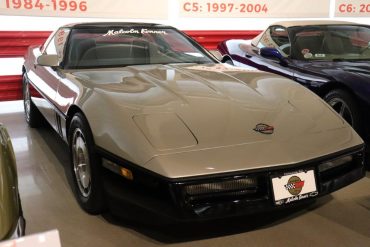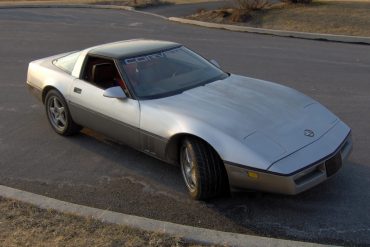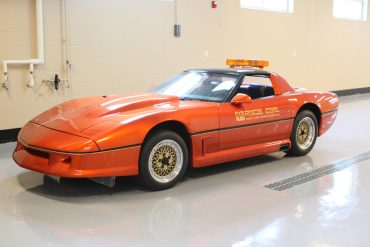
Built by PPG with Chevrolet to lead the Indy Car World Series, this one-off C4 swapped its Cross-Fire 350 for a 450 hp Katech V8. It now sits crushed and unrestored at the National Corvette Museum.


C4 CORVETTE - 1984
The first all-new Corvette in fifteen years and the first ever to skip a model year: a 96.2-inch uniframe chassis with aluminum suspension, fiberglass springs at both ends, rack-and-pinion steering, 16-inch wheels, a clamshell hood, a digital dash and a glass hatch, still powered by the 205-hp Cross-Fire 350.
Quick Nav: Story · Specials · Price & Options · VIN · Specs · Technical · Pics & Videos · The Market · All · FAQs
Model & Gen: 1984 Corvette (C4)
Body Type: Two-door hatchback coupe with lift-off one-piece roof panel; no convertible offered
VIN: 1G1AY0782E5100001 – 1G1AY0782E5151547
Original Price: $21,800.00 base, plus the mandatory $561.20 16-inch wheel and tire package (RPO QZD)
Colors: 11 solid colors plus three two-tones (RPO D84); Bright Red on one car in four
Engine: 350 ci L83 with Cross-Fire Injection, 205 hp: the 1982 engine carried over, the only engine
Transmission: 700-R4 four-speed overdrive automatic (MX0) standard; Doug Nash 4+3 four-speed manual with overdrive (MM4) at no cost from January 1984
Units Produced: 51,547 (all hatchback coupes; no convertible)
The 1984 Corvette is the car Dave McLellan’s engineers had been drawing since 1978 and the first Corvette built from a clean sheet since 1963. Everything under the skin was new: a welded steel “uniframe” that joined the birdcage and the perimeter frame into one structure, with a bolt-on aluminum front crossmember; forged-aluminum control arms at the front with a transverse fiberglass monoleaf spring in place of coils; a five-link rear with another fiberglass spring and an aluminum differential carrier; the first rack-and-pinion steering on a Corvette; aluminum Girlock four-wheel disc brakes; and 16-inch wheels, something no other American car wore, carrying Goodyear’s new unidirectional Eagle VR50 tires. The driveshaft, torque arm and the aluminum beam that tied the transmission to the differential were tucked into a tunnel that also carried the exhaust, so the floor could sit lower and the roof an inch lower than the C3’s.
The body was 8.8 inches shorter and 1.8 inches shorter in wheelbase than the 1982, two inches wider and an inch lower, with a drag coefficient of 0.34 against the Shark’s 0.44. Jerry Palmer’s studio gave it a clamshell hood that lifted with the front fenders to bare the whole engine bay, a single lift-off roof panel in place of T-tops, a frameless glass hatch that was the largest piece of compound-curved glass on an American car, a windshield laid back at 64 degrees, no grille at all (the radiator breathed from below) and a rub strip around the waist that hid the body seam. Inside was a liquid-crystal digital instrument panel with bar-graph speedometer and tachometer, a Delco-Bose sound system developed for the car, and a padded passenger-side “crash pad” built against a passive-restraint rule that never came. The engine was the 1982 car’s Cross-Fire Injection 350, now 205 hp, with the 700-R4 overdrive automatic; the Doug Nash 4+3 manual, a four-speed with electrically engaged overdrive in the top three gears, arrived as a no-cost option in January 1984 and went into 6,443 cars.
Shown to the press at Riverside in December 1982 and to the public in March 1983, the car met every 1984 emissions standard, so Chevrolet skipped the 1983 model year entirely and sold the 1984 for seventeen months: 51,547 cars, second only to 1979. The press loved the chassis (Car and Driver recorded 0.90 g on the skidpad, a production-car record) and hated the ride: 25,995 buyers took the Z51 Performance Handling Package, and on anything but a smooth road the stiff springs, Bilstein shocks and 50-series tires shook the car and its occupants. The digital dash washed out in sunlight, the 4+3 was balky and the Cross-Fire engine was a 1982 carryover in a 1984 car; the 1985 Tuned-Port 230-hp L98 and softened suspension fixed most of it within a year. That is why the 1984 is the least expensive C4, and the easiest way into an all-new Corvette for very little money.
The early eighties was a period of technological firsts. Apple Computer introduced the Macintosh computer. NASA introduced Columbia, the first of a fleet of reusable launch vehicles which would come to be known as the “Space Shuttle”. The first laptop computers were being sold by Tandy and others. In short, Americans were moving into a world that was growing increasingly interlaced with technology. They were clamoring for it – in their offices, in their homes, and in their automobiles. General Motors was prepared to answer the technology boom with the introduction of a brand new Corvette.
The 1984 Corvette was unveiled to the public in March 1983. Although there had been rumors and silent rumblings of a new Corvette for several years prior to its unveiling, the arrival of the C4 Corvette was met with overwhelming enthusiasm from both the press and the public. Although the car was a departure from its predecessor in both styling and form, it was still unmistakably a Corvette – although it was definitely a more technologically advanced Corvette than any that had come before it.
Because of its late release (new model-year cars are generally introduced late in the previous year) and the fact that it already met all of the 1984 federal emission requirements, Chevrolet’s general manager, Robert Stempel, decided that the C4 Corvette would bypass the 1983 model year and officially begin production as a 1984 model. General Motors did build C4 Corvettes in 1983: forty-three pilot and pre-production cars carrying 1983 VINs were assembled at Bowling Green, but none was sold, and all but one were destroyed. The survivor, a white car found at the plant, is displayed at the National Corvette Museum as the only 1983 Corvette.
Although the 1984 Corvette met the emissions regulations requirements of the day, the development of electronic engine management was still in its infancy. As a result, General Motors engineers were cautious about how much power the small-block 350 should really produce. More horsepower, as a rule, meant dirtier exhaust.
Conscious of maintaining the highest possible emissions standards, it was decided early on that, at least for the first model year, the C4’s primary focus would not be horsepower (as was the norm for generations of Corvettes before it) but handling. Many improvements to the overall drivability of the Corvette were made, and a special performance handling package – option Z51 – was introduced for the 1984 model year.
While sales began almost immediately after the arrival of the new Corvette, GM continued to make “running changes” to the car’s layout and equipment even after sales began. The most significant concerned the wheels and tires.
The original fifteen-inch wheel and tire combination was deleted, making the sixteen-inch wheels and P255/50VR16 Goodyear Eagle tires (RPO QZD, $561.20) the only choice; the change raised the price of every C4 even after model-year production had begun. Another, more interesting change was made to the interior of the car.
Federal regulators were pressing for passive restraints in new cars. General Motors suspected that the rule would eventually take effect, and so Chevrolet engineers introduced a large, rounded pad that protruded from the passenger side of the dashboard.
Its sole purpose was passive crash protection – protection that worked whether or not the passenger chose to use it, as a seatbelt requires. The passive-restraint rule was later rewritten around air bags and automatic belts, but the pad remained.
Of course, the creation of a new Corvette also meant the introduction of features that provided for greater functionality and ease of operation. The updated design introduced the permanent inclusion of a hatchback. While it’s true that the hatchback had appeared on the 1982 Collector Edition, it was decided that the permanent inclusion of a hatchback would provide a greater ease of access to the rear storage/luggage compartment. Similarly, the front hood was re-designed to function as a “clamshell” style cover that made engine and front suspension access far more convenient.
Other changes to the design of the C4 also helped differentiate the new Corvette from all of its predecessors. Prior to the 1984 model, all Corvettes had been built to include a front grille. Since its inception in 1953, the Corvette front grille had served as a trademark that was synonymous with Corvette. Of course, in the 30 years that followed, the design of the grille had grown smaller and smaller. At the onset of the 1984 Corvette, it was removed completely. Corvette engineers had developed an undercar ducting system that provided adequate airflow to properly cool the radiator. Replacing the grille was a pair of halogen fog/running lamps which were inspired by the Porsche 928 (and other European sports cars of that era).
Another item that disappeared completely from the C4 Corvette’s design was any visible bumper. While the new Corvette did have bumpers integrated into its design (which were rated to absorb impact speeds of up to 5 miles per hour), it was done in such a way that they were not differentiated from the rest of the car, giving the car a “bumper-less” appearance.
Still another item of note was the evolution of the hideaway headlights. The C3 Corvette had featured hideaway headlights, but they had been engineered as a flip-up design, which meant that the top of the headlight was the same whether it was up or down. The C4 headlight functioned somewhat differently in that the entire headlight assembly rolled outward, the end result of which meant that the headlight cover (when the headlight was recessed) actually became the base of the headlight (when it was exposed and operational). The primary reason for this change was that while the C3 Corvette’s headlight cover protruded from the top of the headlight (effectively creating drag), concealing the headlight covers provided for greater ease of airflow over and around the headlights, thereby increasing the aerodynamics (even if marginally) of the C4 Corvette.
As commercial production of the C4 Corvette began, so did the criticism. Because of the long lead/build time on the 1984 Corvette, General Motors had, perhaps mistakenly, put the new car in front of the automotive press long before it went on sale. Chevrolet invited the automotive media to test the Corvette at Riverside International Raceway in December 1982. These first production Corvettes were driven – and evaluated – by automobile reviewers all over the country. Initial reviews praised the Corvette for its quick acceleration and drivability. They focused on how well it cornered and handled road courses. At the same time, there was significant criticism about how the car treated its occupants. The ride was rough, especially in Corvettes equipped with the Z51 suspension package. While the car was deemed a superior car for the track, it was generally judged as being too harsh-riding for daily driving.
Beyond the ride, other items within the Corvette were met with significant criticism. The interior had earned low marks for excessive exhaust and road noise, for deep door sills (as a result of the unit body frame) that resulted in excessive difficulty climbing into and out of the Corvette, and for the digital dashboard which had been criticized for being difficult to read, especially in sunlight. From its inception, most reviewers pined for a return to the more conventional, user-friendly analog gauges that had been part of the Corvette since the beginning.
Similarly, the 4+3 Overdrive Manual Transmission was met with mixed reviews. First, there was the clunky, high-effort linkage that made stop-and-go driving challenging. Adding to the aggravation was an equally unpleasant high-effort clutch. Perhaps worst of all though was the computer-controlled overdrive. When engaged, the automatic overdrive would often try to out-think the driver, making driving tedious and frustrating. Most reviewers agreed that the 4+3 Overdrive Transmission worked best with the overdrive switched off. The 4+3 proved fragile and unpopular. As a result, most of the 1984 Corvettes that left the Bowling Green Manufacturing Plant were built with automatic transmissions (a fact that remained true through 1988, after which the 4+3 gave way to the ZF six-speed).
Even the new body style was not without reproach. While critics generally agreed that the new design was sleek and sophisticated, many also commented that the new Corvette was, in comparison with the last year of the C3, remarkably restrained. Some critics even went so far as to criticize the Corvette’s overall lack of bodylines. Where the C3 had the “coke bottle” appearance with its extra wide front and rear hips, the C4 was relatively straight-lined by comparison.
There was, of course, the standard automotive styling that enthusiasts had come to expect of the Corvette: the previously mentioned pop-up headlights, the circular taillights and the wraparound rear window previewed by the 1982 Collector Edition.
Despite the lukewarm reviews that began to circulate about the first model year of the C4, the excitement of being able to purchase an all-new Corvette for the first time in 15 years made the 1984 Corvette a quick sellout. In fact, when combined with the extra-long model year, Corvette’s sales reached a total of 51,547 units – the second-highest total in Corvette history, behind only 1979.
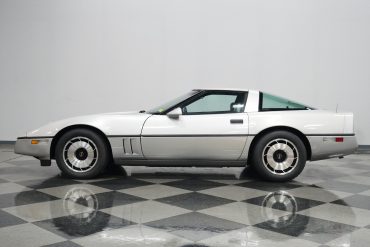
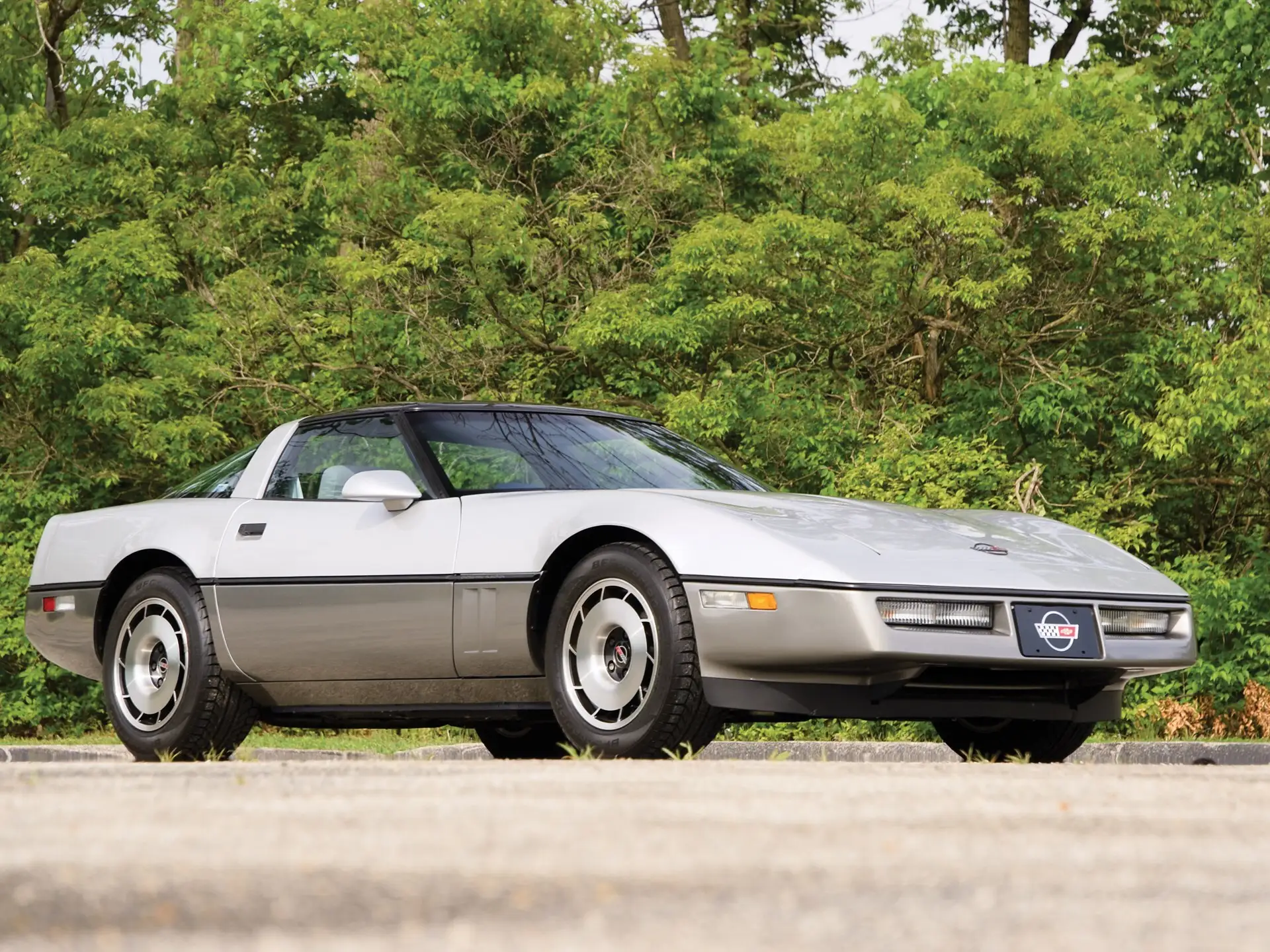
 The 1984 Chevrolet Corvette.
 1984 Corvette Front
 1984 Corvette Interior - Note the passenger side bumper (part of the passive safety restraint system).
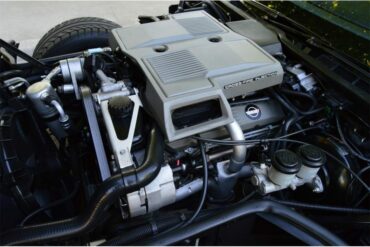
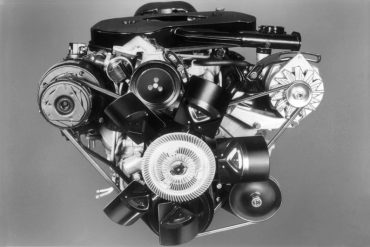
 The Cross-Fire Fuel Injected Engine was introduced only for the 1984 Chevrolet Corvette.
 1984 Corvette Cross-Fire Injection Identifier and the Re-invented Bodyside Cowls.

The 1984 was sold for seventeen months and 51,547 cars without ever being a 1983: Chevrolet built forty-three 1983-VIN pilot cars at Bowling Green, destroyed all but one, and the white survivor sits in the National Corvette Museum as the only 1983 Corvette in the world. The published color totals also list a single Yellow (code 35) 1984, one car out of 51,547, the rarest factory color of the whole C4 run.
DID YOU KNOW
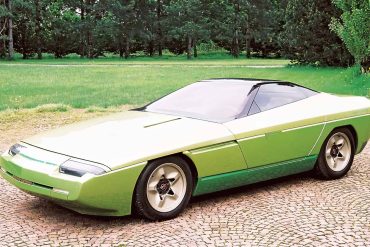
No limited editions in year one: the specials are the 1984 PPG Indy Car World Series pace car (a one-off with a 450-hp Katech 401 that was later swallowed by the National Corvette Museum sinkhole), Bertone’s Ramarro show car on a C4 chassis, and the 1983 Corvette that never went on sale.
The 1984 Corvette listed at $21,800.00, $3,510 above the 1982 coupe, with the L83, the 700-R4 automatic, air conditioning, power windows, the tilt-telescopic column, the lift-off roof panel, cloth seats, digital instruments and an AM-FM radio standard; 51,547 were built, every one a hatchback coupe.
The fifteen-inch wheels on the order guide never reached production, so every car also carried the P255/50VR16 Goodyear Eagle tires on 16-inch alloy wheels (RPO QZD, $561.20), which made the real base price $22,361.20. Half of all buyers, 25,995, added the Z51 Performance Handling Package ($600.20) with its stiffer springs, Bilstein shocks, bushings and bars, fast-ratio steering, oil cooler, heavy-duty radiator with an extra fan and 9.5-inch rear wheels; 3,729 took the Bilstein shocks alone (RPO FG3, $189.00), 4,295 the oil cooler (KC4, $158.00) and 12,008 the heavy-duty radiator (V01, $57.00).
The Doug Nash 4+3 manual (RPO MM4) cost nothing but was not available until January 1984; 6,443 cars got it. The 3.07:1 performance axle (G92, $22.00) went into 410 automatics, two-tone paint (D84, $428.00) onto 8,755 cars and California emissions (YF5, $75.00) onto 6,833.
The 1984 was ordered loaded: cruise control (RPO K34, $185.00) went into 49,832 cars, power door locks (AU3, $165.00) into 49,545, the six-way power seat (AG9, $210.00) into 47,702, rear-window and mirror defoggers (Z6A, $160.00) into 47,680, leather on the base seats (AR9, $400.00) into 40,568 and the new Delco-Bose sound system (UU8, $895.00), the first Bose system in a General Motors car, into 43,607. The glass roof panel (RPO CC3, $595.00) went on 15,767 cars and the Lear Siegler sport seats with inflatable lumbar and power bolsters (AQ9, $625.00, cloth only) into 4,003. Radios otherwise: 6,689 plain cassette stereos (UM6, $153.00), 178 cassette-and-CB sets (UN8, $215.00) and 104 radio-delete credits (UL5, $331.00).
A typical car with the wheel package, cruise, locks, power seat, defoggers, leather and Bose came to about $24,400; add Z51 and the glass roof and it was about $25,600, which is where most 1984s were sold. The published color totals add up to 51,547 exactly.
MORE: PRICING, OPTIONS & COLORS / RPO CODES
| CODE | DESCRIPTION | QUANTITY | RETAIL PRICE |
|---|---|---|---|
| 1YY07 | Base Corvette Hatchback Coupe (L83, 700-R4 automatic, cloth seats, lift-off roof panel, air conditioning, power windows, tilt-telescopic column, digital instruments) | 51,547 | $21,800.00 |
| AR9 | Base Seats, leather | 40,568 | $400.00 |
| AG9 | Six-Way Power Driver Seat | 47,702 | $210.00 |
| AQ9 | Sport Seats, cloth (inflatable lumbar, power side bolsters) | 4,003 | $625.00 |
| AU3 | Power Door Locks | 49,545 | $165.00 |
| CC3 | Removable Transparent (glass) Roof Panel | 15,767 | $595.00 |
| D84 | Two-Tone Paint (three combinations) | 8,755 | $428.00 |
| FG3 | Delco-Bilstein Gas Shock Absorbers (Z51 shocks without the package) | 3,729 | $189.00 |
| G92 | Performance Axle Ratio, 3.07:1 (automatic cars) | 410 | $22.00 |
| K34 | Cruise Control with Resume | 49,832 | $185.00 |
| KC4 | Engine Oil Cooler | 4,295 | $158.00 |
| MM4 | Doug Nash 4+3 Four-Speed Manual with Overdrive (from January 1984) | 6,443 | no charge |
| QZD | P255/50VR16 Goodyear Eagle VR50 Tires on 16-inch Alloy Wheels (required on all cars) | 51,547 | $561.20 |
| UL5 | Radio Delete | 104 | $331.00 credit |
| UM6 | AM-FM ETR Stereo with Cassette | 6,689 | $153.00 |
| UN8 | AM-FM ETR Stereo with Citizens Band | 178 | $215.00 |
| UU8 | Delco-Bose AM-FM Stereo with Cassette | 43,607 | $895.00 |
| V01 | Heavy-Duty Radiator (three-core aluminum) | 12,008 | $57.00 |
| YF5 | California Emission Requirements | 6,833 | $75.00 |
| Z51 | Performance Handling Package (heavy-duty springs, shocks, bushings and stabilizer bars, fast-ratio steering, engine oil cooler, heavy-duty radiator and extra fan, 9.5-inch rear wheels) | 25,995 | $600.20 |
| Z6A | Rear Window and Side Mirror Defoggers | 47,680 | $160.00 |
| CODE | EXTERIOR | TOTAL | INTERIOR |
|---|---|---|---|
| 72 | Bright Red | 12,942 | Graphite, Saddle |
| 19 | Black | 7,906 | Carmine, Graphite, Medium Gray, Saddle |
| 10 | White | 6,416 | Carmine, Bronze, Graphite, Medium Blue, Medium Gray, Saddle |
| 18 | Medium Gray Metallic | 3,147 | Graphite, Medium Gray |
| 16 | Bright Silver Metallic | 3,109 | Graphite, Medium Gray |
| 63 | Light Bronze Metallic | 2,452 | Bronze |
| 53 | Gold Metallic | 2,430 | Saddle |
| 23 | Medium Blue Metallic | 1,822 | Medium Blue |
| 66 | Dark Bronze Metallic | 1,371 | Bronze |
| 20 | Light Blue Metallic | 1,196 | Medium Blue |
| 35 | Yellow | 1 | Graphite |
| 63/66 | Two-tone Light Bronze / Dark Bronze (RPO D84) | 3,693 | Bronze |
| 16/18 | Two-tone Silver / Medium Gray (RPO D84) | 3,629 | Graphite, Medium Gray |
| 20/23 | Two-tone Light Blue / Medium Blue (RPO D84) | 1,433 | Medium Blue |
The engine was the 1982 Collector Edition’s L83 carried over: the 350 at 9.0:1 with Cross-Fire Injection, two Rochester throttle-body injector units on a crossover intake manifold, each feeding the opposite bank, under a Computer Command Control module. It was rated at 205 hp at 4,300 rpm and 290 lb-ft at 2,800, five horsepower and five pound-feet more than 1982, on casting 14010207 with 462624 heads, and it was the only engine; the hood’s twin air inlets fed a new dual-snorkel air cleaner. The standard transmission was the 700-R4 four-speed overdrive automatic (RPO MX0) with a 2.73:1 axle (3.07:1 with the G92 performance axle).
From January 1984 the Doug Nash 4+3 (RPO MM4) was offered at no cost: a Borg-Warner-based four-speed manual with an electro-hydraulic overdrive planetary behind it, engaged automatically in second, third and fourth under light throttle by the engine computer, with a console switch to lock it out, and a 3.07:1 axle. Period road tests put 0–60 between 6.7 and 7.0 seconds, the quarter mile between 15.1 and 15.5 seconds and the top speed at about 140 mph; Car and Driver recorded 0.90 g on the skidpad with Z51, the best they had measured on a production car.
Everything else was new. The uniframe welded the windshield frame, door frames and rear bulkhead into the perimeter rails so the lift-off roof panel could be removed without the chassis flexing; the aluminum front crossmember carried forged-aluminum upper and lower control arms with a transverse fiberglass-reinforced plastic monoleaf spring, and the five-link rear used a second fiberglass spring, aluminum trailing arms and tie rods and an aluminum differential housing.
Steering was rack-and-pinion for the first time (15.5:1, 13.0:1 with Z51), brakes were Girlock aluminum-caliper discs of 11.5 inches at all four corners, and the 16 x 8.5-inch cast alloy wheels (16 x 9.5 at the rear with Z51) wore Goodyear’s P255/50VR16 Eagle VR50 “Gatorback” tires, developed on the car and marked left and right. The wheelbase was 96.2 inches, the length 176.5, the width 71.0 and the height 46.7, with a 0.34 drag coefficient and a curb weight of about 3,200 lb. Chevrolet’s claimed 100-mph-plus cornering and braking numbers were real; what the buyers found was that the same package, and especially Z51, was punishing on Interstate expansion joints, and the 1985 car softened springs and shocks by about a quarter.
MORE: FULL SPECIFICATIONS / ENGINE
| SPEC | 1984 CORVETTE |
|---|---|
| Engine | 350 ci (5.7 L) small-block V-8, RPO L83, the only engine: Cross-Fire Injection with two Rochester throttle-body injector units on a crossover manifold under Computer Command Control, dual-snorkel air cleaner fed by twin hood inlets; carried over from the 1982 Collector Edition |
| RPO L83 | 350/205 hp net @ 4,300 rpm, 290 lb-ft @ 2,800 rpm, 9.0:1, 4.00 x 3.48-in bore and stroke, hydraulic lifters, HEI; casting 14010207 with 462624 heads; engine suffix ZFC (automatic); replaced by the 230-hp Tuned-Port Injection L98 for 1985 |
| Transmission | 700-R4 four-speed automatic with overdrive and lock-up converter (RPO MX0) standard; Doug Nash 4+3 four-speed manual (RPO MM4, no charge, from January 1984) with an electro-hydraulic overdrive planetary engaged by the engine computer in 2nd, 3rd and 4th, console lock-out switch; 6,443 manuals |
| Axle ratio | 2.73:1 automatic, 3.07:1 manual and with RPO G92 ($22.00, 410 cars); Dana 36 differential in an aluminum housing, limited-slip standard |
| Chassis | Welded steel uniframe (birdcage and perimeter frame in one structure) with bolt-on aluminum front crossmember; aluminum “C-beam” driveline support between transmission and differential; exhaust, driveshaft and beam run in a wide central tunnel |
| Front suspension | Independent; forged-aluminum upper and lower control arms, transverse fiberglass-reinforced monoleaf spring, tubular shocks (Delco-Bilstein gas shocks with Z51 or RPO FG3), anti-roll bar |
| Rear suspension | Independent five-link; transverse fiberglass monoleaf spring, aluminum trailing arms and tie rods, half-shafts, aluminum differential carrier, anti-roll bar |
| RPO Z51 | Performance Handling Package, $600.20, 25,995 cars: heavy-duty springs, Bilstein shocks, stiffer bushings and larger stabilizer bars, 13.0:1 fast-ratio steering, engine oil cooler, heavy-duty radiator and auxiliary fan, 16 x 9.5-in rear wheels |
| Brakes | Four-wheel Girlock discs, 11.5-in vented rotors, aluminum calipers, power assist standard |
| Steering | Rack-and-pinion with power assist, the first on a Corvette: 15.5:1 (13.0:1 with Z51); tilt-telescopic column standard |
| Body | Fiberglass hatchback coupe on a 96.2-in wheelbase: clamshell hood lifting with the front fenders, single lift-off roof panel (glass panel RPO CC3, $595.00, 15,767 cars), frameless lifting rear glass, 64-degree windshield, no grille (radiator fed from below), hidden rotating headlamps, body-color rub strip; Cd 0.34; two-tone paint (RPO D84, $428.00) in three combinations on 8,755 cars |
| Interior | Liquid-crystal digital instrument panel with bar-graph speedometer and tachometer, passenger-side passive-restraint pad, cloth base seats (leather RPO AR9, $400.00, 40,568 cars), Lear Siegler sport seats with inflatable lumbar and power bolsters (RPO AQ9, $625.00, 4,003), six-way power driver seat (RPO AG9, $210.00, 47,702), Delco-Bose sound system (RPO UU8, $895.00, 43,607), the first Bose system in a GM car |
| Wheels & tires | 16 x 8.5-in cast aluminum wheels (16 x 9.5 rear with Z51) with Goodyear P255/50VR16 Eagle VR50 “Gatorback” unidirectional tires (RPO QZD, $561.20, required on all 51,547 cars; the 15-in wheels on the order guide were never built) |
| Fuel tank | 20 gal; unleaded only; in-tank electric pump |
| Wheelbase | 96.2 in (1.8 in shorter than the C3) |
| Overall length / width / height | 176.5 in / 71.0 in / 46.7 in |
| Track, front / rear | 59.6 in / 60.4 in |
| Curb weight | approx. 3,200 lb (the specifications post’s 3,020 lb is low) |
| 0–60 mph | 6.7–7.0 sec (period road tests) |
| Quarter mile | 15.1–15.5 sec @ about 88–90 mph |
| Top speed | about 140 mph |
| Lateral acceleration | 0.90 g with Z51 (Car and Driver), a production-car record at the time |
| Production | 51,547 hatchback coupes, the second-highest Corvette total after 1979; no convertible |
| Assembly | Bowling Green, Kentucky; production began January 1983, sales March 1983, seventeen-month model year |
The 1984 Corvette carries the 17-character VIN 1G1AY0782E5 followed by a sequence number from 100001 to 151547, one for each of the 51,547 cars. The 1 is the United States, G General Motors, 1 Chevrolet, A the manual-belt restraint system, Y the Corvette series, 07 the two-door hatchback coupe (the only body style, the 1982 Collector Edition’s code carried over), 8 the L83 Cross-Fire Injection 350 (the only engine), the ninth character a check digit, E the 1984 model year and 5 the Bowling Green plant. The VIN plate moved to the top of the dash on the driver’s side, visible through the windshield at the base of the left pillar; the body and trim plate on the left door-hinge pillar carries the build date, the paint code (both codes on two-tone cars) and the trim code, such as 742 for Carmine leather.
The engine pad at the front of the block on the passenger side carries the plant prefix, the build date and a suffix, ZFC on automatic cars; every 1984 engine is casting 14010207 with 462624 heads and the throttle bodies sit on the crossover manifold with the twin-snorkel air cleaner above. Because every 1984 has the same body, engine and plant codes, originality questions are about options rather than identity: a Z51 car should show the 9.5-inch rear wheels, the oil cooler and the fast-ratio rack, a 4+3 car should have a build date after January 1984, and the first forty-three C4s built, the 1983 pilot cars with a D in the tenth position, were destroyed except for the one at the National Corvette Museum.
MORE: VIN DECODER / PRODUCTION
| POSITION | MEANING |
|---|---|
| 1G1 (First through Third) | Country, maker, make: 1 = built in the USA, G = General Motors, 1 = Chevrolet |
| A (Fourth) | Restraint system: A = manual belts |
| Y (Fifth) | Series: Y = Corvette |
| 07 (Sixth & Seventh) | Body: 07 = two-door hatchback coupe, the only 1984 body style (the 1982 Collector Edition’s code) |
| 8 (Eighth) | Engine: 8 = 350/205 L83 Cross-Fire Injection, the only engine |
| x (Ninth) | Check digit, calculated from the other sixteen characters |
| E (Tenth) | Model year: E = 1984 (the destroyed 1983 pilot cars carried a D) |
| 5 (Eleventh) | Assembly plant: 5 = Bowling Green, Kentucky |
| 100001–151547 (Twelfth through Seventeenth) | Production sequence number; 51,547 built |
Eleven solid colors and three two-tones: Bright Red (12,942), Black (7,906), White (6,416), Medium Gray (3,147), Bright Silver (3,109), Light Bronze (2,452), Gold (2,430), Medium Blue (1,822), Dark Bronze (1,371), Light Blue (1,196) and one Yellow car, plus 8,755 two-tones: Light Bronze/Dark Bronze (3,693), Silver/Medium Gray (3,629) and Light Blue/Medium Blue (1,433). Interiors in Graphite, Medium Gray, Medium Blue, Saddle and Bronze cloth or leather and Carmine leather; Carmine leather (12,768) was the most popular trim.
The 1984 is the cheapest Corvette of the last fifty years and the cheapest C4 by a margin, and the reasons are the ones the road testers gave in 1983: the Cross-Fire engine is the 1982 unit with 205 hp, the Z51 ride is harsh, the digital dash fails and the 4+3 is nobody’s favorite gearbox. That makes it an unusually good value for anyone who wants the all-new chassis and the looks for the price of a used economy car, and low-mileage, original, unmodified cars are starting to be bought as the first C4 rather than as an old one. Manual cars carry a premium with enthusiasts despite the transmission’s reputation, one-owner low-mileage automatics find buyers at the top of the range, and the two-tones and the single-color Bright Red cars are the ones people look for. Converted cars, with later Tuned-Port manifolds, carburetors or aftermarket dashes, are worth less to collectors even when they drive better.
Results tracked by Classic.com from June through October 2026 are all Bring a Trailer: $22,500 for an 11,000-mile 4+3 car in June, $11,500 for a 6,000-mile automatic in August, $5,600 for a 105,000-mile manual and $5,250 for a 54,000-mile automatic, and $4,000 for a project in September. Dealers’ last asking prices on cars that sold or were withdrawn over the summer ran $5,900 to $12,995, and in autumn 2026 the cars on offer were priced from $8,875 for a 62,000-mile car to $19,499 and $20,000 for 8,000- and 26,000-mile automatics, with most between $11,500 and $15,000. Hagerty’s guide puts a #3 (good) 1984 around $8,400 and records 42 public-auction sales over three years between $5,400 and $28,350. Check whether a result includes the buyer’s premium (Mecum and Barrett-Jackson results do, Bring a Trailer bids do not), and treat asking prices and unsold high bids separately from completed sales.
Every 1984 shares one body code, one engine code and one plant, so verification is about options and condition. The VIN should read 1G1AY0782E5 (the check digit varies) with a sequence number up to 151547; the trim tag on the door pillar should carry a 1983 or 1984 build date and a paint code that matches the car, two codes on a two-tone. A Z51 car should have the 9.5-inch rear wheels, the engine oil cooler, the extra radiator fan and the fast-ratio rack; the Bilstein shocks alone were a separate option. A 4+3 car should have the overdrive switch on the console and a build date from January 1984 on, and the overdrive should engage and disengage with the switch; most that were troublesome have had the overdrive unit bypassed. The Cross-Fire system should show two throttle bodies on the crossover manifold under the twin-snorkel air cleaner with the hood inlets ducted to it; the engine pad on casting 14010207 should carry a ZFC suffix on an automatic car, and the partial VIN should match.
Ask about the digital dash first: the LCD panels fade, lose segments and go dark, and the dimmer and the printed-circuit connectors behind them corrode; good used clusters are scarce and rebuilt ones cost more than the price difference between a good and a fair car. Then the Cross-Fire: a hard start, a rough idle and a flat spot off idle are usually a tired throttle-body injector, a leaking intake crossover gasket or a failed coolant or oxygen sensor rather than the system itself, but many cars have been “fixed” with carburetors or later manifolds. The 4+3’s overdrive unit leaks, slips and loses its solenoid, and the clutch is heavy; the Bilstein shocks on Z51 cars are often worn out and expensive to replace correctly. The lift-off roof panel and the hatch seals leak, the headlight motors strip their plastic gears, the power antenna masts snap, the fuel-pump and sending-unit grounds fail, the fiberglass springs are fine but their rubber mounts are not, and the uniframe rusts where the battery tray drains onto the frame rail and at the rear kick-ups and trailing-arm mounts. The bodies hold up; it is the electronics and the rubber that need money.
MORE: THE MARKET

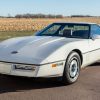
Get all the latest news stories, upcoming auctions, prices, videos and more about the 1984 Chevrolet Corvette! The latest headlines here.


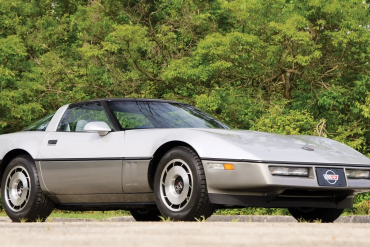


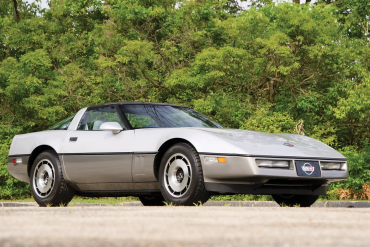


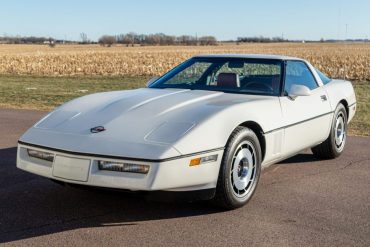
Chevrolet built 51,547 Corvettes for 1984 at Bowling Green, Kentucky, every one a hatchback coupe, over a seventeen-month model year that began in January 1983 and ended in the autumn of 1984. It was the second-biggest year in Corvette history after 1979’s 53,807. Of the cars, 49,832 had cruise control, 47,702 the power seat, 43,607 the Delco-Bose stereo, 40,568 leather, 25,995 the Z51 Performance Handling Package, 15,767 the glass roof panel, 8,755 two-tone paint and 6,443 the Doug Nash 4+3 manual transmission.
In 2026 the 1984 is the least expensive C4: Bring a Trailer sold 1984s for $4,000 to $11,500 between June and September 2026, with one 11,000-mile 4+3 car reaching $22,500, and dealers were asking $8,875 to $20,000 for cars with 8,000 to 62,000 miles, most between $11,500 and $15,000. Hagerty puts a good (#3) car around $8,400 and records a three-year auction range of $5,400 to $28,350. Low-mileage original cars, manuals and two-tones bring the most; cars converted away from Cross-Fire Injection or the digital dash bring less.
One: the 205-hp L83 350 with Cross-Fire Injection, carried over from the 1982 Collector Edition with five more horsepower, making 290 lb-ft at 2,800 rpm. It came with the 700-R4 four-speed overdrive automatic or, from January 1984 at no extra cost, the Doug Nash 4+3 manual, a four-speed with a computer-controlled overdrive in the top three gears. Period tests ran 0–60 in 6.7 to 7.0 seconds and the quarter mile in 15.1 to 15.5; the 1985 car replaced the L83 with the 230-hp Tuned-Port Injection L98.
Eleven solid colors and three two-tones. Bright Red (12,942 cars) was the choice of one buyer in four, followed by Black (7,906), White (6,416), Medium Gray (3,147), Bright Silver (3,109), Light Bronze (2,452), Gold (2,430), Medium Blue (1,822), Dark Bronze (1,371), Light Blue (1,196) and a single Yellow car; the two-tones were Light Bronze/Dark Bronze (3,693), Silver/Medium Gray (3,629) and Light Blue/Medium Blue (1,433). Interiors were Graphite, Medium Gray, Medium Blue, Saddle and Bronze in cloth or leather, and Carmine in leather only, the most popular trim at 12,768.
The list price was $21,800.00, but every car also carried the $561.20 16-inch wheel and tire package, so the real base price was $22,361.20. The Z51 handling package was $600.20, the glass roof panel $595.00, the Delco-Bose stereo $895.00, leather $400.00, the power seat $210.00, cruise control $185.00, power locks $165.00 and two-tone paint $428.00; the 4+3 manual was free. A typical car with the popular options came to about $24,400, and a Z51 car with the glass roof about $25,600.
The C4 was late. Shown to the press in December 1982 and to the public in March 1983, it already met the 1984 federal emissions and bumper rules, so Chevrolet’s general manager Robert Stempel chose to certify and sell it as a 1984 rather than build a few months of 1983s, which also gave the new car a seventeen-month first model year. Forty-three 1983-VIN pilot cars were built at Bowling Green and all but one were destroyed; the survivor, a white car, is displayed at the National Corvette Museum as the only 1983 Corvette.
Nothing that stopped 51,547 people buying one, but the first-year faults were real: the Z51 suspension, taken by half of all buyers, was punishingly stiff on ordinary roads; the liquid-crystal digital dashboard was hard to read in sunlight and fails with age; the Doug Nash 4+3 manual had a heavy clutch and an overdrive that shifted when it chose; the Cross-Fire engine was a 1982 carryover with 205 hp; and the deep sills and wide tunnel made the car hard to get into. Chevrolet softened the suspension and fitted the 230-hp Tuned-Port L98 for 1985, which is why a good 1984 costs less than any other C4.
1984 Corvette Advertisements / 1984 Corvette Colors / 1984 Corvette Common Issues / 1984 Corvette Engine / 1984 Corvette Factory Options / 1984 Corvette For Sale / 1984 Corvette Maintenance / 1984 Corvette Mods / 1984 Corvette Owners Manual / 1984 Corvette Pace Car / 1984 Corvette Performance / 1984 Corvette Posters / 1984 Corvette Pricing / 1984 Corvette Production / 1984 Corvette Recalls / 1984 Corvette Research / 1984 Corvette RPO Codes / 1984 Corvette Sales Brochures / 1984 Corvette Special Model Overview / 1984 Corvette Specifications / 1984 Corvette Technical Research / 1984 Corvette Service Bulletins / 1984 Corvette VIN Numbers