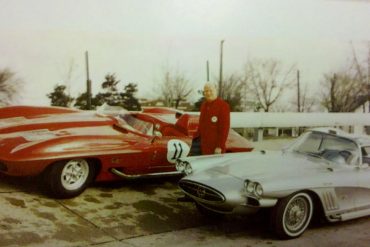
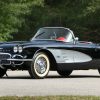
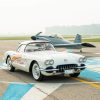
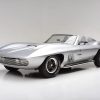
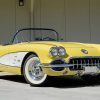
Designed and built under the personal supervision of Bill Mitchell, the wild-looking XP-700 used many regular Corvette components (frame, chassis parts and engine). Bill Mitchell had a lot of “customs” built for himself. This XP-700 previewed the new tail of the upcoming 1961 Corvette.
Quick Nav: The Story · Specials · Price & Options · VIN · Specs · Technical · Pics & Videos · The Market · All Content · FAQs
The Basics
Model & Gen: 1958 Corvette (C1)
Body Type: 2 Door Convertible (removable hardtop optional)
VIN: J58S100001 – J58S109168
Original Price: $3,591 base
Colors: 8 (Snowcrest White, Silver Blue, Charcoal, Signet Red, Regal Turquoise, Tuxedo Black, Panama Yellow, Inca Silver)
Engine: 283 ci V-8, 230 to 290 hp (fuel injection optional)
Transmission: 3-speed manual standard; 4-speed manual and 2-speed Powerglide optional
Units Produced: 9,168
The Overview
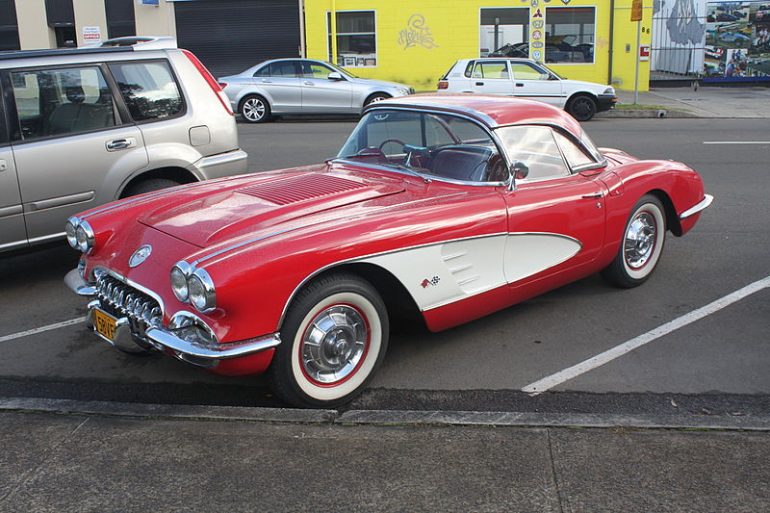
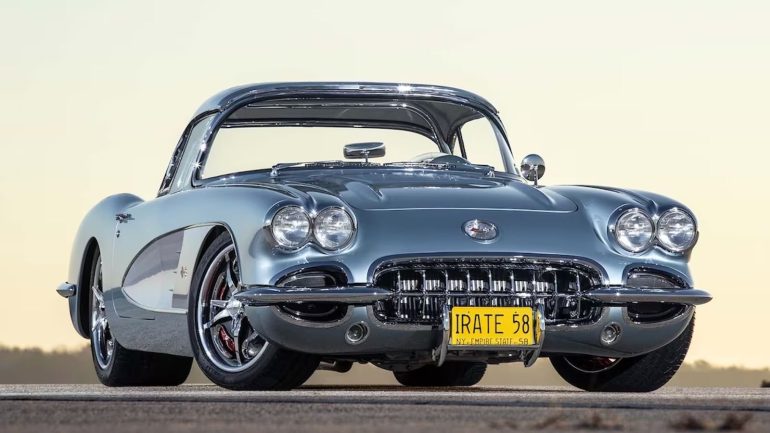
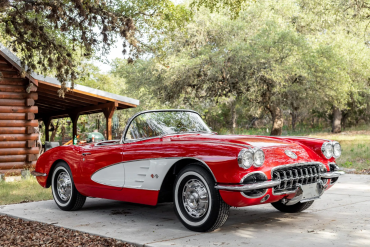
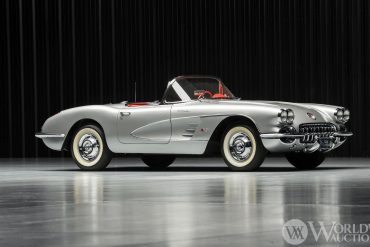
The 1958 Corvette is the year Harley Earl’s styling studio went to town on the 1956 body: quad headlights in heavy chrome bezels, eighteen fake louvers on the hood, dummy vents in the coves, chrome strips along the fender tops, and twin chrome “suspenders” down the trunk lid. The car grew nine inches in length and two in width, and for the first time weighed over 3,000 pounds. Enthusiasts complained then and still do; buyers didn’t, and production jumped from 6,339 to 9,168.
The interior was the better half of the facelift. A new instrument cluster put a 160-mph speedometer and a 6,000-rpm tachometer directly in front of the driver for the first time, with the minor gauges either side, a center console for the heater and radio controls, a passenger grab bar, and seat belts as a factory option. Mechanically the car was a 1957: the same 283 in five versions from 230 to 290 horsepower, the four-speed now a $215.20 option taken by 3,764 buyers, Positraction, and the RPO 684 heavy-duty brake and suspension package on 144 cars.
This was the first year the Corvette made money for General Motors, and the year the XP-700 was built as a preview of where Bill Mitchell wanted to take the car. The louvers and the trunk spears lasted one model year, which makes a 1958 the easiest C1 to identify at a glance.
The 1958 Corvette Story
By the late 1950s, the infrastructure of the automotive industry had begun a transformation from the monopolistic business of a few, large, corporate giants to a much more competitive and highly segmented marketplace.
A few small, relatively unknown companies from Europe were emerging, presenting competitively priced alternatives to the current American offerings, catching companies like Ford and General Motors completely by surprise. Volkswagen had introduced the Beetle and confounded the competition by selling 200,000 or more units per year. The introduction of this, and other “cheap” cars into the automotive market would forever change the direction of automotive marketing and would directly impact the future of the Corvette.
Despite the fact that the Corvette had yet to be profitable, General Motors management was certain that the design changes that Harley Earl had implemented in his 1956 redesign would continue to be the basis of design for future model years. Certainly, the 1957 Corvette had shown considerable improvement in its numbers over the 1956 model year and, if things continued to move in that same direction, the Corvette would certainly meet financial success in the coming year.
In addition, Corvette had managed to completely dominate on the racetrack and, despite the fact that General Motors would join others in observing the racing ban that had been put in place by the Automobile Manufacturers Association (AMA), it had proven nearly unbeatable in its class.
It is commonly believed that the Corvette had performed so well in open competition throughout 1957 that it had forced Ford to “throw in the towel” on its two-seater Thunderbird, forcing them to stall. GM engineers were entertaining thoughts of uni-body construction, while the styling staff was drawing inspiration from the design styling of the immensely popular Mercedes-Benz 300SL gullwing coupe.
Drawing on inspiration from both Earl’s ‘56 Corvette and the Mercedes-Benz, a new concept car emerged that was featured at the 1956 Motorama that nearly became the basis for an all-new Corvette. This car would go on to become known as the “Oldsmobile Golden Rocket”.
This “Golden Rocket” was a unit-body, two-seat coupe that sported futuristic styling that included a slim vertical grille and a protruding snout with quad headlamps - a style that was immensely popular among designers in Detroit.
The Oldsmobile’s front fenders swept back the length of the body to a torpedo-like rear end that was topped by small fins. Gullwing-like sections were cut into the roof assembly to allow greater ease when entering/exiting the car. Much like the rest of the car, the roofline also tapered back in a “boattail” fashion, with a large rear window that wrapped down and around the roof. In all, the “Oldsmobile Golden Rocket” would become commonly recognized as the inspiration for Bill Mitchell ’s Corvette Stingray seven years later.
As early as 1946, General Motors executives had come to a consensus that unit-body construction would be the path forward for cheaper unit cost and higher volume, both of which were items that Corvette needed to begin turning a profit. Using the Oldsmobile concept car as a model, engineers began laying out a new Corvette based on the Golden Rocket’s styling.
Early models made of clay and fiberglass showed how unit body construction might help pave the way for a whole new era of Corvettes. Smaller and lighter than the current C1, it also compensated for many of the current design constraints that current Corvette engineers were forced to deal with. However, this first pass at a new Corvette design never completely got off the ground. The project, which carried the name Q-Corvette, ended up getting shelved as members of the Concept Corvette development team were pulled away to other projects that demanded the attention of those who could best help in the ever-increasing sales race against Ford.
As far as the 1958 Corvette was concerned, the car would have to settle for a facelift.
From the standpoint of appearance, the 1958 Corvette was far more excessive than any of it’s predecessors. While the car still reflected the design changes implemented in the 1956 and 1957 models, the ‘58 Corvette now sported simulated louvers on its bonnet (hood), nonfunctional air intake scoops on either side of the grille, and phony vents in the bodyside “coves”.
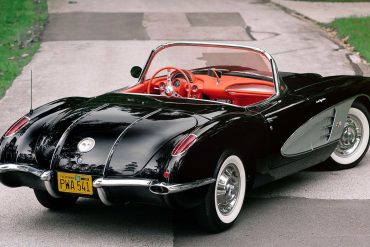
It also featured twin, chrome “suspenders” that ran from the base of the rear window down the trunk lid, before ending abruptly at the rear fender. Another notable departure from the earlier models was the addition of quad headlamps wrapped in a thick chrome bezel.
Did you know? As early as 1958, Chevrolet began developing the XP-700 Corvette as a prototype for the second generation 'Vette. This concept model Corvette featured many styling elements that GM's new design Chief, Bill Mitchell, believed would represent the future of the Corvette.
Much like the chrome “suspenders” featured on the trunk lid, chrome strips ran along the tops of the fenders, accentuating the appearance of the headlamps and giving an overall “swept back” appearance. Lastly, the chrome “teeth” in the front grille itself were reduced from thirteen (as had been the standard in all Corvettes prior to 1958) to only nine. The 1958 Corvette not only looked heavier with it’s many new additions and design changes, but it had actually gotten heavier.
For the first time in Corvette history, the car exceeded 3,000 pounds, which was an increase of 200 pounds over the 1957 model. However, the increase in weight was not merely due to the excesses that were included in the car’s makeover but was the result of the increased size of the car. The 1958 Corvette had 9.2 inches of added length and 2.3 inches of added width, bringing the car’s overall dimensions to 177.2 by 72.8 inches.
Because of the increase in weight and size, the Corvette would require the addition of radius rods to the rear suspension, which would help offset some of the behavioral issues the car experienced under hard acceleration conditions.
While the exterior revisions to the 1958 Corvette exuded excess from almost every angle, the interior revisions to the car were no less substantial, although they were better received. A significant redesign of the instrument cluster at the request/direction of Zora Arkus-Duntov resulted in all of the gauges (save for the clock) to be placed directly in front of the driver in a binnacle.
After the repeat criticisms of instrument placement in earlier models, this change seemed only natural to the Corvette’s design team. The new cluster consisted of a 160-mph speedometer which dominated most of the dashboard, while a smaller 6000 rpm tachometer was placed ahead of it on the steering column.
Flanking the tachometer on each side was a pair of standard instrument gauges that monitored fuel levels, oil pressure, engine temperature and battery charge.
Emerging from the dashboard and mating with the center console was a narrower, vertical console which housed the heater controls, the clock and an optional “Wonder Bar” signal-seeking radio.
While relatively unique for it’s time, this arrangement of controls was virtually identical to the standard layout in automobiles today. The passenger side of the dashboard featured a grab bar mounted in front of a semicircular dashboard that was cut away from the bar itself, allowing passengers to “hold on” in the event of a sharp turn or during sudden acceleration. A locking glove compartment was fitted between the seats just below the release button for the convertible top.
Other changes were made to the interior as well. The interior door panels were remodeled to include reflectors that had been added at arm level for nighttime safety. Upholstery now featured a new “pebble grain” fabric. Even seatbelts, which had been practically unheard of before that model, were standard issue - factory installed in the 1958 Corvette.
Regardless of personal opinion surrounding the 1958 Corvette’s appearance, there were no questions what the performance factor would be. Nearly unchanged from the 1957 Corvette, the ‘58 continued to utilize the 283 engine. Now officially rated at 290 horsepower (at 6,200 rpm’s), the fuel injected, Duntov-cam 283 continued to flourish beneath the hood of the 1958 Corvette as the top level engine for that year’s model run. Similarly, a twin carburetor version of the engine continued to be offered as an option, offering drivers an uncompromising 270 horsepower engine. Despite this fact, few buyers opted for the carbureted version of this engine. Surprisingly, it was the base level 230 horsepower V-8 engine that buyers sought out.
This base model engine was installed in nearly half of the 1958 models. Only 1,500 Corvettes were actually fitted with the fuel injection option, and of those only 1,000 featured the 290 horsepower setup, the other 500 belonging to the 250 horsepower version of the Corvette.
For those enthusiasts that had continued to demand uncompromising speed and performance after the introduction of the 1958 model, Chevrolet continued to offer a near race-ready version of the Corvette, which they made available at local dealerships across the country - and at prices that made buying even the highest end Corvette affordable.
With upgrades ranging from a high performance, 290 horsepower, fuel injected engine, Positraction, heavy-duty metallic brake and suspension and a four speed manual transmission, the total difference in cost between the base priced Corvette and it’s racing counterpart was about $1500.00.
Considering that these upgrades allowed the ‘58 Corvette to rival such competitors as Jaguar, Ferrari and Porsche, there was no question that Corvette was the best performance for the price. It is reported that Corvette’s which were built to include the aforementioned upgrades came with a warning label on their windshields that stated “This car is not intended for street use.”
Production Numbers
Despite some of the extreme changes to it’s body styling, the 1958 Corvette was the first vintage of Corvette to turn a profit for General Motors. In all, Chevrolet sold 9,168 Corvettes in the 1958 model year, which was doubly impressive when considering that the Corvette sales were up (47% over the 1957 Corvette and a staggering 150% over the 1956 Corvette) despite a year in which a financial recession had wrought havoc on the competition, leaving few manufacturers to actually turn a profit that year. In fact, save for Ford’s new four-seat 1958 Thunderbird (and very few others), Corvette alone proved successful in the domestic automotive market.


The rear chrome "suspenders" are a key identifier of the 1958 Corvette.
Image Credit: GM Archives
This would have been the end of the Corvette. Image Credit: GM Archives
The 1958 is the only Corvette with the fake hood louvers and the twin chrome spears on the trunk lid: both were deleted for 1959 after a year of complaints. It was also the first Corvette to turn a profit for General Motors, and the first to top 3,000 pounds.
DID YOU KNOW
Price & Options
Core Features & Factory Options
The base price jumped to $3,591, nearly $415 more than 1957, and the option list repeated 1957’s with the four-speed now priced at $215.20 (RPO 685, 3,764 cars) and the Powerglide at $188.30 (2,057 cars). The engine choices were the 245-hp dual-quad (RPO 469, $150.65, 2,436 cars), the 270-hp dual-quad with the Duntov camshaft (RPO 469C, $182.95, 978 cars), and fuel injection at $484.20 in 250-hp (RPO 579, 504 cars) and 290-hp (RPO 579D, 1,007 cars) forms, so 1,511 of the 9,168 cars were fuelies. Positraction ($48.45) went into 4,011 cars in three ratios, and the heavy-duty brake and suspension package (RPO 684, $780.10) into 144. The removable hardtop ($215.20) was fitted to 5,607 cars, the heater ($96.85) to 8,014, the signal-seeking radio ($144.45) to 6,142, power windows ($59.20) to 649 and the power top ($139.90) to 1,090.
Eight exterior colors were offered, with Snowcrest White the most popular at 2,477 cars, and 3,422 buyers took the $16.15 two-tone cove treatment: 757 Silver Blue/Silver, 756 Signet Red/White, 729 Charcoal/Silver, 499 Snowcrest White/Silver, 252 Regal Turquoise/White, 199 Tuxedo Black/Silver, 190 Panama Yellow/White and 36 Inca Silver/Black. Charcoal is believed to have been replaced by Tuxedo Black after the midpoint of production, which is why both appear in the totals. The color counts add up to 9,164, four short of production.
MORE: PRICING, OPTIONS & COLORS / RPO CODES
| CODE | DESCRIPTION | QUANTITY | RETAIL PRICE |
|---|---|---|---|
| 867 | Base Corvette Convertible | 9,168 | $3,591.00 |
| 101 | Heater | 8,014 | $96.85 |
| 102 | AM Radio, signal seeking | 6,142 | $144.45 |
| 107 | Parking Brake Alarm | 2,883 | $5.40 |
| 108 | Courtesy Lights | 4,600 | $6.50 |
| 109 | Windshield Washers | 3,834 | $16.15 |
| 276 | Wheels, 15 x 5.5 (5) | 404 | $0.00 |
| 290 | Whitewall Tires, 6.70 x 15 | 7,428 | $31.55 |
| 313 | Powerglide Automatic Transmission | 2,057 | $188.30 |
| 419 | Auxiliary Hardtop | 5,607 | $215.20 |
| 426 | Power Windows | 649 | $59.20 |
| 440 | Two-Tone Paint Combination | 3,422 | $16.15 |
| 469 | 283ci, 245HP Engine (2x4 Carburetors) | 2,436 | $150.65 |
| 469C | 283ci, 270HP Engine (2x4 Carburetors) | 978 | $182.95 |
| 473 | Power Operated Folding Top | 1,090 | $139.90 |
| 579 | 283ci, 250HP Engine (Fuel Injection) | 504 | $484.20 |
| 579D | 283ci, 290HP Engine (Fuel Injection) | 1,007 | $484.20 |
| 677 | Positraction Rear Axle, 3.70:1 | 1,123 | $48.45 |
| 678 | Positraction Rear Axle, 4.11:1 | 2,518 | $48.45 |
| 679 | Positraction Rear Axle, 4.56:1 | 370 | $48.45 |
| 684 | Heavy Duty Racing Suspension | 144 | $780.10 |
| 685 | 4-Speed Manual Transmission | 3,764 | $215.20 |
| EXTERIOR | TOTAL | COVE (OPTIONAL) | SOFT TOP | WHEELS | INTERIOR |
|---|---|---|---|---|---|
| Snowcrest White | 2,477 | Inca Silver | Black, White, Blue-Gray | Silver | Charcoal, Blue-Grey, Red |
| Silver Blue | 2,006 | Inca Silver | Black, White | Silver | Charcoal, Blue-Grey |
| Charcoal | 1,631 | Inca Silver | Black, White | Silver | Charcoal, Blue-Grey, Red |
| Signet Red | 1,399 | Snowcrest White | Black, White | Silver | Charcoal, Red |
| Regal Turquoise | 510 | Snowcrest White | Black, White | Silver | Charcoal |
| Tuxedo Black | 493 | Inca Silver | Black, White | Silver | Charcoal, Red |
| Panama Yellow | 455 | Snowcrest White | Black, White | Silver | Charcoal |
| Inca Silver | 193 | — | Black, White | Silver | Charcoal, Red |
Specifications & Performance
Engine & Transmission
Nothing changed under the hood for 1958 except the ratings. The 283 came five ways: the base 230-horsepower single four-barrel (up from 220, 4,243 cars), the 245 and 270-horsepower dual-quads, and the Rochester Ramjet fuel injection at 250 horsepower or, with the Duntov camshaft, 290, up from 283 the year before. All ran 9.5:1 compression on the same 3.875 x 3.00-inch bore and stroke. The 290-hp engine was the one to have, and 1,007 buyers paid $484.20 for it; the airbox option was gone, but RPO 684 still delivered the finned drums, metallic linings, stiffer springs and shocks and quick steering that made a 1958 raceable.
The extra 200 pounds and nine inches of length blunted the car slightly, and the heavier rear end was prone to axle windup under hard acceleration, a problem Chevrolet addressed with trailing radius rods for 1959. Motor Trend’s March 1958 tests recorded 0–60 in 9.2 seconds for a 230-hp three-speed car, 7.6 seconds for a 245, and 6.9 seconds and 118.7 mph for a 290-hp fuelie with the four-speed. The four-speed was now the common choice, on 3,764 cars against 2,057 Powerglides, and Positraction axles went into nearly half the production. The 11-inch drum brakes remained the weak point unless RPO 684 was specified.
MORE: FULL SPECIFICATIONS / ENGINE
| SPEC | 1958 CORVETTE |
|---|---|
| Engine | 283 ci (4.6 L) OHV small-block V-8, 3.875 x 3.00 in bore and stroke, cast iron block & heads, 9.5:1 |
| Base engine | 230 hp @ 4,800 rpm, 300 lb-ft @ 3,000 rpm, single Carter WCFB four-barrel; 4,243 cars |
| RPO 469 | 245 hp @ 5,000 rpm, 300 lb-ft @ 3,800 rpm, dual four-barrels; 2,436 cars, $150.65 |
| RPO 469C | 270 hp @ 6,000 rpm, 285 lb-ft @ 4,200 rpm, dual four-barrels with the Duntov camshaft; 978 cars, $182.95 |
| RPO 579 | 250 hp @ 5,000 rpm, 305 lb-ft @ 3,800 rpm, Rochester Ramjet fuel injection; 504 cars, $484.20 |
| RPO 579D | 290 hp @ 6,200 rpm, 290 lb-ft @ 4,400 rpm, fuel injection with the Duntov camshaft; 1,007 cars, $484.20 |
| Transmission | 3-speed manual standard; Borg-Warner T-10 4-speed (RPO 685, 3,764 cars, $215.20); 2-speed Powerglide automatic (RPO 313, 2,057 cars, $188.30) |
| Axle ratio | 3.70:1 standard (3.55:1 with Powerglide); Positraction in 3.70, 4.11 or 4.56:1 (RPO 677/678/679, $48.45, 4,011 cars) |
| Suspension | Independent front with coil springs and anti-roll bar; live axle on semi-elliptic leaf springs. RPO 684 heavy-duty brakes and suspension ($780.10, 144 cars) |
| Brakes | 11-in drums front and rear; ceramic-metallic linings with finned drums and cooling scoops on RPO 684 |
| Tires | 6.70 x 15 in; 15 x 5.5 in wheels on RPO 276 (404 cars) |
| Wheelbase | 102 in |
| Overall length | 177.2 in (9 in longer than 1957) |
| Curb weight | approx. 3,085 lb / 1,400 kg |
| 0–60 mph | 9.2 sec (230 hp, 3-speed); 7.6 sec (245 hp); 6.9 sec (290 hp fuel injection, 4-speed) — Motor Trend, March 1958 |
| Top speed | 103 mph (230 hp); 112 mph (245 hp); 118.7 mph (290 hp) |
| Production | 9,168, all convertibles; 5,607 with the removable hardtop; 1,511 fuel-injected |
| Assembly | St. Louis, Missouri |
Vehicle Identification Numbers (VIN)
9,168 Cars, J58S100001 TO J58S109168
The last six digits begin at 100001 and run through 109168, accounting for each of the 9,168 Corvettes built for 1958. The VIN plate is on the driver-side door post and the number is also stamped in several places on the frame. The 1958 VIN begins with J rather than E, so every car reads J58S followed by the sequence number.
The engine pad suffix identifies the engine: CQ (230 hp, manual), DG (230 hp, Powerglide), CT (245 hp, manual), DJ (245 hp, Powerglide), CU (270 hp, manual), CR (250-hp fuel injection, manual), DH (250-hp fuel injection, Powerglide) and CS (290-hp fuel injection, manual). The axle code stamped on the housing (AH, AE, AN, AP, AQ, AS, AT, AU) records the ratio and whether the car had Positraction or the heavy-duty package. The monthly ending VINs in the factory records run from 100486 at the end of October 1957 to the last car in the summer of 1958. Only one body style, the convertible, was built.
MORE: VIN DECODER / PRODUCTION
| POSITION | MEANING |
|---|---|
| J (First Digit) | General Motors Identification Code for Chevy Corvette. |
| 58 (Second & Third Digits) | Model Year |
| S (Fourth Digit) | Location of the Assembly Plant. S - St. Louis, Missouri. |
| 1XXXXX (Fifth thru Tenth Digits) | Production Sequence Numbers |
Pictures, Videos, Wallpapers & Galleries
Eight colors on the quad-headlight body, with 3,422 two-tone cars: Snowcrest White (2,477), Silver Blue (2,006), Charcoal (1,631), Signet Red (1,399), Regal Turquoise (510), Tuxedo Black (493), Panama Yellow (455) and Inca Silver (193).
Market & Buying Guide
For Sale & What They Bring
The 1958 is a buyer’s C1: more were built than any earlier year, the styling divides opinion, and prices sit below the 1957 for an equivalent car. That makes it the sensible entry to a 283-era Corvette, and the same rules apply. A documented fuel-injected car, especially a 290-hp four-speed, is worth roughly double a 230-hp Powerglide driver; dual-quad four-speed cars are the volume collector choice; and the 144 RPO 684 cars are the rarities. Because the 1958 is the most common year for restomod conversions, check that the chassis, body and VIN belong together before anything else.
Results tracked by Classic.com through September 2026 put original or well-restored carbureted cars between about $65,000 and $90,000: $74,000 on Bring a Trailer in May, $77,000 and $88,000 at Barrett-Jackson Columbus in June, $79,200 at Mecum Indianapolis in May and $90,000 for a dual-quad four-speed on Bring a Trailer in September, with no-sale high bids of $65,505, $73,000 and $83,500 on similar cars. Fuel-injected cars sold for $112,750 at Mecum Indianapolis in May, with high bids of $170,000 and $200,000 going unsold on two others, and a 327-swapped fuelie brought $148,500 at Mecum Monterey in August. Modified and restomod cars ranged from $46,000 to $140,250, projects from $29,000, and dealer asking prices from $70,000 to $190,000. Check whether a result includes the buyer’s premium, and treat asking prices and unsold high bids separately from completed sales.
Verification starts at the engine pad: the suffix (CQ, CT, CU, CR, CS, DG, DJ or DH) must match the equipment and the block date must precede the car’s build. A fuel-injection unit should carry a Rochester number from the 1958 series (7014800, 7014900, 7014960 or 7017200) with the R suffix on 290-hp units. The axle code on the housing should agree with the Positraction and RPO 684 claims, and a four-speed car should have the T-10 rather than a later Muncie. NCRS judging sheets, old photographs, ownership records and restoration invoices all help, and ask to see dates and scores rather than just the award.
The 1958 body is the 1956 design with more chrome bolted to it, and the extra trim is where the problems hide: the hood louvers and trunk spears mount through the fiberglass, so look for cracks and old repairs around them, around the headlight bezels and at the cove edges, and check that the spears sit flat. Reproduction trim is available but rarely fits like original. Underneath, the boxed frame rails rust from the inside, so an inspection on a lift is essential. On the road, a fuel-injected engine should start hot and cold without drama, the four-speed should not jump out of gear, and the drums should pull straight. Most of these cars see few miles, so budget for tires, brakes and fuel-system work on anything that has sat.
MORE: THE MARKET
FAQs
How many 1958 Corvettes were built?
Chevrolet built 9,168 Corvettes for 1958, all convertibles, at St. Louis, Missouri, up from 6,339 the year before. Of those, 1,511 had fuel injection, 3,764 had the four-speed, 5,607 had the removable hardtop and 144 had the RPO 684 heavy-duty brake and suspension package. It was the first model year in which the Corvette turned a profit.
How much is a 1958 Corvette worth today?
In 2026, original or well-restored carbureted 1958 Corvettes have mostly sold for $65,000 to $90,000 at auction, with fuel-injected cars from about $110,000 and the best 290-hp fuelies bid to $170,000 to $200,000. Restomods range from $46,000 to over $140,000 depending on the build, and projects start around $30,000. The engine, its paperwork and the four-speed decide the price.
What engine and transmission did the 1958 Corvette have?
The 283-cubic-inch small-block V-8 in five versions: 230 hp with a single four-barrel, 245 or 270 hp with dual four-barrels, and 250 or 290 hp with Rochester Ramjet fuel injection. A three-speed manual was standard; the Borg-Warner four-speed ($215.20) went into 3,764 cars and the two-speed Powerglide ($188.30) into 2,057.
What colors did the 1958 Corvette come in?
Eight: Snowcrest White (2,477 cars), Silver Blue (2,006), Charcoal (1,631), Signet Red (1,399), Regal Turquoise (510), Tuxedo Black (493), Panama Yellow (455) and Inca Silver (193). Tuxedo Black replaced Charcoal partway through the year. For $16.15, 3,422 buyers had the coves painted silver or white.
How much did the 1958 Corvette cost when new?
The base price was $3,591 with the 230-hp engine and three-speed manual. Fuel injection added $484.20, the four-speed $215.20, the hardtop $215.20, the dual-quad engines $150.65 or $182.95 and Positraction $48.45. A 290-hp fuelie with the four-speed, Positraction and the RPO 684 package cost around $5,100.
How do you tell a 1958 Corvette from a 1959?
The 1958 has eighteen simulated louvers on the hood and two chrome spears running down the trunk lid; both were deleted for 1959, which is otherwise the same body. The 1958 also has a wider chrome band on the headlight bezels and chrome strips along the tops of the front fenders. Inside, 1959 moved to a concave instrument panel and added a shelf under the passenger grab bar.
Why was the 1958 Corvette so much heavier and longer than the 1957?
The 1958 facelift added quad headlights, bigger bumpers front and rear, the hood louvers, trunk spears and fender strips, and it widened the body by two inches and lengthened it by nine, to 177.2 inches. The result was the first Corvette over 3,000 pounds, about 200 pounds more than 1957. The extra mass made the rear axle wind up under hard acceleration, which Chevrolet fixed with trailing radius rods the following year.
All The Research
1958 Corvette Advertisements / 1958 Corvette Colors / 1958 Corvette Common Issues / 1958 Corvette Factory Options / 1958 Corvette Fiberfab Centurion / 1958 Corvette For Sale / 1958 Corvette Maintenance / 1958 Corvette Owners Manual / 1958 Corvette Performance / 1958 Corvette Posters / 1958 Corvette Pricing / 1958 Corvette Production / 1958 Corvette Recalls / 1958 Corvette Research / 1958 Corvette RPO Codes / 1958 Corvette Sales Brochures / 1958 Corvette Special Model Overview / 1958 Corvette Specifications / 1958 Corvette Technical Research / 1958 Corvette Service Bulletins / 1958 Corvette VIN Numbers / 1958 Corvette XP-700