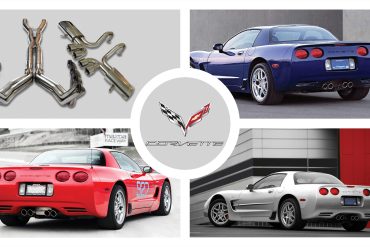
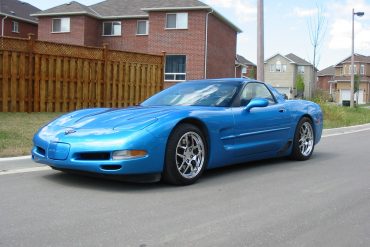
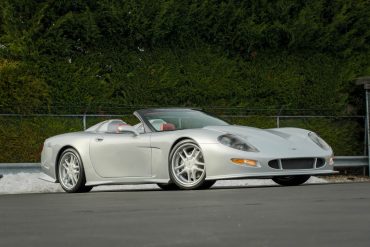
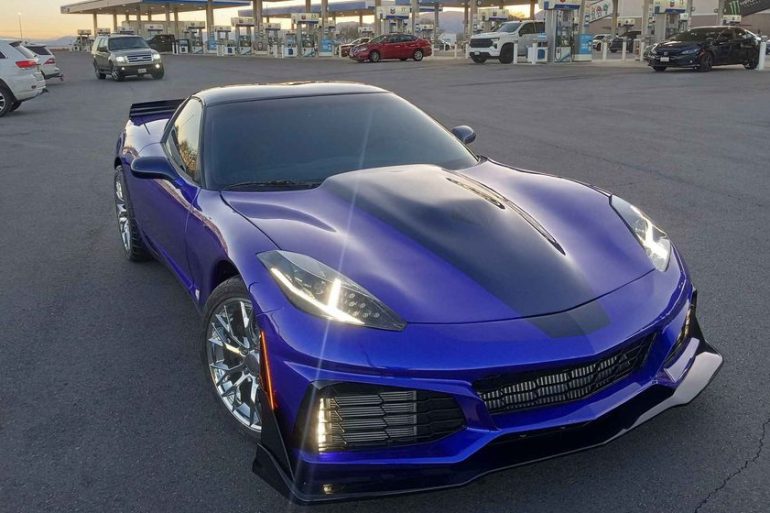
Greenwood's G5R body kit bolted a frame-mounted rear wing, splitter and rear tunnel onto the C5, promising measurable downforce from 50 mph. What the package included and how it was built.



C5 CORVETTE - 1998
The convertible returns, with a trunk for the first time since 1962, and paces the Indianapolis 500: 1,163 purple-and-yellow Pace Car replicas. Motor Trend and North American Car of the Year, Automobile’s Technology of the Year for the LS1, and 31,084 built, the most since 1986.
Quick Nav: Story · Specials · Pace Car · Price & Options · VIN · Specs · Technical · Pics & Videos · The Market · All · FAQs
Model & Gen: 1998 Corvette (C5)
Body Type: Two-door hatchback coupe with lift-off roof panel and, new this year, two-door convertible with a manual top, glass rear window and a trunk; Pace Car Replica (RPO Z4Z) on the convertible only
VIN: 1G1YY22G?W5100001 – 1G1YY22G?W5131069 (coupes 1G1YY22…, convertibles 1G1YY32…; one shared sequence)
Original Price: $37,495.00 coupe; $44,425.00 convertible; Pace Car Replica package $5,039.00 ($5,804.00 with the six-speed)
Colors: 12 including Light Pewter and Medium Purple Pearl (new), Pace Car Purple (Z4Z only, 1,163), Aztec Gold (15) and Navy Blue (14); interiors in Black, Light Gray, Light Oak (new) and Firethorn Red
Engine: 346 ci (5.7 L) LS1 all-aluminum V-8, 345 hp and 350 lb-ft, unchanged
Transmission: 4L60-E four-speed automatic standard (23,978 cars), now with a second-gear start mode; Borg-Warner T56 six-speed $815 (MN6, 7,106 cars); rear-mounted transaxle
Units Produced: 31,084 (19,235 coupes + 11,849 convertibles), including 1,163 Indy 500 Pace Car replicas
The second C5 added the body the chassis had been designed around. Lotus’s 1989 advice that a backbone frame could carry a convertible without added bracing proved out: the 1998 convertible weighed one pound more than the coupe (3,246 lb against 3,245), 114 pounds less than the C4 convertible it replaced, and kept almost all of the coupe’s stiffness, four times the C4’s. It had the first trunk on a Corvette convertible since 1962, 13.9 cubic feet with an outside lid, a body-color “waterfall” between the seats recalling the 1953–62 roadsters, and a manual double-lined top with a glass rear window and defroster that dropped in about 20 seconds and needed no tonneau pins. At $44,425 it was $635 less than the 1996 C4 convertible, and 11,849 were sold, 38 percent of the year. The coupe carried on at $37,495 with the same 345-hp LS1, 4L60-E automatic or $815 six-speed, and gained daytime running lamps, a second-gear start mode for the automatic, a 10,000-mile oil-change monitor, an air-filter monitor, a stainless transmission cooler and a quieter accessory drive, alternator mount and, late in the year, fuel pump.
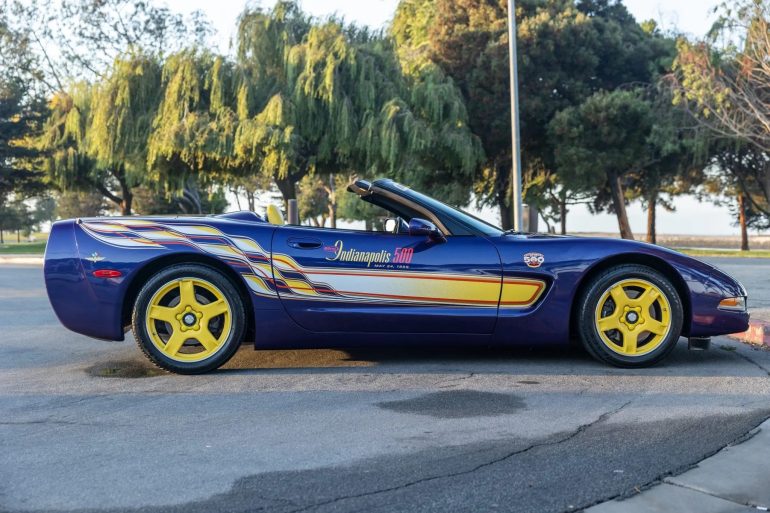
The convertible paced the 82nd Indianapolis 500 on May 24, 1998, driven by Parnelli Jones, the fourth Corvette to do so after 1978, 1986 and 1995, and Chevrolet sold a replica: RPO Z4Z, $5,039 on an automatic or $5,804 with the six-speed, announced in Las Vegas on November 6, 1997. The color was Radar Blue in GM’s press material and Pace Car Purple to everyone who saw it (code 21), with yellow five-spoke wheels, a black top, a yellow-and-black leather interior, the yellow checkered-flag graphics applied at the factory, and almost every option: CD and Bose, dual-zone air, sport seats, memory, mats and the new Active Handling System. 1,163 were built, 616 automatics and 547 six-speeds, 1,111 for the United States, 37 for export and 15 for Canada, including five pilot cars; the real pace car differed only by its strobe lights and a 370-hp intake and exhaust. Active Handling (RPO JL4, $500) arrived at mid-year on any car: a yaw-sensing stability control that braked individual wheels to check a skid and had a competition mode that allowed some slip, 5,356 cars took it. Speedline five-spoke magnesium wheels (N73, $3,000) went on 1,425 cars, 233 of them in the United States, before supplies ran out.
Light Pewter Metallic (3,276 cars) and Medium Purple Pearl (381) joined the chart, Light Oak joined the interiors and tops, Navy Blue arrived so late that only 14 cars got it, and fifteen cars were painted a high-metallic Aztec Gold in October and November 1997 as a 50th-anniversary experiment whose panels never matched, twelve coupes and three convertibles. The LS1 and chassis were unchanged, and GM quoted the same 4.72 seconds to 60 mph, 13.36 at 109.4 and 172 mph; Car and Driver’s six-speed convertible ran 5.1, 13.5 at 107 and 167 mph with the top up. The awards came all year: Motor Trend Car of the Year, North American Car of the Year, Car and Driver’s 10Best, Popular Science’s Grand Award, Automobile’s Technology of the Year for the LS1 and a place on Ward’s 10 Best Engines. Production reached 31,084, 19,235 coupes and 11,849 convertibles, the most since 1986. Today the Pace Car is the collectible 1998, $23,000 to $41,000 in 2026 for documented cars under 30,000 miles, while standard coupes trade from $10,000 for high-mileage drivers to $20,000–$32,000 for the cleanest low-mileage cars.
Despite the limited number of units produced in 1997, there was no question that the new C5 Corvette was anything less than a phenomenal success. Enthusiasts and critics alike praised the car for its outward appearance, improved ergonomics, impressive drivability and handling, uncompromising performance capabilities, and its complete feeling of precision and quality. General Motors had hit a home run from the very start, leaving many questioning with eager anticipation how the C5 could possibly be improved upon.
The answer was simple enough. For its sophomore year, Chevrolet introduced an all-new convertible companion to the C5 coupe. The plan had been to build the convertible from the very start of the C5 project and, as a result, the execution of putting the design to production was far simpler than the development of a convertible variant might have been had such measures not been taken.
In truth, the C5 Corvette had been engineered to accommodate a convertible top without the necessary heavy structural reinforcements most convertible cars require. The benefit of this intentional design strategy was that the C5 Convertible would not require extensive reworking, it would weigh just one pound more than the coupe, and it would retain almost all of the structural rigidity of its coupe counterpart. Additionally, the C5 convertible actually weighed 114 pounds less than the C4, yet it was four times more torsionally sound than its predecessor.
The Corvette design team, working carefully to maximize functionality of the available space on the car while focusing on developing a rag-top design that was more streamlined than earlier models, created a Corvette convertible that was both practical and very aesthetically pleasing.
For starters, the C5 convertible included a functional trunk – which was the first time a trunk had been included on a convertible Corvette since 1962 – and at 13.9 cubic feet, it was not just a small cubbyhole but rather a cargo area that provided genuine and practical functionality.
Amazingly, given the space limitations commonly associated with a Corvette, the C5 convertible’s trunk space was larger than that of any other contemporary convertible from that time. Another of the design elements that paid homage to the C1 was the revival of the convertible’s “waterfall”, a body panel that continued down from the tonneau, flowing between the seats just as it had on the 1953 thru 1962 Corvette. This new “waterfall” was so carefully incorporated into the design of the C5 convertible’s interior that its seams were nearly indiscernible from the rest of the tonneau (all of which conceals the convertible top when it is lowered).
Finished with the Corvette emblem and painted to match the rest of the exterior, it provided another design element to the already sophisticated interior and helped add to the genuine “roadster” look that made Corvette so appealing all the way back in its earliest days.
The convertible top itself was also a fusion of effective design and simplicity. The top itself featured a glass rear window that included an electric defroster as part of the standard convertible package.
While the double-lined top still had to be raised and lowered manually (as with every Corvette convertible before it), this new top was lighter and easier to operate than the C4’s. It could be raised or lowered in about 20 seconds.
However, because of the top’s weight and release points, it was not possible to lower the top while seated inside the vehicle. While considered a minor inconvenience by some, the new design did offer several upsides as well.
For one, the convertible top now used the tension of its raised framework to hold the bottom in place. This new design eliminated the need for the many unsightly tonneau anchor holes and roof locator pins that were always synonymous with earlier Corvette convertible tops.
Making a return for a second year was the LS1 small block V-8 engine. Now available as the standard (and only) power plant for both the coupe and the convertible, this new engine delivered 345 bhp at 5,600 rpm and 350 lb-ft of torque at 4,400 rpm.
While the engine displacement was the same as the C4’s LT1, this 5.7 liter engine was constructed of aluminum instead of iron and was a more aggressive, more durable design than its predecessor. Also a carry over from its predecessor, the LS1 kept the small-block’s time-honored 4.40-inch bore spacing (4.40 inches from bore center to bore center) and the familiar 5.7-liter displacement label.
Specified to run on premium fuel and filled with synthetic oil from the factory, the new LS1 had to be carefully fitted into the body of the Corvette. In fact, the engine clearances were so minimal, the new oil pan that was mated to the LS1 engine was scarcely 5 inches deep, yet offered increased capacity and the ability to supply lubricant during even the most extreme cornering maneuvers.
Even more impressive was the fact that this new 5.7-liter engine weighed 44 pounds less than the LT4 engine that it replaced, while still producing enough power to make it a serious contender against the former ZR1’s power plant.
Mated to the new LS1 engine was a standard, four-speed automatic transmission gearbox. As with the C4 before it, a Borg-Warner T56 six-speed manual transmission was offered for an additional $815.00 (a revised version of the previous generation’s ZF-era gearbox, now mounted at the rear axle). As before, the six-speed included the first-to-fourth Computer-Aided Gear Selection (CAGS) skip shift. While the linkages were more complex than before, the six speed transmission’s shift effort and feel were very reminiscent of the C4.
In an effort to increase the equal distribution of weight, the C5’s transmission was relocated to the rear of the car. Located just in front of the rear axle, the transmission was mated to the LS1 engine via an aluminum tube which ran through an enclosed tunnel that formed a chassis backbone strong enough to reduce structural loads on the outboard frame rails.
Relocating the transmission to the rear axle produced the desired balancing result with a 51/49 percent weight distribution. This equal distribution of weight would result in an automobile that was better-balanced and better equipped to handle the rigors of even the most aggressive drivers.
Further, this new layout was the direct result of a car that hadn’t solely been the brain-child of a single designer, but rather the response by GM to understand the considerable number of customer (and enthusiast) inputs that had driven the development of this car – including a call for friendly handling, roominess in the cockpit, and a solid, silent automobile. Another added benefit of relocating the transmission to the rear of the Corvette was the elimination of the former toe-pinching tunnels of the C4.
As has always been the case with General Motors, safety was a major concern in the development of both the C5 coupe and convertible. Many key safety features that were introduced in the 1997 Corvette carried over for the 1998 model year, while several others were introduced with the onset of the convertible. Daytime running lamps were included in both variants of the car to provide increased visibility of the Corvette during daytime operation.
Four-wheel antilock brakes, which were also standard in the previous platform, were also provided as a standard feature. Manufactured by Bosch, the ABS system helped to reduce wheel lockup and maintain driver steering control while braking – even on slippery surfaces. Safety cage construction and a high-strength perimeter frame were part of the design and, as mentioned earlier, attributed to the elimination of additional engineering that is generally required when rolling out a convertible variant. Other features to return for 1998 included driver and passenger side air bags as well as PASS-Key II theft deterrent system.
The Corvette had always been considered a platform for innovation of new technologies, and the C5 was no exception. Both the 1998 coupe and convertible featured a number of technical innovations that helped make owning a Corvette that much easier. These included a 10,000 mile recommended oil change interval. Admittedly, this option, while a good selling point, also required that a number of specific driving conditions be met. Still, with the specified Mobil 1 synthetic oil being nearly $5.00 a bottle in 1998, this was definitely a marketing point worth noting. An engine air-filter monitor was also installed that would indicate when the filter would need to be replaced. Like the extended oil life, the primary purpose of this monitoring system was for the benefit of consumers who were feeling the pinch at their wallets.
Did you know? In 1998, General Motors experimented with a couple of paint colors that were never officially issued as optional choices to consumers. In preparation for its 50th Anniversary, Chevrolet produced fifteen Corvettes in a high-metallic paint they called “Aztec Gold.”
The paint was initially applied to 5 Corvettes on October 22, 1997. When painting was finished, GM engineers and designers noted that the individual body panels did not appear to match one another in certain light conditions.
With the guidance of some experts at DuPont, a second batch of 5 Corvettes were painted with the special Aztec Gold color on November 17, 1997, with the same results. A third set of 5 were painted on November 26, 1997, but in all cases, the only consistency with this color was that the body panels of every Corvette seemed to vary from one another.
In an effort to reduce the color differences, the panels were removed from all 15 of the Corvettes (which consisted of 3 convertibles and 12 coupes), and each component was matched to others whose color was most similar. It is said today that no two Aztec Gold Corvettes look the same.
While many Corvette enthusiasts might argue that the Aztec Gold was the rarest color of the 1998 Corvette vintage, they would be wrong.
Late in the production year, GM introduced a new paint color, Navy Blue Metallic but, due to its late introduction, a very limited number of orders was placed - 14 Corvettes in all - for this color, making Navy Blue Metallic the rarest paint color for the '98 model year.
Like the 1997 before it, the 1998 Corvette was fitted with Goodyear Eagle F1 GS Extended Mobility Tires. These tires were designed to run airless for 200 miles. Their introduction to the extended mobility tires convinced Chevrolet to eliminate the spare tire and jack altogether, which further helped the engineers reduce weight while increasing cargo space. The inflation level of the tires was monitored constantly and could be called up on an instrument-panel display (thanks to the tire-pressure monitoring system that has since become standard on almost every GM vehicle).
The wheels were 17 x 8.5 inches in front and, for the first time, 18 x 9.5 inches at the rear, on P245/45ZR17 and P275/40ZR18 tires, unchanged from 1997. Optional magnesium wheels were introduced in the 1998 model year, but the $3,000.00 Speedline rims proved unexpectedly popular and were withdrawn later in the model year when supplies ran out; 1,425 sets were fitted, only 233 of them to cars sold in the United States.
Considering the incredible reception that the 1997 Corvette received, it was really no surprise that the 1998 C5 convertible was very well received by enthusiasts and critics alike – so much so in fact that it was selected as the official pace car of the 1998 Indianapolis 500.
This would be the fourth Corvette to serve as a pace car for this race, and while Chevrolet planned on marking the occasion by creating a special edition pace car model, the mechanical modification from the stock convertible were actually very few. The pace car’s LS1 engine received a freer-flowing intake manifold and a modified exhaust system boosted the car’s horsepower by 25, to 370 hp.
The car’s overall ride-height was lowered slightly, a roll bar was mounted behind each seat, and rear-facing strobe lights were integrated into the tonneau’s fairings.
To commemorate the occasion, Chevrolet built 1,163 pace-car replica convertibles (1,158 had been announced) for distribution to dealerships across the country. Listed as option RPO Z4Z, this option package-price carried an additional cost of $5,039.00 (and an additional $5,804.00 for customers who wanted their cars equipped with a manual transmission.) Interestingly, the replicas did not include any of the mechanical tweaks or safety features that were featured on the actual pace car. They did, however, include the exclusive paint – Radar Blue in GM’s press material, Pace Car Purple to everyone who has seen it – the decals, two-tone upholstery, and yellow wheels. They also included most of the otherwise optional equipment available for the model year and featured a new Corvette performance option – an anti-skid system known as the new Active Handling System (RPO JL4).
The new Active Handling System was available to consumers for an additional $500.00 and was designed to sense an impending skid during a turn. In such an instance, the car’s ABS /computer systems would take over and, by selectively applying individual brakes and activating the standard traction control system, would bring the car out of a skid and back under control – at which point it would immediately relinquish control back to the driver.
Much like the standard ABS system, this special Active Handling System functioned in real-time and was designed to aid drivers only as long as it was needed. The system did not affect throttle control, and keeping in character with the Corvette’s sporting nature, this system also featured a “competition mode”. By pressing a button on the console, the “competition mode” could be activated, thereby disengaging the Active Handling System and allowing drivers to drive the cars where some rear-wheel spin was actually desirable, as in extreme cornering situations on race tracks and in drifting conditions.
Did you know? While today’s Corvette convertibles are usually about 15% to 20% more expensive than the base coupe, this wasn’t always the case. In the 1960’s and ‘70s, the “ragtop” Corvettes were actually less expensive than the base coupes, with the base coupe generally costing approximately $300 to $400 more than the convertible.
There were a number of minor improvements made to the 1998 Corvette platform which included a modified accessory drive tensioner, the removal of an alternator brace that produced a high-rev “whining” sound, improved window seals and, later in the production run, a quieter electric fuel pump. While none of these improvements affected drivability, each was made to help reduce unwanted drive noise.
Additional mechanical improvements were made which included increasing the power-steering system’s caster angle to provide better tracking and a recalibrated Real Time Damping option for better wheel control. The transmission oil cooler was manufactured out of stainless steel instead of a copper-nickel alloy, and, perhaps the most significant from a driver’s perspective: the standard four-speed automatic gained a second-gear start mode to reduce (and often eliminate) wheel spin from a standing start on slick roads.
Sales numbers for the 1998 C5 Corvette were incredibly positive – and affirmed that the positive press and overwhelming positive response was more than just talk. For its first full model year, a total of 31,084 units were sold – the highest Corvette production total since 1986. Priced at $37,495.00 for the coupe and $44,425.00 for the convertible (which was a comparable price spread to the C4 coupe and convertible), the new convertible accounted for approximately 38% of the total units sold that year. Needless to say, General Motors was thrilled by the sales results and again, people were asking how the team responsible for the C5 Corvette were going to top their current efforts.
Little did anyone realize that the answer was just a little more than a year in the making, and would leave a mark on the Corvette legacy that would carry across two generations of the incredible sports car, forever transforming the franchise from being a respected American sports car to instead being recognized and accepted globally as one of the top automotive contenders in the world.
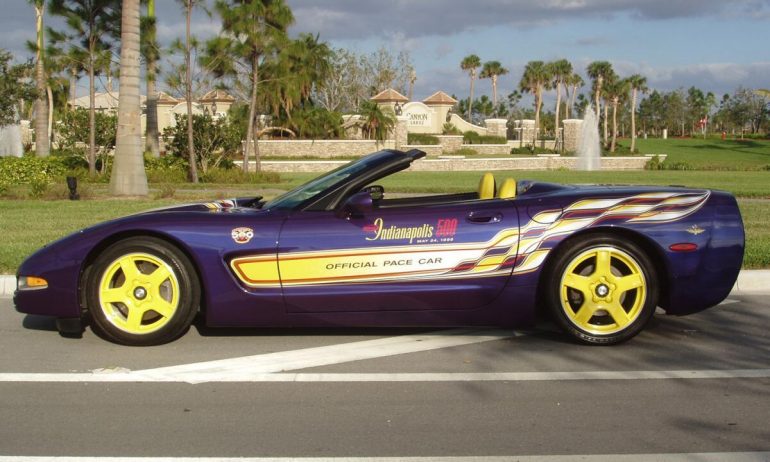
 The 1998 Corvette Convertible Pace Car Replica
 The interior of the 1998 Corvette Pace Car featured a yellow and black leather interior.
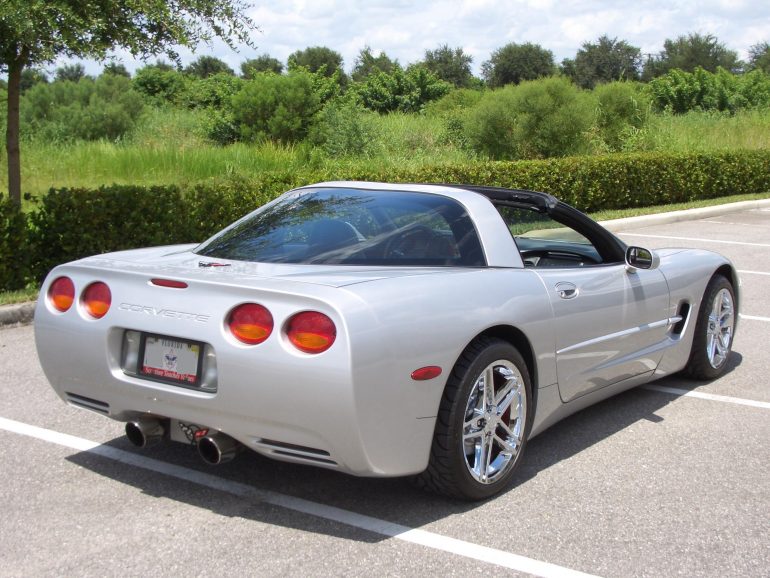
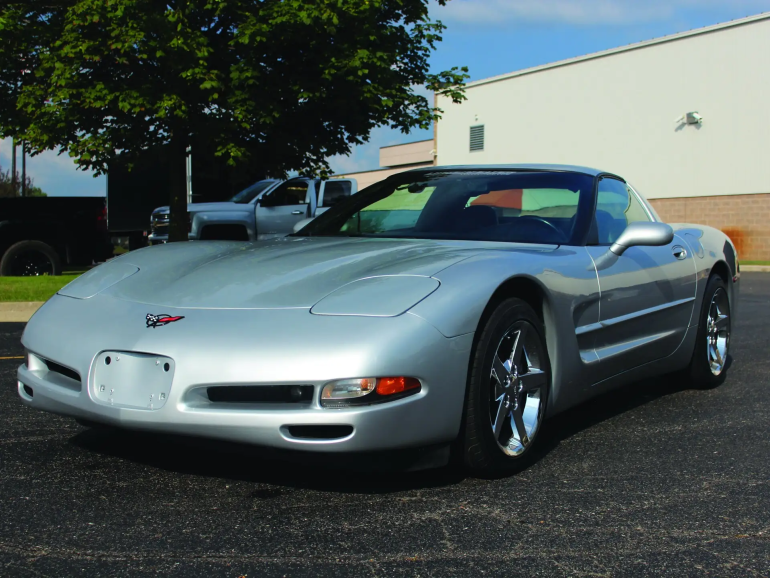
Aztec Gold was never on the order form. Chevrolet painted five cars on October 22, 1997, five more on November 17 and a last five on November 26 for the Corvette’s coming 50th anniversary, found that the high-metallic paint read differently on every panel in changing light, and had the panels pulled off all fifteen cars and re-sorted by shade before they were sold; no two of the twelve coupes and three convertibles match, and a different gold was chosen for 2003. Navy Blue, introduced later still, went on only 14 cars and is the rarest 1998 color of all.
DID YOU KNOW
The Indy 500 Pace Car replica has its own section below. Also here: the Greenwood G5R, the Callaway C12 and the C5-based concepts of the year.
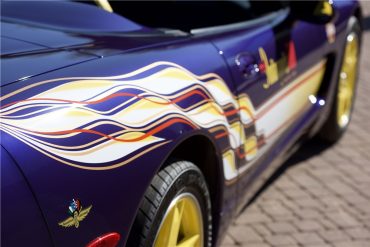
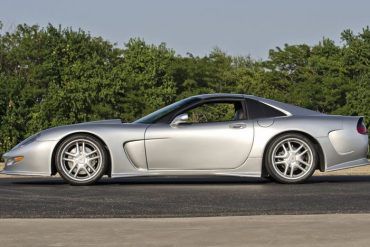
The convertible paced the 82nd Indianapolis 500 on May 24, 1998 with Parnelli Jones driving, the fourth Corvette pace car after 1978, 1986 and 1995, and Chevrolet sold the replica as RPO Z4Z: $5,039 on an automatic or $5,804 with the six-speed, in Pace Car Purple (code 21; “Radar Blue” in the press release) with factory-applied yellow checkered-flag graphics, yellow five-spoke wheels, a black top and yellow-and-black leather, loaded with the CD and Bose system, dual-zone air, sport seats, memory, mats and the brand-new Active Handling System. 1,163 were built, 616 automatics and 547 six-speeds, 1,111 for the United States, 37 export and 15 Canadian, five of them pilot cars; the real pace car differed only by its strobe lights and a 370-hp intake and exhaust. In 2026 documented cars under 30,000 miles sold for $23,000 to $41,000, six-speeds at the top.
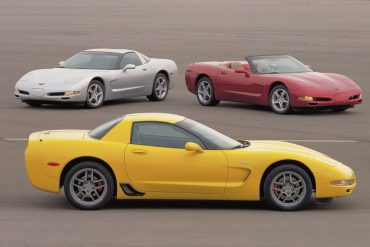
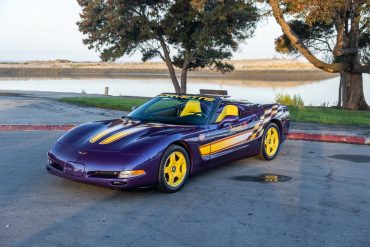

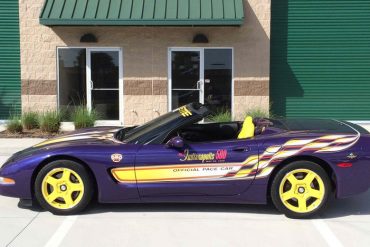
The 1998 coupe stayed at $37,495.00 and the new convertible listed at $44,425.00, $6,930 more than the coupe and, as Chevrolet made a point of saying, $635 less than the last C4 convertible of 1996; 19,235 coupes and 11,849 convertibles were built. The Pace Car Replica package (RPO Z4Z) was $5,039.00 on an automatic convertible and $5,804.00 with the six-speed, so a Pace Car started at $49,464 or $50,229, and 1,163 were built, 616 automatics and 547 manuals.
The six-speed (MN6, $815.00) went into 7,106 cars, 23 percent, against 23,978 automatics, of which 13,331 took the $100.00 3.15:1 axle (G92); 10,562 cars kept the 2.73:1. Selective Real Time Damping (F45, $1,695.00) went into 8,374 cars and the Z51 Performance Handling Package ($350.00) into 4,249, more than one in eight, and the mid-year Active Handling System (JL4, $500.00) into 5,356 cars including every Pace Car. The $3,000.00 Speedline magnesium wheels (N73) went out on 1,425 cars, only 233 of them sold in the United States, before Chevrolet ran out of them.
On the coupe the blue-tinted glass roof (CC3, $650.00) went on 6,957 cars, the dual-roof package (C2L, $950.00) on 5,640 and the standard body-color panel alone on 6,638.
Inside, the leather sport seats (AQ9, $625.00) went into 22,675 cars, nearly three in four, with 8,409 keeping the base leather seats; the power passenger seat (AG2, $305.00) into 28,575, the Memory Package (AAB, $150.00) into 24,234 and dual-zone electronic air (CJ2, $365.00) into 26,572.
The Delco CD player (UN0, $100.00) was fitted to 18,213 cars and the 12-disc changer (U1S, $600.00) to 16,513; 29,310 had fog lamps (T96, $69.00), 30,592 floor mats (B34, $25.00), 17,070 body-side moldings (B84, $75.00), 16,549 coupes the luggage shade (D42, $50.00) and 16,087 the front plate frame (V49, $15.00). Emissions packages were $170.00 for California (YF5, 3,111 cars) or Massachusetts and New York (NG1, 2,701).
A fully equipped F45 automatic coupe came to about $42,300 and a six-speed convertible with Z51, sport seats and CD to about $47,500 before the $565 destination charge.
MORE: PRICING, OPTIONS & COLORS / RPO CODES
| CODE | DESCRIPTION | QUANTITY | RETAIL PRICE |
|---|---|---|---|
| 1YY07 | Base Corvette Hatchback Coupe (345-hp LS1, 4L60-E automatic, body-color lift-off roof panel, leather seats, power driver seat, Delco cassette with Bose speakers, air conditioning, passive keyless entry, dual airbags, ABS and traction control, daytime running lamps, tire-pressure monitor, run-flat tires) | 19,235 | $37,495.00 |
| 1YY67 | Base Corvette Convertible (as coupe, with manual soft top, glass rear window with defroster and trunk) | 11,849 | $44,425.00 |
| AR9 | Base Seats, leather (standard) | 8,409 | no charge |
| FE1 | Base Suspension (standard) | 26,835 | no charge |
| AAB | Memory Package (requires CJ2) | 24,234 | $150.00 |
| AG2 | Six-Way Power Passenger Seat | 28,575 | $305.00 |
| AQ9 | Sport Seats, leather, with power bolsters and lumbar (requires AG2) | 22,675 | $625.00 |
| B34 | Front Floor Mats | 30,592 | $25.00 |
| B84 | Body Side Moldings | 17,070 | $75.00 |
| C2L | Dual Removable Roof Panels, body color and blue-tinted glass (coupe) | 5,640 | $950.00 |
| CC3 | Removable Roof Panel, blue-tinted glass (coupe) | 6,957 | $650.00 |
| CF7 | Removable Roof Panel, body color (coupe, standard) | 6,638 | no charge |
| CJ2 | Electronic Dual-Zone Air Conditioning | 26,572 | $365.00 |
| D42 | Luggage Shade and Parcel Net (coupe) | 16,549 | $50.00 |
| F45 | Selective Real Time Damping (not with Z51) | 8,374 | $1,695.00 |
| G92 | Performance Axle Ratio, 3.15:1 (automatic only; required with Z51 automatic) | 13,331 | $100.00 |
| JL4 | Active Handling System (from mid-year; included with Z4Z) | 5,356 | $500.00 |
| M30 | Four-Speed Automatic Transmission, 4L60-E (standard) | 23,978 | no charge |
| MN6 | Six-Speed Manual Transmission, Borg-Warner T56 | 7,106 | $815.00 |
| N73 | Magnesium Wheels, Speedline five-spoke (233 sold in the US) | 1,425 | $3,000.00 |
| NG1 | Massachusetts/New York Emissions | 2,701 | $170.00 |
| T96 | Fog Lamps | 29,310 | $69.00 |
| U1S | Remote Compact 12-Disc CD Changer | 16,513 | $600.00 |
| UN0 | Delco AM/FM Stereo with CD and Bose speakers (in place of cassette) | 18,213 | $100.00 |
| V49 | Front License Plate Frame | 16,087 | $15.00 |
| YF5 | California Emissions | 3,111 | $170.00 |
| Z4Z | Indy 500 Pace Car Replica, convertible only (Pace Car Purple with yellow wheels, yellow-and-black leather, black top, graphics, JL4, UN0, CJ2, AQ9, AG2, AAB, B34; $5,804.00 with MN6) | 1,163 | $5,039.00 |
| Z51 | Performance Handling Package (FE3 sport suspension; not with F45) | 4,249 | $350.00 |
| CODE | EXTERIOR | COUPE | CONVERTIBLE | TOTAL | INTERIOR |
|---|---|---|---|---|---|
| 70 | Torch Red | 5,535 | 3,232 | 8,767 | Black, Light Gray, Light Oak |
| 41 | Black | 4,080 | 2,517 | 6,597 | Black, Light Gray, Light Oak, Firethorn Red |
| 13 | Sebring Silver Metallic | 3,223 | 1,414 | 4,637 | Black, Light Gray, Firethorn Red |
| 10 | Arctic White | 2,074 | 1,272 | 3,346 | Black, Light Gray, Light Oak, Firethorn Red |
| 11 | Light Pewter Metallic (new) | 2,103 | 1,173 | 3,276 | Black, Light Gray, Firethorn Red |
| 53 | Light Carmine Red Metallic | 1,037 | 530 | 1,567 | Black, Light Gray, Light Oak, Firethorn Red |
| 21 | Pace Car Purple (“Radar Blue”), Pace Car Replica only (RPO Z4Z) | – | 1,163 | 1,163 | Yellow and Black, with black top and yellow wheels |
| 23 | Nassau Blue Metallic | 777 | 321 | 1,098 | Black, Light Gray, Light Oak |
| 95 | Medium Purple Pearl Metallic (new) | 229 | 152 | 381 | Black, Light Gray, Light Oak |
| 87 | Fairway Green Metallic | 153 | 70 | 223 | Black, Light Gray, Light Oak |
| 58 | Aztec Gold Metallic (not offered; 15 experimental cars) | 12 | 3 | 15 | Black, Light Gray, Light Oak |
| 28 | Navy Blue Metallic (late introduction) | 12 | 2 | 14 | Black, Light Gray, Light Oak |
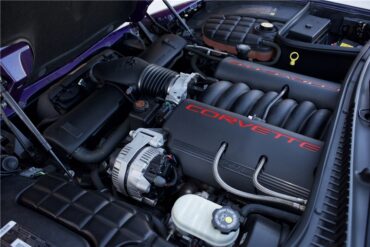
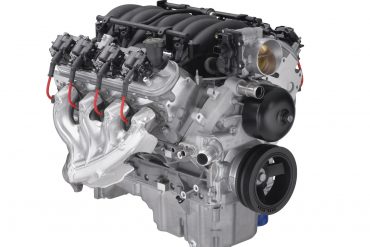
The LS1 (RPO LS1, VIN code G) carried over unchanged: 346 cubic inches from a 3.90-inch bore and 3.62-inch stroke in a deep-skirt cast-aluminum block (casting 12550592, with some late cars on 12559846) with cast-in iron liners and six-bolt mains, aluminum 12558806 heads with two valves per cylinder, hydraulic roller lifters and roller rockers, a composite intake, sequential injection, coil-near-plug ignition and electronic throttle control, 10.1:1 on premium fuel, 345 hp at 5,600 rpm and 350 lb-ft at 4,400 with a 6,000-rpm redline.
Engine suffixes were ZZC and ZZD (automatic and manual), both built in Romulus, Michigan. The rear transaxle held the standard 4L60-E automatic (3.06, 1.63, 1.00, 0.70), now with a second-gear start mode for slippery surfaces, on a 2.73:1 axle or the $100 3.15:1, or the $815 Borg-Warner T56 six-speed (2.66, 1.78, 1.30, 1.00, 0.74, 0.50) with CAGS and a 3.42:1 axle; 10,562 cars had the 2.73, 13,415 the 3.15 and 7,106 the 3.42. EPA figures were 17/25 mpg automatic and 18/28 manual.
The convertible used the coupe’s hydroformed frame and backbone tunnel without added bracing and weighed 3,246 pounds to the coupe’s 3,245, with a 0.32 drag coefficient top-up against the coupe’s 0.29; weight distribution was 51.5/48.5 with the six-speed and 50.8/49.2 with the automatic.
Suspension was unchanged: double wishbones with transverse composite springs and base FE1, Z51/FE3 (stiffer springs, 21.7-mm bars, 45-mm shocks) or F45 Real Time Damping, with more caster for straighter tracking. Brakes were 12.8-inch vented front and 12.0-inch rear rotors with Bosch ABS and ASR, and from mid-year the $500 Active Handling System (JL4) added yaw-rate, steering-angle and lateral-acceleration sensors that braked individual wheels to correct oversteer or understeer, with a competition mode that disabled traction control and let the car slide.
Wheels were 17 x 8.5 and 18 x 9.5 inches in cast aluminum, or Speedline magnesium with 4 mm more offset for $3,000, on Goodyear Eagle F1 GS Extended Mobility P245/45ZR17 and P275/40ZR18 run-flats with no spare.
GM’s figures were unchanged at 4.72 seconds to 60 mph (5.05 automatic), 13.36 at 109.4 mph, 172 mph, 0.93 g and 125 feet from 60; Car and Driver (March 1998) ran a six-speed convertible 0–60 in 5.1, 0–100 in 11.6, the quarter in 13.5 at 107 mph and to 167 mph, with 172 feet from 70 mph.
MORE: FULL SPECIFICATIONS / ENGINE
| SPEC | 1998 CORVETTE |
|---|---|
| Engine, LS1 (RPO LS1, standard) | 346 ci (5.7 L) Generation III small-block V-8, VIN G: 3.90 x 3.62 in, deep-skirt cast-aluminum block 12550592 (late 12559846) with cast-in iron liners and six-bolt main caps, aluminum 12558806 heads, 2 valves per cylinder, hydraulic roller lifters, roller rockers, composite intake, coil-near-plug ignition, sequential injection, electronic throttle control, 10.1:1, premium fuel; 345 hp @ 5,600 rpm, 350 lb-ft @ 4,400 rpm; 6,000-rpm redline; suffix ZZC / ZZD; built in Romulus, Michigan |
| Transmission | Rear-mounted transaxle via aluminum torque tube, Getrag limited-slip: 4L60-E four-speed electronic automatic standard (RPO M30, 23,978 cars) with new second-gear start mode, ratios 3.06, 1.63, 1.00, 0.70; Borg-Warner T56 six-speed manual (RPO MN6, $815.00, 7,106 cars) with CAGS, ratios 2.66, 1.78, 1.30, 1.00, 0.74, 0.50 |
| Axle ratio | 2.73:1 automatic (10,562 cars), 3.15:1 with RPO G92 ($100.00; 13,415 cars); 3.42:1 manual (7,106) |
| Structure | Hydroformed steel perimeter frame with backbone tunnel, aluminum cockpit cage and balsa-cored composite floor, shared by coupe and convertible without added bracing; convertible with trunk (13.9 cu ft) and body-color waterfall |
| Suspension | Double wishbones front and rear, forged/cast aluminum arms, transverse composite leaf springs, monotube shocks, increased caster; FE1 base (26,835 cars), Z51/FE3 Performance Handling ($350.00; 4,249), F45 Selective Real Time Damping ($1,695.00; 8,374) |
| Brakes, traction & stability control | Four-wheel vented discs, 12.8-in front and 12.0-in rear, Bosch ABS with ASR standard; Active Handling System (RPO JL4, $500.00, from mid-year; 5,356 cars) with yaw, steering-angle and lateral-g sensors and a competition mode |
| Steering | Rack and pinion, speed-sensitive magnetic variable-effort power assist, 16.1:1 |
| Body | Sheet-molded-composite panels; hatchback coupe with lift-off roof panel (body color CF7, blue-tinted glass CC3 $650.00, both C2L $950.00) or convertible with manual double-lined top, glass rear window with defroster and trunk; Cd 0.29 coupe, 0.32 convertible |
| Interior | Twin-cove cockpit, analog gauges, Driver Information Center with oil-life and air-filter monitors, leather seats (sport seats AQ9 $625.00), power driver seat, Delco cassette with Bose speakers (CD UN0 $100.00, changer U1S $600.00), passive keyless entry, dual airbags, daytime running lamps; 25.0 cu ft cargo (coupe), 13.9 (convertible) |
| Wheels & tires | Cast aluminum five-spoke 17 x 8.5 front, 18 x 9.5 rear; Speedline magnesium five-spoke optional (RPO N73, $3,000.00, 1,425 cars); Goodyear Eagle F1 GS Extended Mobility P245/45ZR17 / P275/40ZR18 run-flats, tire-pressure monitor, no spare |
| Fuel tank | 19.1 gal, twin composite tanks |
| Wheelbase | 104.5 in |
| Overall length / width / height | 179.7 / 73.6 / 47.7 in |
| Track, front / rear | 62.0 / 62.1 in |
| Curb weight | 3,245 lb coupe, 3,246 lb convertible; 51.5/48.5 manual, 50.8/49.2 automatic |
| 0–60 mph | 4.72 sec manual, 5.05 automatic (GM); 5.1 (Car and Driver, Mar 1998, six-speed convertible) |
| Quarter mile | 13.36 sec @ 109.4 mph (GM); 13.5 @ 107 (Car and Driver convertible) |
| Top speed | 172 mph (GM); 167 mph (Car and Driver convertible) |
| Braking / lateral acceleration | 125 ft from 60 mph, 0.93 g (GM); 172 ft from 70 mph (Car and Driver convertible) |
| Fuel economy (EPA) | 17 / 25 mpg automatic; 18 / 28 mpg manual |
| Production | 31,084: 19,235 coupes, 11,849 convertibles (1,163 Pace Car replicas); VIN sequence 100001–131069 |
| Assembly | Bowling Green, Kentucky; engines from Romulus, Michigan |
The 1998 Corvette’s VIN reads 1G1YY22G?W51xxxxx for a coupe and 1G1YY32G?W51xxxxx for a convertible: 1 for the United States, G for General Motors, 1 for Chevrolet, Y for the Corvette car line, Y for the Corvette series, 2 for the hatchback coupe or 3 for the convertible (new this year), 2 for active manual belts with driver and passenger airbags, G for the 5.7-liter LS1, a check digit in the ninth position that varies car by car, W for the 1998 model year and 5 for Bowling Green, Kentucky. Coupes and convertibles share one sequence, 100001 to 131069: 31,069 numbers against an official total of 31,084, the 15-car difference being pilot cars counted in the production figure, five of them Pace Cars. Nothing in the VIN identifies a Pace Car Replica: the sixth-position 3 says convertible and Z4Z appears only on the build sheet, the window sticker and the service parts identification label in the console, with paint code 21 and the yellow-and-black trim code.
The engine pad carries the Romulus plant code, build date and suffix ZZC or ZZD on a 12550592 block (a few late cars have 12559846) with 12558806 heads, the casting the LS1 used through 1998 before the 853 heads of 1999. The VIN plate sits on the left windshield pillar, visible through the glass, and is repeated on the driver’s door certification label and the service parts label, which lists every RPO on the car and is the quickest check on a claimed Z51, F45, JL4, N73 or Z4Z; the Pace Car VIN post on this site lists every replica’s sequence number and build date. Paint codes on the label and build sheet are 10, 11, 13, 21, 23, 28, 41, 53, 58, 70, 87 and 95; interior trims 19I black, 92I light gray, 67I light oak and 94I Firethorn Red, with top codes 41T black, 67T light oak and 16T white on convertibles.
MORE: VIN DECODER / PRODUCTION
| POSITION | MEANING |
|---|---|
| 1G1 (First through Third) | Country, maker, make: 1 = built in the USA, G = General Motors, 1 = Chevrolet |
| Y (Fourth) | Car line: Y = Corvette |
| Y (Fifth) | Series: Y = Corvette |
| 2 or 3 (Sixth) | Body: 2 = two-door hatchback coupe; 3 = two-door convertible (new for 1998; the Pace Car Replica is a convertible and carries no code of its own) |
| 2 (Seventh) | Restraint system: 2 = active manual belts with driver’s and passenger’s airbags |
| G (Eighth) | Engine: G = 346 ci (5.7 L) LS1, 345 hp; suffix ZZC / ZZD |
| x (Ninth) | Check digit, calculated from the other sixteen characters |
| W (Tenth) | Model year: W = 1998 |
| 5 (Eleventh) | Assembly plant: 5 = Bowling Green, Kentucky |
| 100001–131069 (Twelfth through Seventeenth) | Production sequence number, one series for both bodies: 31,069 numbers for an official total of 31,084 cars (the difference is pilot cars, five of them Pace Cars) |
Twelve colors: Torch Red (8,767), Black (6,597), Sebring Silver (4,637), Arctic White (3,346), Light Pewter (3,276, new), Light Carmine Red (1,567), Pace Car Purple (1,163, Z4Z only), Nassau Blue (1,098), Medium Purple Pearl (381, new), Fairway Green (223), Aztec Gold (15) and Navy Blue (14). Interiors in Black (18,338), Light Oak (5,871, new), Light Gray (5,450) and Firethorn Red (1,425); convertible tops in Black (8,630), Light Oak (2,376) and White (843).
The 1998 is the first C5 with a convertible, a collectible edition and a full year of production, and the market treats its three cars differently. The Pace Car Replica is the one that holds value: 1,163 built, unmistakable, bought new as a keepsake and often stored, so documented low-mileage examples are common and the six-speeds (547) bring more than the automatics. Standard convertibles sell for a few thousand more than coupes of the same mileage and the coupes sit with the 1997s and 1999s, with the six-speed, F45 or Z51, the glass roof and mileage deciding the price; the rare colors (Navy Blue, Aztec Gold, Medium Purple Pearl, Fairway Green) and the magnesium wheels are talking points rather than premiums, though an Aztec Gold car with its paperwork is a curiosity collectors pay for. Active Handling cars are worth seeking because the system is a real improvement on a wet road, and a 1998 with JL4 is identifiable from the console button and the service parts label.
Pace Car results tracked by Classic.com from November 2025 to October 2026, with the Classic.com benchmark at about $30,000: Bring a Trailer sold a 22-mile six-speed for $41,000 in February 2026, a 19,000-mile six-speed for $28,750 in September and 14,000-mile six-speeds for $24,750 and $23,000 in November and December 2025; Mecum Kissimmee sold a 551-mile automatic for $37,400, a 26,000-mile six-speed for $29,700 and a 7,000-mile automatic for $26,400 in January 2026, and Mecum Glendale a 6,000-mile six-speed for $29,700 in March; GAA sold a 10,000-mile six-speed for $25,000 in February, a private seller a 6,000-mile six-speed for $33,333 in June and Hagerty a 50,000-mile automatic for $18,000 in August. A 638-mile automatic was bid to $30,000 at Mecum in September without selling, and dealers asked $26,900 to $39,990, up to $36,000 for a 21,000-mile six-speed. Standard cars: Mecum Kissimmee sold a 21,000-mile automatic coupe for $31,900 and a 31,000-mile modified car for $27,500 in January 2026, Mecum Indianapolis a 3,000-mile automatic for $22,550 in May and Mecum Tulsa a 27,000-mile six-speed for $20,900 in June; Bring a Trailer sold a 3,000-mile automatic for $20,250 in November 2025 and 33,000- and 39,000-mile cars for $13,400 and $14,800 in spring 2026, Cars & Bids a 48,000-mile six-speed for $14,000, and high-mileage cars (87,000 to 125,000 miles) brought $9,550 to $10,750 at Hagerty, Cars & Bids and Bring a Trailer. Dealers asked $15,000 to $27,000 for ordinary coupes, $31,900 for a 13,000-mile six-speed and $34,890 for a 31,000-mile convertible. Auction figures are hammer prices; add the buyer’s premium when comparing with asking prices.
Verification of a Pace Car Replica: a 3 in the sixth VIN position, Z4Z on the build sheet, window sticker and the service parts label in the console, paint code 21 on the label, the yellow-and-black leather with embroidered headrests, the black top, the factory-applied yellow graphics with the checkered-flag motif over the tail, the yellow wheels and the Active Handling button; the Pace Car VIN post on this site lists every replica’s sequence number and build date, so a claimed car can be matched to it. Graphics have been reproduced and repainted purple convertibles exist, so a car without its label and sheet is a tribute until proven otherwise. For any 1998, the console label settles MN6, F45, Z51, JL4 and N73 claims, and a magnesium-wheel car should have Speedline castings, not the aluminum five-spokes painted bronze.
The inspection list is the 1997’s, with the first-year pieces mostly fixed. The electronic column lock (recall 04V060) can lock the steering with the key out and most cars now carry a dealer or aftermarket bypass; the Delco battery leaked onto the PCM below it, so check the tray and connectors; the lap-belt retractors were recalled (00V111). Rocker needle bearings fail and show up as valvetrain noise and metal on the drain plug, harmonic balancers walk forward on early LS1s, front rotors warp, and ABS, traction and Active Handling lights point to wheel-speed sensors, the steering-wheel position sensor or the EBCM. Fuel senders read empty on high-sulfur fuel, the fuel pump hums until the quieter later unit goes in, window regulators and headlight bezel plugs fail, the seat bolsters split and the seats rock. The convertible adds its own: the top’s rear window seal and the latch adjustment, water in the trunk from the top-well drains, and the tonneau-lid gas struts. None of it is costly, and a sorted 1998 convertible with the six-speed and Active Handling is the best open C5 short of a Z06-era car.
MORE: THE MARKET
Get all the latest news stories, upcoming auctions, prices, videos and more about the 1998 Chevrolet Corvette! The latest headlines here.




Chevrolet built 31,084 Corvettes for 1998 at Bowling Green, Kentucky, the most since 1986: 19,235 hatchback coupes and 11,849 convertibles, the first open C5s. Among the convertibles were 1,163 Indianapolis 500 Pace Car replicas (616 automatics, 547 six-speeds; 1,111 for the United States, 37 export and 15 for Canada, including five pilot cars). 7,106 cars had the six-speed, 23,978 the automatic, 8,374 Real Time Damping, 5,356 the mid-year Active Handling System, 4,249 the Z51 package, 1,425 magnesium wheels, 22,675 sport seats and 18,213 the CD player; fifteen cars were painted Aztec Gold and fourteen Navy Blue.
Between November 2025 and October 2026, Classic.com tracked Pace Car replicas selling from $18,000 (50,000 miles) to $41,000 (a 22-mile six-speed), with most documented cars under 30,000 miles between $23,000 and $33,000 and dealers asking up to $39,990. Standard 1998s sold from $9,550 for high-mileage cars to $31,900 for a 21,000-mile coupe at Mecum Kissimmee, with most clean cars between $13,400 and $22,550; dealers asked $15,000 to $27,000, and more for low-mileage six-speeds and convertibles. The six-speed, mileage, documentation and the Pace Car package set the price.
The LS1, unchanged from 1997: 346 cubic inches (5.7 liters) of all-aluminum Generation III small-block with a 3.90 x 3.62-inch bore and stroke, 10.1:1 compression, sequential injection, coil-near-plug ignition and electronic throttle, making 345 hp at 5,600 rpm and 350 lb-ft at 4,400 with a 6,000-rpm redline, built in Romulus, Michigan. It drove a rear-mounted 4L60-E automatic, which gained a second-gear start mode, or the $815 Borg-Warner T56 six-speed. Automobile named the LS1 its Technology of the Year and Ward’s put it on its 10 Best Engines list.
Twelve. Torch Red (8,767), Black (6,597), Sebring Silver (4,637), Arctic White (3,346), Light Pewter (3,276, new), Light Carmine Red (1,567), Nassau Blue (1,098), Medium Purple Pearl (381, new) and Fairway Green (223) were on the order form; Pace Car Purple (1,163; “Radar Blue” in GM’s press material) came only with the Z4Z package; Aztec Gold (15) was an unreleased experiment and Navy Blue (14) arrived too late to sell. Interiors were Black, Light Gray, Light Oak (new) or Firethorn Red leather; convertible tops Black, Light Oak or White.
$37,495 for the coupe and $44,425 for the new convertible, $635 less than the 1996 C4 convertible; destination was $565. The Pace Car Replica package was $5,039 on an automatic or $5,804 with the six-speed, so a Pace Car listed at $49,464 or $50,229. Magnesium wheels were $3,000, Real Time Damping $1,695, the dual-roof package $950, the six-speed $815, the glass roof $650, sport seats $625, the CD changer $600, Active Handling $500, dual-zone air $365, the Z51 package $350, the power passenger seat $305 and the Memory Package $150.
A replica of the convertible that paced the 82nd Indianapolis 500 on May 24, 1998 with Parnelli Jones at the wheel, the fourth Corvette pace car after 1978, 1986 and 1995. RPO Z4Z, $5,039 (automatic) or $5,804 (six-speed) on a convertible: Pace Car Purple paint (code 21), factory yellow checkered-flag graphics, yellow five-spoke wheels, a black top, yellow-and-black leather with embroidered headrests, and almost every option including the CD player, Bose, dual-zone air, sport seats, memory and the new Active Handling System. 1,163 were built, 616 automatics and 547 six-speeds; the real pace car differed only by its Speedway-mandated strobe lights and a freer-breathing 370-hp intake and exhaust.
The convertible returned, built on the unreinforced C5 frame with a trunk for the first time since 1962, a glass rear window with defroster and a manual top. The Active Handling System (JL4, $500) arrived at mid-year, the first stability control on a Corvette, with a competition mode. Speedline magnesium wheels were offered for $3,000, Light Pewter and Medium Purple Pearl joined the colors and Light Oak the interiors, and daytime running lamps, a second-gear start mode for the automatic, an air-filter monitor, a 10,000-mile oil-life monitor and a quieter accessory drive and fuel pump were added. The engine, transmissions and chassis were otherwise unchanged, and the car won Motor Trend’s and the North American Car of the Year awards.
1998 Corvette Advertisements / 1998 Corvette Colors / 1998 Corvette Common Issues / 1998 Corvette Engine / 1998 Corvette Factory Options / 1998 Corvette For Sale / 1998 Corvette Maintenance / 1998 Corvette Mods / 1998 Corvette Owners Manual / 1998 Corvette Pace Car / 1998 Corvette Performance / 1998 Corvette Posters / 1998 Corvette Pricing / 1998 Corvette Production / 1998 Corvette Recalls / 1998 Corvette Research / 1998 Corvette RPO Codes / 1998 Corvette Sales Brochures / 1998 Corvette Special Model Overview / 1998 Corvette Specifications / 1998 Corvette Technical Research / 1998 Corvette Service Bulletins / 1998 Corvette VIN Numbers