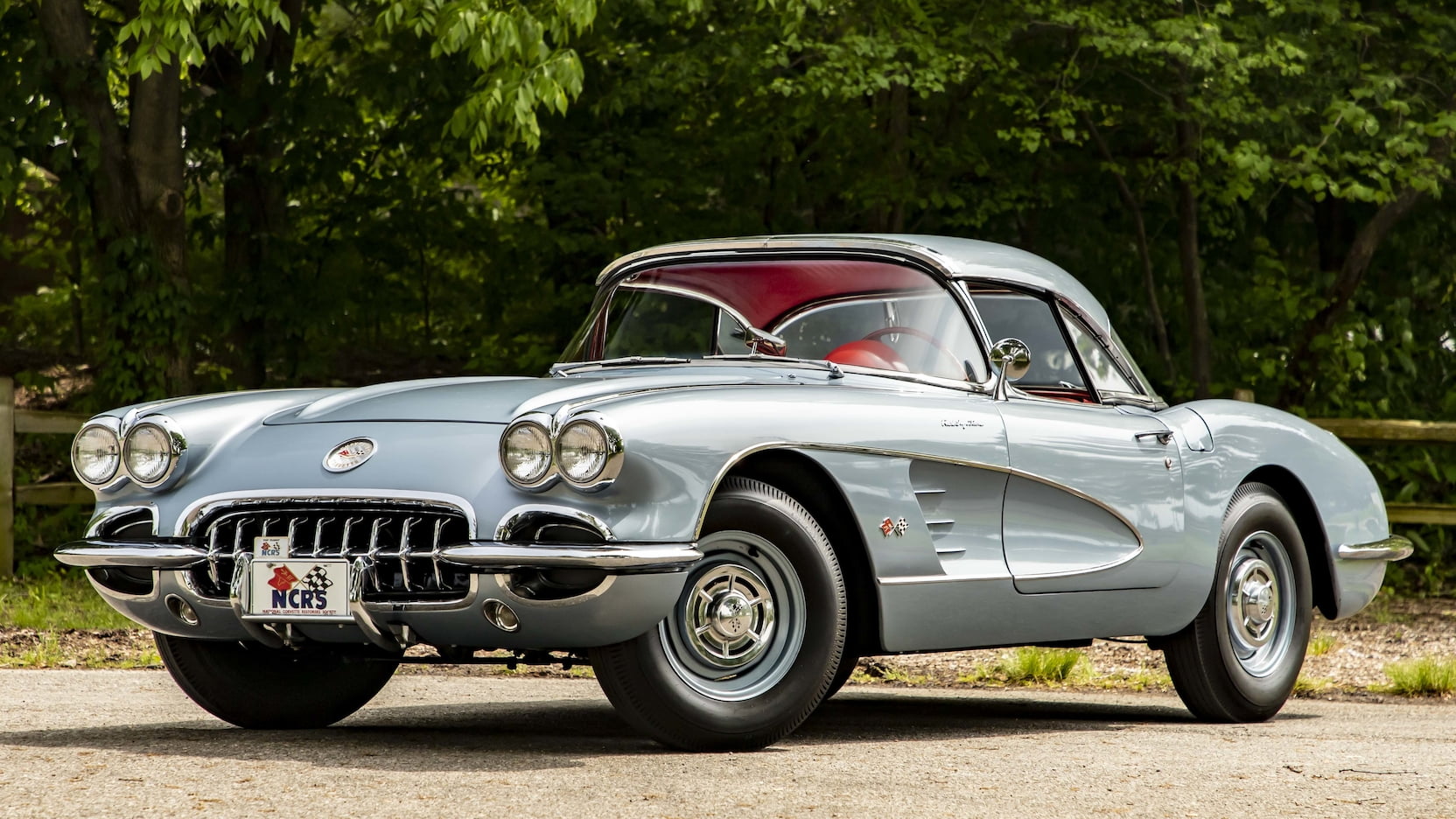
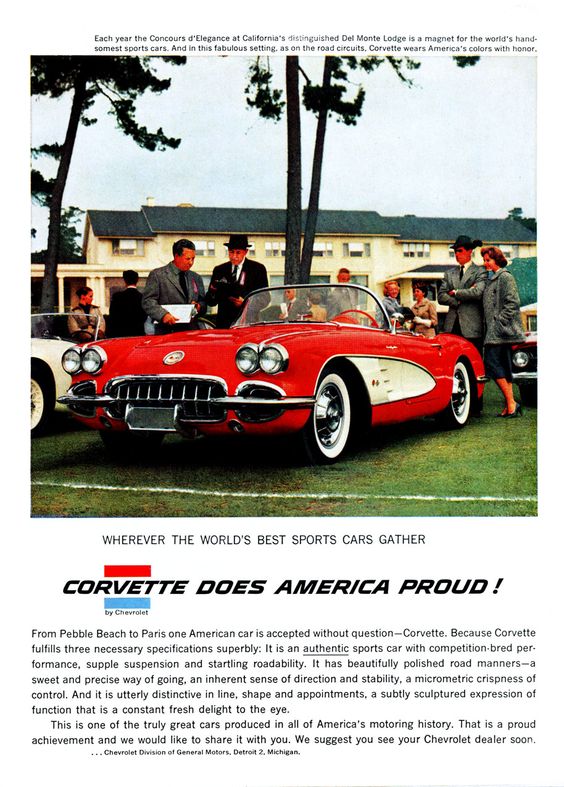
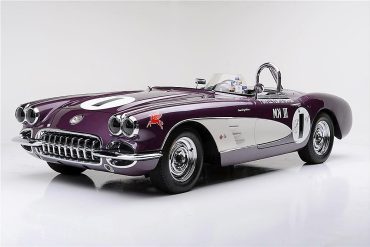
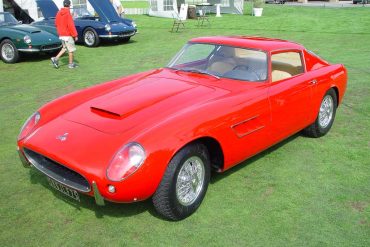
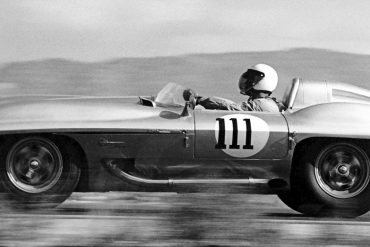
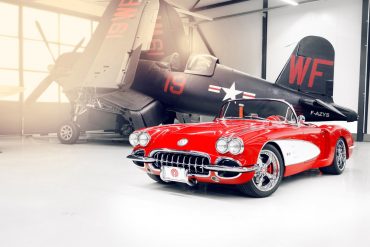
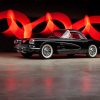
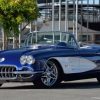
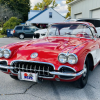
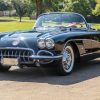
The Purple People Eater MKIII is a 1959 Corvette that was literally unbeatable in SCCA B-Production racing in the late 1950s. There were three Purple People Eaters built in 1958 and 1959. The 1959 model, won every race it entered, except the last one, with Jim Jeffords behind the wheel and mechanic Ronnie Kaplan turning wrenches. The car was built by a team at Nickey Chevrolet in Chicago.
Quick Nav: The Story · Specials · Price & Options · VIN · Specs · Technical · Pics & Videos · The Market · All Content · FAQs
The Basics
Model & Gen: 1959 Corvette (C1)
Body Type: 2 Door Convertible (removable hardtop optional)
VIN: J59S100001 – J59S109670
Original Price: $3,875 base
Colors: 7 (Snowcrest White, Tuxedo Black, Roman Red, Frost Blue, Inca Silver, Crown Sapphire, Classic Cream)
Engine: 283 ci V-8, 230 to 290 hp (fuel injection optional)
Transmission: 3-speed manual standard; 4-speed manual and 2-speed Powerglide optional
Units Produced: 9,670
The Overview
The 1959 Corvette is the 1958 cleaned up. Bill Mitchell, who had replaced Harley Earl as head of GM Styling at the end of 1958, had the fake hood louvers and the chrome trunk spears removed, and with them the car’s worst excesses; the quad headlights, the longer body and the bigger bumpers stayed. Nothing changed in the drivetrain: the same five 283s from 230 to 290 horsepower, the three-speed, four-speed and Powerglide, and Positraction in three ratios.
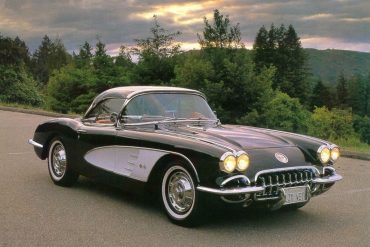
The real improvements were in the details. Trailing radius rods on the rear axle cured the wheel hop that had plagued the heavier 1958, the instrument panel went concave so the gauges could be read, the tachometer read to 7,000 rpm, the seats got more lateral support, a storage bin appeared under the passenger grab bar, sun visors became an option and the manual shifter gained a T-handle reverse lockout. Black became an interior color for the first time, a turquoise soft top was offered for this year only, and the sintered-metallic brake linings from the racing package could now be ordered on their own.
Production reached 9,670, within sight of the 10,000 GM wanted, and the four-speed outsold the three-speed for the first time. With the Sting Ray racer running under Mitchell’s own name and the XP-87 on the drawing board, the C2 was already taking shape; the 1959 is the last C1 before Chevrolet began counting down to it.
The 1959 Corvette Story
Even Bill Mitchell, General Motors Design Chief, commented that the GM Styling practices of that era were too quick to “ladle on chrome with a trowel.” As the 1959 Corvette was nearing production, it was decided that, once again, the design teams would re-visit Corvette and clean up the overall appearance of the car.
Ironically, the 1958 ‘Vette, along with other Chevrolet models, had been the subject of more than a little criticism and ridicule for it’s excessive use of chrome plating and trim. As the previous model year began drawing to a close, Chevrolet basked ever so briefly in the fact that they had finally achieved sales and marketing success with the 1958 Corvette.
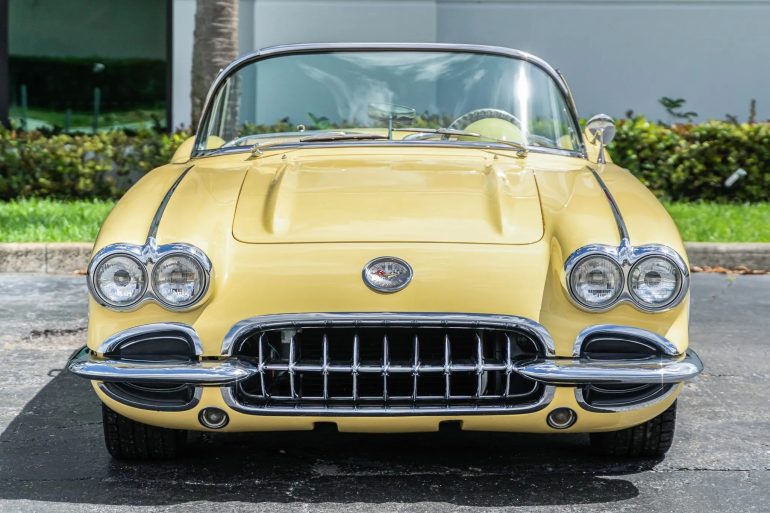
To the credit of all involved, the 1959 Corvette was cleaned up considerably. For one, the chrome “suspenders” were removed from the design, providing Corvette with a more swept-back look that was synonymous with speed. For another, it was decided that the faux hood louvers would be eliminated, returning the Corvette to a semblance of its former self. While these features were key identifiers of the 1958 Corvette, there was no question that the elimination of the excessive chrome would reduce weight and help increase performance.
Much like the exterior of the Corvette, the interior received minor, but significant updates as well. Both the door handles and the armrests were repositioned and a small-item storage compartment was added beneath the passenger side grab bar.
In addition, both the driver and passenger seats were redesigned to offer increased lateral support of their occupants. All tachometers now indicated up to 7,000 rpm and offered redline and safe limit indicators. Sun visors were introduced to the 1959 Corvette as a new option and concave instrument lenses replaced the flat covers of the 1958 Corvette, thereby reducing sun glare (and other reflections) that might cause a driver to become distracted.
Lastly, a T-handle manual transmission lockout was included to prevent drivers from accidentally putting their Corvettes in reverse. As with the 1958 Corvette before it, the powertrain of the ‘59 Corvette was unchanged from previous years - with one exception: the addition of trailing radius rods. These trailing rods were introduced to help counteract rear-axle windup, while also contributing to a softer overall ride and noticeably less rear-end shifting while driving on uneven or irregular surfaces. In addition to the trailing radius rods, Chevrolet began offering even stiffer springs as part of the heavy-duty brakes/suspension option (RPO 684) that had been originally introduced as an option on the 1957 Corvette.
The addition of both of these new components helped produce consistently better handling and better handling also meant better overall performance, and the 1959 Corvette proved it at the test track. With quarter-mile times of less than 15 seconds and a 0-60 mph time of fewer than 8 seconds, the 1959 Corvette was considered to be remarkably fast - and notably fast even by today's standards. The top-end “fuelies” (fuel injected) Corvettes were rated at 290 horsepower with a top speed of 128 miles per hour when mated with the 4.11:1 final drive.
Did you know? The 1959 Corvette was the only production year where Chevrolet included an option of purchasing a turquoise soft top. Also, the 1959 Corvette marked the first year where consumers could purchase an all black interior. Lastly, 1959 marked the last year in which Chevy Corvette sold less than 10,000 units in a given model year.
Lastly, the braking system of the 1959 Corvette received some upgrades. Several factory options including sintered-metallic linings (RPO 686) were introduced under the development of General Motors Delco-Moraine Division. These new linings were comprised of three pairs of lining segments that were riveted to the primary brake shoe and five pairs of slightly thicker segments for the secondary shoes. These sintered linings provided for smoother braking while requiring less time to heat up before providing maximum, effective braking.
Production Numbers
Chevrolet sales of the 1959 Chevy Corvette totaled 9,670 units, a number that was just shy of the landmark 10,000 units that General Motors was now anxiously hoping to hit with its two-seater sports car. Although Chevy was not yet making a significant profit from sales of the Corvette, it was no longer costing Chevrolet money either. The modest numbers continued to point in the right direction, and both Corvette designers and engineers believed that they were on the brink of surpassing the 10,000 units/year number. Still, it was now clear that American car enthusiasts were finally embracing the Corvette as a serious sports car which meant that Chevrolet would continue moving forward with the development of an, as yet unrealized, second-generation Corvette. With prototype designs like the exceedingly expensive Q-Corvette and Bill Mitchell's XP-700 already envisioned, anticipation among General Motors executives, engineers, and designers was on the rise.

Interior of 1959 Corvette. Note the T-handle on the manual transmission shifter and the storage compartment beneath the passenger grab bar.


1959 is the only year a turquoise convertible top was offered, and the first year a Corvette could be ordered with an all-black interior. It is also the year the four-speed overtook the three-speed: 4,175 cars had the Borg-Warner T-10 against 3,617 with the standard gearbox.
DID YOU KNOW
Price & Options
Core Features & Factory Options
The base price rose to $3,875 and the option list grew. The engines carried over at the same prices: the 245-hp dual-quad (RPO 469, $150.65, 1,417 cars), the 270-hp dual-quad with the Duntov camshaft (RPO 469C, $182.95, 1,846 cars), and fuel injection at $484.20 in 250-hp (RPO 579, 175 cars) and 290-hp (RPO 579D, 745 cars) forms, so 920 of the 9,670 cars were fuelies, down from 1,511 the year before. The four-speed (RPO 685, $188.30) went into 4,175 cars and the Powerglide (RPO 313, $199.10) into 1,878. Positraction (RPO 675, $48.45) was on 4,170 cars.
The heavy-duty brake and suspension package (RPO 684) dropped to $425.05 now that Positraction was ordered separately, and 142 buyers took it; new for 1959, the sintered-metallic brake linings could be had alone as RPO 686 for $26.90 (333 cars), and a 24-gallon fuel tank (RPO 1625), blackwall nylon tires (RPO 1408) and a radiator fan clutch (RPO 121, 67 cars) joined the list for racers.
The comfort options were the familiar ones: the removable hardtop ($236.75) on 5,481 cars, the heater ($102.25) on 8,909, the signal-seeking radio ($149.80) on 7,001, power windows ($59.20) on 587, the power top ($139.90) on 661, and new sun visors ($10.80) on 3,722. Seven colors were offered, with Snowcrest White again the most popular, and 2,931 buyers paid $16.15 for the two-tone coves: 805 Roman Red/White, 535 Snowcrest White/Silver, 496 Tuxedo Black/Silver, 420 Crown Sapphire/White, 361 Frost Blue/White, 220 Inca Silver/White and 89 Classic Cream/White. The color totals add up to 9,582, 88 short of production.
MORE: PRICING, OPTIONS & COLORS / RPO CODES
| CODE | DESCRIPTION | QUANTITY | RETAIL PRICE |
|---|---|---|---|
| 867 | Base Corvette Convertible | 9,670 | $3,875.00 |
| 101 | Heater | 8,909 | $102.25 |
| 102 | AM Radio, signal seeking | 7,001 | $149.80 |
| 107 | Parking Brake Alarm | 3,601 | $5.40 |
| 108 | Courtesy Lights | 3,601 | $6.50 |
| 109 | Windshield Washers | 7,929 | $16.15 |
| 121 | Radiator Fan Clutch | 67 | $21.55 |
| 261 | Sunshades | 3,722 | $10.80 |
| 276 | Wheels, 15 x 5.5 (5) | 214 | $0.00 |
| 290 | Whitewall Tires, 6.70 x 15 | 8,173 | $31.55 |
| 313 | Powerglide Automatic Transmission | 1,878 | $199.10 |
| 419 | Auxillary Hardtop | 5,481 | $236.75 |
| 426 | Power Windows | 587 | $59.20 |
| 440 | Two-Tone Paint Combination | 2,931 | $16.15 |
| 469 | 283ci, 245HP Engine (2x4 Carburetors) | 1,417 | $150.65 |
| 469C | 283ci, 270HP Engine (2x4 Carburetors) | 1,846 | $182.95 |
| 473 | Power Operated Folding Top | 661 | $139.90 |
| 579 | 283ci, 250HP Engine (Fuel Injection) | 175 | $484.20 |
| 579D | 283ci, 290HP Engine (Fuel Injection) | 745 | $484.20 |
| 675 | Positraction Rear Axle | 4,170 | $48.45 |
| 684 | Heavy Duty Brakes and Suspension | 142 | $425.05 |
| 685 | 4-Speed Manual Transmission | 4,175 | $188.30 |
| 686 | Metallic Brakes | 333 | $26.90 |
| 1408 | Blackwall Tires, 6.70 x 15 Nylon | – | – |
| 1625 | 24 Gallon Fuel Tank | – | – |
| EXTERIOR | TOTAL | COVE (OPTIONAL) | COVE TOTAL | SOFT TOP | WHEELS | INTERIOR |
|---|---|---|---|---|---|---|
| Snowcrest White | 3,354 | Silver | 535 | Blue, Black, Turquoise, White | Black | Blue, Black, Red, Turquoise |
| Tuxedo Black | 1,594 | Silver | 496 | Black, White | Black | Blue, Black, Red |
| Roman Red | 1,542 | White | 805 | Black, White | Black | Black, Red |
| Frost Blue | 1,024 | White | 361 | Blue, Black, White | Black | Blue, Red |
| Inca Silver | 957 | White | 220 | Black, White | Black | Black, Red |
| Crown Sapphire | 888 | White | 420 | Black, Turquoise, White | Black | Turquoise |
| Classic Cream | 223 | White | 89 | Black, White | Black | Black |
Specifications & Performance
Engine & Transmission
The powertrain was a 1958 carryover: the 283 in five versions from the base 230-horsepower single four-barrel through the 245 and 270-horsepower dual-quads to the 250 and 290-horsepower Rochester fuel injection, all at 9.5:1 compression.
The engine pad suffixes also carried over (CQ, CT, CU, CR, CS for manual cars, DG, DJ, DH for Powerglides), so a 1959 engine is identified exactly as a 1958’s. What changed was the choice: for the first time the four-speed outsold the standard three-speed, and 290-hp fuelie buyers almost always paired it with the four-speed and a 4.11 Positraction axle.
The chassis finally got the attention the extra weight demanded. Trailing radius rods tied the rear axle to the frame and stopped it winding up under hard acceleration, which both improved traction and softened the ride on rough roads. Period tests put a 290-hp four-speed car at around 6.6 seconds to 60 mph and under 15 seconds for the quarter mile.
Braking improved too: the sintered-metallic linings developed by Delco-Moraine, previously only part of the RPO 684 package, became a $26.90 option on their own (RPO 686), and the 684 package itself was repriced at $425.05 with Positraction ordered separately. A 24-gallon fiberglass fuel tank and a fan clutch rounded out the racing options.
MORE: FULL SPECIFICATIONS / ENGINE
| SPEC | 1959 CORVETTE |
|---|---|
| Engine | 283 ci (4.6 L) OHV small-block V-8, 3.875 x 3.00 in, cast iron block & heads, 9.5:1 |
| Base engine | 230 hp @ 4,800 rpm, 300 lb-ft @ 3,000 rpm, single Carter WCFB four-barrel; 5,487 cars |
| RPO 469 | 245 hp @ 5,000 rpm, 300 lb-ft @ 3,800 rpm, dual four-barrels; 1,417 cars, $150.65 |
| RPO 469C | 270 hp @ 6,000 rpm, 285 lb-ft @ 4,200 rpm, dual four-barrels with the Duntov camshaft; 1,846 cars, $182.95 |
| RPO 579 | 250 hp @ 5,000 rpm, 305 lb-ft @ 3,800 rpm, Rochester Ramjet fuel injection; 175 cars, $484.20 |
| RPO 579D | 290 hp @ 6,200 rpm, 290 lb-ft @ 4,400 rpm, fuel injection with the Duntov camshaft; 745 cars, $484.20 |
| Transmission | 3-speed manual standard (3,617 cars); Borg-Warner T-10 4-speed (RPO 685, 4,175 cars, $188.30); 2-speed Powerglide (RPO 313, 1,878 cars, $199.10). New T-handle reverse lockout on manual cars |
| Axle ratio | 3.70:1 standard (3.55:1 with Powerglide); Positraction (RPO 675, $48.45, 4,170 cars) in 3.70, 4.11 or 4.56:1 |
| Suspension | Independent front with coil springs and anti-roll bar; live axle on semi-elliptic leaf springs with new trailing radius rods to control axle windup. RPO 684 heavy-duty brakes and suspension ($425.05, 142 cars) |
| Brakes | 11-in drums; sintered-metallic linings available separately for the first time (RPO 686, $26.90, 333 cars) |
| Tires | 6.70 x 15 in; blackwall nylon tires (RPO 1408) and 15 x 5.5 in wheels (RPO 276, 214 cars) optional |
| Fuel tank | 16.4 gal; 24-gallon fiberglass tank for racing (RPO 1625) |
| Wheelbase | 102 in |
| Overall length | 177.2 in |
| Curb weight | 3,033 lb / 1,376 kg (manual); 3,135 lb (Powerglide) |
| 0–60 mph | approx. 6.6 sec (290 hp fuel injection, 4-speed, 4.11:1, period road test) |
| Quarter mile | under 15 sec (290 hp, 4-speed) |
| Top speed | approx. 125 mph (290 hp) |
| Production | 9,670, all convertibles; 5,481 with the removable hardtop; 920 fuel-injected |
| Assembly | St. Louis, Missouri |
Vehicle Identification Numbers (VIN)
9,670 Cars, J59S100001 TO J59S109670
The last six digits begin at 100001 and run through 109670, accounting for each of the 9,670 Corvettes built for 1959. The VIN plate is on the driver-side door post and the number is also stamped in several places on the frame. Every 1959 begins J59S followed by the sequence number.
The engine pad suffix identifies the engine exactly as in 1958: CQ (230 hp, manual), DG (230 hp, Powerglide), CT (245 hp, manual), DJ (245 hp, Powerglide), CU (270 hp, manual), CR (250-hp fuel injection, manual), DH (250-hp fuel injection, Powerglide) and CS (290-hp fuel injection, manual). The axle code on the housing records the ratio and whether the car had Positraction or the heavy-duty package. Only one body style, the convertible, was built.
MORE: VIN DECODER / PRODUCTION
| POSITION | MEANING |
|---|---|
| J (First Digit) | General Motors identification code for the Chevrolet Corvette |
| 59 (Second & Third Digits) | Model year |
| S (Fourth Digit) | Assembly plant: S = St. Louis, Missouri |
| 100001–109670 (Fifth through Tenth Digits) | Production sequence number |
Pictures, Videos, Wallpapers & Galleries
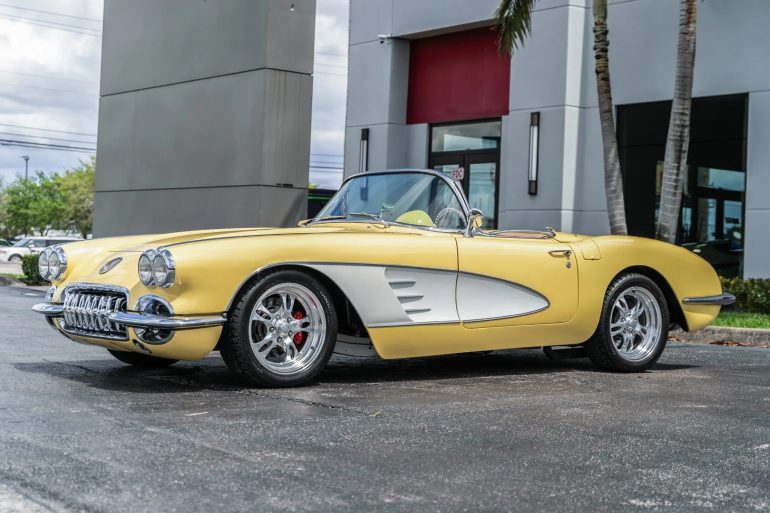
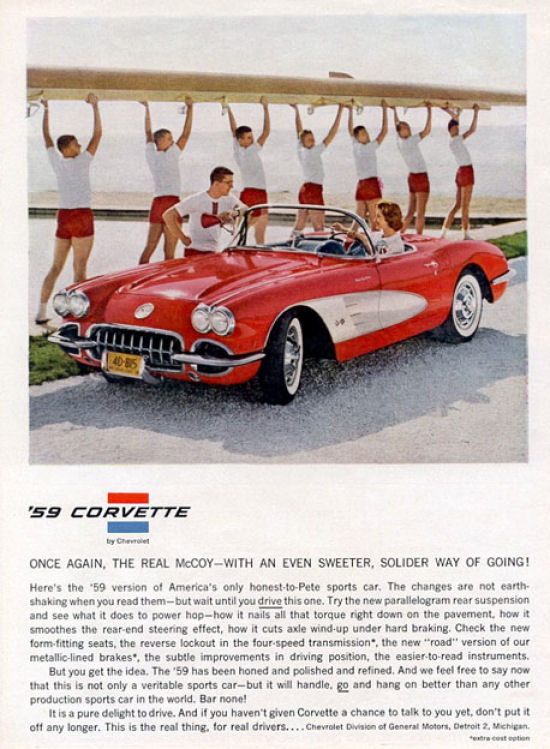
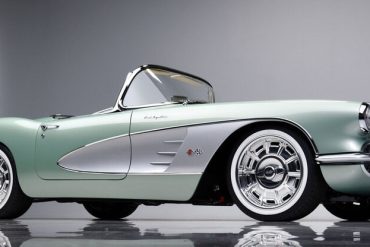
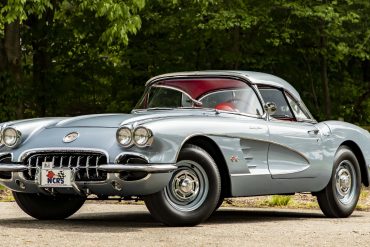
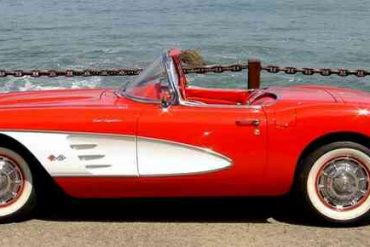
Seven colors on the de-chromed body, with 2,931 two-tone cars: Snowcrest White (3,354), Tuxedo Black (1,594), Roman Red (1,542), Frost Blue (1,024), Inca Silver (957), Crown Sapphire (888) and Classic Cream (223).
Market & Buying Guide
For Sale & What They Bring
The 1959 and 1960 are the quiet middle of the C1 market: cleaner than a 1958, cheaper than a 1961–62, and mechanically identical to each other. Prices track the 1958 closely, with the same hierarchy. A documented 290-hp fuelie four-speed, and above it the 142 RPO 684 “big brake” cars, are the collector tier; 270 and 245-hp dual-quad four-speeds are the volume collector cars; 230-hp and Powerglide cars are the entry point. The 1959 is also a favorite restomod base, so confirming that body, frame and VIN belong together comes before anything else.
Results tracked by Classic.com from May through September 2026 put original or well-restored carbureted cars between about $55,000 and $82,000: $55,000 and $55,500 on Bring a Trailer in June and September, $62,700 at Barrett-Jackson Las Vegas in September, $68,000 and $81,959 on Bring a Trailer in June. A 283 fuelie sold for $112,500 at GAA Greensboro in July, while big-brake fuelies were bid to $100,000 at Mecum Indianapolis in May and $66,500 at a Hagerty auction in August without selling. Modified and restomod cars ranged from $50,000 to $95,000 at auction, with custom builds reaching $126,500 at Barrett-Jackson Columbus, and projects from about $28,000. Check whether a result includes the buyer’s premium, and treat asking prices and unsold high bids separately from completed sales.
Verification starts at the engine pad: the suffix must match the equipment and the block date must precede the car’s build. A fuel-injection unit should carry a 1959-series Rochester number, and the metallic brakes and 24-gallon tank are easy to add, so RPO 684 and 686 claims need the axle code and documentation to back them. The trailing radius rods should be present on any 1959; their absence means a 1958 chassis or a swap. NCRS judging sheets, old photographs, ownership records and restoration invoices all help, and ask to see dates and scores rather than just the award.
The body is the 1958 shell without the louvers and spears, and the weak points are the same: cracks around the headlight bezels, the door hinge pillars, the cove edges where the two-tone trim mounts, and the cowl. Hoods from 1958 have louvers, so a louvered hood on a 1959 is a replacement. Underneath, the boxed frame rails rust from the inside, so an inspection on a lift is essential, and look at the radius-rod mounts on the frame. On the road a fuelie should start hot and cold without drama, the four-speed should not jump out of gear, and the T-handle lockout should work. Most of these cars see few miles, so budget for tires, brakes and fuel-system work on anything that has sat.
MORE: THE MARKET
Everything We've Published On The 1959 Corvette
Get all the latest news stories, upcoming auctions, prices, videos and more about the 1959 Chevrolet Corvette! The latest headlines here.
FAQs
How many 1959 Corvettes were built?
Chevrolet built 9,670 Corvettes for 1959, all convertibles, at St. Louis, Missouri, up from 9,168 in 1958 and just short of the 10,000 GM was hoping for. Of those, 920 had fuel injection, 4,175 had the four-speed, 5,481 had the removable hardtop and 142 had the RPO 684 heavy-duty brake and suspension package.
How much is a 1959 Corvette worth today?
In 2026, original or well-restored carbureted 1959 Corvettes have mostly sold for $55,000 to $82,000 at auction, with a documented 283 fuelie bringing $112,500 and big-brake fuelies bid to $100,000. Restomods and customs range from $50,000 to over $125,000 depending on the build, and projects start around $28,000. The engine, its paperwork and the four-speed decide the price.
What engine and transmission did the 1959 Corvette have?
The 283-cubic-inch small-block V-8 in the same five versions as 1958: 230 hp with a single four-barrel, 245 or 270 hp with dual four-barrels, and 250 or 290 hp with Rochester Ramjet fuel injection. A three-speed manual was standard; the four-speed ($188.30) went into 4,175 cars, more than the three-speed for the first time, and the Powerglide automatic ($199.10) into 1,878.
What colors did the 1959 Corvette come in?
Seven: Snowcrest White (3,354 cars), Tuxedo Black (1,594), Roman Red (1,542), Frost Blue (1,024), Inca Silver (957), Crown Sapphire (888) and Classic Cream (223). For $16.15, 2,931 buyers had the coves painted silver or white. Black was offered as an interior color for the first time, and a turquoise soft top was available for 1959 only.
How much did the 1959 Corvette cost when new?
The base price was $3,875 with the 230-hp engine and three-speed manual. Fuel injection added $484.20, the four-speed $188.30, the hardtop $236.75, Positraction $48.45 and the heavy-duty brake and suspension package $425.05. A 290-hp fuelie with the four-speed, Positraction and RPO 684 came to just over $5,000.
What changed from the 1958 to the 1959 Corvette?
Outside, the eighteen fake hood louvers and the two chrome trunk spears were removed; otherwise the body is the same. Inside, the instrument panel became concave, the tachometer read to 7,000 rpm, the seats gained lateral support, a storage bin was added under the passenger grab bar, the door handles and armrests moved, sun visors became available and the manual shifter got a T-handle reverse lockout. Underneath, trailing radius rods were added to the rear axle, and the metallic brake linings became a stand-alone option.
How do you tell a 1959 Corvette from a 1960?
You mostly can’t from the outside: the bodies are identical, and both lack the 1958 louvers and spears. The 1960 added a larger front anti-roll bar and a rear bar, aluminum radiators on the higher-output engines, and raised the fuel-injected engines to 275 and 315 hp with 10.5:1 compression. The VIN is the reliable tell: 1959 cars begin J59S, 1960 cars begin 00867S.
All The Research
1959 Corvette Advertisements / 1959 Corvette Colors / 1959 Corvette Common Issues / 1959 Corvette Factory Options / 1959 Corvette For Sale / 1959 Corvette Owners Manual / 1959 Corvette Performance / 1959 Corvette Posters / 1959 Corvette Pricing / 1959 Corvette Production / 1959 Corvette Research / 1959 Corvette RPO Codes / 1959 Corvette Sales Brochures / 1959 Corvette Scaglietti Coupe / 1959 Corvette Special Model Overview / 1959 Corvette Specifications / 1959 Corvette Sting Ray / 1959 Corvette Technical Research / 1959 Corvette VIN Numbers