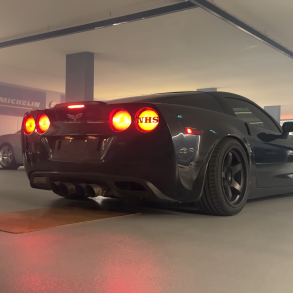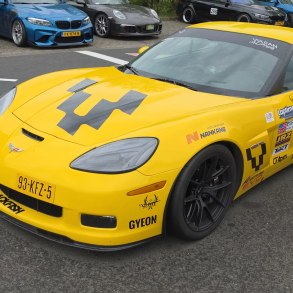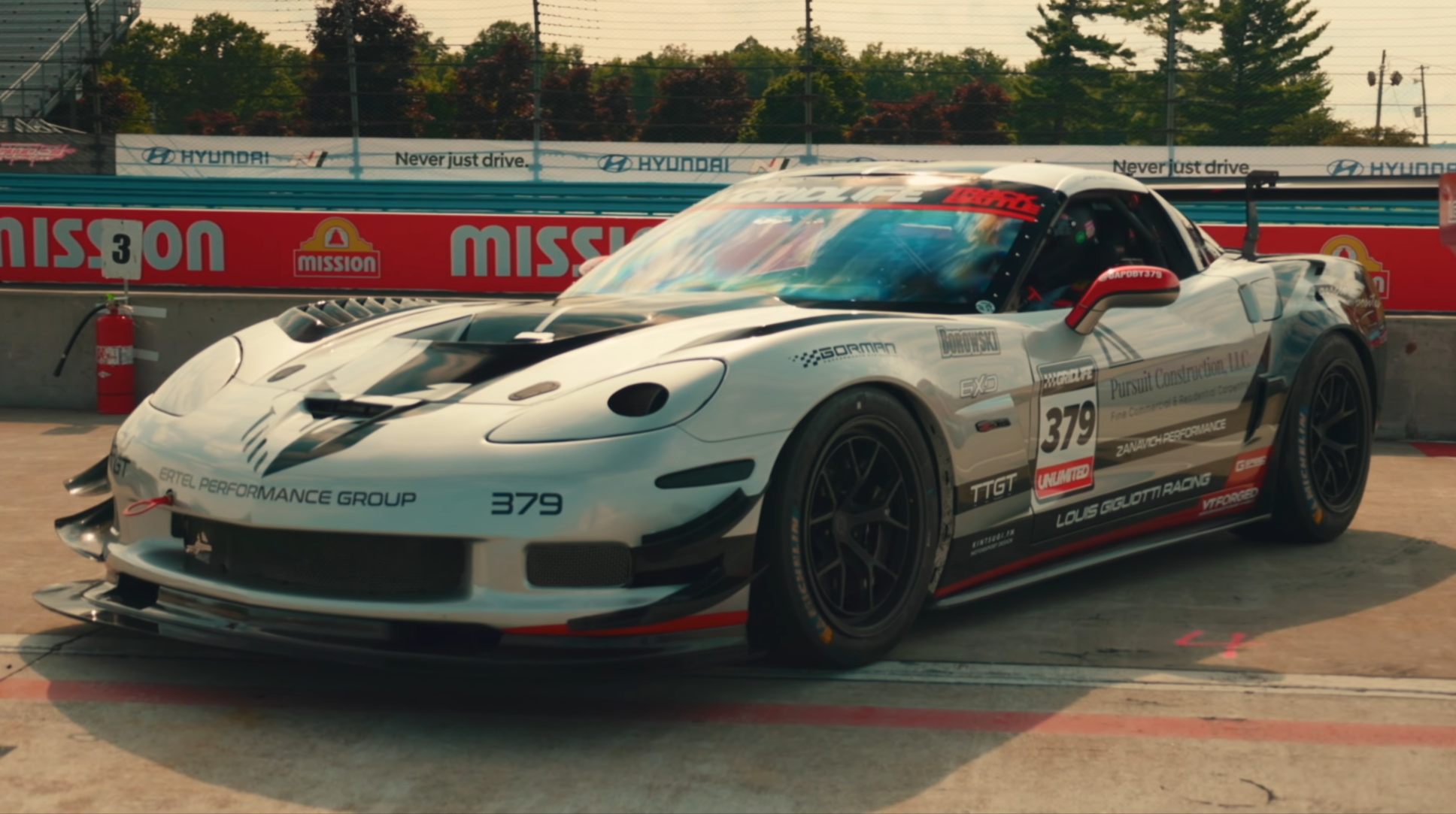
Jake Orchel’s Chevrolet Corvette C6 Z06 has evolved from a modified track car into a purpose-built race machine developed for events such as Gridlife. The project progressed through several build phases, with each stage addressing reliability, chassis performance, safety, power, weight, aerodynamics, and drivetrain capability.
From C8 to C6 Z06
Orchel initially began tracking a C8 Corvette, but an engine failure and fire at Thompson Speedway ended that project. After General Motors bought the damaged car back, he used the proceeds to purchase a C6 Z06 for approximately $38,000.
The Corvette already had a built engine and rebuilt transmission, providing a strong foundation. The first phase concentrated on making the car reliable under sustained track use.
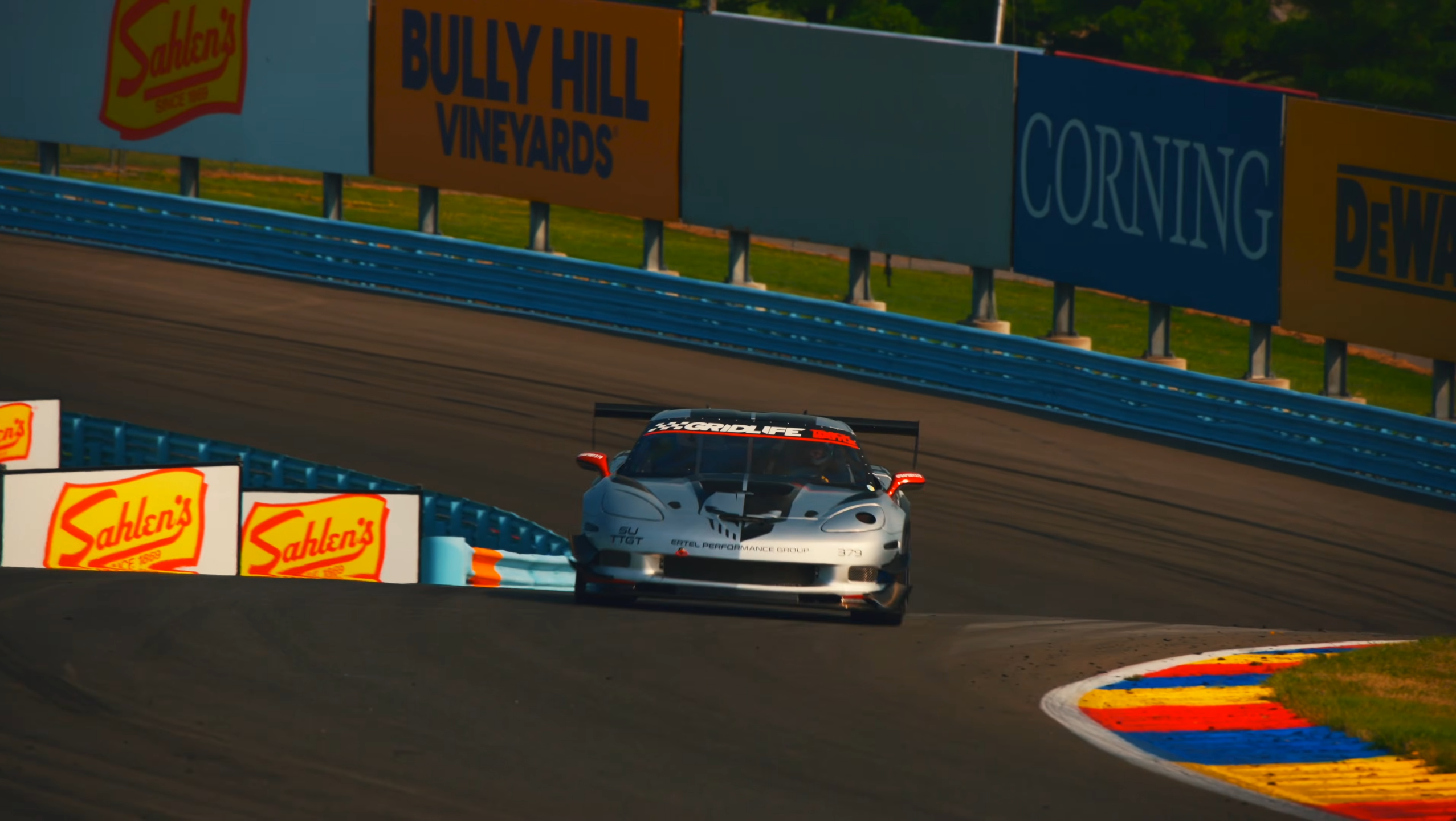
A G-Speed oil-cooling system was installed, followed by larger radiators and a Mishimoto radiator. Suspension upgrades included T1-style sway bars and G-Speed Penske 8300 double-adjustable coilovers. Aerodynamic development began with a front splitter and rear wing.
The car remained in this configuration for several years before progressing into a dedicated race build.
Safety and Chassis Development
The second phase added a roll cage and race seat, converting the Corvette into a proper competition car. Orchel subsequently competed across New England and established several track records.
The next phase was substantially more comprehensive. The Corvette was stripped down to its frame and body structure, allowing virtually every major system to be redesigned.
900-hp Naturally Aspirated LS7
The latest build uses a Barowski-built LS7 producing approximately 900 hp naturally aspirated. The engine features a Dart block, All Pro heads, and a billet Plazmaman intake.
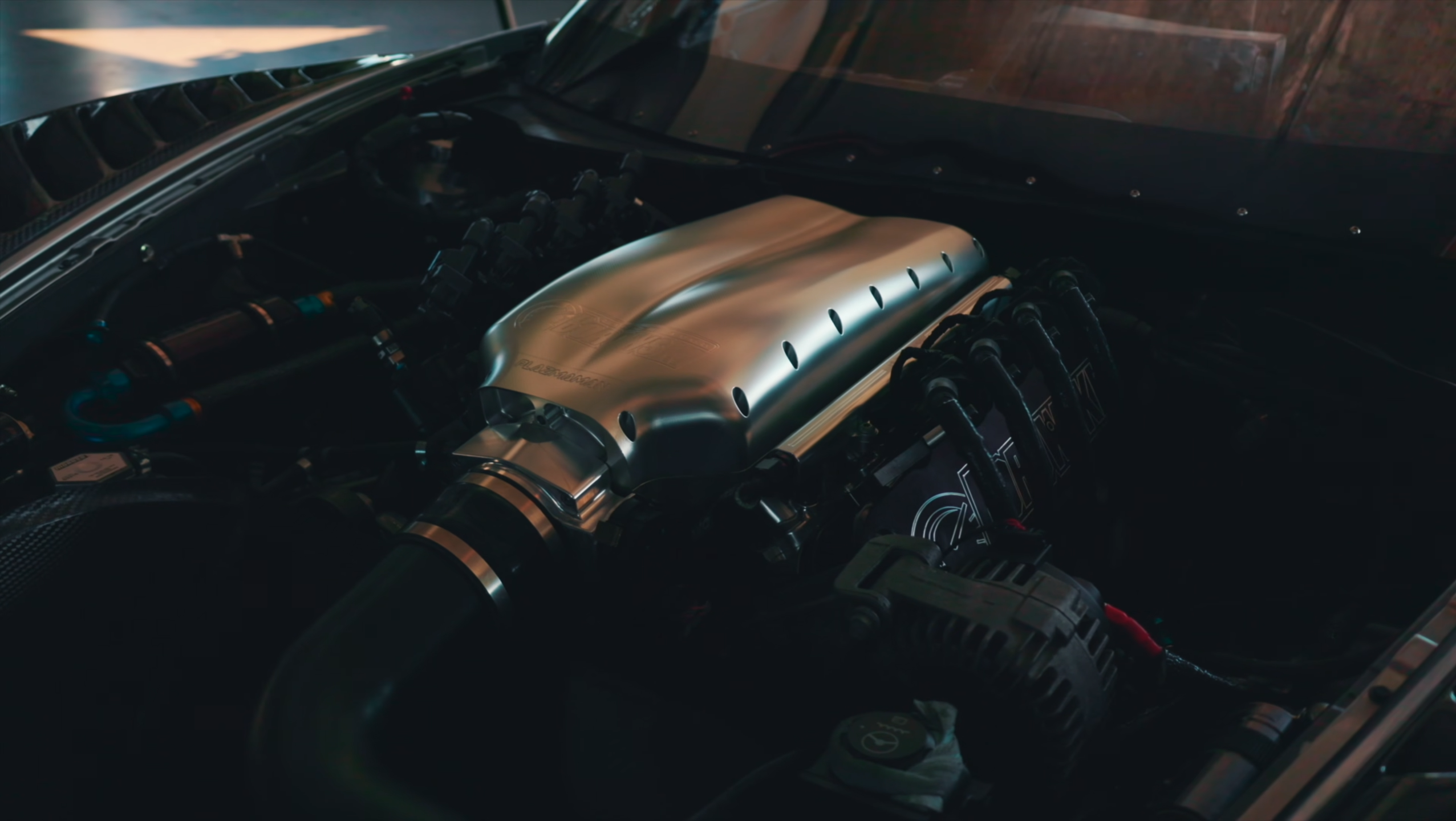
The induction system was integrated into a revised front-end airflow strategy. Faircloth Composites carbon-fiber headlight blanks replace the factory headlights, reducing weight and creating additional space for ducting.
Sequential Transmission and Quick-Change Differential
Power is transferred through a 6XD sequential transmission rated for up to 2,000 hp. The sequential gearbox provides rapid, consistent shifts suited to competition use.
A Winters quick-change differential allows Orchel to alter the final-drive ratio for different circuits. The gearing can therefore be optimized for high-speed or technical tracks without replacing the complete differential assembly.
Carbon-Fiber Bodywork and Aerodynamics
Weight reduction became a major focus of the final build. Faircloth Composites supplied much of the carbon-fiber package, including the roof, hatch, B-pillars, and aerodynamic components.
The Corvette uses a 78-inch, 14-inch-chord rear wing mounted through carbon-fiber uprights directly to the chassis. AJ Hartman canards add further front-end downforce.
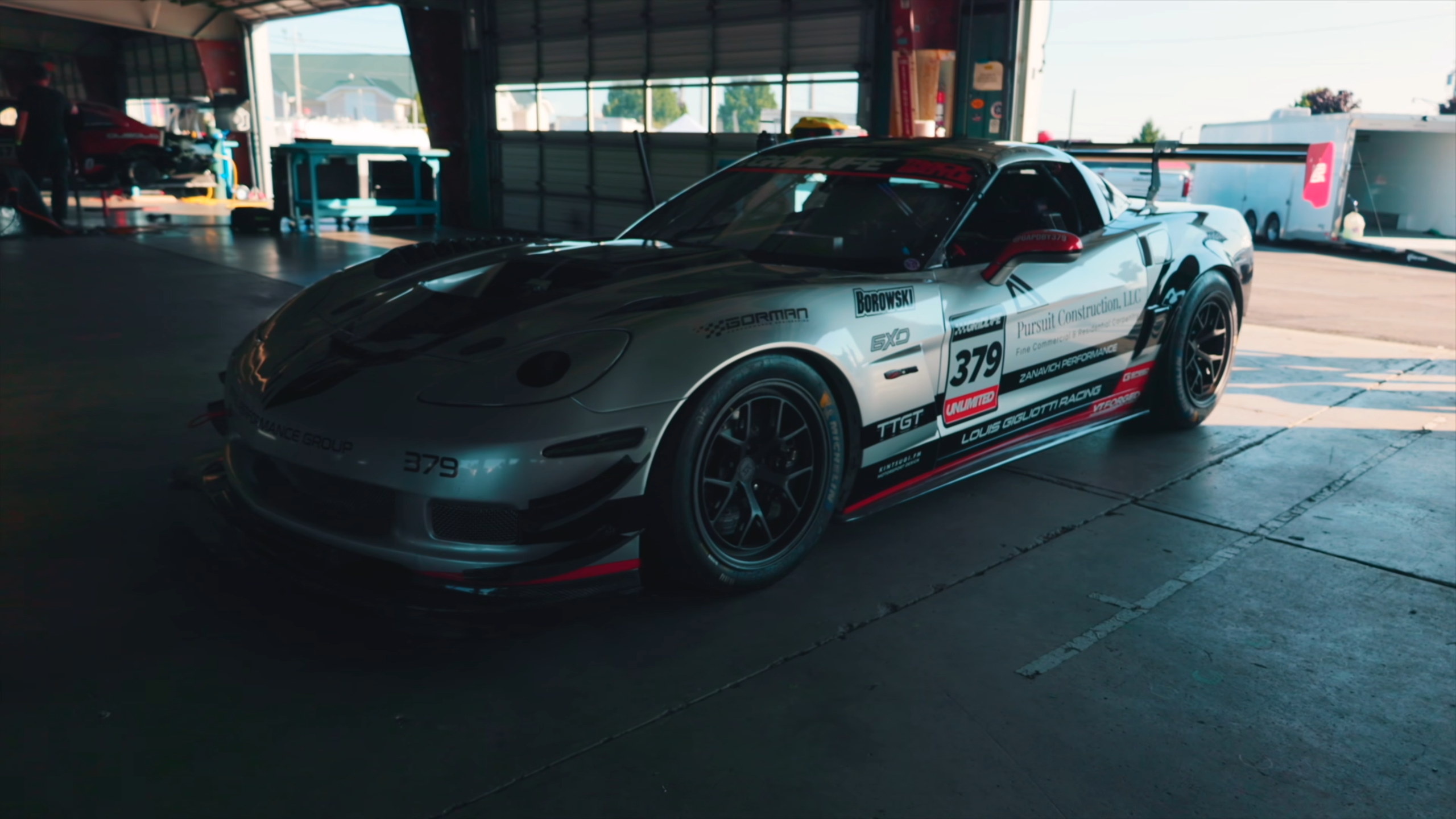
Carbon-fiber fender vents extract air from the oil-cooling system and front wheel wells, improving airflow management while reducing weight.
The front aerodynamic package is designed around the cooling system and splitter. A Louis Jigliótti Racing radiator laydown system works with a Faircloth Composites carbon duct and C6R-style hood to control airflow through the heat exchangers.
Motorsport Electronics
The factory electrical architecture has been replaced with a motorsport-specific system. The car uses a MoTeC M150 ECU and PDM 30 power distribution module, with wiring supplied by Louis Jigliótti Racing.
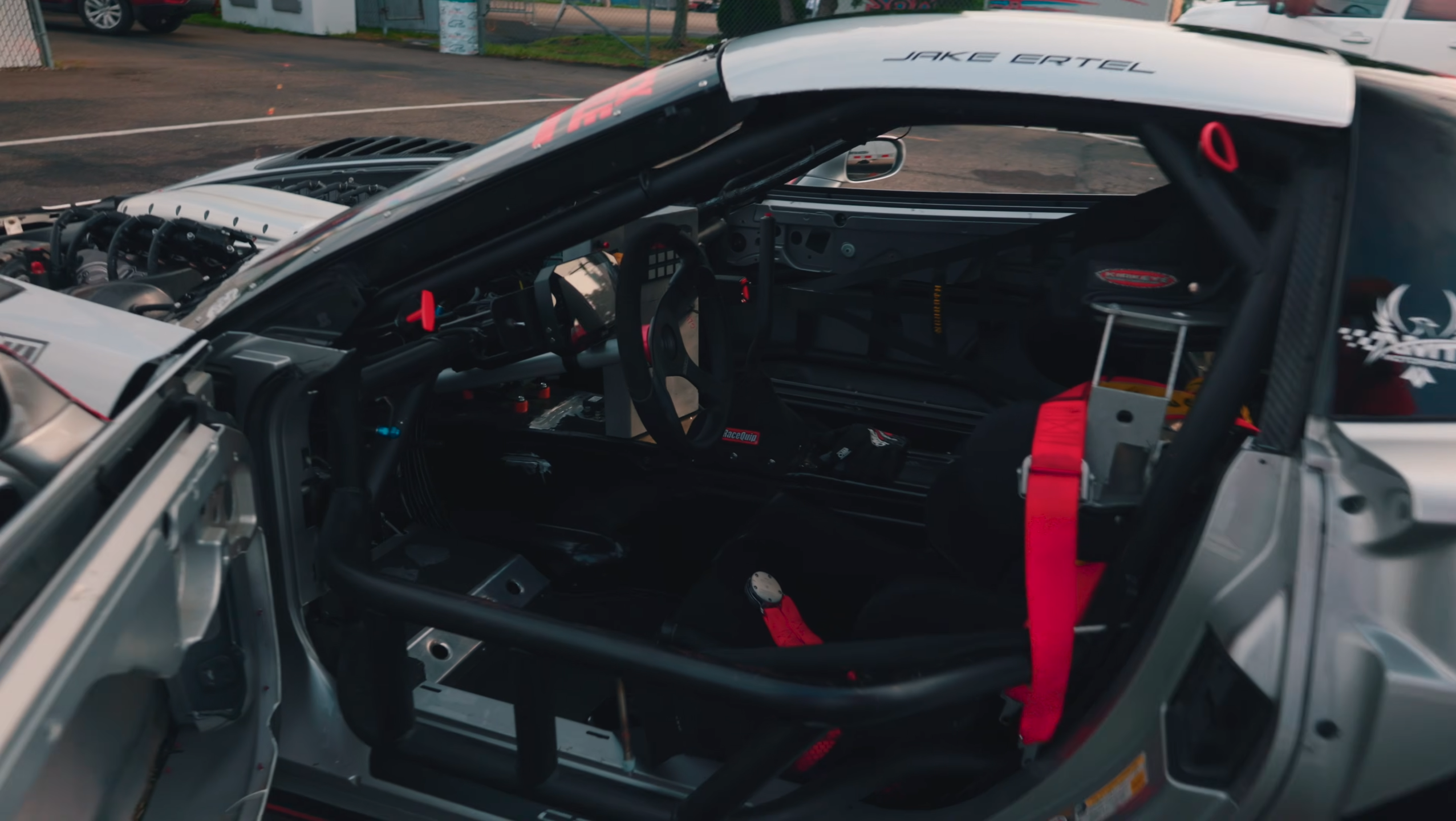
The factory pedal assembly has also been removed in favor of Tilton triple pedals. At this point, the frame and portions of the original body structure are among the few remaining factory elements.
Chassis Balance
Aerodynamic balance has been developed through testing rather than simply maximizing downforce. At Watkins Glen, Orchel adjusted the splitter angle to correct initial understeer and establish the desired balance through high-speed corners.
The final setup provides a neutral platform once the tires reach operating temperature, allowing the car to maintain high grip without excessive understeer or oversteer.
500 lb Lighter and 200 hp More Powerful
The latest build weighs approximately 500 lb less than the previous version while producing roughly 200 hp more. That combination significantly changed the car’s behavior.
The reduction in mass improves braking, acceleration, direction changes, and tire performance, while the additional power increases the demands on traction and throttle control. Orchel’s adaptation to the new car has therefore been as much about managing its increased performance as extracting it.
At Watkins Glen, the combination of high power, reduced mass, aerodynamic grip, and chassis balance allows the Corvette to remain flat through the circuit’s fastest sections at approximately 150 mph.
The C6 Z06 has consequently moved far beyond a modified production Corvette. It is now a lightweight, high-downforce race car built around the original platform, with a 900-hp LS7, sequential transmission, quick-change differential, extensive carbon fiber, motorsport electronics, and a fully developed aerodynamic package.
Source: Trackbuilt, GAPDby379