

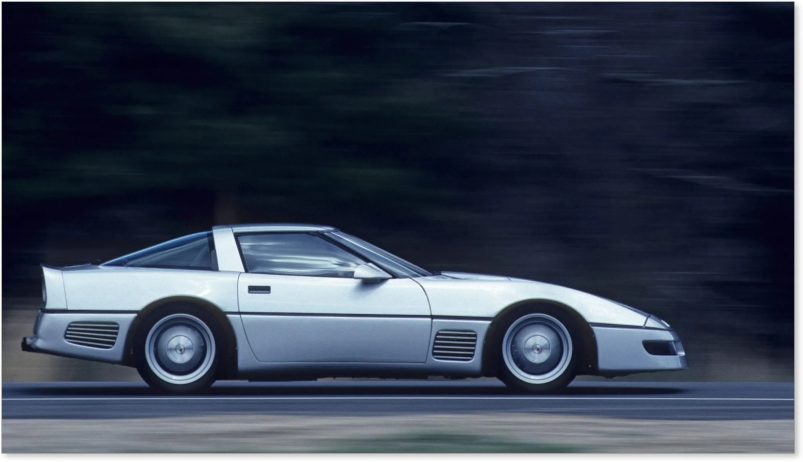
Long before Bugatti established its reputation for 250-mph performance, an American tuning company had already pushed a Chevrolet Corvette beyond that threshold. On October 26, 1988, the Callaway SledgeHammer reached an astonishing 254.76 mph, establishing one of the most remarkable high-speed achievements in Corvette history. Even more impressive, this 880-horsepower machine remained street legal and retained the comfort and equipment of a conventional road car.
The Vision Behind Callaway
The project was the vision of Reeves Callaway, founder of Callaway Turbo Systems. Having established his reputation through turbocharger conversions for several manufacturers, Callaway developed a close relationship with Chevrolet in 1987 through the B2K twin-turbo Corvette package.
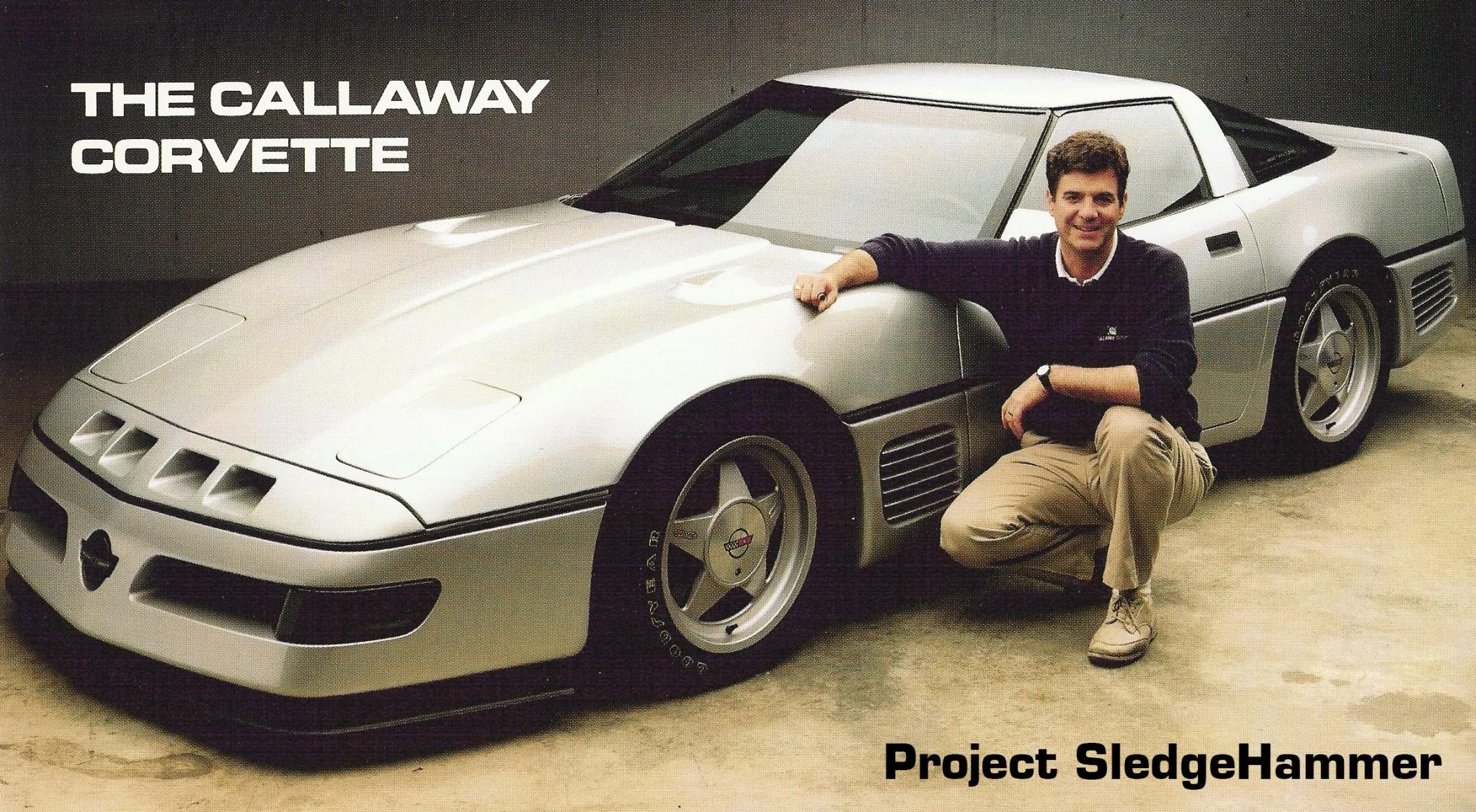
Available directly through Chevrolet dealerships, the conversion transformed the C4 into a formidable performance machine while retaining its factory warranty. Between 1987 and 1991, Callaway produced 509 B2K-option Corvettes.
However, Callaway wanted to go considerably further. Following the company’s 231-mph Top Gun Corvette in 1987, the SledgeHammer project was conceived to break the 250-mph barrier without sacrificing everyday usability.
An 880-HP Twin-Turbocharged Small-Block
Based on a 1988 C4 Corvette equipped with the B2K package, the SledgeHammer received an extensively modified 5.7-liter Chevrolet Bow Tie small-block V8 developed with renowned engine builder John Lingenfelter.
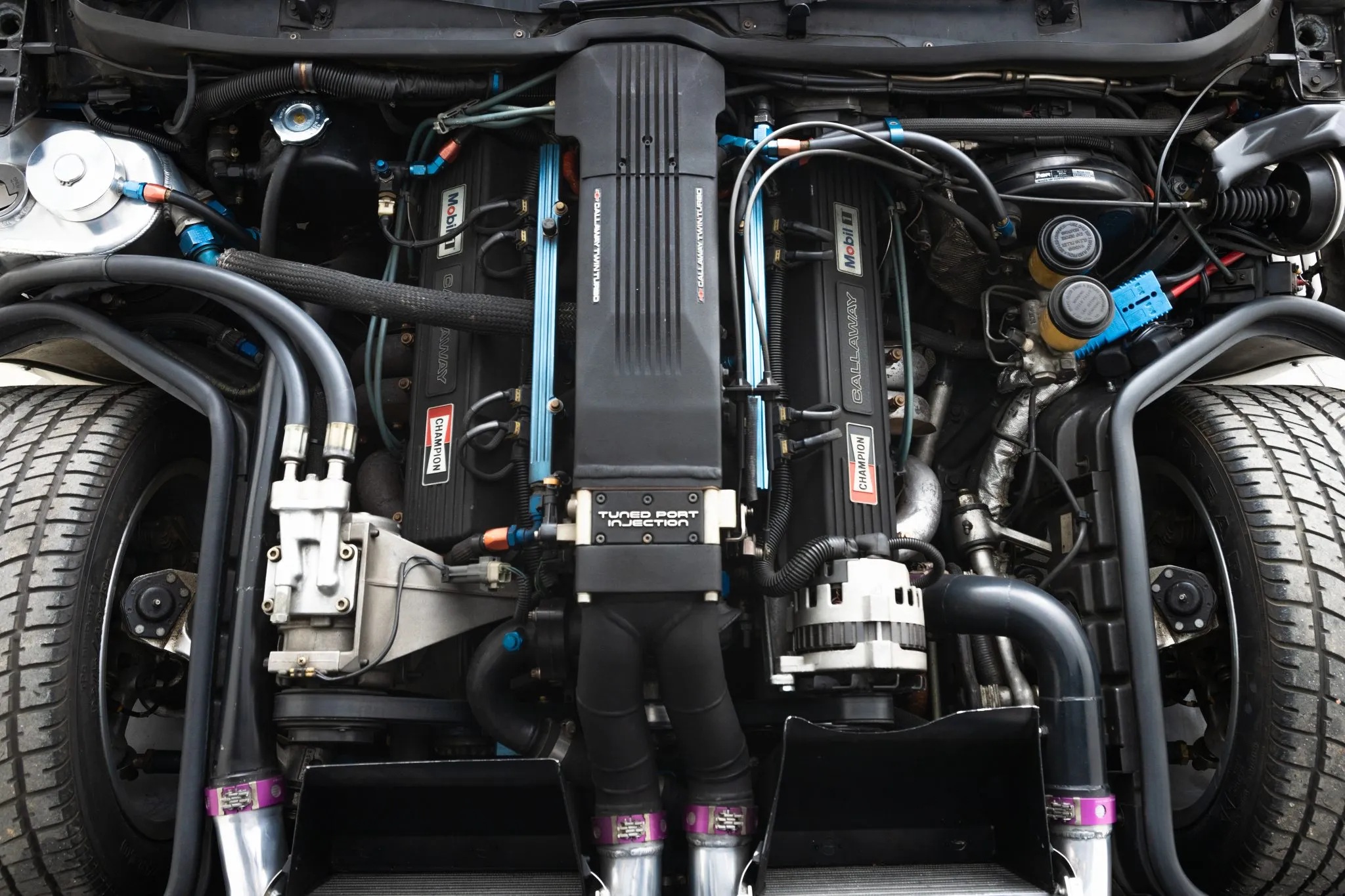
Forged internal components, strengthened bearing caps, dry-sump lubrication, and upgraded cylinder heads prepared the engine for extreme output. Two Turbonetics T04B turbochargers delivering approximately 22 psi of boost fed compressed air through custom intercoolers.
The resulting powerplant was rated at 880 horsepower and 772 lb-ft of torque. Power reached the rear wheels through a strengthened drivetrain and Doug Nash five-speed manual transmission, later replaced by a ZF six-speed.
Aerodynamics and Everyday Comfort
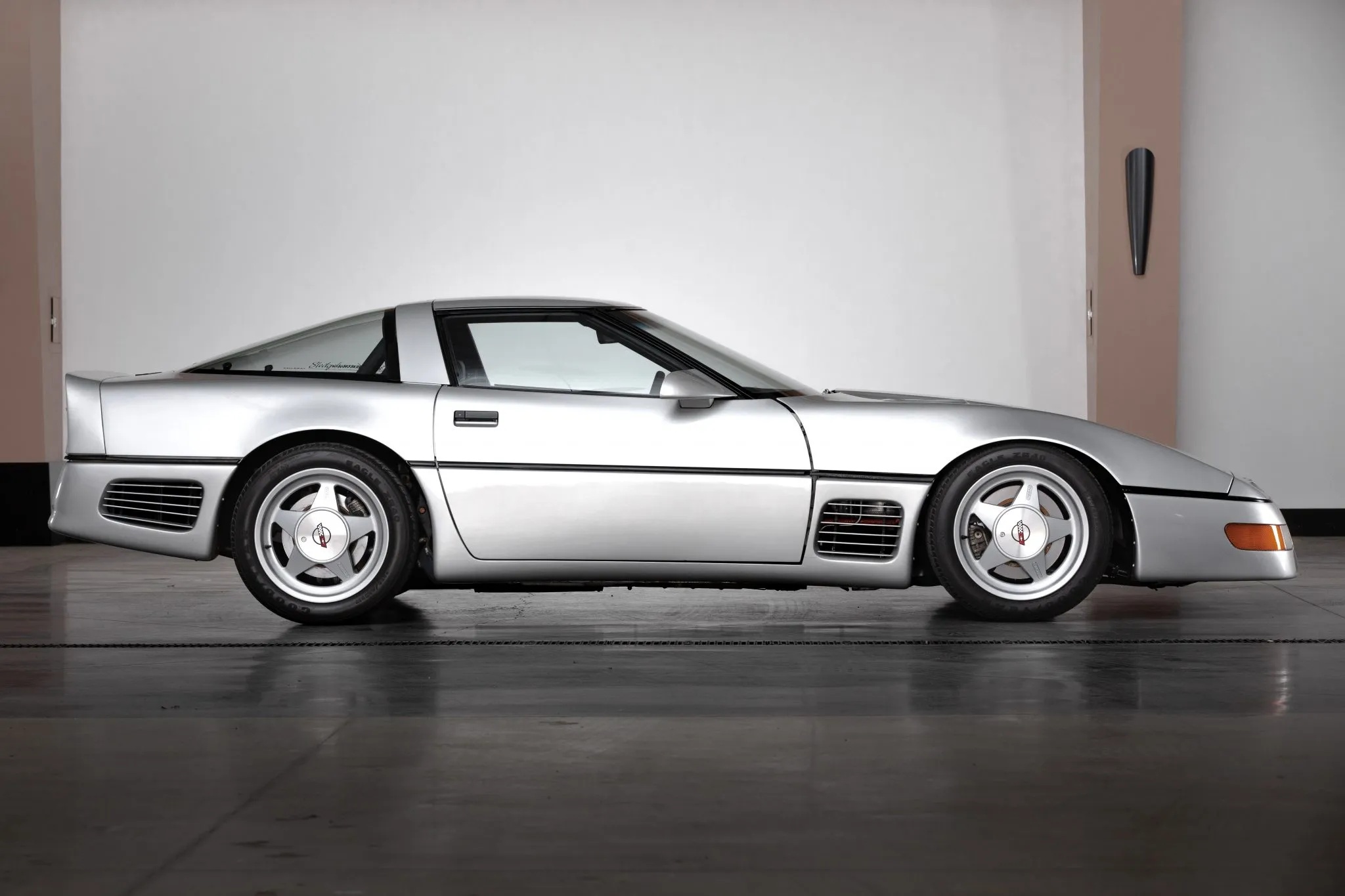
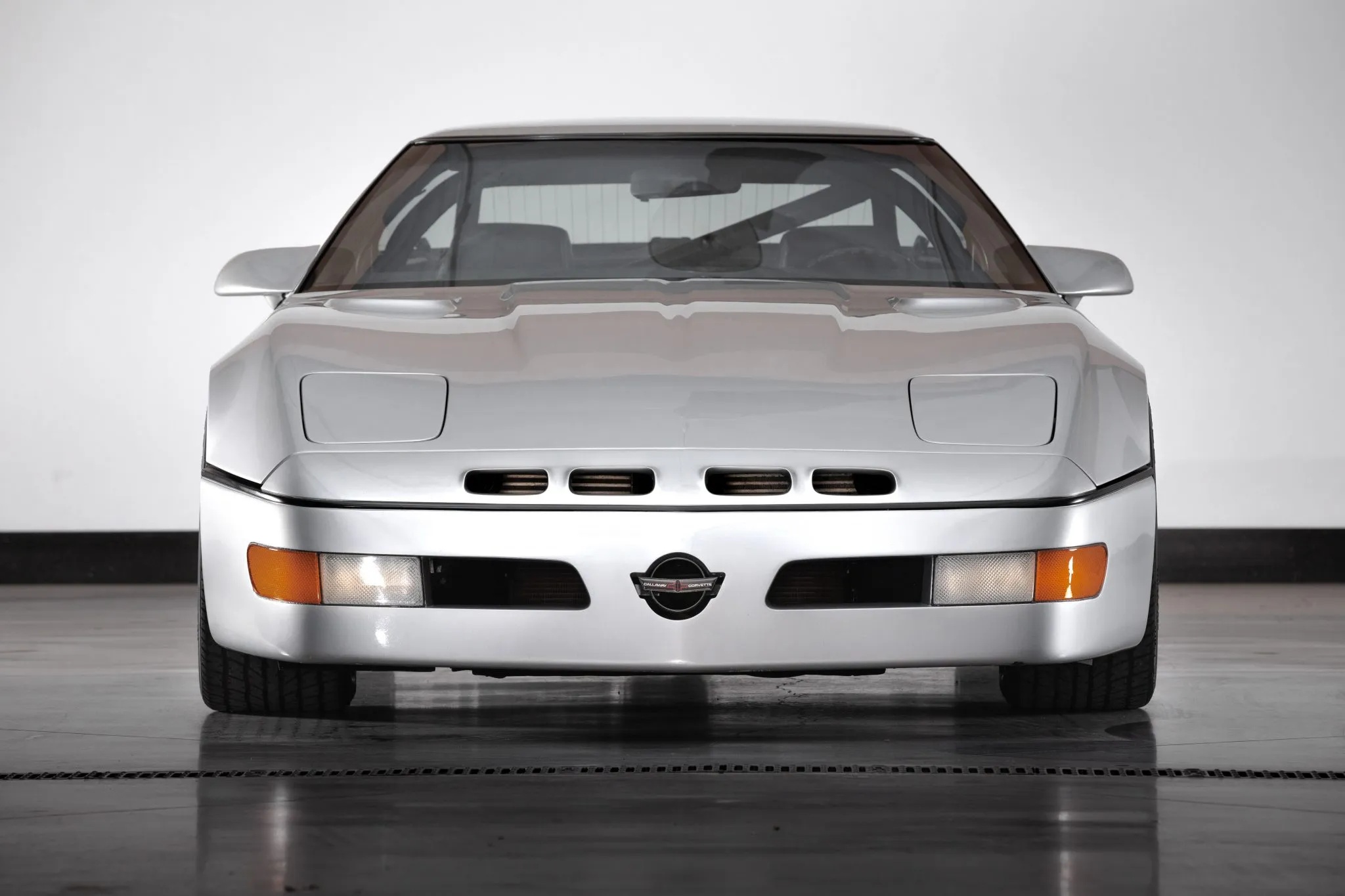
Achieving 250 mph required considerably more than additional horsepower. Callaway collaborated with designers Tony Cicale and Paul Deutschman to develop the AeroBody package, featuring a redesigned front end, functional ventilation, wider bodywork, and an integrated rear spoiler. Dymag magnesium wheels, specially developed Goodyear high-speed tires, modified suspension components, and upgraded brakes completed the transformation.
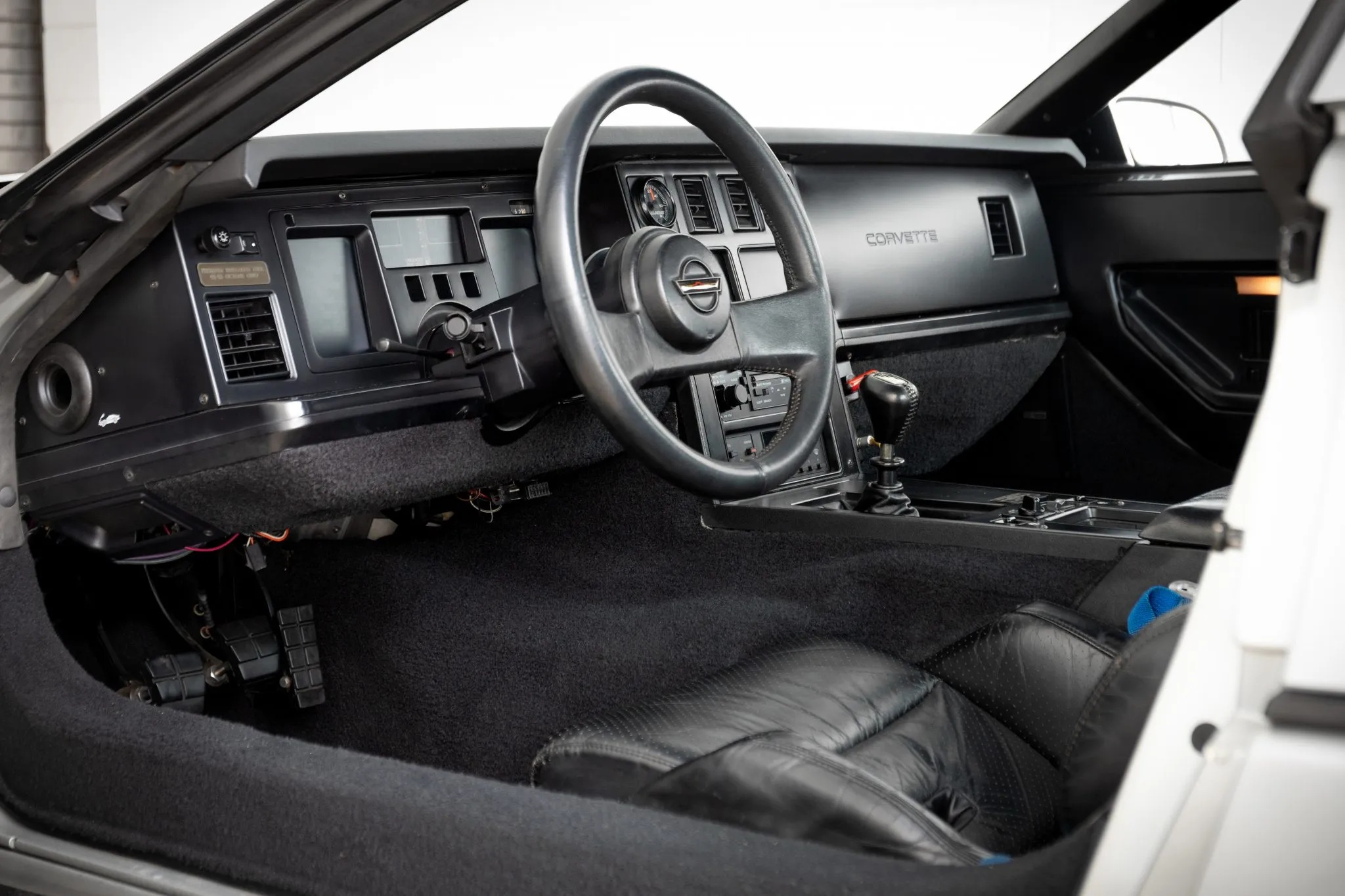
Remarkably, the interior retained black leather sport seats, automatic climate control, power windows, power locks, and the original Delco Bose cassette stereo. Additional safety equipment included a roll hoop, five-point harnesses, and a fire-suppression system.
The Historic 254.76-MPH Record
The SledgeHammer traveled nearly 700 miles from Connecticut to Ohio under its own power before its October 1988 record attempt at the Transportation Research Center.
Initial testing encountered fuel-delivery problems and an oil leak. After repairs and aerodynamic adjustments, the Corvette reached 248 mph at partial throttle, demonstrating that its ambitious target was within reach.
On October 26, 1988, it finally achieved 254.76 mph.
Although frequently described as a production-car speed record, the run was not an officially recognized Guinness production-car record. Nevertheless, its achievement remains extraordinary, particularly for a street-legal Corvette built in the late 1980s.
An Enduring Piece of Corvette History
The SledgeHammer subsequently became Callaway’s most celebrated creation, earning recognition from automotive publications and appearing at the National Corvette Museum. In 2013, it was inducted into Bloomington Gold’s Great Hall as one of the 50 most influential Corvettes.
Its auction history includes a $221,400 sale at Barrett-Jackson in 2004, followed by unsuccessful bidding attempts reaching $600,000 in 2014 and $500,000 in 2021.
More than three decades later, the SledgeHammer remains a landmark in American performance engineering. It wasn’t simply a fast Corvette; it was a road-going engineering statement that challenged the world’s most exotic supercars nearly two decades before the Bugatti Veyron arrived.
Source: AmeriCars
