

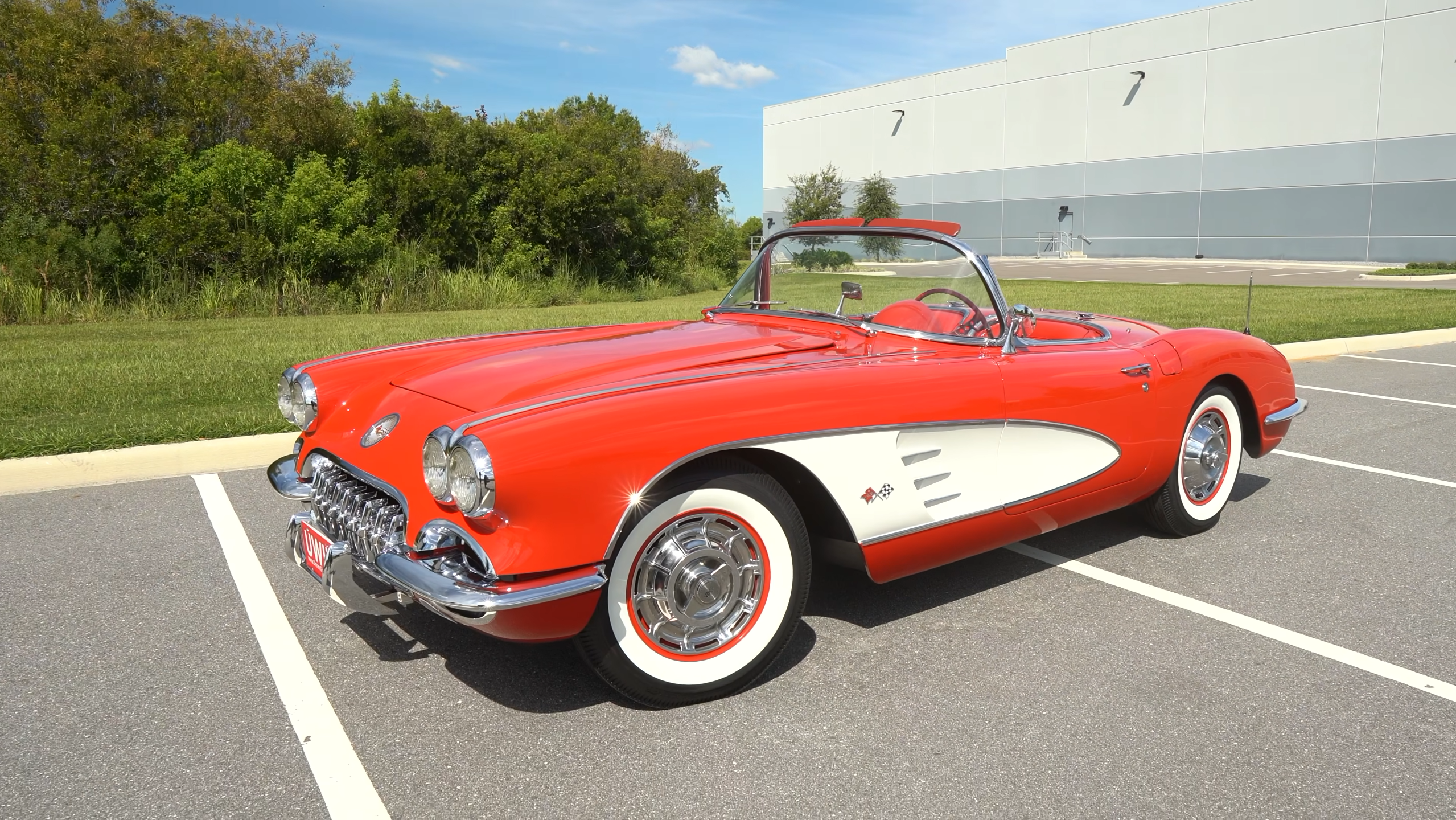
The first-generation Chevrolet Corvette remains an enduring symbol of American sports car heritage, combining distinctive styling, lightweight construction, and V8 performance. In a feature from Joe Raiti of Raiti’s Rides, a pristine 1960 Chevrolet Corvette finished in Roman Red with contrasting white coves showcases the design and engineering that helped establish the Corvette as an icon. This example benefits from a frame-off restoration recognized by the National Corvette Restorers Society (NCRS), emphasizing period-correct details and authenticity.
Iconic Styling and Fiberglass Construction
Produced during the later years of the C1 generation, which ran from 1953 to 1962, the 1960 Corvette features the quad-headlight design introduced in 1958. Its cleaner front-end styling combines a horizontal chrome grille, crossed-flags emblem, sculpted hood, and extensive brightwork.
Roman Red paint contrasts with the white body coves, creating a classic appearance complemented by red-painted 15-inch steel wheels, spinner-style hubcaps, and wide whitewall tires. The decorative fender vents and side-mounted Corvette emblems reinforce the car’s distinctive profile.
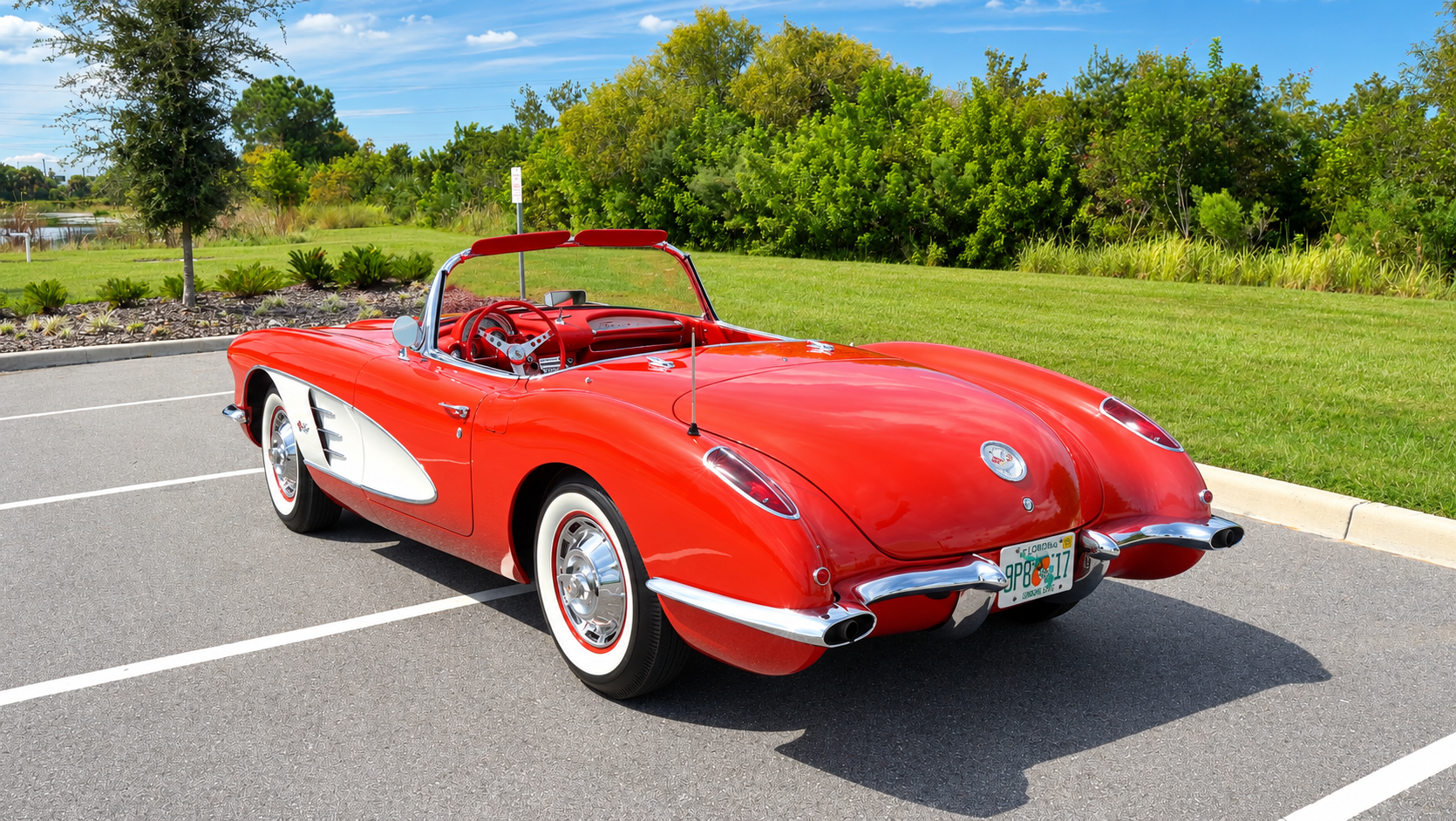
Fiberglass body construction helped reduce weight, while the optional Roman Red hardtop added versatility to its open-top configuration. These details reflect an era when American manufacturers were experimenting with materials and styling to distinguish their sports cars from European rivals.
283-Cubic-Inch V8 and Four-Speed Manual
Power comes from a 283-cubic-inch Chevrolet small-block V8 equipped with a four-barrel Rochester carburetor. In this configuration, the engine produces 230 horsepower and 300 lb-ft of torque. An optional four-speed manual transmission provides a more engaging driving experience than the available two-speed Powerglide automatic.
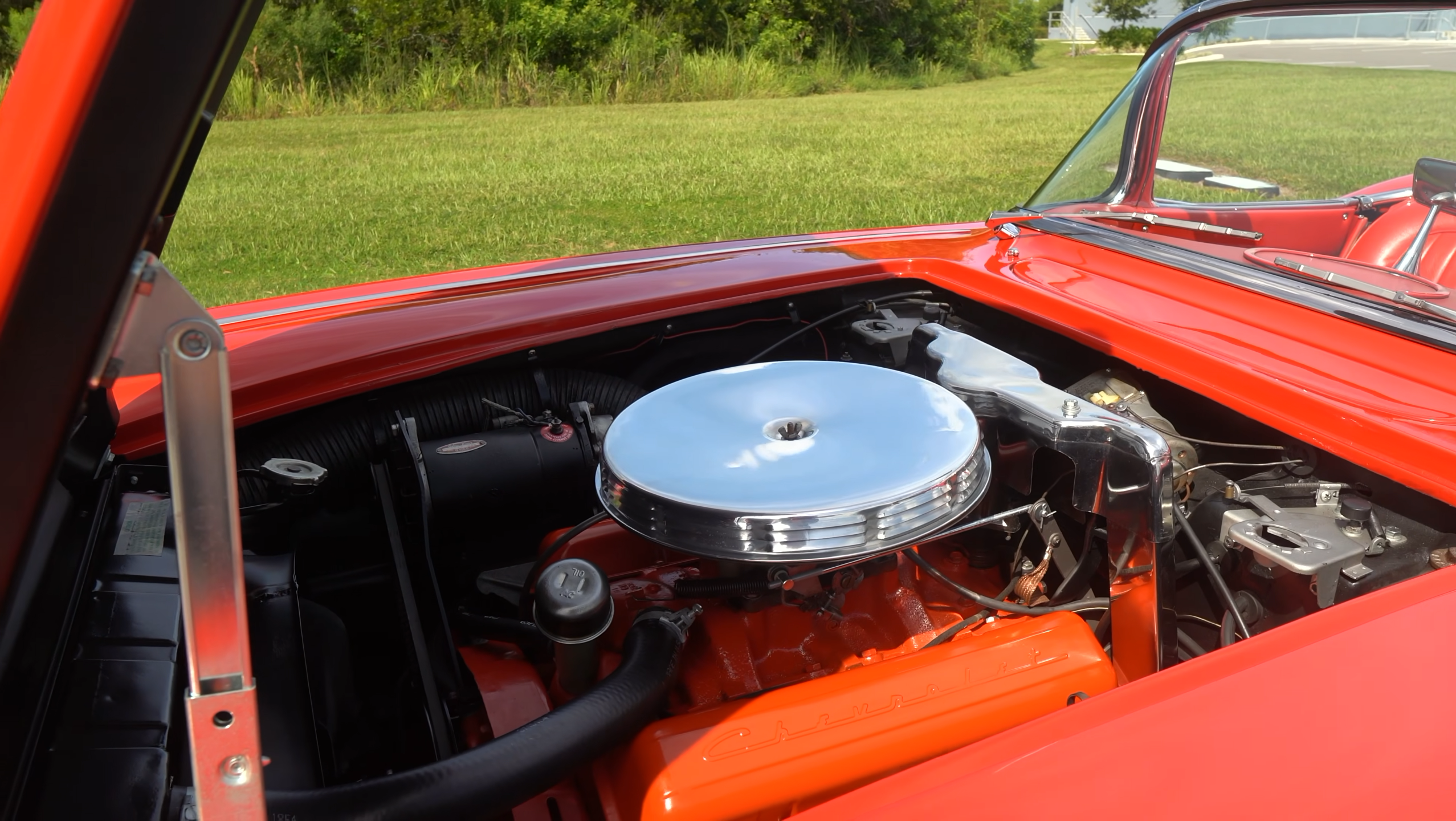
Weighing approximately 2,840 pounds, the Corvette features rear-wheel drive and a limited-slip differential. Period performance figures cited in the feature include a 0–60 mph time of approximately 7.5 seconds and a top speed of 115 mph. Buyers could also choose more powerful engine configurations, including dual-carburetor and mechanical fuel-injection options.
The chassis retains traditional engineering, with a solid rear axle, manual steering, and drum brakes at all four corners. These systems demand more driver input than modern performance hardware, highlighting the evolution of Corvette engineering over subsequent generations.
Authentic Interior and Driving Experience
Inside, Roman Red dashboard surfaces, aluminum trim, vinyl upholstery, and traditional analog gauges preserve the cabin’s period character. The centrally positioned tachometer, optional AM Wonder Bar radio, manual window cranks, and cue-ball shifter emphasize the car’s mechanical simplicity.
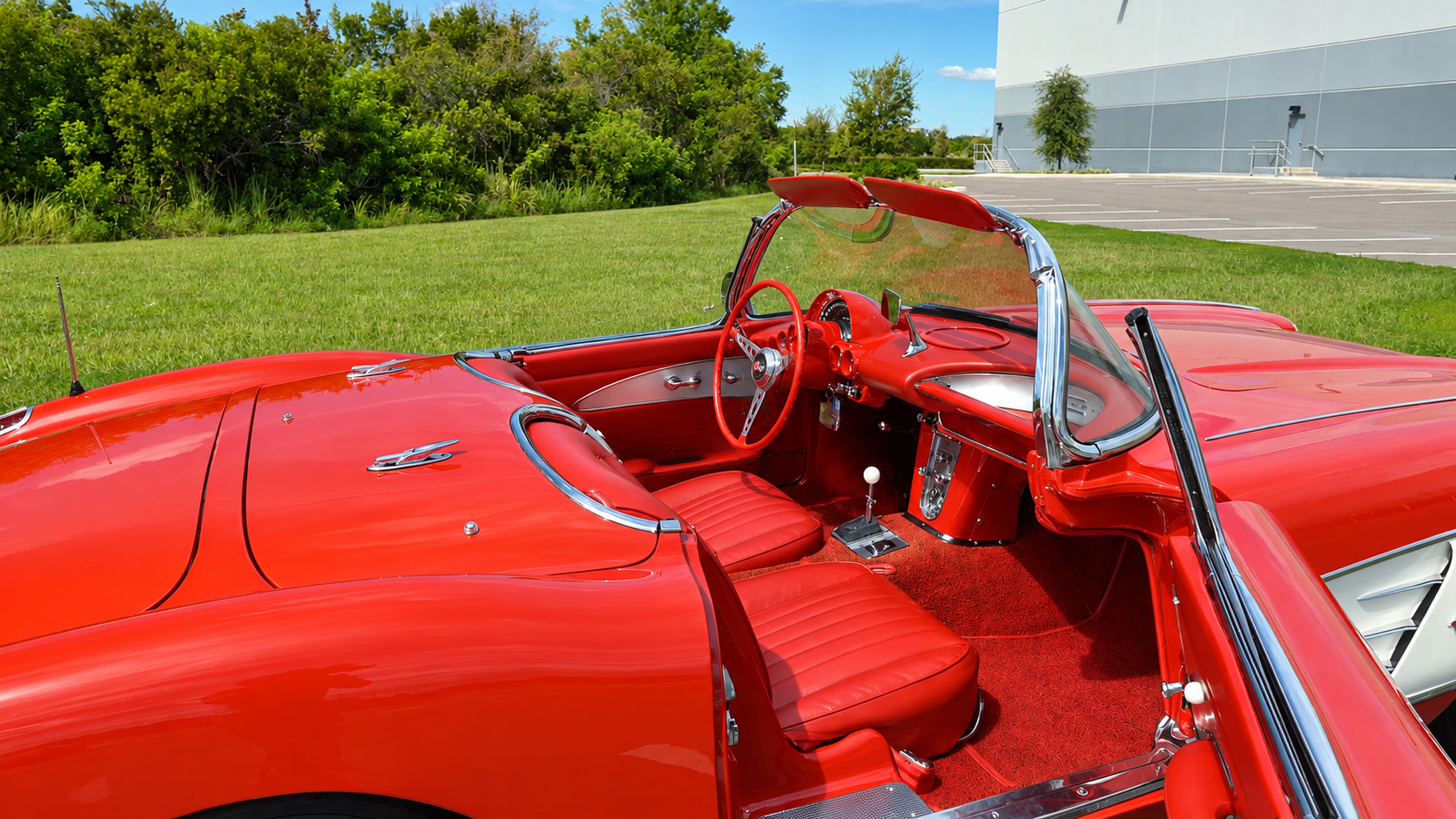
Behind the wheel, Raiti describes the restored Corvette as impressively solid, with limited chassis shake and few unwanted noises. The four-speed transmission enhances driver engagement, while the large steering wheel and manual steering require deliberate inputs. The drum brakes also demand careful anticipation when slowing down.
Ultimately, this NCRS-restored 1960 Chevrolet Corvette demonstrates the enduring appeal of the C1 generation. Its combination of unmistakable styling, small-block V8 performance, and direct driving dynamics offers a compelling reminder of the era when Chevrolet established the Corvette as America’s signature sports car.
Source: Raiti’s Rides
