C7 Corvette Grand Sport (2017–2019): The Complete Guide Quick Nav: The Story...



CORVETTE BUYER’S GUIDES
Buying a 2014–19 Corvette? This guide covers the six years and four models, what each costs in today’s market from the results the site tracks, the best buys and the ones to leave alone, how to verify a Z51, a Z07 or one of the numbered editions, the model guides and the cars for sale beside it.
Quick Nav: Overview · Why Buy · Year by Year · Year Details · Variants · Values · Price Ladder · What Moves the Price · Model Guides · Driving · Costs to Own · Considerations · Problems · Inspection · Verification · Market Reports · For Sale · FAQs
The Car: The seventh-generation Corvette, 2014–2019: the Stingray name back after 37 years on an aluminum frame built at Bowling Green, the last front-engine Corvette and the last with a manual gearbox
Years and Built: 189,507 over six model years: 37,288 (2014), 34,240 (2015), 40,689 (2016), 32,782 (2017), 9,686 (2018, cut to seven months by a plant shutdown), 34,822 (2019); about 120,300 Stingrays, 39,940 Z06s, 26,280 Grand Sports and 2,953 ZR1s
Models: Stingray (2014–19), Z06 (2015–19), Grand Sport (2017–19), ZR1 (2019); every one a hatchback coupe with a removable roof panel or a power-top convertible
Engines: 6.2 L LT1 with direct injection, 455 hp (460 with the NPP exhaust) in the Stingray and Grand Sport; 6.2 L supercharged LT4, 650 hp, in the Z06; 6.2 L supercharged LT5, 755 hp, in the ZR1
Transmissions: Tremec seven-speed manual with Active Rev Match; 6L80 six-speed automatic (2014), 8L90 eight-speed paddle-shift automatic (2015–19); all in the rear transaxle
What One Costs Today: Stingrays $27,000–$59,000; Grand Sports $27,500–$63,000; Z06s $41,500–$110,000 (benchmark about $76,600); C7.R Editions to $119,500 and Carbon 65s to $110,000; ZR1s $125,000–$340,000, manual ZTK coupes on top (results tracked October 2025–October 2026)
The Pick: A 2017–19 Grand Sport, manual if you can find one, for the Z06’s chassis without its heat or price; a 2017–19 Z06 for the 650 hp; a 2LT Z51 Stingray under $40,000 as the bargain; a manual ZTK ZR1 for the collection
Related: The C7 hub, the six year pages, the C7 Stingray, Grand Sport, Z06 and ZR1 model pages, the Bargain Hunting series, the colors, production, VIN and RPO pages
For decades people have promised themselves a Corvette, and the mid-engine C8’s arrival in 2020 sent a new, younger audience into the market and kept the prices of the fifth, sixth and seventh generations higher than the bargain-hunters hoped. That is still true in 2026, and it is still a fine time to buy a C7: the oldest is twelve years old, most have been garaged and driven lightly, and a low-mileage seventh-generation Corvette costs a good deal more than a Mustang, Challenger or Camaro and delivers a great deal more car. Go drive one and the argument makes itself.
The C7 is the modern Corvette that has held its value best, and its market sorts by model and gearbox rather than by year: the ZR1 on top, manuals far above automatics; then the Carbon 65 and the Z06 C7.R Edition; then the Z06, with manuals and Z07 cars carrying the premium; then the Grand Sport and its Collector and Drivers Series editions; then the Stingray by trim, the 3LT Z51 manuals first. Because the C8 has no manual, every manual C7 is the last of its kind and the gap between manual and automatic prices has widened every year.
This guide is the roadmap: the six years and four models and what changed, the variants and the numbered editions, what each tier of the market costs from the results the site tracks, what moves the price, what the cars are like to drive and to own, the problems the generation has, the inspection step by step, how to verify a Z51, a Z07 and the editions, and the questions readers ask most. Whether you own a C7 already or are weighing one against something else (gasp), this is where to start; the year pages and the model pages go deeper on each car.
For decades, people across North America (and around the globe) have promised themselves that, at some point in their lives, they would own a Chevy Corvette. For some, Corvette ownership comes early in life. For others, it takes a lifetime to get there. However, once this goal is achieved, Corvette ownership becomes an indelible part of your life.Interest in Corvette ownership has surged recently, thanks in large part to the introduction of the mid-engine Corvette in 2020.
Chevrolet's flagship sports car had found a new, younger audience. It has also caused the prices of many of the older fifth-, sixth-, and seventh-generation Corvettes to remain a little more inflated than was the case a few years ago. While this might seem a deterrent to some would-be consumers - especially those that thought they might scoop up an older-generation Corvette at a deeply discounted rate - the reality is that this is still a GREAT time to consider Corvette ownership, especially if you've been considering one of the newer, seventh-generation Corvettes.
Consider this - the C7 Corvette was built from 2014 to 2019 - which means that the oldest example is just seven-year young. In many cases, Corvette owners treat their cars like garage queens. They pull them out, wash them, then put them away for safekeeping. This means that many of these Corvettes have far fewer than the standard miles for a car their age. Put that all together, and you're likely to find a newer, low-mileage, seventh-generation Corvette at a price point that is manageable for your individual budget. Yes, you'll potentially pay more than you would for a Mustang, Challenger or Camaro, but you are going to get a lot more car for the money too. Don't believe us? Go take one for a test drive and you'll see for yourself.
What follows below is a roadmap to help you navigate the marketplace of used Corvettes and, ideally, help you find your first (or next) seventh-generation Stingray. If you're still considering your options – maybe even considering something other than a Corvette (gasp!) for your driving fun – then we’ve found each other just in time! For everyone else – from current C7 owners to prospective first-time buyers, this C7 Corvette Buyers Guide is intended to provide some insight into the experience of Corvette ownership, and give you some valid reasons why a seventh-generation Corvette might be the perfect car for you!
On January 13, 2013, Chevrolet unveiled the new, seventh-generation Stingray to the world. The arrival of the C7 Corvette was the culmination of months of speculation by enthusiasts, car experts, critics, and countless fans, and was treated with more fanfare and pomp-and-circumstance than a Hollywood blockbuster movie debut.
Development of the seventh-generation Corvette began about a year after the introduction of the C6 model in 2005. Tom Peters, Chevrolet’s Design Director, had been tasked with improving upon the sixth-generation Corvette design which had already been considered such a resounding success the world over by car enthusiasts and critics alike. Working in conjunction with Tadge Juechter, Corvette’s Chief Engineer, the pair produced a vehicle that could challenge and beat the best the Germans and Italians could throw at it.
The result is that the C7 Corvette Stingray was truly a departure from its predecessor. In fact, it only shares two parts with the previous-generation Corvette – the removable roof release lever and a filter in the air filtration system. The rest of the car was completely new – including the frame structure, chassis, powertrain, and an all-new interior and exterior design.
On January 13, 2013, the night before the Detroit show, Chevrolet unveiled the seventh-generation Corvette with more fanfare than a film premiere, and it was the car the months of speculation had promised. Development had begun about a year after the C6 arrived in 2005. Tom Peters’ exterior and Ryan Vaughan’s interior under Ed Welburn, with Tadge Juechter as chief engineer, produced a Corvette that shared two parts with the car it replaced, the roof-panel release lever and an air-filter element, and could run with the Germans and the Italians on their own terms.
An aluminum frame built in-house at Bowling Green for every model, a carbon-fiber hood and roof panel, composite body panels bonded to the structure, aluminum double wishbones with composite leaf springs and optional Magnetic Ride, an electronic limited-slip differential, and the direct-injected Gen V LT1 small block with 455 horsepower, the most powerful standard Corvette engine to that point, behind the first seven-speed manual or an automatic in the rear transaxle. The interior finally answered the critics: a 360 mm wheel, GT or Competition Sport seats, a configurable cluster, an eight-inch MyLink touchscreen and a head-up display a generation beyond the C6’s.
The Stingray came first, then the 650-horsepower Z06 in 2015 with the eight-speed automatic, the Grand Sport in 2017 with the Z06’s wide body and chassis on the LT1, and the 755-horsepower ZR1 in 2019, the fastest and most powerful front-engine Corvette ever built. Along the way came the C7.R Edition, the Grand Sport Collector Edition, the Carbon 65 and the Drivers Series, each with a numbered plaque, and a run of color-themed design packages. The same aluminum frame and the same cabin carry a $30,000 2014 coupe and a $300,000 manual ZTK ZR1, which is why the C7 market is a ladder of models rather than years.
The C7 is the last front-engine Corvette and the last with a clutch pedal, and the market has noticed: manuals carry a premium that grows each year, the ZR1 trades above its sticker, the numbered editions have their own benchmarks. Yet the Stingray and the Grand Sport still sell as used cars, with no premium for any year, which makes a 2016–19 Stingray or a 2017–19 Grand Sport the best value in the modern Corvette market: 455 to 460 horsepower, a car that keeps up with anything on a back road, 29 mpg on the highway with the automatic, and parts at every Chevrolet dealer. Buy the right model for what you will do with it, and the rest of this guide is about finding a good one.
MORE: THE C7 HUB / THE C7 STINGRAY GUIDE / THE C7 GRAND SPORT GUIDE / THE C7 Z06 GUIDE / THE C7 ZR1 GUIDE
 The 2014 Corvette Stingray Coupe
 The 650-hp, 2015 Chevrolet Corvette Z06 is one of the most capable vehicles on the market, capable of accelerating from 0 to 60 mph in only 2.95 seconds, achieving 1.2 g in cornering acceleration, and braking from 60-0 mph in just 99.6 feet.
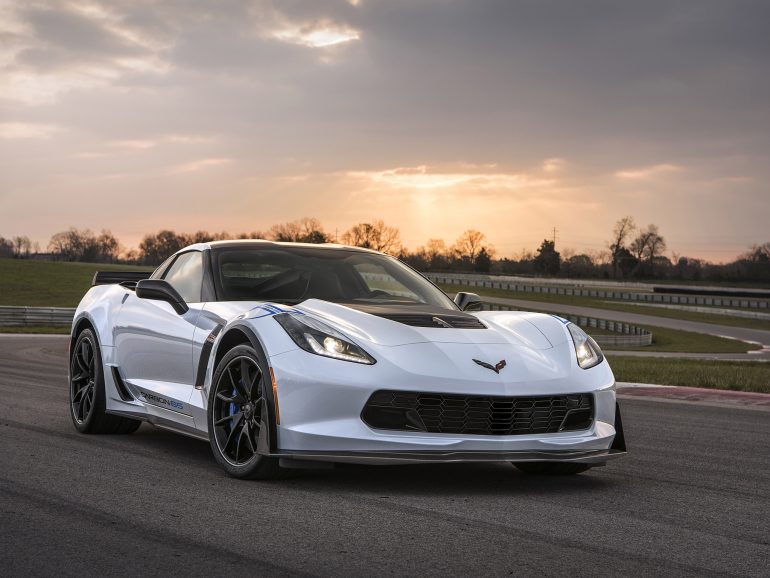
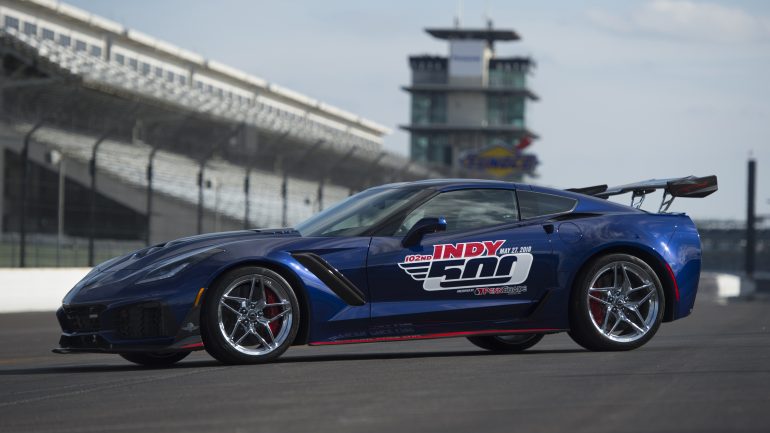
 The 2017 Corvette Grand Sport Coupe.
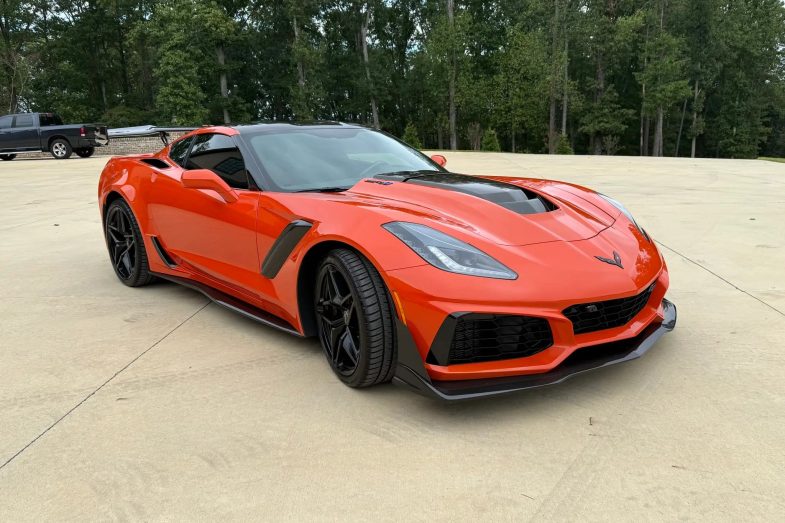
 2019 Corvette ZR1 Coupe.
The C7 changed every year, but unlike a classic Corvette the changes decide what a car drives like more than what it is worth. The 2014 is the first-year car with the six-speed automatic; 2015 brought the eight-speed, the PDR and the Z06; 2016 CarPlay and the C7.R Edition; 2017 the Grand Sport and the Z06’s cooling fix; 2018 the Carbon 65 and the shortest run since 1959; 2019 the ZR1 and the end. The table gives the changes, the production, the engines and the verdict for each; the year pages have the full story, the specs, the options, the colors and the current market for that year.
Three rules hold across all six. The model and the gearbox matter more than the year: a 2015 Z06 is worth more than a 2019 Stingray, and a manual more than an automatic of the same car. Only the numbered editions and the ZR1 carry a premium over an ordinary car of the same model, and the 2018’s scarcity has not been priced. And a 2017–19 car gets every update the generation received, so there is no reason to pay more for an early one.
MORE: THE 2014 PAGE / THE 2015 PAGE / THE 2016 PAGE / THE 2017 PAGE / THE 2018 PAGE / THE 2019 PAGE / THE C7 HUB
| YEAR | WHAT CHANGED | BUILT | ENGINES | THE VERDICT |
|---|---|---|---|---|
| 2014 | All new: the aluminum frame, the carbon hood and roof, the 455/460-hp direct-injected LT1 with the seven-speed manual or the 6L80 six-speed automatic, 1LT/2LT/3LT, the Z51 package (19/20-inch wheels, dry sump, eLSD, slotted rotors and bigger front brakes, coolers, gearing, the aero package) on 57 percent of cars, MyLink and the new HUD; coupe and convertible; the Premiere Editions; North American Car of the Year. | 37,288 | 376 ci (6.2 L) Gen V LT1 V-8, 455 hp / 460 with NPP | The cheapest way into the C7 and a used car in the market’s eyes: the six-speed automatic, no Z06 or Grand Sport, first-year wrinkles. A late-build 2LT Z51 under $40,000 is the bargain of the generation; the Premiere Edition the only 2014 with a premium. |
| 2015 | The 8L90 eight-speed automatic replaces the six-speed, the Performance Data Recorder arrives with navigation, the Atlantic (GT) and Pacific (track) design packages, and the Z06: the 650-hp LT4, wide body, Z07 with carbon-ceramic brakes and Cup 2 tires, coupe or convertible (the first Z06 convertible since 1963), 2.95 seconds to 60 and 99.6 feet from 60 to 0. | 34,240 | 376 ci (6.2 L) LT1, 455 hp / 460 with NPP (Stingray); 376 ci supercharged LT4, 650 hp (Z06) | The year the market splits: the Stingray gains the eight-speed and the PDR and stays a used car; the Z06 is the collectible, trading on a benchmark of about $76,000 with manuals, Z07 and 3LZ carrying the premiums. Early Z06 heat-soak stories come with the year. |
| 2016 | No special edition on the Stingray; instead the Twilight Blue, Spice Red and Jet Black Suede design packages, a front curb-view camera on 2LT/3LT and 2LZ/3LZ, Apple CarPlay (Android later) through MyLink, the flat-bottom wheel, and the Z06 C7.R Edition in Corvette Racing Yellow or Black with Z07, carbon pieces and a serialized VIN: 650 built. The C7’s biggest year. | 40,689 | 376 ci (6.2 L) LT1, 455 hp / 460 with NPP (Stingray); 376 ci supercharged LT4, 650 hp (Z06) | The most of everything: 40,689 cars, CarPlay and the front camera, and the C7.R Edition, the only 2016 that is collected. A 2LT Z51 Stingray under $40,000 is the well-equipped bargain; a 3LZ Z07 manual Z06 the driver’s pick. |
| 2017 | The Grand Sport returns, unveiled at Geneva: the Z06’s wide body, brakes, wheels, eLSD and Magnetic Ride on the 460-hp LT1, Z07 available, a Z07 car within a second of the C6 ZR1 at Milford and 1.05 g (1.2 g with Z07); the Collector Edition in Watkins Glen Gray with Tension Blue (935 built); the Z06 gets the revised hood and supercharger cover that cured its cooling. | 32,782 | 376 ci (6.2 L) LT1, 455 hp / 460 with NPP (Stingray; 460 standard on the Grand Sport); 376 ci supercharged LT4, 650 hp (Z06) | The Grand Sport takes the middle of the market and the Z06 gets its revised hood and cooling, which makes 2017–19 the Z06s to buy. A 2LT Grand Sport automatic under $50,000 is the best-value C7 there is; the Collector Edition the one to collect. |
| 2018 | The Carbon 65 Edition for the 65th anniversary on Grand Sport 3LT and Z06 3LZ (650 built: 297 and 353) in the new Ceramic Matrix Gray with visible carbon; 19/20-inch wheels standard on the Stingray and Magnetic Ride a stand-alone option for the first time, five new wheel designs, Spice Red top and interior, the stitching packages. A seven-month model year around a paint-shop shutdown. | 9,686 | 376 ci (6.2 L) LT1, 455 hp / 460 with NPP (Stingray; 460 standard on the Grand Sport); 376 ci supercharged LT4, 650 hp (Z06) | The shortest C7 year and the Carbon 65 Edition, the only 2018 with a premium (benchmark about $116,000). Ordinary 2018s bring no more than 2017s; a Carbon 65 Z06 with the seven-speed (85 built) is the 2018 to collect. |
| 2019 | The ZR1: the 755-hp LT5 with a 2.65-liter supercharger (52 percent more displacement than the LT4’s) and port-plus-direct injection, the low wing or the ZTK high wing (60 percent more downforce than a Z07 Z06), the front underwing, 212 mph; otherwise unchanged apart from Elkhart Lake Blue and Shadow Gray, the Drivers Series Grand Sports and the Hertz Z06s. A Grand Sport paced Indianapolis; the last C7 was built on November 15, 2019. | 34,822 | 376 ci (6.2 L) LT1, 455 hp / 460 with NPP (Stingray; 460 on the Grand Sport); 376 ci supercharged LT4, 650 hp (Z06); 376 ci supercharged LT5, 755 hp / 715 lb-ft (ZR1) | The last front-engine Corvette and the ZR1: 2,953 built, trading at $125,000–$340,000 with the 900-odd manuals $50,000–$60,000 above the automatics. The Stingray, Grand Sport and Z06 carry no premium for being last; the Drivers Series and Hertz cars carry a story. |
The table gives the headlines; this is the detail a buyer uses at the viewing, because on a C7 the model year decides the gearbox, the infotainment, the Z06’s cooling and which editions exist, and the service parts label in the glovebox decides everything else. The year pages carry the full specifications, options, colors and production for each.
The 2014 Corvette Stingray was offered in both coupe and convertible trims. Each version of the car was offered in three trim levels - 1LT, 2LT, and 3LT. Additionally, all variants of the coupe and convertible were offered with the available Z51 Performance Package, which provided consumers with 19″ front and 20″ rear wheels, dry sump oil system, Electronic Limited Slip Differential (eLSD), slotted brake rotors, larger front brakes with Black calipers, specific shocks, springs and stabilizer bars, performance gear ratios, differential and transmission cooling, and an Aero Package that reduces lift for high-speed stability.
All 2014 Corvettes were powered by a new LT1 small-block 6.2L V8 engine that offered advanced consumers advanced technologies including Direct Injection, Active Fuel Management, and Continuously Variable Valve Timing. It was the most powerful standard Corvette ever introduced by GM (to date). The LT1 produced an impressive 460 horsepower and 460 lb./ft. of torque, and provided consumers with 0-60 times of just 3.8 seconds.
The redesigned interior featured one of the most cutting-edge cockpits ever devised for a Corvette. Consumers could select standard GT seats for all-around comfort and support or optional Competition Sport seats for more aggressive support on the track. The car also featured a smaller, 360mm steering wheel that was designed for optimal feel during performance driving. Perhaps the most notable upgrades to the interior were the introduction of some truly remarkable technologies throughout. The 2014 Corvette included the Chevrolet MyLink system which fully integrated information from several Bluetooth-enabled mobile devices, as well as access to USB ports, SD cards, MP3 players, and an audio input jack. An 8″ LCD central display touch-screen (that lowers for device storage and allows access to a USB port inside) provided access to third-party music services such as Pandora. The car also featured a highly customizable instrument cluster, and an available Head-Up Display that was a huge leap ahead of the HUD offered in the fifth- and sixth-generation Corvettes.
For its sophomore year, Chevrolet rolled out a considerable number of enhancements to the Stingray, including an all-new transmission, two new design packages, and a Z06 Corvette variant that would surpass any Corvette that had come before it in both power and performance. Two new and distinctive design packages were also introduced - the Atlantic and Pacific Design Packages. Each package was unique from the other and showed the personalization range of the Corvette Stingray. At one end of the spectrum, the Corvette could be configured as a luxury sports GT car (the Atlantic Design Package) or as a high-performance motorsport car (the Pacific Design Package.)
The most notable improvement available to the 2015 Corvette was the introduction of an all-new eight-speed paddle-shift automatic transmission. This transmission, which replaced the six-speed automatic featured in the 2014 model, was offered on both the Corvette Stingray as well as the 2015 Z06 coupes and convertibles. The transmission, dubbed the Hydra-Matic 8L90, was developed and built by General Motors, and delivers world-class shift times that rival the best dual-clutch designs anywhere in the world.
Moving to the interior of the car, the other significant technology advancement on the 2015 Corvette was the introduction of an optional Performance Data Recorder, a feature that came bundled with the navigation system (RPO IO6). The Performance Data Recorder – or PDR – enabled users to record high-definition video, with telemetry overlays, of their driving experiences both on and off the track. The PDR was developed for Corvette in conjunction with Cosworth, the motorsports-engineering company that supplies the Corvette Racing team’s data acquisition and telemetry electronics system.
While all the enhancements to the 2015 Corvette Stingray coupe and convertible models helped to further advance the car’s perception on the marketplace as a performance vehicle, Chevrolet also unveiled an all-new Z06 model for the 2015 lineup that was more powerful than any production Corvette that had come before it.
At the heart of the 2015 Corvette Z06 was a new LT4 supercharged 6.2L V-8 engine. The LT4 was SAE-certified at 650 horsepower (485 kW) at 6,400 rpm and 650-lb-ft of torque (881 Nm) at 3,600 rpm. This certified performance rating identified the Z06 Corvette as not only the most powerful production car ever built by General Motors but also one of the most powerful production cars available in the United States. The 2015 Corvette Z06 produced some truly staggering performance numbers, including:
0-60 mph acceleration in 2.95 seconds with the eight-speed automatic and 3.2 seconds with the seven-speed manual transmission.
Quarter-mile times of 10.95 seconds at 127 mph with the eight-speed and 11.2 seconds at 127 mph with the seven-speed transmission.
Lateral acceleration of 1.2 g.
60-0 mph braking in only 99.6 feet – the best of any production car tested by General Motors.
It was also the first Z06 since 1963 to be offered as either a coupe or a convertible.
The 2016 Corvette Stingray was the first in the seventh-generation lineup not to include a special edition version. Instead, Chevrolet introduced three all-new, color-themed design packages for the 2016 model year. Finished in either Twilight Blue, Spice Red or Jet Black Suede, the special color-themed design packages offered consumers a custom-tailored appearance package that helped to elevate the Stingray’s presence both on the street and on the track. Additionally, each of the customized appearance packages reflected the different roles the Corvette represented in different customer experiences – from high-performance driving to grand touring cruising.
The 2016 Corvette Stingray’s most noteworthy advancements included the introduction of a front curb view parking camera which was offered on all 2LT/3LT and 2LZ/3LZ (Z06) models. This camera, while a minor enhancement to the aesthetic of the car itself, provided drivers with visibility to high-curbs and other obstructions that are known to “bite” the front end of this low-riding Corvette Stingray. It also featured a smartphone projection technology as part of the Stingray’s new MyLink system. This new smartphone technology interface enabled drivers to display content from their Apple iPhone (for iPhone 5 or later models) and select Android phones on the Corvette’s eight-inch, multicolor center-console display screen. The Apple/Android CarPlay feature enabled users to utilize their phone, text messages, maps, music, and compatible third-party apps.
The 2016 Z06 Corvette was the continued embodiment of track-ready, uncompromised high-performance driving and handling. Its return for the 2016 model year provided consumers with more options to personalize their cars. It would also finally pay homage to Corvette’s racing heritage with the introduction of a special, C7.R Edition model. It was specifically designed as a direct tribute to the Corvette Racing C7.R race cars. It represented the closest link between the racecar and the production model of any Corvette in the car’s sixty-three-year history.
The special edition package was offered in two color schemes, both paying homage to Corvette Racing’s signature yellow and black liveries. Each car featured a number of coordinated exterior and interior accents which included: A C7.R Edition graphics package, the Z07 Performance Package with Brembo carbon-ceramic brakes, and Michelin PS Cup 2 tires, yellow brake calipers, black wheels with a yellow accent stripe, and Corvette Racing-logo center caps, a visible carbon fiber ground effects package, a new, visible carbon fiber hood section, grilles and vents finished in Spectra Gray Metallic, a Jet Black leather interior with sueded microfiber accents on the instrument panel and doors, sueded microfiber-trimmed Competition Sport Seats, steering wheel and shifter, yellow contrast stitching throughout the car’s interior, a Carbon Fiber interior trim package (high-gloss), Corvette Racing sill plates, and special indoor car cover with C7.R graphics.
Only 500 of the C7.R Edition Z06 Corvettes were built, and all 500 came equipped with the Z07 Performance Package, carbon-ceramic brakes, and a specially serialized vehicle identification number.
For the 2017 model year, Chevrolet unveiled its newest iteration of the Corvette Grand Sport at the Geneva Auto Show. Like the 2015 Corvette C7.R Pro race car, the new Grand Sport combined a lightweight architecture, a track-honed aerodynamics package, Michelin tires, and a naturally aspirated engine. To enhance the Grand Sport’s capabilities, Corvette engineers utilized the chassis tuning, upgraded cooling systems, and the performance technologies previously developed for use in the Z06. The result is a Grand Sport Corvette that was truly derived from its race-car brethren. When equipped with the Z07 performance package, the 2017 C7 Grand Sport rivaled the performance of the previous generation’s ZR1 Corvette. In fact, the Z07 equipped Grand Sport ran just a second slower than the ZR1 at GM’s Milford Proving Grounds. In addition, the 2017 Corvette Grand Sport also featured an estimated 1.05g in cornering capability and an even greater cornering capability -1.2g – when equipped with the Z07 package.
The 2017 Corvette Grand Sport was also offered to consumers in a special Collector’s Edition package. The Grand Sport Collector Edition Corvette featured an exclusive Watkins Glen Gray Metallic exterior with Tension Blue hash-mark graphics, satin black, full-length stripes, black wheels, and a unique Tension Blue full leather and suede-wrapped interior.
While Chevrolet’s primary focus for the 2017 model year was the introduction of the Grand Sport to the Corvette stable, Chevrolet continued to offer all of the earlier models, including the base coupe and convertible and the Z06 coupe and convertible.
The 2018 Corvette Stingray included a Special Edition model that marked the 65th Anniversary of America’s Sports Car. Although rumors of a mid-engine Corvette were already becoming the dominant topic whenever the brand was mentioned, Chevrolet maintained its focus on the C7 Stingray platform with the introduction of the Carbon 65 Edition Corvette. The car, which was offered to consumers as either a Grand Sport 3LT or Z06 3LZ model, was specially designed to celebrate the history and heritage of Corvette since its introduction in 1953.
The Carbon 65 Edition Corvette blended visible carbon-fiber exterior elements – most notably, a new carbon-fiber rear spoiler and quarter ducts – with a new Ceramic Matrix Gray exterior color. On convertible models, the Cermaic Matrix Gray exterior was paired to a blue top. Each of the Carbon 65 Edition Corvettes received unique fender stripes and door graphics, special black wheels with special center caps and machined grooves paired with summer-only tires, blue brake calipers, visible carbon-fiber ground effects, visible carbon fiber on a section of the hood and roof (on coupe models) or tonneau inserts (on convertible models.) All variants of the Carbon 65 received new, visible carbon-fiber spoilers, special carbon flash badges, and outside mirrors, and Carbon 65 Edition sill plates. All 2018 Carbon 65 Grand Sport models were paired with a Cup-Style wheel while its Z06 counterpart received Blade Style Wheels.
Moving to the car’s interior, each Carbon 65 Corvette received a Jet-Black suede-wrapped cockpit with special blue stitching, a carbon-fiber steering wheel rim,and gloss carbon-fiber interior trim elements along with Competition Sport seats.
A limited global production run of just 650 Carbon 65 Corvettes were manufactured in 2018 – 297 of which were Grand Sport models and the other 353 were Z06’s.
The 2018 Corvette Stingray coupe and convertible models now featured standard 19-inch front and 20-inch rear wheels. These wheels were derived from the optional wheels that were previously included with the Z51 package. They replaced the standard 18-inch front/19-inch rear wheels previously included on earlier base model Corvette coupes, convertibles, and Grand Sports. In addition to upgrading the size of the standard wheels, Chevrolet offered consumers five new wheel design options, including both a “Torque” and “Motorsport” design. Additionally, Magnetic Ride Control was offered for the first time as a stand-alone option. Like the larger wheels, it had previously been bundled with the Z51 package.
The most visible changes for the 2018 Corvette Stingray came in the color choices offered. For 2018, Ceramic Matrix Gray replaced Sterling Blue for the exterior. A Spice-Red convertible top was offered and a Spice-Red interior was offered on all 3LT and 3LZ trim packages. A Jet Black suede-wrapped interior was offered and included a carbon rim steering wheel and gloss carbon-fiber interior trim elements. A new interior color stitching package was also offered which included either red, yellow or blue stitching on surfaces of the interior (when so ordered as part of the 3LT and 3LZ trim packages.)
The 2019 model year marked the final year of the seventh-generation Corvette Stingray (and all its higher-performance iterations.) It also welcomed the arrival of the ultimate rear-wheel drive Corvette – the seventh-generation, 755 horsepower ZR1. The 2019 Corvette ZR1 was developed with the intent of building a super-car iteration of the Corvette that pushed the limits of the brand to the highest power output, greatest track performance, and most advanced technology package in its sixty-six-year production history.
The 2019 ZR1 was powered by Chevrolet’s exclusive LT5 supercharged engine. Rated at an SAE-certified 755 horsepower (563 kW) and 715 lb-ft (969 Nm) of torque, the LT5 delivered the highest engine output ever for a Chevrolet production vehicle. This incredible performance output was achieved in large part because of the new, more-efficient inter-cooled supercharger system, which offered 52 percent more displacement than the aforementioned Zo6’s LT4 supercharger. Additionally, the 2019 Corvette ZR1 featured GM’s first-ever dual-fuel-injection system, which employed both primary direct injection and supplemental port injection.
The 2019 ZR1 elevated Corvette’s track capability by offering consumers two wind tunnel-developed aerodynamic packages, both of which helped distinguish the car as the fastest production Corvette to date. The first package – which featured the standard rear Low Wing – offered consumers the option to achieve the fastest speeds on the track. The optional High Wing offered consumers an available two-way-adjustable high-wing that produced maximum downforce on the track – about 60 percent more downforce than the 2019 Z06 with the available Z07 Performance Package. Both variants of the 2019 Corvette ZR1 also featured a Chevrolet first – a downforce-enhancing front underwing.
While there’s no question that the ZR1 was the center-piece of the 2019 Corvette model year, its arrival was still somewhat overshadowed by the certainty that GM was close to unveiling the eighth-generation, mid-engine Corvette! In fact, the ZR1’s introduction was the only appreciable change to the seventh-generation Corvette that year. The base models, the Grand Sports, and the Z06 Corvettes all returned for the final model year as well, but without any significant changes to any of these “lesser” models.
Chevrolet did introduce two new paint colors for the 2019 Corvette – Elkhart Lake Blue and Shadow Grey.
Additionally, for the 2019 running of the Indianapolis 500, Chevrolet announced that a Corvette Grand Sport Coupe would serve as the official pace car. The 2019 Corvette Grand Sport Pace Car was finished in Long Beach Red Metallic Tintcoat. It received unique GM-designed Indy 500 decals and silver racing stripes.
MORE: 2014 / 2015 / 2016 / 2017 / 2018 / 2019 / THE C7 TIMELINE
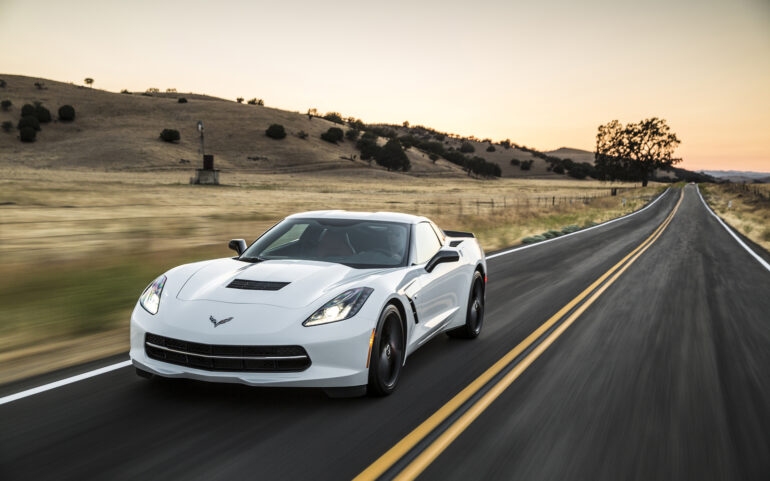
 The 650-hp, 2015 Chevrolet Corvette Z06 is one of the most capable vehicles on the market, capable of accelerating from 0 to 60 mph in only 2.95 seconds, achieving 1.2 g in cornering acceleration, and braking from 60-0 mph in just 99.6 feet.
 The new 2017 Chevrolet Corvette Grand Sport combines a lightweight architecture, a track-honed aerodynamics package, Michelin tires and a naturally aspirated engine to deliver exceptional performance. Inside, the Grand Sport Collector Edition features a unique Tension Blue full leather and suede-wrapped interior, a three-dimensional representation of an original Grand Sport race car is embossed in the headrests and that shape is also used on an instrument panel plaque that carries a unique build sequence number.
Four models, three trim levels each, two bodies, two gearboxes and a handful of packages: that is the whole C7 range, and the service parts label in the glovebox lists every one of them by RPO code. The decisions are the model (how much engine and how much chassis), the gearbox (the manual carries a growing premium, the automatic is quicker and better in traffic), Z51 or Z07 (the brakes and tires that cost money to replace), the trim (3LT/3LZ for the interior, 1LT/1LZ for the value) and whether an edition’s plaque and paperwork justify its price. The table sorts them the way the market does; the model pages carry the full guide to each car.
A note on the names. Chevrolet called every base C7 a Stingray, and the Grand Sport, Z06 and ZR1 were separate models rather than packages, so a “Z06 package” or a “Grand Sport Stingray” in a listing is a seller’s shorthand. The label and the VIN’s eighth character (7 for the LT1, 6 for the LT4, J for the LT5) settle it.
MORE: THE STINGRAY GUIDE / THE GRAND SPORT GUIDE / THE Z06 GUIDE / THE ZR1 GUIDE / THE SPECIAL EDITIONS / EVERY C7 ENGINE
| MODEL OR EDITION | WHAT IT IS | BUILT | WHAT A BUYER SHOULD KNOW |
|---|---|---|---|
| Stingray (2014–19) | The base C7: 455/460-hp LT1, 1LT/2LT/3LT, coupe or convertible, Z51 optional | ~120,300 | A used car with no premium for any year. Z51 is worth having on a driver (brakes, coolers, eLSD, gearing, exhaust; the dry sump on 2014s); 3LT only for the interior. A 2016–19 car has CarPlay and every update at the same money as an early one. |
| Z51 Performance Package | 19/20-inch wheels, bigger slotted brakes, eLSD, coolers, performance gearing, the aero package, the dry sump (2014) and, with F55, Magnetic Ride | More than half of Stingrays | A few thousand dollars on the used market and worth it. A base car wearing Z51 wheels and a spoiler (the ZF1 look-alike) is not a Z51: check the label, the dry-sump tank behind the right headlamp on a 2014 and the coolers under the rear. |
| Grand Sport (2017–19) | The Z06’s wide body, wheels, brakes, eLSD and Magnetic Ride on the 460-hp LT1 with a dry sump; Z07 optional | 26,280 | The C7 the road testers and the market picked: a Z06 chassis without the heat, the supercharger or the price, and still priced like a Stingray with better parts. The best-value C7 there is; the manual the collector’s preference. |
| Z06 (2015–19) | 650-hp supercharged LT4, wide body, six-piston brakes, Magnetic Ride, Z07 optional; coupe or convertible | 39,940 | The most horsepower per dollar in the Corvette market, trading on a benchmark of about $76,600. Buy a 2017–19 for the revised hood and cooling; a 2015–16 only with its software updates and no track-day heat history. Manuals and Z07 carry the premiums. |
| Z07 Performance Package | Brembo carbon-ceramic brakes, Michelin Pilot Sport Cup 2 tires, the stage-3 aero and stiffer Magnetic Ride tuning, on Z06 and Grand Sport | 3,378 (2015) to 823 (2018) | A premium that depends on the rotors, which wear by weight and cost a five-figure sum to replace, and on the Cup 2s, which age out. Have the rotors weighed; a Z07 with worn rotors should be priced for it. |
| ZR1 (2019) | The 755-hp LT5, carbon-ceramic brakes, the halo hood, the low wing or the ZTK high wing, coupe or convertible, 1ZR/3ZR | 2,953 | Already a collector car trading above its $119,995 sticker: benchmarks of about $160,600 for an automatic coupe and $220,500 for a manual, and the ZTK package is most of the rest of the premium. Buy on the label, the odometer and the recall history. |
| Premiere Edition (2014) | Laguna Blue 3LT Z51 coupes and Lime Rock Green convertibles with Magnetic Ride, a numbered plaque and Thule luggage | 1,044 | The only 2014 with a premium: $71,500–$74,500 for delivery-mileage coupes against $44,000 for a driven one. Verified by SRZ on the label, the plaque and the 300001-series VIN on coupes. |
| Z06 C7.R Edition (2016) | Corvette Racing Yellow or Black Z06 3LZ with Z07, the carbon pieces, the graphics and a serialized VIN | 650 (570 coupes) | The only collected 2016, with its own Classic.com benchmark (about $93,800) and sales from $75,500 to $119,500. A yellow Z07 Z06 with stripes added is not one: check the plaque, the VIN series (00001–00650) and ZCR on the label. |
| Grand Sport Collector Edition (2017) | Watkins Glen Gray with Tension Blue hash marks and interior, satin-black stripes, black wheels, a numbered plaque | 935 | A modest premium so far (around $57,500–$60,000). A Heritage Package car in the same gray with blue hashes is not one; the plaque, Z25 on the label and the VIN series say which. |
| Carbon 65 Edition (2018) | Ceramic Matrix Gray Grand Sport 3LT or Z06 3LZ with visible carbon, blue calipers, the carbon wheel rim and a numbered plaque | 650 (297 GS, 353 Z06) | The only 2018 with a premium, benchmark about $116,000 against $76,600 for a Z06, sales from $71,500 to $110,000. A Ceramic Matrix Gray 3LZ with carbon ground effects but no plaque, blue calipers or Z30 on the label is an ordinary 2018. |
| Design packages (2015–19) | Atlantic and Pacific (2015), Twilight Blue, Spice Red and Jet Black Suede (2016) and their successors: color, wheel, stripe and interior themes | 1,360 in 2016 | Taste rather than value: the design-package cars have not separated from ordinary Stingrays and Z06s at auction. The code on the label (ZLD, ZLE, ZLG and so on) is the proof. |
| Drivers Series and Hertz Z06 (2019) | Four Drivers Series Grand Sports with their drivers’ colors and stripes (95 built); 100 Corvette Racing Yellow Z06 automatics built for Hertz’s centennial | 95 / 100 | A story more than a premium. A Drivers Series car is proved only by its label code (PDT, PDO, PDJ, PDA); a Hertz car has a rental fleet in its past and sold off in 2020 at $57,000–$64,000. |
The C7 market sorts by model and gearbox, then by edition, then by mileage and spec, and only last by year. The ZR1 is on top, manuals far above automatics and ZTK cars above the low-wing ones; then the Carbon 65 and the C7.R Edition; then the Z06, with manuals and Z07 carrying the premium; then the Grand Sport and its Collector and Drivers Series editions; then the Stingray by trim, 3LT Z51 manuals first. The 2018 is scarce but ordinary 2018s bring no premium, and every manual C7 has become the last of its kind since the C8 has none, so the manual-automatic gap widens each year.
The results the site tracked on Classic.com between October 2025 and October 2026 show the spread. Stingrays sold for $27,250 to $59,000, most 2LT and 3LT Z51 cars between $38,000 and $53,500, with Premiere Edition coupes at $71,500 to $74,500. Grand Sports sold for $27,500 to $62,700, most between $48,000 and $62,000, a 1,000-mile manual at $96,800 and Collector Editions around $57,500 to $60,000. Z06s sold for $41,500 to $110,000, most driven 3LZ cars between $58,000 and $88,000 and low-mileage manuals at $103,000 to $110,000, against a benchmark of about $76,600; C7.R Editions for $75,500 to $119,500 (benchmark $93,824); Carbon 65 Editions for $71,500 to $110,000 (benchmark $116,260). ZR1s trade on benchmarks of $160,593 for an automatic coupe and $220,516 for a manual, $176,346 and $227,507 for the convertibles, with manual ZTK coupes selling for $200,000 to $340,000 and automatics for $125,000 to $260,000.
Two cautions that apply to every figure on this page. Auction figures are hammer prices, so add the buyer’s premium when comparing them with asking prices, and treat asking prices and unsold high bids separately from completed sales: dealers asked $142,900 to $339,980 for ZR1s while the cars sold for less, and a 13,000-mile 2017 Stingray bid to $57,000 three times without selling is not a $57,000 car. The year pages carry each year’s results and are updated as the site tracks new sales; the price ladder below puts the whole generation in five tiers.
MORE: 2014 MARKET / 2015 MARKET / 2016 MARKET / 2017 MARKET / 2018 MARKET / 2019 MARKET / THE BARGAIN HUNTING SERIES
What the money buys at each level of the 2014–19 market, from the results above. The tiers are models more than conditions: a Stingray does not reach the Z06 tier however good it is, and a ZR1 does not fall to the Z06 tier however many miles it has. Within a tier the gearbox, the mileage, the trim and the paperwork set the price.
$27,000 – $40,000
Higher-mileage or 1LT and 2LT Stingrays, mostly 2014–16, automatics more than manuals, and the odd modified car. Recent sales: a 44,000-mile 2LT manual at $30,250, a 22,000-mile 2016 2LT automatic at $27,250, 2LT Z51 cars at $38,000 to $41,500. The cheapest modern Corvette with 455 horsepower; buy a Z51 with a clean history report and ignore the year.
$40,000 – $62,000
Low-mileage 3LT Z51 Stingrays and ordinary Grand Sports, the heart of the market. Recent sales: 3LT Z51 Stingrays at $40,000 to $53,500, a 36-mile 2014 at $58,750, 2LT and 3LT Grand Sports at $48,000 to $62,700, a 71,000-mile Grand Sport manual at $48,250. A 2LT Grand Sport automatic around $50,000–$55,000 is the best-value C7 there is.
$58,000 – $90,000
Driven Z06s of every year, trading on a Classic.com benchmark of about $76,600: 2LZ automatics at the bottom, 3LZ Z07 manuals at the top, 2017–19 cars worth a little more for the cooling fix. Recent sales: $58,000 to $88,000 for 3LZ cars with 10,000 to 50,000 miles, a 52,000-mile 2LZ manual at $49,500, 3LZ manuals at $80,000 to $90,000. The most horsepower per dollar in the Corvette market.
$90,000 – $140,000
Delivery-mileage Z06s, the C7.R Edition ($75,500 to $119,500, benchmark $93,824), the Carbon 65 ($71,500 to $110,000, benchmark $116,260), the Premiere Edition at $71,500 to $74,500, and the cheapest automatic ZR1s at $124,000 to $140,000. Recent sales: a 358-mile 2016 3LZ at $110,000, a 4,000-mile 2019 2LZ manual at $110,000, a 4,000-mile Carbon 65 Z06 at $110,000. Bought on the plaque, the label and the window sticker.
$125,000 – $340,000
2,953 cars that trade as collectibles above their $119,995–$123,995 stickers: automatic coupes on a $160,593 benchmark, manuals $220,516, convertibles $176,346 and $227,507. Recent sales: automatics $125,000 to $260,000 with most ZTK cars $150,000 to $190,000; manual ZTK coupes $200,000 to $276,000 and a 3,000-mile 3ZR ZTK at $340,000. About 900 are manuals and the market pays $50,000 to $60,000 for the pedal.
Model. The ladder on this page is a model ladder: ZR1, then the numbered editions, then the Z06, then the Grand Sport, then the Stingray. Within a model the differences are tens of thousands; between models they are factors of two and three. A 2019 Stingray is worth half of a 2015 Z06 and a fifth of a 2019 ZR1.
Gearbox. The seven-speed manual carries a premium on every model and the premium grows every year, because no Corvette since has had one: a modest sum on a Stingray, more on a Grand Sport or Z06, and $50,000 to $60,000 on a ZR1. The automatic is quicker and the better daily car, and it is the value.
Z07, ZTK and the consumables. Z07 on a Z06 or Grand Sport and ZTK on a ZR1 add a clear premium, but only when the carbon-ceramic rotors (worn by weight, replaced for a five-figure sum) and the Cup 2 tires (which age out in a few years) are healthy. A worn Z07 car is worth less than a healthy standard one.
Mileage and history. The C7 market pays for delivery mileage as no Corvette generation before it: sub-1,000-mile Z06s bring $100,000 and up against $60,000 for a driven one, and a 36-mile 2014 brought $58,750. Track history matters more than mileage on a Z06 or ZR1, so a clutch, tire, brake and fluid record is worth more than a low odometer. Flood and salvage titles are common on C7s; the history report is not optional.
Trim and edition. 3LT and 3LZ lead on collector cars and are expected there; 1LT and 1LZ are the value on a driver. The numbered editions (Premiere, C7.R, Collector, Carbon 65) have their own benchmarks and are bought on the plaque, the label and the window sticker; the design packages and the Drivers Series have a story but no premium yet.
Color and spec. Corvette Racing Yellow, Long Beach Red, Admiral Blue, Watkins Glen Gray, Sebring Orange on a ZR1 and the late Elkhart Lake Blue sell quickest; Magnetic Ride, the PDR, the NPP exhaust and Competition Sport seats are worth having and worth little; a visible-carbon hood or roof is a plus. The colors pages have the counts by year.
MORE: C7 COLORS BY YEAR / RPO CODES & OPTIONS / PRODUCTION NUMBERS
The C7 is the modern Corvette that has held its value best, for reasons that will not change: it is the last front-engine Corvette, the last with a manual, the last with the shape the brand carried for sixty-six years, and its best cars were built in small numbers with plaques to prove it. The ZR1 trades above its sticker seven years on, the Carbon 65 and the C7.R Edition have their own benchmarks, and manuals of every model have widened their lead over automatics each year since the C8 arrived.
The realistic expectation is a split market. The Stingray and the ordinary Grand Sport are used cars and will go on behaving like them, depreciating slowly from here and then levelling off as the supply of clean, low-mileage examples shrinks; the Bargain Hunting series has tracked the price floor since 2024 and it has moved little. The Z06 has found its level around $76,000 with the manuals and Z07 cars holding best. The ZR1, the editions and the delivery-mileage cars are collectibles already and move with the collector market, up and down.
The strongest cases are the cars the next collectors will want and can verify: a manual ZTK ZR1 coupe, a C7.R Edition or a Carbon 65 with delivery mileage and its paperwork, a 2017–19 Z06 or Grand Sport manual with Z07 and healthy rotors, a Collector Edition with its plaque. The weakest are a high-mileage automatic Stingray bought as an investment, a Z07 car with worn rotors priced as if they were new, and any C7 with a title history the seller glossed over.
Buy the car you want to drive, keep the records and let the market be a bonus. The site’s Bargain Hunting series, the State of the Market reports and the auction coverage track the C7 month by month; the year pages are updated as new results come in.
MORE: BARGAIN HUNTING / AUCTION RESULTS / WHOLESALE MARKET REPORTS
The charts below from our friends at Classic.com track recent sales and trends in the 2014–19 Corvette market: the Stingray, the Grand Sport, the Z06 and the ZR1, with the C7.R and Carbon 65 editions beside them. For any other year or spec, the year pages carry the results the site tracks and Classic.com has the rest.
The model pages carry a full buyer’s guide for each car: which year to buy, what one costs from the tracked results, how to verify a real one, the inspection list, the known issues and the options and editions that carry a premium.
MORE: THE SPECIAL EDITIONS / THE FULL MODEL LIST / THE C7 HUB
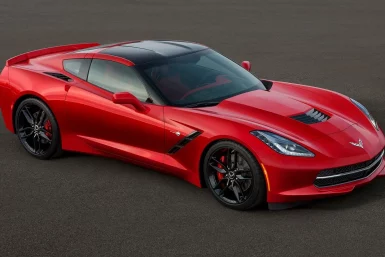
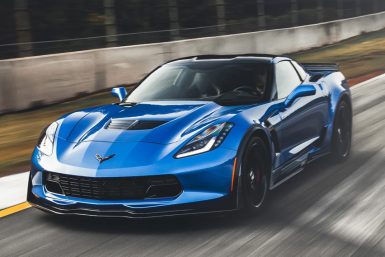
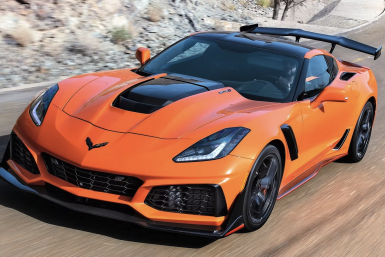
A C7 drives like a modern sports car with a very large engine in front of you and almost nothing behind: the aluminum frame is rigid, the steering is quick and accurate, the brakes are strong on every model, the ride on Magnetic Ride is better than the looks suggest, and the cabin is tight in the right places and roomy where it counts. The LT1’s torque means the gearing barely matters on the road, the seven-speed’s Active Rev Match makes anyone a good downshifter, and the car cruises at 29 mpg on the highway with the automatic. It is also low: the nose scrapes on steep driveways and the 2016-on front camera exists for a reason.
Stingray. The all-rounder. A Z51 car has the brakes, cooling, gearing and electronic limited-slip the reviews praised and is the one to drive hard; a base car is softer and quieter and still faster than most things on the road. The 2014’s six-speed automatic is slower-witted than the 8L90 but some owners prefer its smoothness; the eight-speed is quick and, once its fluid and software are current, well-behaved. GT seats suit long trips, Competition Sport seats the track and narrower drivers.
Grand Sport. The Z06’s body, wheels, 335-section rear tires, brakes, Magnetic Ride and eLSD with the LT1, which is to say the best chassis of the range with the engine that never gets hot. It turns in harder, stops shorter and feels wider than a Stingray, and on a track it is the C7 that keeps going lap after lap. Most road testers picked it as the C7 to own, and so does this guide.
Z06. 650 horsepower changes the car: the supercharger whine, the shove from any speed, the traction-control light in the first three gears, and a chassis that is up to it. The automatic is quicker and the manual is the one enthusiasts want. The caveat is heat: 2015–16 cars pulled power on hot track days until GM revised the hood and the supercharger cover for 2017, so a 2017–19 Z06 is the one to track and an early one is a fast road car that should have its software updates. Z07’s Cup 2 tires are superb when warm and poor when cold or wet.
ZR1. 755 horsepower and thirteen heat exchangers make it the Z06 with the heat problem solved and the volume turned up; the high-wing ZTK car is a track weapon and the low-wing car the 212-mph grand tourer. Most are driven very little, which is why delivery-mileage cars are common at auction, and a tracked one deserves its fluid history.
Coupe or convertible, manual or automatic. The coupe’s removable roof panel gives most of the open-air experience and squeaks over bumps in the cold, which is normal; the convertible’s power top is quick and the car gives up little stiffness on the aluminum frame. The automatic is the better car in traffic and quicker everywhere; the manual is the one the market will want in ten years. Drive both before deciding, and drive a Grand Sport before you settle on the Z06 you came for.
MORE: C7 PERFORMANCE FIGURES / SPECS BY YEAR / EVERY C7 ENGINE
A C7 is a late-model Chevrolet to run, which is the best thing about it and the reason the Stingray is the cheapest modern Corvette to own: the LT1 is a pushrod V8 on Mobil 1 with a conventional service schedule, the steel brakes and the suspension parts are at every dealer and every independent, and the car returns 29 mpg on the highway. Everything on a Corvette costs more than on a Camaro, but not much more, and nothing on a Stingray or a Grand Sport is exotic except the tires.
Tires are the first bill. The C7 uses its tires at 15,000 to 20,000 miles a set because of the compound that gives it its grip, so bare tread does not mean burnouts, and sellers often list a car just as the tires wear out, leaving the buyer the cost; a set of the Michelin Pilot Super Sports or Pilot Sport 4S the cars wear is four figures, the Grand Sport’s and Z06’s 335-section rears more, and Z07’s Cup 2s more again and short-lived. Most owners agree that conventional tires ride better, run quieter and last longer than the factory run-flats, but the C7 carries no spare, so a conventional-tire car needs an inflator kit or roadside assistance. Use worn tires as leverage on the price, not as a reason to walk away.
Brakes are the second. Steel pads and rotors are ordinary money; the Z07 and ZR1 carbon-ceramic rotors are not, wearing by weight rather than thickness and costing a five-figure sum to replace, so check pad material and look for pitting and scoring on the rotors, which on a ceramic car tell you how aggressively it was driven as surely as the odometer.
Everything else is predictable: a transmission fluid and software update on an 8L90 car that shudders, Magnetic Ride dampers when they leak (not cheap), a clutch on a hard-launched manual (a torque-tube-out job), wheels after potholes, and on a Z06 or ZR1 premium fuel, a supercharger belt and an intercooler pump at some point. Owners’ reports put a driven Stingray or Grand Sport at a few thousand dollars a year in consumables and service, a Z06 more for tires and brakes, a Z07 or ZR1 more again.
Insurance is ordinary for a sports car on a Stingray, Grand Sport or Z06; a C7.R Edition, a Carbon 65, a delivery-mileage car or any ZR1 is worth an agreed-value classic policy, because a standard policy will not pay what one costs to replace. Most C7s are driven little, so budget by age for tires, batteries (a tender is cheap insurance for the rear-mounted battery) and fluids rather than by mileage, and keep the dealer service records: on a C7 they are worth money at resale.
MORE: C7 MAINTENANCE SCHEDULES / C7 SERVICE BULLETINS / OWNER’S MANUALS
Beyond price, mileage and condition, a C7 purchase turns on a few judgments the inspection alone cannot make: which of the four cars you actually want, how much history you can verify, how the car was used, whether the specialist support exists for a Z06 or ZR1 where you live, and where the car sits in a market that has already sorted itself. Think these through before the first viewing; most C7 regrets are the wrong model bought well.
Decide first what the car is for. A daily or weekend road car wants a Stingray or a Grand Sport, automatic if you sit in traffic, Z51 or Grand Sport if you drive hard; a track car wants a Grand Sport or a 2017–19 Z06 and a clutch, tire and brake budget; a collection wants a manual ZR1, a numbered edition or a delivery-mileage Z06 that will stay that way. The usual mistakes are the Z06 bought for commuting, the Z07 bought for the look and resold when the rotors wear, and the ZR1 bought to drive that loses its mileage premium the first summer.
A Stingray or Grand Sport can be serviced at any Chevrolet dealer and any good independent, and the parts are everywhere. A Z06 or ZR1 wants a shop that knows the LT4 and LT5 (the dry sump, the supercharger, the intercooler circuit), a source for carbon-ceramic rotors and Cup 2 tires, and a dealer that has done the 8L90 fluid and software updates. A pre-purchase inspection at a Chevrolet dealer, with the full diagnostic scan GM technicians can run, is cheap against the price of any C7 and essential on a Z06 or ZR1; ask the seller for the service records from wherever the car was maintained.
As we stated at the beginning of this C7 Corvette Buyers Guide article, for many of you reading this, the thought of buying ANY Corvette may be the culmination of a life-long dream. It is important therefore to make sure that the car you purchase is going to be one that provides you many years of happiness. While owning a Corvette can be an exhilarating, truly-one-of-a-kind experience, it can also be difficult and costly if you purchase a car without doing your homework first.
So where to start?
Whenever considering the purchase of a used vehicle, it is important to glean as much information about the car as possible. As a general rule, a car with the lowest possible mileage and fewest owners is always preferable. However, lower-mileage often translates into bigger dollars. Higher-mileage Corvettes, if properly maintained (and with documentation showing proper maintenance history) are also definitely worth considering. While these cars should definitely be looked at by someone with a trained and discerning eye, they can often be purchased at a far more affordable price and might be a great way to enter into Corvette ownership without breaking the bank.
The seventh-generation Corvette Stingray utilized a drivable chassis with non-structural SMC (sheet molding compound/composite) panels bonded to an underlying structure. Unlike earlier Corvettes, which featured a body bolted to a steel frame, these newer Corvettes have components that are specifically mounted to the chassis via an epoxy-type bonding material. When looking at a prospective purchase vehicle, check for mismatched paint, narrow or wide gaps in body panels, and for paint overspray in the wheel wells.
In addition to body panels, look for scrapes beneath the car. All seventh-generation Corvettes, save for those “garage queens” that have spent most of their lives tucked neatly away in a garage somewhere, will have at least a bit of road rash. Remember that all Corvette are going to have some amount of surface scrapes, but be wary of any cars that have significant damage to any sub-assemblies. Dings, dents, serious abrasions, etc., are all indicators of a potential problem, so evaluate each closely when looking at the car.
One of the most insightful things any prospective car owner can do is to obtain a vehicle history report on any seventh-generation Corvette you might be considering. It will give you a detailed look at the car’s service and accident history. It will identify how many owners (before you, potentially) owned the car you are considering, for how long, and how many miles they put on the car. It will show a complete vehicle service history including any recalls/service bulletin work that may have been performed. It will let you know if the car has been involved in an accident (or even multiple accidents) and/or if there any other concerns about the car that is worth noting (ex.// “rebuilt” or “salvage” title.)
Consider that the C7 Corvette (all years) is a late model production car and is definitely covered by services like CarFax. Most reports cost less than $50.00. While they may not tell you everything about the car, they definitely provide you a snapshot of the car’s history. This may help you make a more informed decision before investing any significant time or effort into that particular vehicle.
A couple of things worth considering:
One, if you are working with a dealership and they refuse to share a CarFax (or similar) report with you, be wary of that dealership! While there are certainly instances (especially with smaller dealerships) where these reports are not immediately available, consider that these reports are incredibly easy to obtain (thanks to the internet.) They should be willing to provide you with this information as part of their service to you as a prospective customer.
When dealing with a private owner, we strongly encourage you to obtain your own CarFax report. For most cars (and certainly for all seventh-generation Corvettes), the only information you’ll need is the year, make model and the VIN number. While sellers may already have a copy of the report that they are willing to share with you, obtaining your own copy ensures that you’ve got all the most current information from a neutral third party.
Before climbing behind the wheel of the car, take some time to give the car a thorough once-over, keeping a discerning eye open for a number of specific items, including:
The C7 Corvette Stingray is known for using up tires quickly at a rate of about 15-20 thousand miles per set. This is a result of the type of rubber compound used that enables the car to maintain greater levels of traction and to perform at high speeds. Keep in mind that low tire tread does not necessarily indicate aggressive driving. Corvette tires naturally wear more quickly than conventional streetcar tires, so low tread does not automatically equal burnouts.
High-performance tires are expensive and it's not uncommon to find C7 Corvettes on the market that have tread-bare tires on them. Sellers will often list their cars after the tires wear out because of the cost of replacing them, leaving the buyer to take on that added cost after they make the purchase.
Should this be a deal killer? Not at all. Just remember that you are going to incur that expense, so use it as leverage when negotiating your sale price with the seller.
It is also worth noting that while the factory setup on Corvettes calls for run-flat tires (tires that can continue to be driven on after the tire has gone flat), it is generally agreed by most Corvette owners that conventional inflatable tires ride better, are quieter and last longer than the run-flats. However, it is also worth noting that the C7 Corvette does not come equipped with a spare tire, so if you have a tire go down during any driving condition, you may find yourself stranded until help can come and assist you.
As for the C7’s braking system? Always make a point of checking both the brakes and rotors for signs of wear or aging. Try and determine how much material is left on the brake pad surfaces. Also, pay special attention to the brake rotors for pitting/scarring, especially on models equipped with ceramic brakes. Like the tires, brake work on a Corvette can be expensive. It can also be an indicator of aggressive driving based on how the pads/rotors are worn as well as by how many miles are on the Corvette itself.
It is always a good idea to request your local Chevy dealership perform a complete used car check on any prospective Corvette you might be considering. Chevy’s technicians are specially trained to work on all Chevrolet vehicles, including the Corvette, and will be able to provide valuable insight into the condition of any prospective car. GM mechanics can also run a complete electronic diagnostic of the car you are considering which may identify an issue (or issues) that should be addressed by the current owner.
Similarly, if the current owner of the Corvette had his/her car serviced at a local dealer or service garage, make a point of stopping and asking for a copy of the service records. Like the CarFax report, this information can provide valuable insight into the Corvette you are considering and will help you make the most informed decision possible.
This is one of the most important and valuable parts of the car buying process, but maybe not for the reasons you think. For many consumers, test driving a “new to them” car is no different than driving a brand new car off the showroom floor. They take the car out for a quick spin, play with all the switches, dials, and buttons on the radio, make sure everything more or less works, and return quickly to complete the deal.
The test drive is your only true opportunity to fully assess the condition of the car you may be considering purchasing. When you get in the car, turn off the radio immediately and ask the seller to hold off on any further conversation until you complete the test drive. If he/she decides to travel with you, make sure they understand that the purpose of the test drive is to identify any unknown squeaks, rattles, rumbling, etc.
Be intentional during the test drive to listen for any clunks, rattles, whines, or any other sound that might cause you alarm. Does the car hesitate or stumble during acceleration? Does the car discharge any smoke (white or black?) Does the removable roof squeak (believe it or not, this is actually commonplace on many C7 Corvettes, and does not necessarily indicate a problem), is the car equipped with any aftermarket modifications?
If the answer is yes to any of these, take note of each issue and address it with a qualified mechanic. Failure to do so will likely lead to expensive repairs later. Remember that almost everything on a Corvette is more expensive, so you don’t want to buy into somebody else’s problems before you’ve even had time to enjoy your new car. By the way, roof squeaking during driving conditions (especially during colder driving conditions) is simply the natural body flex of the car. Most removable roofs make some amount of noise. While this can be mildly irritating, it is no cause for alarm.
Prior to starting your test drive, make sure the Corvette you are considering has a full set of functional lights, blinkers, power accessories, seats, windows etc. Take the time to check that everything operates as it is supposed to. Turn the radio on long enough to make sure it works and listen long enough to ensure that the speakers sound clear (buzzing or crackling can indicate a blown speaker). Check the wipers and the washer fluid, check the heat and air conditioning controls, the Heads Up Display (if so equipped) including the HUD controls (located to the left of the steering wheel), all of the vehicle information center buttons (located to the right of the steering wheel), the navigation system (if so equipped), cruise control, fuel tank release, hood release, the parking brake (especially on cars equipped with manual transmission) and even the adjustable suspension system (again, if so equipped.)
Even if everything checks out up to this point, there are a few more items worth checking.
Ask the seller (dealer or private owner) for a list of recalls that have been performed on the vehicle. Every C7 Corvette has a list of recalls that have been issued for each model year (you can find the recalls for most seventh-generation models on our website by visiting the model year page (links to each model year can be found earlier in this article under the section “Year by Year – What Are the Differences?”)).
In theory, any recalls that have been issued should be performed/completed by an authorized GM dealership. If the Corvette you are considering has been maintained by a Chevy dealer, these recalls would normally be scheduled during regular maintenance appointments and completed while the vehicle is in for service. The Federal Government requires that all recalls are performed to bring the car up to proper specifications. Obtaining this information from the seller is another measure of the care the car received from its previous owner.
This final item might be a small detail, but definitely one worth noting.
The Factory Door Sticker will is located on the driver’s side outer door jamb. It contains a bunch of information about the Corvette you are looking to purchase including the VIN number and a breakdown of the options included on that particular car. The VIN number on the sticker should match the VIN on the car. If it doesn’t, or if the sticker is missing, this could indicate that the car was involved in an accident that required the door to be replaced. This is definitely NOT the only instance where the sticker may be missing, but its absence should be cause for some concern, given that it contains vital information about the car.
While most Corvette owners are ethical and part of a global community that contains some of the finest enthusiasts and owners in the world, it is also an unfortunate reality that many Corvettes do end up being stolen, stripped and sold for parts, or involved in some sort of serious accident before being rebuilt. Taking time to evaluate all of the information – from closely inspecting the vehicle to looking for clues like a potentially missing door sticker – will help make the best choice when purchasing your first, or next, Corvette!
Know where the car sits before you pay for it. Stingrays and ordinary Grand Sports are used cars with a stable floor and the easiest to resell; the Z06 has found its level and the manuals and Z07 cars hold best; the ZR1, the C7.R Edition and the Carbon 65 are collectibles and move with that market. Manuals widen their lead every year. Price against the site’s tracked results, the Bargain Hunting series and the year pages rather than the asking prices around the car, add the buyer’s premium to any auction figure you compare, and remember that an unsold high bid is a ceiling the market declined to pay.
The C7 is one of the most reliable Corvettes built, and its faults are few, well documented and, with one exception, cheap to put right. The exception is the carbon-ceramic brakes on Z07 and ZR1 cars, which are the most expensive consumable on any Corvette and the first thing to measure on one. Everything else below should be on the inspection checklist and in the negotiation, and a car with the dealer records for the fixes is the one to buy.
The year pages carry the recalls, service bulletins and maintenance schedules for each year; the list below is the generation’s.
MORE: C7 RECALLS / C7 SERVICE BULLETINS / C7 MAINTENANCE SCHEDULES
| PROBLEM | YEARS | WHAT HAPPENS | THE FIX AND THE COST |
|---|---|---|---|
| 8L90 automatic shudder | 2015–19 | The torque converter shudders at 25–45 mph under light throttle and the gearbox shifts harshly at low speed, worst on a cold morning; GM addressed it across the range with new fluid and software. | The Mobil 1 LV ATF HP fluid flush and the latest calibration at a dealer, a few hundred dollars; a car that still shudders after both needs a converter. Drive it at 25–45 mph on the test drive. |
| Active Fuel Management lifters | 2014–19 | The LT1’s cylinder-deactivation lifters can collapse, with a tick, a misfire and in the worst cases a damaged camshaft; many cars have had AFM disabled or deleted. | A lifter and cam job is a four-figure repair; a disabler or a tune is common and should be disclosed. Listen for a tick at idle on a warm engine. |
| Z06 heat soak | 2015–16 | On track in warm weather the LT4 heat-soaks and the car pulls timing and power to protect itself; four class actions followed and GM revised the hood vent and supercharger cover for 2017. | Buy a 2017–19 for the track; on a 2015–16 ask about track use and the software updates, and look for aftermarket cooling. A road car rarely sees the problem. |
| Carbon-ceramic rotors (Z07, ZR1) | 2015–19 | The Brembo rotors wear by weight rather than thickness, pit and score on tracked cars, and cost a five-figure sum for a set of four. | Have them weighed at a dealer; a Z07 or ZR1 with worn rotors should be priced for it. Pitting on a ceramic rotor is a record of how the car was driven. |
| Wheel cracking | 2015–19 | The forged aluminum wheels on the Z06, Grand Sport and ZR1 bend and crack on bad pavement, often from the inside; two class actions were filed. | Inspect every wheel inside and out, and check for a vibration on the test drive; budget for replacements on a car from pothole country. |
| Torque tube and clutch | 2014–19 | Launched and tracked cars wear the torque-tube bearing and coupler (a whine or a clunk on and off the throttle) and the manual’s clutch and slave cylinder (a high, soft pedal, a shudder on take-up). | Both are torque-tube-out jobs and priced accordingly; a Z51 or Grand Sport with a track history deserves a listen. |
| Magnetic Ride dampers | 2014–19 | The adaptive dampers leak and lose their damping, usually one corner first; the ride goes soft and the car wallows. | Expensive to replace in pairs; look for weeping at the damper bodies and test the ride on a rough road. |
| Removable roof panel | 2014–19 | The panel rattles and squeaks over bumps, especially in the cold, and can leak at its seals; this is largely normal body flex, but worn seals and latches are not. | Check the seals, the latches and the headliner for water; the squeak is no cause for alarm, a leak is a cheap seal. |
| Convertible top | 2014–19 | The power top misaligns, its sensors fault and the hydraulics can weep; a top that stops mid-cycle is usually a sensor. | Run it fully up and down twice; a dealer can read the fault codes. |
| Infotainment and electronics | 2014–19 | Early MyLink screens go dark or freeze (software), the PDR and its SD slot fail, key fobs and the trunk release misbehave, and the rear-mounted battery drains when the car sits. | Software updates and a battery tender cure most of it; test every system on the drive, and the HUD, DIC buttons and cruise control with it. |
| Supercharger coupler and intercooler pump | 2015–19 | On the LT4 and LT5 a rattle at idle is the supercharger’s isolator coupler; a failing intercooler pump lets intake temperatures climb under boost. | The coupler is a specialist job, not an engine failure; the pump is inexpensive, and a scan tool shows the intake temperature rising on a pull. |
| Dry-sump and cooler plumbing | 2014 Z51, GS, Z06, ZR1 | The dry-sump tank and the differential and transmission cooler lines weep at the fittings on some cars, and the dry sump has its own oil-level routine (hot, running) that owners get wrong. | Look for staining under the nose and the rear; check the level the right way and ask whether the owner knows how. |
| Paint, carbon and the nose | 2014–19 | The low nose and the rocker extensions chip and scrape, the carbon hood and roof chip and craze in the clear coat, and Ceramic Matrix Gray and the tri-coat reds are hard to match after a repair. | Look in daylight; a clear bra is a plus and a mismatched panel is a history question. |
| Recalls | 2014–19 | The 2014–15 parking-brake cable and airbag recalls, the 2019 ZR1 airbag-module reprogram and the others listed on the year pages; a dealer-maintained car will have had them done at service. | Check completion by VIN (free from GM or the NHTSA) and ask the seller for the list; an open recall is a measure of the care the car received. |
For many buyers a Corvette is the culmination of a lifelong promise, and the way to make sure it stays a happy one is to do the homework before the money changes hands. Most of what follows takes an hour at the car; the rest is paperwork you can do before you travel.
1. Start with the history report. Order your own CarFax or AutoCheck by VIN (under $50): owners and how long each kept the car, mileage by year, accidents and airbag deployments, service and recall work, rebuilt, salvage or flood titles. Every C7 is a late-model car and fully covered by these services. Be wary of a dealer who will not produce one, and get your own even if a private seller offers theirs, so the information is current and from a neutral source.
2. Read the paperwork and the labels. The window sticker and build sheet (available from GM’s Corvette archives or the National Corvette Museum for any C7), the service parts label in the glovebox (every RPO on the car: Z51, Z06, Z07, ZTK, the trim level, the edition code and the plaque number), and the factory label on the driver’s door jamb, whose VIN must match the car; a missing or mismatched door label can mean a replaced door after an accident, and is worth asking about. On a numbered edition the plaque, the label code and the VIN series must agree.
3. Walk the body. The composite panels are bonded to the aluminum frame, so look for mismatched paint, narrow or wide panel gaps and overspray in the wheel wells, which are the signs of repair on a C7. Sight down the carbon hood and roof for chips and clear-coat crazing. Underneath, every C7 has some road rash at the nose and rockers; scraped, dented or repaired sub-structures and frame rails are a different matter and need explaining.
4. Tires and wheels. Read the tread and the date codes: the C7 uses a set in 15,000 to 20,000 miles, so low tread is normal and a bargaining point, not proof of abuse, and Cup 2s on a Z07 age out before they wear out. Inspect every wheel inside and out for bends and cracks, especially the 20 x 12 rears on a Grand Sport, Z06 or ZR1. Note whether the car is on run-flats or conventional tires and whether it carries an inflator kit, since there is no spare.
5. Brakes. Check the pad material left and the rotor faces for pitting and scoring; on a Z07 or ZR1 have the carbon-ceramic rotors weighed, because they wear by weight and cost a five-figure sum. How the pads and rotors have worn against the mileage tells you how aggressively the car was driven.
6. Under the hood and underneath. Oil-level routine and staining on a dry-sump car (2014 Z51, Grand Sport, Z06, ZR1), the cooler lines at the rear, Magnetic Ride dampers for weeping, the torque tube for leaks, the supercharger for a rattle at idle on an LT4 or LT5, and any aftermarket parts: tune, AFM delete, exhaust, intake, lowering. Mods are not a deal-breaker but each one is a question, and a tuned Z06 with a track history is a different purchase from a stock one.
7. Everything electrical, before you drive. Lights, indicators, power seats, windows, mirrors and locks; the radio long enough to hear every speaker (buzzing or crackling is a blown speaker); wipers and washers; heat and air conditioning; the head-up display and its controls to the left of the wheel; the driver information center buttons to the right of the wheel; navigation and the PDR if fitted; cruise control; the fuel-door and hood releases; the parking brake, especially on a manual; the adjustable suspension modes; the convertible top fully down and up; the removable roof panel’s latches and seals.
8. Drive it, with the radio off. The test drive is the only real chance to assess the car, so turn the radio off, ask the seller to hold the conversation and listen. Clunks, rattles, whines, hesitation or stumbling under acceleration, smoke of any color, a vibration through the wheel at speed or under braking (wheels or rotors), the 8L90’s shudder at 25–45 mph under light throttle, the clutch’s take-up and pedal height on a manual, a torque-tube whine on and off the throttle, pulling under braking or on a straight road. The roof panel squeaking over bumps in the cold is normal body flex; a leak is not.
9. Recalls and service records. Ask for the list of recalls performed and check completion by VIN; every C7 model year has recalls, listed on the year pages, and a dealer-maintained car will have had them done at regular service. Ask for the service records from wherever the car was maintained; on a C7 they are worth money at resale and tell you whether the 8L90 updates, the AFM work and the fluid changes were done.
10. Get the dealer’s opinion. Have a Chevrolet dealer, or a Corvette specialist, do a complete used-car inspection with the full electronic diagnostic GM technicians can run: it finds stored codes, pending faults and the software level, and on a Z06 or ZR1 it is not optional. Then price the car against the site’s tracked results, not the asking prices, keep the emotion out of it as far as is humanly possible, and remember that almost everything on a Corvette is more expensive than on an ordinary car, so you do not want to buy into somebody else’s problems before you have had a chance to enjoy your own.
MORE: THE VIN DECODER / RPO CODES / PRODUCTION NUMBERS / C7 RECALLS
What the VIN, the service parts label and the car itself should say for each year, and the thing most often misrepresented. The year pages carry the full code lists; this is the short version to take to the viewing. On every C7 the eighth VIN character gives the engine (7 for the LT1, 6 for the LT4, J for the LT5), the tenth the model year (E 2014, F 2015, G 2016, H 2017, J 2018, K 2019), the Z06 carries a 600001-series serial, the Grand Sport a 100001 series and the ZR1 an 800001 series, and the glovebox label lists every RPO on the car.
MORE: 2014 VERIFICATION / 2015 VERIFICATION / 2016 VERIFICATION / 2017 VERIFICATION / 2018 VERIFICATION / 2019 VERIFICATION / THE VIN DECODER
| YEAR | THE VIN, THE LABEL, THE CAR | WHAT IS MISREPRESENTED MOST, AND WHAT TO CHECK |
|---|---|---|
| 2014 | Z51 on the label with G96, Z52, FE3 or FE4, J55, KNR, YFJ tires and Q7S/Q7E/Q7T wheels; the car has 19 x 8.5 and 20 x 10 wheels, slotted 13.6-inch front rotors, the dry-sump tank behind the right headlamp, coolers under the rear and the stand-up spoiler and splitter extensions. A Premiere Edition shows SRZ, Laguna Blue (G7H) 3LT Z51 with FE4, NPP and the plaque, a 300001-series VIN on coupes; convertibles are Lime Rock Green (G7J). A museum-delivered car (R8C) has its plaque. | A base car wearing Z51 wheels and a spoiler is a $2,000 look-alike: no dry sump, no eLSD, no coolers. Check the label and the tank behind the headlamp. The 2014 is the only year with the 6L80 six-speed automatic. |
| 2015 | A Z06 has N, P, R, S, T or U in the fifth position, a 6 in the eighth and a 600001-series number; the label shows LT4, FE6 or FE7, MEK or M5U and 1LZ/2LZ/3LZ; the car has the wide fenders, the hood bulge with the extractor, 19 x 10 and 20 x 12 wheels and six-piston front calipers. Z07 shows Z07, FE7 and J57 with gray carbon-ceramic rotors (no rust ring), Cup 2 tires and the adjustable rear wicker and splitter winglets. An Atlantic (ATI, 17) or Pacific (PF1, 97) car shows its code. | A Stingray with CFZ, the stinger stripe and Z06 wheels is a Stingray; a ZF1 car has the Z51 look without the package. “Stage 2” and “Stage 3” aero are a Z07 with the larger winglets fitted, not a separate package. The pace car was one Arctic White manual coupe; replicas are owner-built. |
| 2016 | A C7.R Edition reads 1G1YT2D6?G57 or 1G1YU2D6?G57 (?3 on the 80 convertibles) followed by 00001–00650, carries the plaque with the same number, and shows ZCR, 3LZ, Z07, FE7, J57, CFV, B92, Q9C, J6E, 36S and GC6 or GBA on the label, with the Jake hood graphic, the silver stripe, Spectra Gray grilles, black wheels with the yellow stripe, yellow calipers, C7.R-embroidered seats and its cover. A design-package car shows ZLD, ZLE or ZLG; a Stingray with FE2 has Magnetic Ride without Z51. | A Corvette Racing Yellow Z07 Z06 with black wheels and stripes added is the year’s look-alike: the plaque, the VIN series and ZCR settle it. The 2016 Z06 is the last year before the cooling revisions, so ask about track use and software updates. |
| 2017 | A Grand Sport has a 7 in the eighth position and a 100001-series number; the label shows Z16 with FE6, G96, Z52, KNR, NPP and a Grand Sport wheel code; the car has the wide fenders with the Grand Sport inserts, 19 x 10 and 20 x 12 Cup-style wheels, six-piston front calipers, a wicker-bill spoiler and no hood bulge or extractor. A Collector Edition reads 1G1Y12D7?H53 (?3 on the 151 convertibles) followed by 00001–00935, shows Z25, 3LT, G7Q, 246, Q8X and EYT, carries the plaque and the 1963 Grand Sport embossed in the headrests. A 2017 Z06 has the revised hood with the larger supercharger-cover vents. | A Watkins Glen Gray 3LT with blue hash marks added is a Heritage Package car (Z15), not a Collector Edition; the plaque and the VIN series say which. A Grand Sport dressed as a Z06 has no supercharger and no extractor. |
| 2018 | A Carbon 65 is Ceramic Matrix Gray (G9F) on a 3LT Grand Sport or 3LZ Z06 with Z30 on the label, 198, 37S, J6B, CFV, B92 and Q90 (Grand Sport Cup-style) or Q7Y (Z06 Blade) wheels, blue calipers, the stripes and door graphics, Carbon 65 sill plates and caps, the carbon-rimmed wheel, blue-stitched Competition Sport seats, a blue top on a convertible and the numbered plaque, in the normal 100001 or 600001 series with a J in the tenth position. The Stingray’s 19/20-inch wheels are standard. | A Ceramic Matrix Gray 3LZ with carbon ground effects and black wheels but no plaque, no blue calipers and no Z30 is an ordinary 2018 (393 Z06 coupes and 92 convertibles were built in the color). A 2018 Stingray on 18/19-inch wheels has been changed. The Hertz Z06s and the ZR1 are 2019 cars (K), not 2018s. |
| 2019 | A ZR1 has a 9 in the eighth position and an 800001-series number, the halo hood with the supercharger cover through it, the front underwing, thirteen heat exchangers, carbon-ceramic rotors (887 cars with blue calipers, 758 orange), LT5 on the engine cover and 1ZR or 3ZR on the label; ZTK adds the stanchion-mounted high wing, the splitter end caps, Cup 2 tires and FEB. A Sebring Orange Design Package car shows ZLZ and J6L with the orange stripes and belts and bronze trim. A Drivers Series Grand Sport shows PDT, PDO, PDJ or PDA; a Hertz Z06 is a yellow 2019 automatic with Hertz badging and a centennial plaque. | A low-wing ZR1 with a high wing bolted on is not a ZTK car: the stiffer suspension and FEB on the label are the test, and ZTK is most of the premium. Sebring Orange paint alone (841 ZR1s) is not the design package (758). No 2019 other than the documented last car and the museum’s second-to-last carries a build-order premium. |
What CorvSport has written about buying, selling and valuing the 2014–19 Corvette: the Bargain Hunting series, the State of the Market reports, the auction coverage, the Garage Queens and the complaint and tire roundups, newest first. The year pages carry the current results for each year.
Bargain Hunting The Manual C7 Corvette: A One-Year Retail & Wholesale Report On Its Enduring Legacy — 2026
State Of The C7 Corvette Market: The True Price Floor Revealed — 2025
Corvette Bargain Hunting: How Cheap Are The C7 Grand Sports? — 2025
Bargain Hunting Heat Check: How Far Have C7 Corvette Prices Dropped? — 2025
Garage Queens: Will The C7 ZR1s Continue To Sell Slowly? — 2025
Bargain Hunting: The Cheapest 7-Speed Manual C7 Corvettes In The Market — 2025
Corvette Bargain Hunting: How Much C7 Z06 Can You Get For Less Than $48,000? — 2025
CorvSport Curates: The Top Seven C7 Corvette Complaints — 2025
Garage Queens: The C7 Corvettes Reign Supreme In Today's Low-Mileage Gems — 2025
C7 Bargain Hunting: Can $30,000 Buy You The Last Front-Engine Corvette? — 2024
Garage Queens: C7 Stingray & Z06s Rule The Day With These Low-Mileage Gems — 2024
Top 5 Most Interesting Sales: 2019 Corvette ZR1 Sets New Bring a Trailer Record — 2024
The site’s recall, service-bulletin and maintenance-schedule posts for the 2014–19 Corvette.


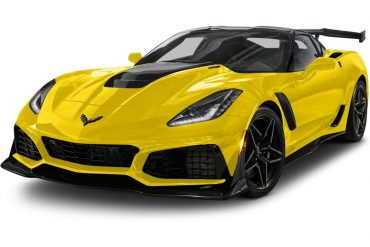
The C7s the site has listed for sale, newest first: owners’ cars, dealer stock and the auction consignments worth watching, with the asking price and what we make of it. The for-sale page has every Corvette the site is following and the auctions tag the results.
The model matters more than the year, but within each model a 2017–19 car gets every update the generation received at no extra cost: the eight-speed automatic and the PDR (2015 on), CarPlay and the front camera (2016 on), the Z06’s revised hood and cooling (2017 on), the standard 19/20-inch wheels and stand-alone Magnetic Ride (2018 on). The 2014 is the cheapest C7 and the only one with the six-speed automatic; the 2016 has the most cars to choose from; the 2018 is scarce but no dearer.
If you want one answer: a 2017–19 Grand Sport, manual if you can find one, with a clean history report and the dealer records. It is the Z06’s chassis without the Z06’s heat or price, the C7 the road testers picked, and still priced like a Stingray with better parts.
From about $27,000 for a higher-mileage Stingray to $340,000 for a delivery-mileage manual ZTK ZR1, which is why the price ladder on this page has five tiers. In the results the site tracked between October 2025 and October 2026, Stingrays sold for $27,250 to $59,000 with most 3LT Z51 cars $38,000 to $53,500; Grand Sports $27,500 to $62,700, most $48,000 to $62,000; Z06s $41,500 to $110,000 against a benchmark of about $76,600; C7.R Editions to $119,500 and Carbon 65s to $110,000; ZR1s $125,000 to $340,000, manuals $50,000 to $60,000 above automatics.
Every figure moves and every figure depends on the gearbox, the mileage and the paperwork, so use the year pages, which carry the current results for each year, add the buyer’s premium to any hammer price you compare with an asking price, and read the Bargain Hunting series for the price floor.
The Stingray for the road on a budget: 455 to 460 horsepower, 29 mpg, the cheapest to buy and to run, and a Z51 car has the brakes and cooling to be driven hard. The Grand Sport for the best chassis without the heat or the price: the Z06’s body, wheels, brakes, Magnetic Ride and eLSD on the LT1, the C7 the market and the testers picked. The Z06 for 650 horsepower at used-car prices, a 2017–19 if you will track it. The ZR1 for the collection, and the fastest front-engine Corvette ever built.
Match the car to the use. A Z06 bought for commuting, a Z07 bought for the look and a ZR1 bought to pile miles on are the three most common C7 regrets; a Grand Sport bought for anything is rarely one.
The 8L90 eight-speed automatic (2015 on; the 6L80 six-speed in 2014) is quicker in every measured test, better in traffic and the one most C7s have, and its torque-converter shudder is a known item cured by a fluid and software update on most cars. The seven-speed manual with Active Rev Match is the one enthusiasts want and the market will want in ten years: it carries a premium on every model that grows each year, because no Corvette since has had a clutch pedal, and on the ZR1 the premium is $50,000 to $60,000.
Buy the gearbox you will enjoy. If it is the automatic, check the fluid and software history and drive it at 25–45 mph under light throttle; if it is the manual, check the clutch take-up and pedal height, because a clutch on a C7 is a torque-tube-out job.
The 8L90 automatic’s torque-converter shudder and harsh low-speed shifts (fluid and software), the LT1’s Active Fuel Management lifters, the 2015–16 Z06’s heat soak on track (cured on 2017–19 cars by the revised hood and supercharger cover), the carbon-ceramic rotors on Z07 and ZR1 cars that wear by weight and cost a five-figure sum, cracked forged wheels on the wide-body cars, the torque tube and clutch on launched cars, leaking Magnetic Ride dampers, a rattling or leaking roof panel, convertible-top sensors, early MyLink and PDR faults, and the battery that drains when the car sits.
None of them is a reason not to buy a C7, which is one of the most reliable Corvettes built; all of them are a reason to inspect, to read the dealer records and to check the recalls by VIN. The year pages carry each year’s recalls and service bulletins.
The ZR1, the numbered editions and the delivery-mileage cars already are: the ZR1 trades above its sticker seven years on, the Carbon 65 and the C7.R Edition have their own benchmarks, and every manual C7 has widened its lead over the automatics since the C8 arrived without one. The ingredients do not change: the last front-engine Corvette, the last with a manual, small numbers with plaques to prove them.
The Stingray and the ordinary Grand Sport are used cars and will go on behaving like them, depreciating slowly and then levelling off as clean examples get scarce, which makes them a fine car to own and a poor thing to speculate on. The best risk-and-reward in the generation is a 2017–19 Grand Sport or Z06 manual with Z07 and healthy rotors, or a numbered edition with delivery mileage. Buy the car you want to drive and let the market be a bonus.
The history report first (owners, accidents, airbags, service, title brands; flood and salvage titles are common), then the labels (the glovebox RPO label for Z51, Z07, ZTK and the edition code; the door-jamb label’s VIN against the car), then the body for repair (gaps, mismatched paint, overspray), the tires and every wheel, the brake pads and rotors (weighed on a ceramic car), the dry-sump and cooler lines, the dampers, every electrical system before you drive, and then the test drive with the radio off for shudder, whine, clunks, smoke and pull.
Finish with the recall list by VIN, the dealer service records and a pre-purchase inspection with a full diagnostic scan at a Chevrolet dealer or a Corvette specialist. The inspection section above walks through all ten steps.
The Z06 is reliable by supercar standards: the LT4 is a strengthened LT1 with a supercharger, hand-built at Bowling Green, and the known items are the 8L90’s shudder, the supercharger’s isolator coupler, the intercooler pump, the forged wheels and the Z07 rotors. The year to be careful with is 2015–16, when the car pulled power on hot track days; GM revised the hood vent and supercharger cover for 2017 and the complaints stopped.
A 2015–16 Z06 is a fine fast road car with its software updates and no track-day heat history, and often the cheapest way in; a 2017–19 is the one to track. Either way buy the manual if you want the premium to grow, the automatic if you want the quicker car.
Some are already priced as collectibles and some are not. The Carbon 65 (benchmark about $116,000 against $76,600 for a Z06) and the Z06 C7.R Edition (about $93,800) have their own markets; the 2014 Premiere Edition brings $71,500 to $74,500 against $44,000 for a driven 2014; the Grand Sport Collector Edition carries only a modest premium so far; the design packages, the Drivers Series and the Hertz Z06s carry a story and no premium yet. The ZR1 is a model rather than an edition and the most collected C7 of all.
Every edition is bought on its plaque, its label code and its window sticker, because every one has been imitated: a yellow Z07 Z06 with stripes is not a C7.R Edition and a Watkins Glen Gray Grand Sport with blue hash marks is not a Collector Edition. The verification table above gives the codes.
The for-sale section above and the site’s for-sale page gather the C7s we are following from owners, dealers and the auctions, newest first, with what we make of each asking price. The year pages carry the current tracked results for each year, the Bargain Hunting series tracks the price floor by model, the State of the Market reports follow the trend and the auctions tag has the sale-by-sale coverage. Bring a Trailer, Cars & Bids, Mecum, Barrett-Jackson, Hagerty and the dealers’ lots are where the cars change hands.
Use the results, not the asking prices: dealers asked up to $339,980 for ZR1s and $132,900 for Z06s in 2026 while the cars sold for a good deal less, and a C7 listed at a number is not a C7 worth the number.