C4 Corvette Grand Sport (1996): The Complete Guide Quick Nav: The Story...


CORVETTE BUYER’S GUIDES
Buying a 1984–96 Corvette? This guide covers the thirteen years, the four engines and the editions, what each costs in today’s market from the results the site tracks, the best buys from the $5,000 drivers to the ZR-1 and the Grand Sport, what breaks and how to verify one, with the model guides and the cars for sale beside it.
Quick Nav: Overview · Why Buy · Year by Year · Year Details · Variants · Values · Price Ladder · What Moves the Price · Model Guides · Driving · Costs to Own · Considerations · Problems · Inspection · Verification · Market Reports · For Sale · FAQs
The Car: The fourth-generation Corvette, 1984–1996: the first all-new Corvette since 1963, on a galvanized uniframe with aluminum suspension, fiberglass springs, a clamshell hood, a one-piece targa roof and, from 1986, a convertible again
Years and Built: 358,180 over thirteen model years, from 51,547 in the seventeen-month 1984 run to 20,479 in 1992; 283,529 coupes and 74,651 convertibles, 6,939 ZR-1s, 507 Callaway B2Ks, 1,000 Grand Sports
Engines: 350 small blocks throughout: L83 Cross-Fire 205 hp (1984), L98 Tuned-Port 230–250 hp (1985–91), LT1 300 hp (1992–96), LT4 330 hp (1996); the ZR-1’s Lotus-designed 32-valve LT5, 375 then 405 hp (1990–95); Callaway’s B2K twin-turbo, 345–403 hp (1987–91)
Transmissions: Doug Nash 4+3 manual (1984–88), ZF six-speed (1989–96); 700-R4 / 4L60 four-speed automatic, the electronic 4L60-E from 1994
What One Costs Today: 1984 Cross-Fire cars $4,000–$11,500; L98 and LT1 drivers $5,000–$20,000 with the best low-mileage cars to $30,000–$45,000; 35th and 40th Anniversary cars $9,000–$26,000; ZR-1s $15,000–$85,000 (Classic.com benchmark $37,240); Grand Sports $32,500–$50,000; documented Callaways $34,000–$50,500 (results tracked late 2025–October 2026)
The Pick: A 1992–96 LT1 six-speed coupe with the receipts, Z51 or Z07 if you can find it; a 1989–91 L98 six-speed as the value; the ZR-1 and the Grand Sport as the collectible C4s
Related: The C4 hub, the thirteen year pages, the C4 ZR-1 and C4 Grand Sport model pages, the Callaway posts, the colors, production, VIN and RPO pages
A decade ago a used Corvette was out of reach for most of us: the C1, C2 and early C3 were collectors’ cars, the late C3s were slow and cheaply built, and even the C4 that promised better performance and handling arrived with the Cross-Fire 1984 and the 4+3 gearbox. Four generations and a mid-engine car later, the C4 is the cheapest Corvette of the last fifty years and the cheapest way into the Corvette lifestyle: a running 1984 can be had for the price of a used economy car, a good L98 or LT1 for $10,000 to $15,000, and the ZR-1 that cost $58,995 in 1990 trades around $37,000.
Is it a real Corvette? Yes. The C4 was the first fully redesigned Corvette since the 1963 Sting Ray, celebrated when new for its futuristic design, its uniframe chassis and aluminum suspension, its digital dash and its cornering, and it got overlooked afterwards for the same reason the late C3 did: the cars that followed it (the C5, the C6 that took the Corvette to Le Mans, the C7) were so much better that the C4 came to look like a blip. It is not. It is a highly capable car that road racers still campaign, it looks less dated and more classically attractive with every year, and the 1980s it comes from have found a new audience.
That cheapness is also the trap. More C4s have been abused, neglected or ignored than any other Corvette, and the gap between a well-kept car and a tired one is wider than the price difference. This guide covers the thirteen years and what changed, the engines and the editions, what each tier of the market costs from the results the site tracks, what the cars are like to drive and own, the known-what-to-look-for list the old guide was built around, the inspection step by step, how to verify a ZR-1, a Grand Sport, a Callaway or an anniversary car, and the questions readers ask most. The year pages and the model pages go deeper; this is where to start.
As recently as a decade ago, the idea of purchasing a used Corvette was prohibitively expensive for many of us.
The classic Corvettes from the fifties (C1), sixties (C2) and early-seventies (C3) were (and still are) commonly recognized as high-dollar garage queens or collectors' cars. Corvettes from the late seventies and early-eighties (1978-1982) were under-powered, considered cheaply made and were just not that aesthetically or mechanically appealing. Even the early C4's - which promised improved performance and drivability - had their problems, what with the 1984 Cross-Fire Injection and its unusual 4+3 manual transmission. By the late 1980's, the fourth-generation Corvette had evolved into a more desirable automobile, thanks in part to the arrival of the ZR-1. Still, as with the older-generation Corvettes, the late model C4's were largely out of reach financially for many of us.
Fast-forward to the present and you'll discover that this is no longer the case. With four-generations of Corvette now separating the C4 from its newest, mid-engine sibling, and with the refinements to both the form and function of each iteration of the car that followed the fourth-generation model, prices have never been better on Corvettes built between 1984 and 1996. In fact, purchasing a C4 is a fun-and-affordable way to indoctrinate yourself into the Corvette lifestyle - even on a budget.
In a word - YES!
The fourth-generation Corvette often gets overlooked by many Corvette enthusiasts simply because it arrived during a time when government-mandated safety and emission regulations as well a need for increased fuel economies forced Chevrolet to develop a version of their beloved sports car that was less about engine output and raw-power and more about handling and drivability. At the same time, the C4 Corvette was the first fully-redesigned Corvette since the 1963 Corvette Sting Ray. When it was first introduced in 1984, it was celebrated by enthusiasts for its futuristic design and its use of (then) cutting-edge technology.
Today, the fourth-generation Corvette may look a bit dated compared to the seventh-generation Stingray or the eighth-generation mid-engine C8, but part of its appeal is that it calls back to a pivotal decade which has, thanks to shows like Stranger Things, found an entirely new audience who just can't get enough of the 1980's. Just like its predecessors, the C4 Corvette (in all its iterations) looks less dated and more classically attractive. While it may never be seen as vintage, at least not in the way a 1963 Corvette is considered as such, it nonetheless has become an iconic symbol of its era while remaining immediately recognizable as a Corvette.
Some of what makes the C4 less attractive to enthusiasts can be tied to the models that followed the fourth generation Corvette just as much as any shortcomings of the C4 itself. The arrival of the C5 Corvette brought significant advances in performance, ergonomics and build quality. These refinements helped catapult the fifth-generation Corvette onto the global stage both on-and-off the racetrack. As such, the C4 was quickly overshadowed by the improvements made to the C5 between 1997 and 2004. The C6 Corvette further advanced all the best elements of the C5, catapulting the Corvette forward as a genuine contender in European racing circuits, including the 24 Hours of Le Mans. By the time the C7 Corvette arrived in 2014, the fourth-generation Corvette was considered by many as an outdated blip in the history of the brand.
While the advances made by each successive-generations of the Corvette pulled attention away from the C4, it is a highly capable vehicle both on-and-off the track. The fourth-generation Corvette more than holds its own - as proven by the countless road racers across the country (and around the world) who continue to regularly drive them in competition. Additionally, attend any local Cars & Coffee event in your hometown. You'll find a number of examples of the fourth-generation Corvette on display and looking as good as they did when they rolled off the assembly line in Bowling Green more than 35 years ago.
The fourth-generation Corvette was designed around handling and drivability rather than horsepower, because emissions, safety and fuel-economy rules left Chevrolet no choice, and it shows in the hardware: a galvanized steel uniframe that welded the windshield frame into a single structure instead of the body-on-frame of every Corvette before it, forged-aluminum control arms, fiberglass transverse springs at both ends, rack-and-pinion steering, 16- and then 17-inch wheels, a clamshell hood that lifted the whole nose, and a one-piece removable targa top in place of the C3’s T-bars. The suspension was dialed in with stiff shocks and high spring rates that gave the car cornering numbers no American car had posted and a ride that could be punishing, especially on early Z51 cars; by 1996 Chevrolet had softened it and offered selective ride damping that changed the setting to suit the road.
Every C4 but the ZR-1 has a version of the 5.7-liter, 350-cubic-inch small block, and they are among the best-regarded engines of their era. The 1984’s L83 Cross-Fire Injection (205 hp, 290 lb-ft) was the 1982 engine carried over, a twin throttle-body system that is remembered as underpowered and temperamental but was a necessary step toward meeting emissions while keeping power, and whose faults (leaky intake manifolds, sticky idle-air motors, air-injection pumps) are well understood by the owners who buy these cars for their affordability and sort them out. The L98 with Tuned-Port Injection (230 to 250 hp, 1985–91) was Chevrolet’s first truly successful fuel injection, computer-controlled fuel and spark that gave better mileage and sharper throttle response, the same engine GM put in the IROC Camaro and the Trans Am GTA, and the most durable engine of the generation. The LT1 (300 hp, 330–340 lb-ft, 1992–96) brought reverse-flow cooling that cooled the heads first and allowed higher compression, and one famous weakness, the Optispark distributor, covered below. The LT4 of 1996 added 30 horsepower for six-speed cars. Above them all, the ZR-1’s LT5: a Lotus-designed, Mercury Marine-built 32-valve, double-overhead-cam 350 with 375 hp and 370 lb-ft (1990–92) and 405 hp and 385 lb-ft (1993–95) from cam timing and porting changes, four-bolt mains and EGR from 1993.
No generation offers a wider spread for the money. A 1984 with a working digital dash is a sub-$10,000 car; a 1989–91 six-speed L98 with FX3 is a real driver’s car in the teens; a 1992–96 LT1 six-speed is the best-driving cheap Corvette there is; the 1988 35th Anniversary, the 1993 40th Anniversary and the 1986 and 1995 Pace Car convertibles are affordable collectibles; the Callaway twin-turbos are a cult with their own registry; the 1996 Grand Sport is the C4 collectors want; and the ZR-1, the “King of the Hill” that out-ran a Ferrari Testarossa, is a supercar for the price of a new Civic, if you buy the right one. The old post called the C4 a fun and affordable way to indoctrinate yourself into the Corvette lifestyle, and that is still exactly right.
Mileage matters more on a C4 than on any older Corvette, because so many were kept as second cars: a 5,000-mile car of any year brings two or three times a 60,000-mile one. The electronics and the rubber are where the money goes (the dash, the weatherstrips, the headlight motors, the FX3 shocks), not the body or the engine. And the sheer number of tired examples means knowing what good looks like before you shop. The rest of this guide is about that.
MORE: THE C4 HUB / THE C4 ZR-1 MODEL PAGE / THE C4 GRAND SPORT MODEL PAGE / ALL THE GENERATIONS
 When introduced in 1984, the C4 Corvette was celebrated for its cutting-edge technology, its futuristic design and its focus on handling and drivability.
 The C4 Corvette was the first-generation of Corvette to feature unibody construction.
 A 1991 Corvette ZR-1 Coupe
The C4 changed under the skin almost every year, and the changes decide which car is worth having: the engine (Cross-Fire, L98, LT1, LT4, LT5), the gearbox (4+3 or ZF six-speed), the dash (the 1984–89 digital cluster or the 1990-on hybrid), the brakes (ABS from 1986, the ZR-1’s 13-inch fronts for everyone in 1995) and the editions. The table gives the headline changes, the production, the engines and the verdict for each year; the detail block below it carries the full year-by-year, and the year pages have the specs, options, colors and current market for each.
Three rules hold across all thirteen. A six-speed is worth more than an automatic on every car built from 1989 on, and a 4+3 is worth more than an automatic only to enthusiasts. Mileage sets the price more than the year does. And the editions (the anniversary cars, the Pace Cars, the Grand Sport, the ZR-1, the Callaways) are verified on the paperwork and the VIN, because badges, decals and paint are all reproduced.
MORE: 1984 / 1985 / 1986 / 1987 / 1988 / 1989 / 1990 / 1991 / 1992 / 1993 / 1994 / 1995 / 1996 / THE C4 HUB
| YEAR | WHAT CHANGED | BUILT | ENGINES | THE VERDICT |
|---|---|---|---|---|
| 1984 | All new: uniframe, aluminum suspension, fiberglass springs, rack-and-pinion, clamshell hood, digital dash, glass hatch, one-piece targa roof. The 1982’s Cross-Fire L83 carried over at 205 hp; the Doug Nash 4+3 arrived late in the run (6,443 cars). Introduced March 1983 as a 1984, there was no 1983 model. | 51,547 | 350 ci L83 with Cross-Fire Injection, 205 hp: the 1982 engine carried over, the only engine | The cheapest Corvette there is, and the one with the most first-year faults: Cross-Fire, the harsh Z51 ride, the digital dash, the 4+3. A clean low-mileage original is becoming the collectible first C4; a tired one is a project. |
| 1985 | Tuned-Port Injection L98, 230 hp and 330 lb-ft; spring rates cut 25 percent, 9.5-inch wheels all round, Delco-Bilstein gas shocks and thicker bars; an 8.5-inch heavy-duty differential for manuals, 3.07 (manual) and 2.73 (automatic, 3.07 with G92) axles. | 39,729 | 350 ci L98 with Tuned-Port Injection, 230 hp: the first year of the TPI small-block | The 1984’s looks with a real engine: the 230-hp TPI L98 and springs softened by a quarter. The sensible early C4, priced a few thousand above a 1984. |
| 1986 | The convertible returns after eleven years, reinforced until it is stiffer than the coupe, and paces the 70th Indianapolis 500 (all 7,315 are Pace Car replicas); Bosch ABS and the center brake light standard; the VATS resistor key; aluminum heads and 235 hp mid-year; 50 Malcolm Konner Edition coupes in Silver Beige over Black. | 35,109 | 350 ci L98 with Tuned-Port Injection: 230 hp with cast-iron heads (early coupes), 235 hp with the new aluminum heads (all convertibles, later coupes) | ABS, aluminum heads, VATS and the convertible’s return; every 1986 convertible is an Indy Pace Car replica. Coupes sit with the 1985; the convertibles are the first collectible C4. |
| 1987 | Roller lifters take the L98 to 240 hp; RPO B2K sends 184 cars to Callaway in Old Lyme, Connecticut, for twin turbos, 345 hp and 465 lb-ft at $19,995 extra; the Z52 package puts the Z51 hardware under a softer ride; Car and Driver Ten Best, Motor Trend’s top speed, braking and skidpad honors. | 30,632 | 350 ci L98 with Tuned-Port Injection and new roller lifters, 240 hp; or the Callaway B2K twin-turbo conversion, 345 hp | Roller lifters and 240 hp, the civilized Z52 package and the first Callaway B2K twin-turbos. Priced with the 1986; the B2Ks are a market of their own. |
| 1988 | The 35th Anniversary Edition (RPO Z01, 2,050 coupes, white over a black roof bow with white leather and wheels); new aluminum heads, 245 hp with the 3.07 axle; dual-piston front brakes and a rear-caliper parking brake; 17x9.5 twelve-slot wheels on P275/40ZR17s for Z51 and Z52; carpeted sills, flow-through ventilation, new hood struts and A/C compressor; Z51 limited to manual coupes; 125 Callaways. | 22,789 | 350 ci L98 with Tuned-Port Injection and new aluminum heads, 240 hp (245 hp in coupes with the 3.07:1 axle and low-restriction mufflers); Callaway B2K 382 hp | The 35th Anniversary coupes (2,050), 17-inch wheels on Z51/Z52, bigger brakes and the last 4+3. The anniversary car is the affordable collectible; the standard car is the fewest-built L98. |
| 1989 | The ZF six-speed (RPO MN6, no cost) with CAGS skip-shift replaces the 4+3; the 17-inch wheels become standard; Z52 gives way to FX3 Selective Ride and Handling with tour, sport and performance settings; a bolt-on convertible hardtop; 84 ZR-1 pilot cars built and held back; 69 Callaways. | 26,412 | 350 ci L98 with Tuned-Port Injection and new Multec injectors, 245 hp in coupes with the 3.07:1 axle, 240 hp otherwise; Callaway B2K 382 hp | The ZF six-speed, 17-inch wheels and Bilsteins standard, FX3 Selective Ride, the convertible hardtop; 84 ZR-1 pilots. The L98 the driving enthusiasts want. |
| 1990 | The ZR-1: the 375-hp 32-valve LT5 by Lotus and Mercury Marine, a ZF six-speed, FX3, a three-inch-wider convex tail with square taillights for the 315/35ZR17 rears, $58,995. Every 1990 gets a driver’s airbag, a new contoured dash with analog gauges and a digital speedometer, and a Bose CD option; 58 Callaways. | 23,646 | 350 ci L98 with speed-density Tuned-Port Injection, 245 hp (250 with the 3.07:1 axle); or the ZR-1’s 5.7 L LT5 all-aluminum 32-valve V-8 by Lotus and Mercury Marine, 375 hp | The ZR-1 arrives (3,049), and every car gets a driver’s airbag and the new dash with analog gauges. The 1990 ZR-1 is the collector’s first-year car; the L98 1990 is a 1989 with a better interior. |
| 1991 | The facelift: slimmer front fascia with wraparound lamps, body-color side moldings, horizontal fender strakes, turbine wheels and the ZR-1’s rear end on every car; Z07 combines Z51 and FX3; the last L98 (250 hp with the 3.07 axle); the last 71 Callaway B2Ks and the Callaway 500. | 20,639 | 350 ci L98 with speed-density Tuned-Port Injection, 245 hp (250 with the 3.07:1 axle), its last year; or the ZR-1’s 5.7 L LT5 32-valve V-8, 375 hp | The facelift: slimmer nose, body-color moldings, the ZR-1’s convex tail on every car; Z07; the last L98. The value ZR-1 year and a good-looking L98 at 1989 money. |
| 1992 | The LT1: 300 hp, reverse-flow cooling, 10.5:1, Optispark, Mobil 1 from the factory; Acceleration Slip Regulation traction control and GS-C tires standard; the one-millionth Corvette, a white convertible, built July 2, 1992; 502 ZR-1s. | 20,479 | New 350 ci LT1 small-block, 300 hp, with reverse-flow cooling and Mobil 1 factory fill; or the ZR-1’s 5.7 L LT5 32-valve V-8, 375 hp | The 300-hp LT1 and traction control; the one-millionth Corvette. The value LT1 year, with the Optispark caveat; 502 ZR-1s, the second-fewest. |
| 1993 | The 40th Anniversary package (RPO Z25, Ruby Red with Ruby Red leather and embroidered headrests, 6,749 cars including 245 ZR-1s); GM’s first passive keyless entry; narrower 8.5x17 front wheels on P255/45s and P285/40 rears, 9.5s all round with Z07, a polished turbine wheel; the LT5 to 405 hp and 385 lb-ft. | 21,590 | 350 ci LT1, 300 hp and now 340 lb-ft; or the ZR-1’s LT5, raised to 405 hp with new heads, cam and four-bolt mains | The 40th Anniversary package in Ruby Red (6,749), passive keyless entry, the ZR-1 raised to 405 hp. The 245 anniversary ZR-1s are the rarest LT5 cars. |
| 1994 | Sequential fuel injection, the electronic 4L60-E with a brake-shift interlock, a passenger airbag and two-spoke wheel, leather and new seats standard, a glass convertible window with defogger, run-flat tires optional; Admiral Blue and a 116-car Copper Metallic; ZR-1 five-spoke wheels; the National Corvette Museum opens September 2, 1994. | 23,330 | 350 ci LT1, 300 hp and 340 lb-ft, now with sequential fuel injection and a stronger ignition; or the ZR-1’s 405-hp LT5 | Sequential injection, the electronic 4L60-E, a passenger airbag, standard leather, a glass convertible window. One of the better C4 buys; 448 ZR-1s on five-spoke wheels. |
| 1995 | Gill-shaped fender vents, de Carbon shocks, the ZR-1’s 13-inch front brakes and Bosch ABS/ASR 5 on every car, a quieter LT1 with stronger rods, alcohol-tolerant injection and a vented Optispark, a high-detent six-speed; the Indy Pace Car replicas (RPO Z4Z, 527 Dark Purple-over-white convertibles, $2,816); Dark Purple replaces Copper and Black Rose; the last ZR-1 built April 28, 1995 (6,939 in all). | 20,742 | 350 ci LT1, 300 hp and 340 lb-ft, with new connecting rods, injectors and a vented Optispark; or the ZR-1’s 405-hp LT5, built for the last time | The last ZR-1 (448), the Indy Pace Car replicas (527), the ZR-1’s brakes and the vented Optispark for every car. The shortest inspection list of the LT1 cars. |
| 1996 | The 330-hp LT4 for every six-speed car ($1,450); the Grand Sport (RPO Z16, 1,000 cars, Admiral Blue with a white stripe and red hashes, $3,250 coupe / $2,880 convertible); the Collector Edition (RPO Z15, 5,412 cars in Sebring Silver); F45 Real Time Damping replaces FX3, adjusting each shock every 10 to 15 milliseconds; Z51 returns; OBD-II; the last Gen II small block. | 21,536 | 350 ci LT1, 300 hp and 335 lb-ft, now with OBD-II; or the new LT4, 330 hp and 340 lb-ft, six-speed only, standard in the Grand Sport | The send-off: 1,000 Grand Sports, 5,412 Collector Editions, the 330-hp LT4 for six-speed cars, Real Time Damping, OBD-II. The Grand Sport is the C4 collectors want; the LT4 six-speed in a plain color is the sleeper. |
The table gives the headlines; this is the old guide’s anatomy of the car and its year-by-year, kept as written: the suspension, the four engines and the ZR-1’s LT5, the things that make a C4 a C4, and what changed in each of the thirteen years. The year pages carry the full specifications, options, colors and production for each.
There's a lot to love about the fourth-generation Corvette. If you've never driven one, its a unique experience, even when compared to driving other-generations of America's sports car. As with any car, it has its high-and-low points - it's strengths and weaknesses if you will. While we'll drill into the specific weaknesses you should be on the lookout for later in this article, the following topics are a general overview of all that was good, and some of what was not-so-good, about Corvettes built between 1984 and 1996.
While structural rigidity is a given on today's Corvettes, the body structure of the fourth-generation Corvette was somewhat less rigid, which caused some body flex, especially in the convertible models. To compensate for this, Chevrolet developed an all-aluminum suspension for the fourth-generation Corvette that was dialed in with surprisingly stiff shocks and very high spring rates. This setup gave the C4 incredible cornering capabilities, but it could also make the car extremely uncomfortable when driving it for any length of time. This rigid suspension setup was especially true of the early fourth-generation Corvettes along with those that came equipped with the optional Z51 suspension package. By 1996, Chevrolet had refined the suspension setup on the C4 and even offered consumers an optional selective ride setup that changed the rigidity of the ride based on driving conditions.
As you'll see below, the powerplant that breathed life into the C4 Corvette improved throughout the lifespan of the fourth-generation model. That said, all iterations of the 5.7 liter, 350-cubic-inch small-block engine that were used between 1984 and 1996 remain some of the best regarded powerplants from that era.
When the C4 was introduced in 1984, it produced a very modest 205 horsepower. By 1996 however, Corvette was utilizing the LT1 engine and pushing north of 300 horsepower out of their cars. While all variants of the powerplants used are timid (compared to the Corvette engines being built today), the setup on these cars still gave their drivers a thrilling driving experience. Even the L98, which was used from 1984 to 1991, was surprisingly powerful (despite how it might be perceived when looking at its performance specs on paper.) In fact, the same L98 that was used in the Corvette was also the engine selected by GM to power their IROC Camaros and the Pontiac GTA Trans Am.
The L83 engine was introduced in 1982 for the final year of the C3 Corvette. The engine was a 350 cubic inch V8 that was rated at a modest 200 horsepower and 285 lb./ft. of torque. This engine carried over to the 1984 Corvette (there was no production Corvette built in 1983) and received a marginal increase in power. Now rated at 205 horsepower and 290 lb./ft. of torque, this engine was significant for its introduction of Cross-Fire Fuel Injection, which was actually a twin throttle-body fuel injection system.
While the Cross Fire Fuel Injection is often viewed as both under-powered and temperamental, this hybrid throttle-body fuel injection system was actually a necessary leap forward in the advances of the Corvette powerplant. There were considerable emissions requirements that had to be met and GM's engineers were looking at ways to maintain power output while ensuring the Corvette met these requirements. While considered vastly underpowered by today's standards, the Cross-Fire Fuel Injection system actually improved engine horsepower in 1984 (as well as in the 1982 C3 model) over carbureted iterations of the C3's powerplant.
For anyone considering an inexpensive first (or next) Corvette, the 1984 Cross Fire Injection Corvettes are the most affordable (on average) of any used Corvette currently on the market. And while it is true that the Cross Fire Fuel Injection system has its problems - such as leaky intake manifolds, sticky IAC motors and temperamental air-injection pumps - there is also a large subset of consumers who have purchased these cars for their affordability, made some modifications to the fuel injection system, and have enjoyed driving these cars both on the open road and on the racetrack.
The L98 featured Tuned Port Injection (TPI), which was considered by many as Chevrolet's first successful venture into the world of EFI (we beg forgiveness of anyone who actually appreciates the L83's crossfire injection system.) The L98 engines featured computer-controlled ignition and fuel injection which delivered more precise control of both fuel and spark, which resulted in both better fuel mileage and a far more responsive throttle control. The L98 enabled Chevrolet to offer higher level of powers and performance while also navigating government sanctioned fuel economy regulations. Yes, its true that the L98 was certainly not the most powerful V8 of its generation, or even the most powerful V8 offered by General Motors during that time, but it still represented a huge leap forward in performance and output over the engines that had immediately preceded it. Moreover, it paved the way for even more powerful engines -such as the LT1.
The LT1 engine replaced the L98 in 1992. Rated at 300 horsepower and 330-340 lb./ft. of torque (depending on the year), the LT1 featured a remarkable improvement in engine horsepower over its predecessor. The new engine featured Multi-Port Fuel Injection and a reverse-flow cooling system which cooled the cylinder heads first, helping the engine to maintain lower combustion chamber temperatures which allowed the engine to run at a higher compression than its predecessor.
Like the L98, the LT1 was considered a fairly reliable engine, save for one fairly common - and significant - issue that has plagued the LT1 almost since its inception in 1992 - the Optispark Ignition System.
While a traditional fuel-injected small-block Chevy V8 had the distributor mounted near the rear of the engine block, the LT1 featured anew type of optical sensor that was placed in the front of the engine. This sensor was able to see the LED light passing through a spinning reluctor wheel in one-degree increments. This meant that the LT1's ECM was able to know where each piston was located at any given time and which cylinder would fire next. In turn, this allowed the ECM to make minor adjustments to ignition timing during engine operation.
While this technology was advanced for its time, its placement in the front of the engine caused the Optispark system to suffer from exposure to road water, grit and salt far more than a typical distributor. Additionally, being mounted beneath the waterpump, it would fail if/when the waterpump failed - and even a small amount of water from the waterpump weep hole would often wipe out the distributor entirely. To that end, even a split radiator hose could cost C4 owners hundreds of dollars if the leaking coolant came into contact with the distributor. Adding to this issue, the factory ventilation holes on the distributor were too small, which would result in ozone buildup and corrosion within the distributor, which could lead to engine misfires. These holes were also too small to allow water to escape, so if the Corvette sat for a few weeks, the condensation in the distributor would result in water getting trapped within the distributor cap.
Despite this one issue, the LT1 was a solid engine, with horsepower and torque to spare. While it should be noted that the Optispark ignition can cause issues with the later-model C4 Corvettes, there were many aftermarket distributors manufactured that resolved the aforementioned issues. We make mention of it here only because this issue plagued so many Corvette owners back when the C4 was new.
The LT5 engine was introduced in 1990 and was released by Chevrolet as the powerplant for the C0rvette ZR-1. The LT5 engine featured a Lotus Engineering-designed double overhead cam, 350 cubic-inch engine rated at 375 horsepower and 370 lb./ft. of torque for the 1990-1992 Corvette ZR-1's and 405 horsepower and 385 lb./ft. of torque for the 1993-1995 Corvette ZR-1's. The jump in power rating on the later engines was due to cam-timing changes and improvements to engine porting. The 1993 engine also added 4-bolt main bearing caps and an exhaust gas re-circulation system.
While very few of us would say that the C4 Corvette was perfect, there were/are a lot of nuances to the car that have become an important part of its character and charm. For example, the C4 has some of the largest and widest door sills of all eight-generations of Corvette. The sills had a lot more to do with function than the car's form, and getting into and out-of a fourth-generation Corvette is anything but graceful, yet the design adds a distinctive 1980's aesthetic to the car that plays to the same excess that abounds in everything from that era.
The entire design of the C4 was far more understated than its predecessor. Where the C3 Corvette drew heavy design influence from the Mako Shark II concept car, with its swooping front fenders and its countered cockpit, the C4 was more subdued by comparison with an emphasis on deliberate bodylines that were functional as well as fashionable. The C4 was the first-generation of Corvette to shift its focus to the form follows function design process.
Unlike the body-on-frame construction practices used on earlier Corvettes (up to and including the 1982 C3), the C4 Corvette utilized a uniframe sub-assembly design. Uniframe fabrication combines critical elements of the car, including the cars's windshield, into a single, welded unit.
Lastly, instead of utilizing a two-piece T-top construction for its removable roof panels on coupe models, the C4 Corvette featured a single-piece removable targa top. The larger, single piece assembly enabled drivers a more open, less restrictive view while driving with the top off. Thanks to advances made in the rigidity of the unibody frame, the removable targa top became the standard on all-generations of Corvette coupes from 1984 onward.
While Chevrolet had originally intended the C4 as a 1983 model year vehicle, changing emissions standards and a desire not to rush into production caused a year-gap between the outgoing C3 and the arrival of the fourth-generation C4 Corvette.
The 1984 Corvette is unique in that it features the same Cross-Fire Injection engine that was introduced in the 1982 Corvette. Designated L83, the 350 cubic-inch engine was rated at just 205 horsepower. Unlike the C3, which could only be ordered with an automatic transmission, the 1984 Corvette could also be ordered with a Doug Nash 4+3 manual transmission, although this option did not arrive until late in the production year. As a result, just 6,443 Corvettes were equipped with this gearbox in 1984, making the pairing a fairly rare combination today.
More common was the inclusion of the Z51 performance suspension upgrade, an option which included heavy-duty front and rear springs, shock absorbers, stabilizer bars and bushings, a faster steering ratio, an engine oil cooler, and extra radiator fan, P255/50VR16 tires and directional alloy wheels (16 x 8.5- inch in the front and 16 x 9.5-inch in the rear.) More than half of the 1984 Corvettes built that year came equipped with the Z51 option (25,995 units total.) While a popular option for performance driving, this setup made for a very unforgiving ride on any surface that had even minor imperfections to it.
Despite its limited horsepower and unrefined handling, the 1984 Corvette proved to be a huge sales success when new. Because Chevrolet did not present a 1983 Corvette to the buying public, the 1984 Corvette was introduced in March, 1983, resulting in the longest single-year production run of any model Corvette built before or since. The outcome of this long run was that the 1984 Corvettes became the second-highest produced Corvette of all time, with 51,547 units sold that year.
While the Cross-Fire Injection system may be considered undesirable to many, a well-maintained 1984 Corvette will likely be one of the most affordable Corvettes on the market today, with many examples selling for $8,000 or less.
While the overall aesthetic of the car remained largely the same from 1984 to 1985, the sophomore model of the C4 Corvette saw a significant refinement - the replacement of the L83 Cross-Fire Injected Engine with the 230-horsepower L98 engine with Bosch Tuned-Port Fuel Injection. In addition to the respectable bump in horsepower, the 1985 Corvette's torque output also increased from 290 lb-ft of torque to 330 lb-ft.
As the unforgiving ride of the aforementioned Z51 suspension was definitely a concern for many consumers, Chevrolet addressed the issue with a 25 percent reduction in spring rates and the inclusion of 9.5-inch wheels all around. The 1985 Corvette also received Delco-Bilstein gas-charged shock absorbers and thicker stabilizer bars.
Corvettes equipped with a manual transmission that year received a new, heavy-duty 8.5-inch ring differential. Rear axle gearing ratio for manual transmission models was 3.07:1. Standard gearing ratio for automatic transmissions was 2.73:1 although the optional, higher gear ratio could be ordered on cars equipped with an automatic as well via RPO G92.
These new features improved the car's overall performance between the 1984 and 1985 models and resulted in another year of large sales numbers. In 1985, Chevrolet sold 39,729 Corvettes.
Arguably the biggest announcement for the 1986 model year was the return of a Corvette convertible, an option that hadn't been available to consumers since 1975. In commemoration of the return of the convertible, the 1986 Corvette was selected to serve as the official pace car for the 70th running of the Indianapolis 500. All 7,315 convertibles produced that year were considered pace car replicas, regardless the color selection of each car.
A new Vehicle Anti-Theft System (VATS) was introduced with the 1986 Corvette. Cars now required a special VATS key that featured a unique unique ignition key with a black, embedded pellet. The ignition lock cylinders could measure the electrical resistance of the pellet (there were 15 different pellets in all) and served as a secondary means of verifying that the ignition key was the correct one for the car.
Fifty Malcolm Konner Commemorative Edition Corvettes were produced in 1986 as well. These cars were built to commemorate the New Jersey Chevrolet dealership's founder, Malcolm Konner. All fifty of the cars were coupes and all featured a special, two-tone paint scheme, silver-beige over black and all of them had graphite leather interiors.
Horsepower on the 1986 Corvette was increased to 235HP. The L98 featured new, aluminum cylinder heads. The car also included anti-lock brakes (ABS) and a center-mounted brake light as standard features. Despite the return of the convertible model, total sales of the 1986 Corvette dropped by roughly 11,000 units to just 27,794 cars sold that year.
The 1987 Corvette was ranked by Car and Driver magazine as one of the top-ten cars that year. It was also recognized by Motor Trend magazine as the winner of the top speed, best braking and best skidpad categories for the 1987 model year.
The most significant mechanical upgrade made to the 1987 Corvette was the introduction of new roller valve lifters which boosted the L98 engine's output to 240 horsepower, which was a 5 horsepower bump over the 1986 Corvette.
The biggest announcement for 1987 was the introduction of regular production option (RPO) B2K. This $19,995 upgrade was not a factory installed option, but rather an aftermarket upgrade performed by Callaway Engineering. Fully assembled Corvettes were shipped from the manufacturing plant in Bowling Green, Kentucky to Callaway Engineering in Old Lyme, Connecticut for modifications to the engine which included the installation of a twin-turbo system to the factory engine. When so equipped, it boosted the car's horsepower output to 345hp and 465lb./ft. of torque. All 1987 Callaway Corvettes were equipped with manual transmission and none were certified for sale in California. A total of just 188 twin-turbo Corvettes were built in 1987. Of these, 123 were coupes and 65 were convertibles.
The other big news for 1987 was the introduction of a new Z52 sport-handling package. It combined elements of RPO Z51 with the softer suspension of base model Corvettes. RPO Z52 included a radiator boost fan, Bilstein shock absorbers, an engine oil cooler, a heavy-duty radiator, 16x9.5-inch wheels, a faster 13:1 steering ratio, larger front stabilizer bars and the convertible-inspired upgrades also introduced with RPO Z51 in 1987 which fortified the structural rigidity of the convertible Corvette's frame.
Total Corvette sales improved for the 1987 model year with a total of 30,632 Corvettes produced. Of these, 10,625 were convertible models.
The 1988 model year marked the 35th anniversary of the Corvette. Chevrolet celebrated the anniversary by creating a special-edition trim package which was limited to just 2,050 examples. The 1988 35th Anniversary Corvette featured white paint with a black roof bow, a white leather interior (including a white steering wheel and white leather seats), white painted wheels and unique badging commemorating Corvette's 35th anniversary. The option (RPO Zo1) was only available on coupe models of the car.
The 1988 Corvette offered consumers a number of other new options including: carpeted door sills, solution-dyed carpet, improved flow through ventilation for the coupes and a lower, rearward relocation of the parking brake handle. In addition, improvements to the braking system now included new dual-piston front brakes and parking brakes which activated the rear disc brake pads instead of activating small, separate parking drum brakes (as had been standard on all earlier models.) All 1988 Corvettes also received improved hood support rods and a more efficient air conditioning compressor.
The features included in RPO Z51 and Z52 changed some for the 1988 model year. Both had newly styled 17x9.5-inch wheels with twelve cooling slots and P275/40ZR17 tires. The Z51 had higher spring rates and a finned power steering cooler as before but it also received larger front brake rotors and calipers. RPO Z51 was limited to manual transmission coupes. RPO Z52 was not restricted.
The most significant change to the 1989 Corvette was the introduction of the ZF (Zahnradfabrik Friedrichshafen) sourced six-speed manual transmission. The transmission, which could be ordered under RPO MN6, was a no-cost option on the Corvette. It featured a computer-aided gear selection (CAGS) which bypassed second and third gears (and locked out fifth and sixth) for improved fuel economy when a series of low-performance criteria were met.
The standard six-slot 16x8.5-inch wheels that had been introduced in 1988 were discontinued for the 1989 model year. The twelve-slot 17x9.5-inch wheels that were offered in 1988 as part of the Z51 and Z52 packages became the standard wheel on all Corvette models.
The Z52 option was discontinued in 1989 as well. It was replaced with a new Selective Ride and Handling System (RPO FX3). It was only offered to consumers when purchasing a Corvette with a manual transmission and/or cars equipped with the RPO Z51 Performance Handling package. The Selective Ride Control system offered consumers three different driving modes: tour, sport and performance.
Another significant Corvette milestone that actually began in 1989 was the introduction of the Corvette ZR-1. Just eighty-four prototypes were built in 1989, and while production would not officially begin for another year, 1989 is remembered for being the year that the King of the Hill arrived.
Despite the significantly improved manual transmission and the number of other minor, though important, refinements made to the Corvette, only 26,412 units were sold that year. This number is disappointing when you consider this is just over half of the total number of C4 Corvettes sold five years earlier when the model was introduced in 1984.
The arrival of the ZR-1 King of the Hill Corvette as a production model was the big news for the 1990 model year. The car featured a GM spec, Lotus-designed 32-valve, dual-overhead-cam, 350 cubic inch V8 engine. Designated the LT5, it was rated at 375 horsepower. While fairly modest compared to modern Corvettes, the LT5 was a powerhouse in its day. In addition to providing a major bump in horsepower over the base coupe and convertible models, the ZR-1 also included new body styling from the car's B-pillar back. The car featured a wider rear fascia that was specifically designed to house the massive 315/25ZR17 rear wheels/tires. The fascia also included new body-styling, featuring a convex rear (as compared to the concave rear fascia on all C4 Corvettes to that point.)
While the ZR-1 dominated most conversation in the Corvette community, the engineers and designers at Corvette remodeled the interior of all Corvettes for the 1990 model year. The car now featured a new, hybrid instrument cluster which featured a digital speedometer and analog instrument gauges. Also gone was the flat dashboard in favor of a more contoured one that now also housed a passenger front airbag.
Chevrolet sold a total of 26,412 Corvettes in 1989 of which 3,049 were equipped as the ZR-1 model. While these sales numbers were still south of earlier model years, it proved that the arrival of the ZR-1, despite its hefty pricetag, had bolstered interest in the Corvette once more.
For 1991, the Corvette's exterior received many design enhancements, including a smoother, slimmer front fascia with wraparound parking/cornering/fog lights, wider body-side moldings that were now painted to match the body color, and horizontal front-fender strakes that replaced the previous gill-like louvers. Additionally, the 9.5 inch wide aluminum wheels were re-designed and now featured a turbine-like appearance.
In addition to the refinements to the car's exterior, the 1991 Corvette also provided consumers some new options. RPO Z07 was introduced and included the Z51 suspension components (that had been previously introduced in earlier model years) and the FX3 adjustable ride option. The latter of these enabled drivers of the 1991 Corvette the option of adjusting the car's suspension to accommodate various driving conditions. From a consumers standpoint, it made the car's ride go from stiff to VERY stiff.
While not a feature of the car exactly, 1991 marked the last year for the L98 350 V8 engine. Sales numbers of the 1991 Corvette struggled, despite the return of the ZR-1 for its sophomore year of production. In total, Chevrolet sold just 20,639 Corvettes in 1991. Of these, just 2,044 were sold with the ZR-1 upgrade.
The 1992 Corvette ushered in the era of the LT1 small-block V8 engine. This 5.7-liter, 350 cubic inch engine produced an impressive 300 horsepower and 330 lb./ft. of torque, which was a remarkable improvement over the previous year’s L98 engine, despite being approximately twenty pounds heavier than the former powerplant.
A new traction control system was introduced in 1992 as well. Known as “Acceleration Slip Regulation” (RPO ASR), the system helped prevent the drive wheels from spinning unnecessarily while on slippery surfaces or when the power coming from the engine caused unnecessary wheel spin. It was designed to improve directional control with better traction during high-speed cornering.
Elsewhere on the car, a number of refinements were made, including:
Improved weather stripping and added insulation were added to keep the car’s cockpit both drier and quieter
The instrument panel was updated to include all black buttons and easier to read instrumentation.
The passenger door now triggered the power cutoff to the car’s accessories when opened.
On the ZR-1 models, brand emblem/badging was added above the car’s gills on the front fenders.
An important milestone was achieved during the 1992 model year – the one-millionth Corvette rolled off the assembly line on July 2, 1992. The car would go on to be displayed at the National Corvette Museum. Sadly, the car was destroyed during the sinkhole which opened up in the Museum’s Skydome on February 12, 2014.
Total production of the 1992 Corvette was just about the same as the previous model year with just 20,974 units produced. Of these, 502 were ZR-1 Corvettes.
The 1993 Corvette marked another significant milestone for the Corvette- its 40th Anniversary! As with other milestone years, Chevrolet developed a special edition 40th Anniversary Package which was available on all variants of the car including the ZR-1. The 40th Anniversary package included a Ruby Red metallic exterior, special “40” badging on the front fenders and special badging on the hood, Ruby Red leather sport seats with “40th” embroidered headrests, a power driver seat and special wheel center caps finished in Ruby Red with the Corvette emblem emblazoned on it. In reality, all 1993 Corvettes included the embroidered headrests, regardless of paint/color scheme.
The 1993 Corvette was the first automobile sold by General Motors to feature the passive keyless entry (PKE) system. Working by proximity, a battery-operated key-fob transmitter sent a code picked up by a receiver in the Corvette through one of two antennas (in the coupes, the antenna was in the driver door and rear decklid, in convertibles, the antennas were in both doors.) The transmitter required no specific action by the owner. When a person with the fob approached the car, the transmitter would unlock the doors, turn on the car’s interior light and disarm the theft-deterrent system. Similarly, when leaving the car with the fob, the transmitter would lock the doors and arm the theft-deterrent system. Additionally, Corvette coupes had an extra button to release the rear decklid.
The front wheels on the base coupe and convertible were decreased in size from 9.5×17 to 8.5×17 and the front tire size from P275/40ZR17 to P255/45ZR17/ Rear tire size was increased from P275/40ZR17 to P285/40ZR17. For cars equipped with PRO Z07, 9.5×17 wheels and P275/40ZR17 tires were used for both front and rear wheels. A new, polished version of the “turbine” wheel was introduced as the standard wheel for the 1993 Corvette.
The 1993 Corvette ZR-1 received a respectable boost in power from 385 horsepower to 405 horsepower. The car’s torque was improved from 370 lb./ft. to 385 lb./ft.
Total production of the 1993 Corvette was better than the previous years, though still lackluster compared to the early years of the C4 Corvette. In total, 22,048 Corvettes were produced. Of these, just 448 were built as ZR-1 Corvettes.
There were few changes made to the Corvette for the 1994 model year. The LT1 engine remained at 300 horsepower though sequential fuel injection was added. The SFI improved engine idle, overall drivability and emissions output by firing the fuel injectors in sequence with the engine’s firing order.
The standard four-speed automatic transmission was updated to include electronic shift control for improved performance. Additionally, a lockout switch was installed on the new automatic gearbox which required drivers to depress and hold the brake pedal before shifting out of “park”. This last addition was installed as a response to industry concerns regarding “unintended acceleration.”
There were no cosmetic changes made to the exterior of the 1994 Corvette. The only visible difference that differentiated the 1994 Corvette from earlier years was the introduction of two new colors – Admiral Blue and Copper Metallic (although Copper Metallic was limited to only 116 cars due to limited availability).
For the ZR-1 Corvette, non-directional, five-spoke wheels were introduced and included as part of the RPO ZR1 package option. These wheels were not made available on the base model coupe or convertible.
Another important milestone in the history of the Corvette was the opening of the National Corvette Museum in Bowling Green, Kentucky. The NCM opened on September 2, 1994 directly across the street from the Corvette Assembly Plant. While the opening of the Museum probably had little do with Corvette’s sales numbers, the 1994 Corvette actually saw a decent uptick in total units sold at 23,330 examples, of which 448 were sold as ZR-1 Corvettes.
By the time production began on the 1995 Corvette, much of the engineering team behind the brand were already engaged in testing the fifth-generation (C5) model. So, for its second-to-last model year, the 1995 Corvette received only minor enhancements.
That’s not to say that there weren’t any changes made to the 1995 Corvette. Mechanically, the already robust LT1 engine received additional refinements. The connecting rods were revised to improve strength and weight uniformity, the engine fan was made quieter, and the fuel injection system was improved to utilize alcohol-blend fuels, which began to have an increased appearance at gas pumps.
The six speed manual transmission was also upgraded to include a high-detent operation (which took the place of the 1994 Corvette’s reverse lockout) for easier operability. Heavy-duty ZR-1 brakes were made standard on all models, and every model also received a brand new Bosch V ABS (Anti-lock brakes) Traction Control System. All 1995 Corvettes also received a ride improvement with the introduction of the less-stiff DeCarbon gas-charged shocks.
Whereas the 1994 model year had recessed slats behind its front wheel, the ’95 model was much more refined, with a slightly flared cowling around the vents. Beyond this single physical change, the only other cosmetic differences involved the introduction of a new paint color – Dark Purple Metallic, which replaced the depleted Copper and Black Rose metallic paints.
Another special-edition Corvette was made available in 1995. After a near-stock LT1 Corvette Convertible paced the Indy 500 in 1995 – which was only the third time Corvette had ever been bestowed with this honor – Chevrolet decided to commemorate the occasion by producing a specially optioned Pace Car Replica. Option RPO Z4Z was offered to consumers at an extra cost of $2816 and was limited to convertibles.
The last C4 ZR-1 was driven off the assembly line on April 28, 1995, resulting in a total number of 6,939 units being built during its six year production run. As for the base coupe and convertible, the total sales numbers decreased to 20,742 units for the model year.
The 1996 model year would mark the final year of both the C4 and the Generation II small block engine that powered it. As such, Chevrolet commemorated its departure by offering two special edition Corvettes, both of which featured an upgraded version of the LT1 power plant. Denoted as the LT4, the 330-horsepower engine was showcased in both the Collectors Edition Corvette and a limited edition Grand Sport Corvette, but only when equipped with the six-speed manual transmission option.
The Special Edition Corvette, which included a special Sebring Silver paint color, 5-spoke matching alloy wheels with special “collector edition” wheel cap centers, perforated sport seats accentuated with “Collector Edition” embroidery, black brake calipers with “Corvette” lettering, and a special trim package featuring chrome “Collector Edition” badges, the 1996 Collector Edition Corvette was solely designed to help honor the end of the C4 era. It would be made available to consumers as both a coupe and a convertible.
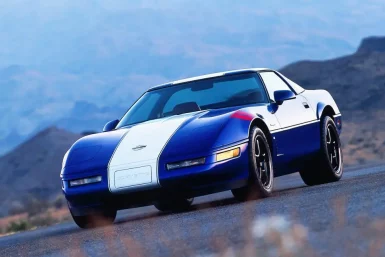
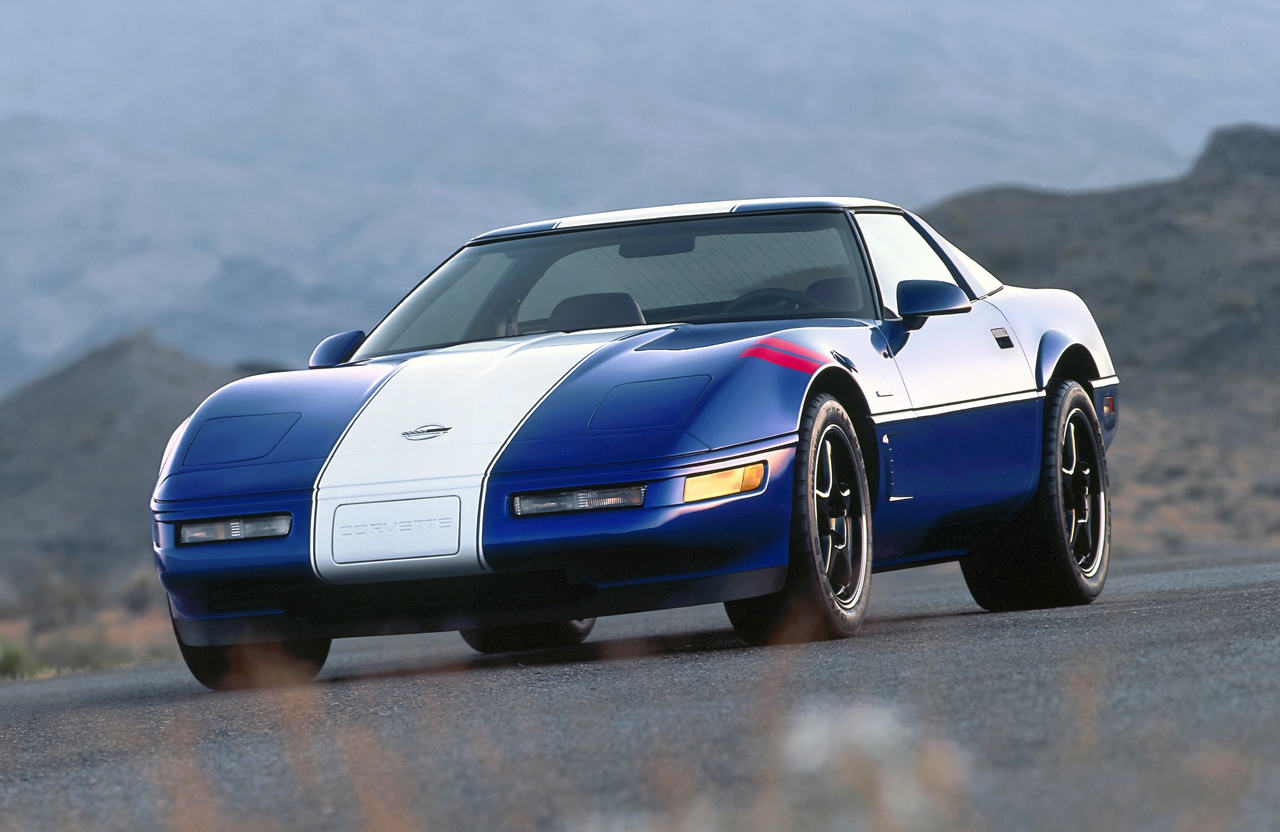
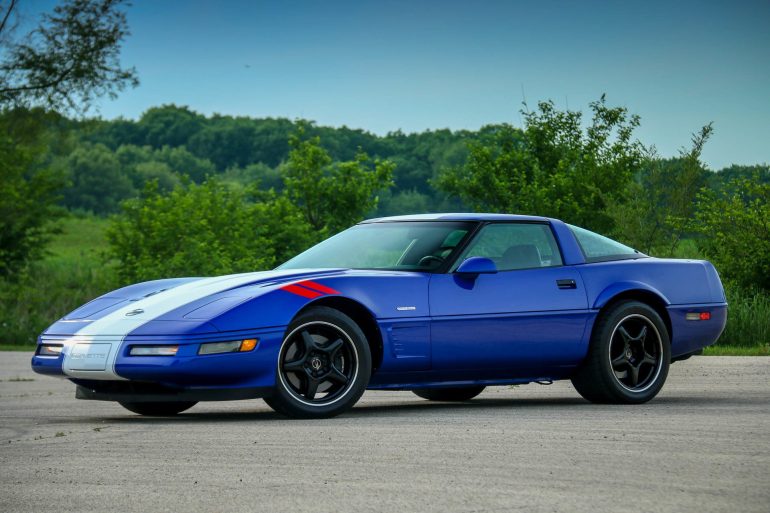
Priced at an additional $3250 for the coupe or an additional $2880 for the convertible, the Grand Sport package included exclusive Admiral Blue paint and featured a single white stripe that ran the length of the body as well as two red accent stripes (also known as “Sebring Stripes”) on the driver side front fender. This unique paint scheme was deliberately developed by GM to pay homage to the classic Corvette Grand Sport Racer of the 1960’s.
The Grand Sport’s interior upholstery was offered either in an all black or a sporty red/black combination, and all of the Grand Sport interiors featured a specialized embroidered headrest which featured the Grand Sport emblem. All Grand Sports –both coupes and convertibles- were equipped with a six speed manual transmission.
Selective Real Time Damping was introduced to replace the previous Selective Ride suspension option. Available under option code RPO F45, the Real Time Damping suspension calculated the optimal damping mode for its custom shock absorbers to maintain ride and handling quality via data that was gathered from individual sensors at each of the four wheels. This system could alter the load level/resistance of each shock individually, and it made these adjustments at intervals of once every 10 to 15 milliseconds, which translates roughly into approximately 1 (one) foot of road traversed when travelling at a speed of approximately 60 miles per hour.
Chevrolet built a total of 21,536 Corvette in 1996.
MORE: 1984 / 1985 / 1986 / 1987 / 1988 / 1989 / 1990 / 1991 / 1992 / 1993 / 1994 / 1995 / 1996 / THE C4 TIMELINE
When introduced in 1984, the C4 Corvette was celebrated for its cutting-edge technology, its futuristic design and its focus on handling and drivability. 1986 Corvette ConvertibleA 1991 Corvette ZR-1 Coupe
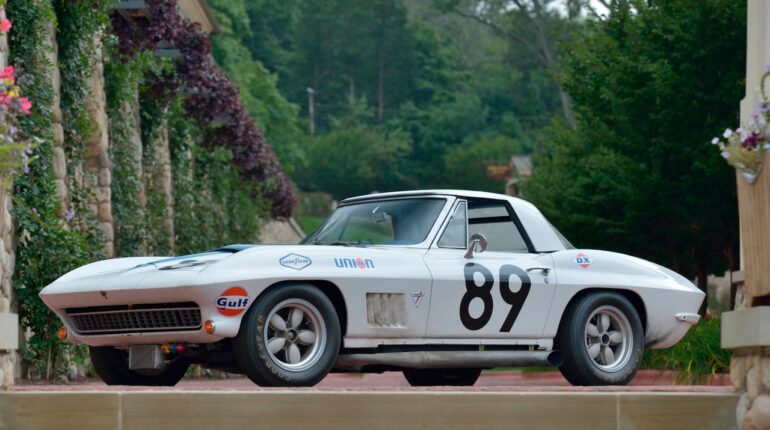
Chevrolet sold a coupe and, from 1986, a convertible, and the engine, the gearbox and the RPO list made everything else: four small blocks and the LT5, two manuals and two automatics, two anniversary packages, two Pace Cars, a Collector Edition, a Grand Sport, a ZR-1 and a twin-turbo that was ordered on the Chevrolet form and built in Connecticut. The table sorts them into the tiers the market uses; the engine list on the C4 hub has every RPO with its output and years, and the model pages carry the full guides to the ZR-1 and the Grand Sport.
Two naming notes. Chevrolet wrote the C4 car “ZR-1” with a hyphen and the C6-and-later cars “ZR1” without, and the two are different animals. And “Callaway” on a C4 can mean a B2K twin-turbo ordered through Chevrolet (1987–91), a Callaway 500 or Speedster built after the option ended, or a SuperNatural naturally aspirated conversion (1992–96); Callaway Cars will confirm any of them from its records.
MORE: THE C4 ZR-1 GUIDE / THE C4 GRAND SPORT GUIDE / THE CALLAWAY CORVETTES / EVERY C4 ENGINE / THE SPECIAL EDITIONS
| VARIANT | WHAT IT IS | BUILT | WHAT A BUYER SHOULD KNOW |
|---|---|---|---|
| Coupe | The hatchback with the one-piece removable targa roof and the glass hatch, 1984–96 | 283,529 | The majority of cars and the body a driver wants: stiffer than the convertible and the only body for Z51, Z07 and the ZR-1. Check the roof-panel seals and the hatch struts. |
| Convertible | Reinforced by ASC, 1986–96; a bolt-on hardtop from 1989; glass rear window from 1994 | 74,651 | Brings a premium over the coupe in most years, and adds the top, the frame bushings, water leaks at the rear corners and X-brace rust to the inspection. |
| L83 Cross-Fire (1984) | The 1982 twin-throttle-body 350, 205 hp | 51,547 | The cheapest Corvette of all. Hard starts and a rough idle are usually a tired injector, an intake gasket or a sensor, not the system; converted cars (TPI manifolds, carburetors) drive better and are worth less to collectors. |
| L98 Tuned-Port (1985–91) | The TPI 350: 230, 235 (aluminum heads), 240 (roller lifters), 245 and 250 hp | About 200,000 | The most durable C4 engine; valve guides, the mass-airflow sensor and burn-off relay, the cold-start injector and the fuel-pump relay are the known items. A 1989–91 six-speed is the enthusiast’s L98. |
| LT1 (1992–96) and LT4 (1996) | The Gen II 350: 300 hp with reverse-flow cooling and Optispark; sequential injection from 1994, the vented Optispark from 1995; the 330-hp LT4 with every 1996 six-speed | About 105,000 LT1; about 5,400 LT4 | The best-driving cheap Corvette. The Optispark (1992–94 unvented units especially) is the one question to ask first; a documented LT4 Z51 coupe is the sleeper of the generation. |
| 4+3 and ZF six-speed | The Doug Nash four-speed with overdrive on gears 2–4 (1984–88); the ZF S6-40 six-speed with CAGS skip-shift (1989–96) | — | A six-speed is worth a premium on every car from 1989 on; the 4+3 is worth one only to enthusiasts, and its overdrive unit (leaks, slips, solenoid) is the generation’s least-loved component. Many have been bypassed. |
| ZR-1 (1990–95) | The Lotus-designed, Mercury Marine-built 32-valve LT5 (375 then 405 hp), ZF six-speed, FX3, wide tail, its own 800001-series VIN | 6,939 | The collectible C4 and the one that needs a specialist. Buy the engine’s service history before the color or the year; 1990 and 1995 lead, 1991–92 are the value, 1993–95 have the 405-hp engine. The C4 ZR-1 page is the guide. |
| Callaway B2K (1987–91) | RPO B2K: completed cars sent to Callaway for twin turbos and intercoolers, 345 to 403 hp, $19,995–$33,000 extra | 507 | Two to four times a standard car when documented: the Callaway serial plate, the registry confirmation and the full installation decide it. A turbocharged Corvette without them is not a B2K. |
| 35th Anniversary (1988) | RPO Z01, coupe only: white over a black roof bow, white leather and wheels, numbered plaque | 2,050 | The affordable collectible: value rests on mileage, an unmarked white interior, the correct wheels and roof panel and the paperwork. Plaques and badges are reproduced; the trim tag (paint 40/41, trim 113) decides. |
| 40th Anniversary (1993) | RPO Z25 on coupe, convertible and ZR-1: Ruby Red with Ruby Red leather and embroidered headrests | 6,749 (245 ZR-1s) | The most plentiful collectible C4, priced by mileage and by the Ruby Red leather, which fades and cracks. Ruby Red was not sold without the package, so a Ruby Red car without the trim is a repaint. |
| Pace Car replicas (1986, 1995) | Every 1986 convertible (decals supplied); the 1995 Z4Z Dark Purple-over-white convertibles | 7,315 · 527 | The 1986 trades on mileage and originality rather than the decals (reproduced); the 1995 on mileage above all, with hundreds-of-miles cars asking $37,000–$50,000 while driven cars sit in the teens and twenties. |
| Collector Edition (1996) | RPO Z15: Sebring Silver, silver five-spokes, perforated embroidered seats, chrome badges; LT4 with the six-speed | 5,412 | The affordable special: a modest step over a base 1996, more with the LT4. Sebring Silver was not sold any other way; badges are reproduced. |
| Grand Sport (1996) | RPO Z16: Admiral Blue, white stripe, red hashes, LT4, six-speed, black ZR-1-size wheels, its own 600001-series VIN; coupes have riveted rear flares | 1,000 (810 / 190) | The C4 collectors want, and the first production Grand Sport. The VIN series and the build sheet make it; a blue car with a painted stripe and a 100001 VIN is a tribute. Convertibles and the red-and-black interiors lead. The C4 Grand Sport page is the guide. |
The C4 is the cheapest modern Corvette and the market sorts it by engine first and edition second. ZR-1s sit on top, then the Grand Sport, the documented Callaways, the 35th and 40th Anniversary cars and the two Pace Car replicas; then six-speed LT1 cars, then L98 cars by year, with the 1984 Cross-Fire and the 1985–88 4+3 cars at the bottom. Mileage counts for more on a C4 than on any older Corvette, because so many were kept as second cars: a 5,000-mile example of any year brings two or three times the price of a 60,000-mile one, and a six-speed brings a premium on everything built after 1988.
The results the site tracked on Classic.com and at the auction houses between late 2025 and October 2026 show the spread. 1984s sold for $4,000 to $11,500, with one 11,000-mile 4+3 car at $22,500. 1985–91 L98 coupes and convertibles brought $5,000 to $20,000, with the best low-mileage cars at $30,800 (a 1985 at Mecum Kissimmee) and $44,000 (a 22-mile 1986 4+3 coupe). 1992–96 LT1 cars ran $6,400 to $20,000, with 13,000-mile examples at $31,900 and $45,000. 35th Anniversary coupes brought $15,250 to $22,750, 40th Anniversary cars $9,350 to $26,400, 1995 Pace Car replicas were bid to $19,000 without selling, and 1986 Pace Car convertibles made $6,600 to $26,400. ZR-1s sold for $15,250 to $53,500 for 1990–92 cars and $43,000 to $85,000 for the 405-horsepower 1993–95s, with Classic.com’s C4 ZR-1 benchmark at $37,240 in October 2026; Grand Sports for $32,500 to $50,000; documented Callaway B2Ks for $34,100 to $50,500, with a Callaway Speedster offered at $599,979.
Two cautions apply to every figure on this page. Check whether an auction result includes the buyer’s premium (Mecum, Barrett-Jackson and GAA results do; Bring a Trailer bids do not), and treat asking prices and unsold high bids separately from completed sales: dealers were asking $49,900 for low-mileage 1995 Pace Cars while driven ones failed to sell at $19,000. The year pages carry each year’s results and are updated as the site tracks new sales; the ladder below puts the whole generation in five tiers.
The used collector’s car market is a difficult thing to measure in terms of vehicle values. Every sports car on the market today will have significant swings in its market value based on a number of varying factors including: long-term reliability, availability and demand of next-generation models (this one has a huge impact on Corvettes of all generations), rarity of particular options within a particular series of cars (such as paint color/interior color combinations, included options, limited edition models, etc.)
When trying to valuate what a used Corvette’s “worth” is, there are a number of approaches that can be taken. Fortunately, the internet has taken some of the mystery out of the valuation process because it allows would-be consumers the opportunity to look at cars across the nation (and even around the world) and compare prices in real time. It is a worthwhile exercise to get online and spend time shopping at reputable automotive websites such as AutoTrader, CarGurus, Craigslist and the like. These websites will allow you to narrow down your search to a specific model, geographic area or even by specific options that are important to you as a consumer, and the compare hundreds of similarly equipped cars that are all prospective options for purchase.
MORE: 1984 / 1988 / 1990 / 1993 / 1996 / CORVETTE AUCTION COVERAGE / BARGAIN HUNTING
What the money buys at each level of the 1984–96 market, from the results above. The ranges are for the generation as a whole: a 1984 sits a tier below a 1994 of the same condition, a six-speed a half-step above an automatic, and the editions a tier above the standard car they are based on. Where a car is modified, the build sets the price more than the year.
$3,000 – $7,000
High-mileage automatics with dark dashes, leaking roofs and deferred maintenance, 1984s above all, and the odd running project. Recent sales: a 1984 project at $4,000, 105,000- and 54,000-mile 1984s at $5,600 and $5,250, a 157,000-mile 1995 at $6,050, a 136,000-mile 1989 at $5,250. The cheapest Corvettes there are, and only a bargain if the dash, the electronics and the frame rails check out.
$7,000 – $15,000
Where most C4s live: 40,000–90,000-mile L98 and LT1 coupes and convertibles that run and drive, with a working dash and a service file. Recent sales: 1986–89 cars at $7,500–$14,500, 1992–95 LT1 cars at $8,750–$15,200, a 92,000-mile 1987 4+3 at $9,900, a 20,000-mile 1993 at $14,300. The best value in the whole Corvette range for someone who wants to drive one; buy the six-speed if you can.
$15,000 – $30,000
Sub-25,000-mile originals, six-speed Z51/Z07 and FX3 cars, 35th and 40th Anniversary cars, 1986 Pace Car convertibles and driven ZR-1s. Recent sales: a 29,000-mile 1987 Z51 4+3 at $19,750, an 18,000-mile 1989 six-speed at $16,500, 35th Anniversary coupes at $15,250–$22,750, 40th Anniversary cars to $26,400, a 13,000-mile 1992 at $31,900, 1990–91 ZR-1s with 18,000–60,000 miles at $17,600–$27,250.
$30,000 – $55,000
Grand Sports, the 405-hp 1993–95 ZR-1s, low-mileage 1990–92 ZR-1s, documented Callaway B2Ks, delivery-mileage Pace Cars and the best preserved standard cars. Recent sales: Grand Sports at $32,500–$50,000, ZR-1s at $37,400–$53,500, Callaways at $34,100–$50,500, a 14,000-mile 1994 at $45,000, a 22-mile 1986 at $44,000. Bought on the VIN, the build sheet and the service file; every badge here is reproduced.
$55,000 – $85,000+
The unused cars and the rarities: a 4,000-mile 1992 ZR-1 at $78,500, a 203-mile 1993 40th Anniversary ZR-1 at $85,000, a 226-mile 1995 ZR-1 at $69,553, a 79-mile 1992 ZR-1 at $66,000, one of the 84 1989 ZR-1 pilot cars at $60,500. Beyond them the Callaway Speedsters and the Sledgehammer, in a class of their own. These trade at the headline auctions and privately, and the paperwork does the work.
Engine and edition. The ladder is an engine ladder with the editions layered on it: LT5 over LT4 over LT1 over L98 over Cross-Fire, and a Grand Sport, a Callaway, an anniversary car or a Pace Car above the standard car it is based on. Within a year the gap between a 1984 automatic and a 1984 4+3 is small; the gap between a 1995 coupe and a 1995 ZR-1 is a factor of three.
Mileage. The single biggest factor on a C4, because so many were garaged as second cars and so many others were driven into the ground. A 5,000-mile example brings two or three times a 60,000-mile one of the same year, and the ZR-1 market is almost entirely a mileage market.
Gearbox. A ZF six-speed carries a premium on every 1989–96 car, biggest on Z51, Z07 and LT4 cars; the 4+3 carries one only with enthusiasts and only when the overdrive works. Automatics are the majority and the value.
Condition of the electronics and rubber. A working 1984–89 digital dash, an FX3 system that still switches, a VATS key that starts the car first time, headlights that open together and weatherstrips that keep the rain out are worth more than paint, because each is a costly fix and together they are the difference between a good car and a fair one.
Documentation. The build sheet or window sticker (many survive; the NCM archives will pull the production order for a fee), the SPID label in the console, the Callaway registry, the ZR-1 registry and a service file. On the editions the paperwork is most of the premium; on a standard car it is the proof of the mileage.
Color and options. Bright Red, Black and White are the volume colors; the two-tones of 1984–88, Copper Metallic (116 cars in 1994, four in 1986), Competition Yellow, Quasar Blue, Admiral Blue and the purples are the ones buyers ask for; leather, the Bose system, the glass roof panel, Z51/Z07 and FX3 add to a driver’s car. The colors pages have the counts by year.
MORE: C4 COLORS BY YEAR / RPO CODES & OPTIONS / PRODUCTION NUMBERS
The C4 has been the forgotten Corvette for twenty years and the market has started to remember it, selectively. The ZR-1 led: the unused 1990 and 1995 cars and the 40th Anniversary ZR-1s have doubled over the decade and Classic.com’s benchmark sat at $37,240 in October 2026, while driven cars stayed in the twenties and thirties. The Grand Sport followed, with documented low-mileage cars now regularly above $40,000. The documented Callaways, the 1989 pilot cars and the Sledgehammer are collector pieces. Everything below that has tracked the used-car market, which is to say it has stopped falling and the best examples have begun to rise.
The realistic expectation is appreciation at the documented, low-mileage end and stability below it. A delivery-mileage ZR-1 or Grand Sport bought in 2026 should keep rising with the 1980s and 1990s collector market generally; a clean 35th or 40th Anniversary car or a 1986 Pace Car convertible is a stable holding; a driven L98 or LT1 is a car to enjoy that should be worth roughly what you paid for it in five years, which no C5 could say until recently.
The strongest cases are the ones the next generation of collectors will want and can verify: low-mileage 1990 and 1993–95 ZR-1s with service history, Grand Sport convertibles and red-and-black coupes, documented B2Ks, unused anniversary cars, and the sleeper, a documented 1996 LT4 Z51 six-speed in a standard color. The weakest are a tribute at a real car’s price, a converted 1984, a modified ZR-1 and any C4 bought as an investment rather than as a car to drive.
Buy the car you want to own and drive, and let the market be a bonus. The site’s auction coverage, the Bargain Hunting series and the year pages track every notable C4 sale.
MORE: AUCTION RESULTS / WHOLESALE MARKET REPORTS / BARGAIN HUNTING
The charts below from our friends at Classic.com track recent sales and trends in the 1984–96 Corvette market: the generation as a whole, then the ZR-1, the Grand Sport and the Callaway twin-turbos. For any other year or edition, the year pages carry the results the site tracks and Classic.com has the rest.
The model pages carry a full buyer’s guide for each car: which year to buy, what one costs from the tracked results, how to verify a real one, the inspection list, the known issues and the options that carry a premium.
MORE: THE CALLAWAY CORVETTES / THE SPECIAL EDITIONS / THE FULL MODEL LIST
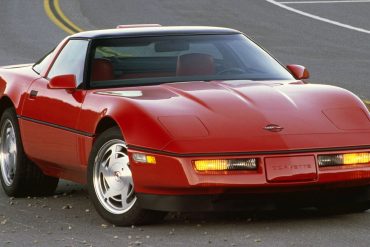
A C4 drives like a car designed around a skidpad. The uniframe and the aluminum suspension give it cornering grip that embarrassed European exotics in 1984 and still feels serious, the steering is quick and accurate, the brakes (ABS from 1986, the ZR-1’s 13-inch fronts for everyone from 1995) are strong, and the whole car feels low, wide and planted. The price is the ride: stiff on a base car, harsh on an early Z51 and brutal on a Z07, with the body flex that the uniframe never quite cured making convertibles and targa-off coupes shudder over bad pavement. FX3 and the 1996 Real Time Damping take the edge off; the 1985 spring-rate cut and the 1995 de Carbon shocks helped every car.
Cross-Fire and L98. A 1984 is a 205-hp car with a 3,200-pound body and a tall axle, so it is quick in its era’s terms and relaxed in ours, with a soft throttle and a fuel system that wants everything in order to idle well. The L98 is a different animal: enormous mid-range torque from the long Tuned-Port runners, a flat top end past 4,500 rpm, 150 mph in a 1985 and a lazy, strong, cheap-to-run character that makes a 1989–91 six-speed one of the most satisfying cheap sports cars there is. The TPI engine does not like to rev and does not need to.
LT1 and LT4. The LT1 revs where the L98 would not, pulls to 5,700 rpm, runs 0–60 in five seconds and sounds like a modern small block; with the six-speed it is the best-driving cheap Corvette, and with the LT4 and Z51 it is the best-driving C4 that is not a ZR-1. The automatics are competent and dull; the 1994-on 4L60-E shifts better than the 700-R4.
The ZR-1. A different car wearing the same nose: the LT5 is quiet and docile below 3,500 rpm with the valet key or the secondaries closed, then changes character completely as the secondary ports open and pulls hard to 7,000, with the six-speed’s long throws and the wide rear tires giving it a supercar’s stance and a supercar’s tire bill. It is the one C4 that feels special every time, and the one that must be serviced by someone who knows it.
Gearboxes. The 4+3 is a heavy-clutch four-speed with an overdrive that engages behind gears 2–4 on a console (1984) or shifter (1985–88) switch; it works when it has been maintained and is nobody’s favorite. The ZF six-speed is heavy, precise and strong, with the CAGS skip-shift that most owners have disabled. Both make the car much more involving than the automatic.
Living with it. The door sills are the widest of any Corvette and getting in and out is not graceful; the digital dash of 1984–89 is either a period delight or a dark rectangle; the clamshell hood makes the engine the most accessible of any Corvette; the targa top comes off in a minute and stows in the hatch; the hatch itself swallows luggage. A 1990-on car with the airbag dash and analog gauges is the easier daily companion; a 1994–96 with the second airbag, standard leather and the quieter engine is the most refined C4 there is.
Drive several before buying one. A 1984 Z51 and a 1996 LT4 Collector Edition share a silhouette and almost nothing else, and the car that suits you may be the quiet 1994 automatic rather than the six-speed you came for.
MORE: C4 PERFORMANCE FIGURES / SPECS BY YEAR / EVERY C4 ENGINE
A C4 is the cheapest Corvette to buy and, with one exception, among the cheapest to run. The small blocks are small-block Chevrolets: any independent shop can service an L98 or LT1, parts are plentiful and cheap, tires are standard sizes (except the ZR-1’s 315s), and a driven car on a modest budget runs $1,000 to $2,500 a year in parts and labor in owners’ experience, less than most modern cars. Insurance on a classic policy with an agreed value is cheap; a standard policy on a daily-driven car is ordinary.
The exception is the ZR-1. The LT5 is reliable when looked after, but its sixteen injectors, the secondary-port actuator, the timing-chain tensioners, the coolant and oil-cooler plumbing and a plenum-off job for plugs and starter cost several times what the same work costs on an L98, blocks and heads are no longer made, and the specialists are few. Budget a baseline service of several thousand dollars on any ZR-1 without recent history and find the shop before you buy.
On every C4 the money goes to the electronics and the rubber rather than the body or the engine: a rebuilt 1984–89 digital cluster, a set of FX3 or F45 shocks done correctly, an ABS pump, a passive-keyless-entry module, headlight motors, a Bose amplifier, a full set of weatherstrips and roof seals, and on convertibles a top. None is ruinous alone; a car that needs all of them costs more than a car that needs none, which is the whole C4 market in a sentence. The Optispark on a 1992–94 is a water-pump-out job; a hub bearing is a known, moderate bill; a 4+3 overdrive rebuild is specialist work.
Budget, in other words, for the car plus the inspection, plus whatever the inspection finds, plus tires, brakes, fluids and a battery on any car that has sat. Then enjoy the cheapest Corvette miles there are.
MORE: C4 MAINTENANCE SCHEDULES / C4 COMMON ISSUES / OWNER’S MANUALS
Beyond price, condition and mileage, a C4 purchase turns on a few judgments the inspection alone cannot make: what the car is for, whether you can tell a sorted car from a tired one, how much of the price is paperwork, where the structure stands, and where the car sits in a market that has started to sort itself. There are hundreds of abused, neglected or simply ignored C4s for sale at any moment; being selective is the difference between a nearly maintenance-free car and endless upkeep.
Decide first whether this is a car to drive, to show or to hold. A driver wants a 1989–96 six-speed with a working dash and a service file, and the engine code barely matters beyond L98 versus LT1; a show car wants a low-mileage anniversary car, Pace Car or Collector Edition with its paperwork; an investment wants a delivery-mileage ZR-1 or Grand Sport and the patience to find the right one. Most regrets come from buying one kind of car for the other: the ZR-1 that becomes a daily driver and a specialist’s bill, the Cross-Fire 1984 bought for performance, the modified car bought as a collectible.
Every C4 but the ZR-1 is a small-block Chevrolet that any competent independent shop can service, with parts plentiful and cheap, so the question is not whether the car can be looked after but whether it has been: ask for the service file rather than a description, and expect receipts for the items the common-problems table lists for its year (the dash, the Optispark on a 1992–94, the hub bearings, the FX3 shocks, the weatherstrips). The ZR-1 is the exception. Its LT5 needs one of a handful of specialists, blocks and heads are no longer made, and a baseline service runs to several thousand dollars; find the shop before the car, and treat a ZR-1 without an LT5 service history as a car that needs one.
Before beginning the hunt for that perfect example of a fourth-generation Corvette to purchase, there are a few things that must be looked at critically.
First, it is important to know what good looks like. “Good” is definitely the operative word here, because lets face it, there are hundreds (if not thousands) of C4 Corvettes out there that have been abused, neglected or ignored completely. It is paramount that you avoid them when performing your search. While there is no shortage of used C4 Corvettes on the market today, being selective during the decision-making process could be the difference between enjoying a relatively maintenance-free owernship experience and purchasing a vehicle that requires endless upkeep and repairs.
To be forewarned is to be forearmed.
You are going to be looking at cars that – best case (if built in 1996) are nearly 24 years old (at the time this content was written.) Go all the way back to 1984, and you are looking at a car that is nearly 36 years old. In both cases, it is important to know what to look for before you even consider visiting a dealership or private owner to look at a used C4 Corvette. This following list of items is not all-inclusive, but it will help you find you navigate your way as you sift between someone’s shadetree restoration project and a well preserved piece of Americana.
While it’s true of any car, looking at the treadwear of the tires is an excellent place to begin evaluating a prospective Corvette. Tires are expensive to replace and its commonly known that a seller will avoid putting new tires on a car if they plan on selling it. A car with extensive treadwear means that the tires will need to be replaced soon which can result in hundreds (even thousands) of dollars in repair/replacement costs.
In addition to evaluating the overall condition of the tires, look to see that the tread is wearing evenly across the tire. Finding tires that are wearing more quickly on their interior or exterior edge could indicate an alignment problem. While a simple alignment may be all that is required, unevenly wearing tires can also be an indicator of failing front-end components including tie rods, ball joints, bad shocks and springs. Bad tires aren’t necessarily going to be the deal breaker (unless they’re just completely neglected and left sitting for years), but the care of the tires could be an indicator of how well the rest of the car was cared for.
Although we’ve previously touched on each of the major engine platforms that were utilized by Corvette from 1984 to 1996, this section is designed to itemize and quantify issues with each of the engines offered during that time period. It should be noted that, as before, this is not a complete and all-inclusive list of deficiencies for these engines, but rather a “what to look out for” narrative.
The L98 and LT1 are still considered powerful, reliable workhorse engines. Like most “old-school” small-block Chevy engines, they were considered nearly bulletproof in their day. Still, there are things to look out for on both the L98 and LT 1 engines that will help discriminate between a viable engine and one that could well past its prime.
On the L98 engines, worn valve guides are known to be an issue. Valve guides wear because of the constant friction between the guide and the stem. When the guides are worn or there is too much clearance between the guides and the valve stem, the engine will begin consuming oil. The best indicator that the valve guides are worn is a puff of blue smoke from the exhaust system during a cold start.
We’ve already addressed the issues with the LT1’s OptiSpark ignition system above. However, when looking at purchasing a 1992–1996 Corvette, one of the first questions that should always be asked is “has the OptiSpark unit been replaced?” It is worth noting that failure of the OptiSpark system was more common in the 1992 and 1993 Corvettes. By 1994, the OptiSpark units had been redesigned to provide better moisture venting. Remember that a compromised OptiSpark ignition system is one of the most common culprits of rough-engine and no-engine start for these cars.
A failed fuel-pump relay is also another common culprit on the C4 Corvette that prevents it from starting. This issue is more common on pre-1990 Corvettes although it has impacted all model years of this generation. Many experienced C4 Corvette owners carry at least one spare fuel pump relay to avoid getting stranded by their car in the event that it fails while they’re out driving.
When evaluating a prospective C4, always ask the current owner to start the car and allow it time to warm up long enough that the thermostat opens and the cooling fans turn on. The electric fan relay on these cars has a tendency to fail, which will result in engine overheating. Additionally, the C4 Corvettes (all years) are known to develop coolant leaks and is actually considered a fairly common problem today. Check for oil in the radiator fluid. If the engine has an internal coolant leak, the coolant may look murky, orange-brown in color or have specs of oil floating in the coolant.
It should be noted that the “LOW COOLANT” light on the dashboard is prone to illuminate, even when the car’s cooling system is completely full. This is generally the result of a faulty coolant temperature sensor. When looking at any C4 Corvette, don’t be afraid to ask the owner if the car has had any coolant leaks. If the system is full and no leaks are visible, then its probably the coolant temperature sensor.
When reviewing maintenance records, asked the seller when the wheel bearings were last serviced. The C4 Corvette used sealed hub assemblies and they were notorious for wearing out prematurely. If they haven’t been replaced recently, it is advised that they’re inspected prior to purchase. It’s also recommended that they’re replaced before they fail as they can cause a wheel to seize, leaving the driver stranded.
Earlier-generation (pre-1990) C4 Corvettes are known to develop leaks at the rear axle. As with the wheel bearings, look at the vehicle maintenance records and verify whether or not the rear axle was serviced in the car’s lifetime. If it hasn’t been, it is advised that the rear axle is inspected prior to purchase.
The carpet and seat upholstery of any car will wear out over time, but given the extremely low ride height of a Corvette, the driver seat and carpeting tends to take a bit more abuse than in other, more conventional vehicles. As such, it is worth inspecting the condition of the carpeting for wear or extreme discoloration. It is also worth thoroughly inspecting the condition of the seats, most especially the driver’s outside bolster. On older Corvettes, the bolsters are known to split open (the stitching wears out) or tear (the leather becomes dry and brittle) creating an unsightly appearance to the seat. While this does not affect drivability, it nonetheless takes away from the aesthetic of the car, and so finding a Corvette whose interior has been properly maintained (including treating the leather with conditioner on a routine basis) will help ensure that the car being purchased continues to look good long after pink slips swap hands.
The C4 Corvettes are notorious for having electrical issues, especially on Corvettes built from 1984 to 1989. These earlier examples of the fourth-generation Corvette utilized an all-digital, electroluminescent instrument panel/dashboard. While the technology was definitely cool when new, it was also developed during a time when this type of technology was brand-new and more prone to failure. As such, take time to verify operability of the entire dashboard. Toggle thru all of the different options and make sure that all buttons and gauges are working.
Do the same with all power windows, locks and latch release buttons. Lastly, verify that the pop-up headlights function as intended – and take the time to test them several times. Replacing the drive motors on the pop-up headlights is expensive. By taking the time to review/verify operability of all the car’s features, you’ll potentially avoid an expensive repair bill later.
On C4 Corvettes equipped with airbags, the airbag warning light may remain illuminated. Look for the “INFL REST” light when inspecting the dashboard during your inspection of the vehicle. In the event that this light remains on during operation, it is often an indicator that an airbag sensor has failed. The airbag warning light is often accompanied by the safety-belt warning light as well, so look for either/both to remain illuminated after the initial start-up/ignition-on process of the Corvette.
For some Corvette owners, the steering wheel serves a secondary purpose – it becomes a means of pulling ones self out their Corvette. Because this puts undue wear on the steering column, it has also become a common fail point on older Corvettes. When inspecting the vehicle, take a moment to pull down on the steering wheel towards the 7 o’clock position. If the steering wheel makes any noise, it if feels loose or if the steering wheel jiggles in your hand when going over bumps/uneven terrain during a test drive, it is likely that the steering knuckle is worn out and will need to be replaced.
Remember the earlier discussion about uni-frame construction? The C4 also ushered in a new era of material and body assembly. The body panels on the C4 Corvette are considered “non-structural” (think cowlings on a sport-bike/motorcycle) and are attached (by adhesives in many instances) to the drivable space frame. When inspecting the body panels, make sure that the fitment of the panels and the gaps between panels are uniform. If any panels appear to be misaligned, or if the gaps are pressed together, this could be an indicator that the car was involved in an accident.
In addition to body panel fitment, take the time to have the car lifted so that an undercarriage inspection can be performed. While the body panels on the Corvette are constructed of fiberglass, the frame and sub-assemblies are not. It is important to inspect these area for damage and frame integrity. It is also important to keep an eye open for rust/corrosion. While lifted, you’ll also have the opportunity to do a visual inspection of the internal side of the lower body panels as well.
Take time to inspect the removable targa-top on coupes and the overall condition of the fabric and sub-structure of the top on convertible models. On targa tops, inspect the panel for cracks, especially where the mounting hardware is attached. Check the weatherstripping around the top and make sure that they’re soft and pliant. Dry or brittle weatherstripping will cause significant leakage into the car’s interior.
On the fourth-generation Corvette, the clamshell hood is the single largest body panel on the car. It comprises the entire hood of the car as well as the upper half of the front fenders. As part of the car’s visual inspection, it is imperative that the clamshell hood be opened, not just to inspect the engine beneath, but to ensure that the hood operates (opens and closes) as intended. Any C4 Corvette that has been involved in a front-end collision will likely have an alignment issue that causes the hood to be difficult to open and close. Verify that the hood latches/unlatches easily, without a lot of force on the latch-release mechanism located on the underside of the hood near the driver’s door.
This is a fairly straight-forward process and fairly easy to-do. You’ll need the VIN number for the next step anyway, so taking time to familiarize yourself with the vehicle identification number and engine codes will help ensure you’ve got an unmolested/unaltered Corvette. To help you in this process, Corvsport.com has all of this information available for you on our website. To review/understand the breakdown of the VIN information by year, click here. For a more detailed breakdown of the VIN, including engine and transmission numbers/stampings, please visit the individual model-year pages by selecting the model year you are considering below:
An important step in researching any used vehicle is to know the car’s service and care history. In today’s world, there are a number of reputable companies out there that can provide you a comprehensive and detailed review of any vehicle you might be looking to purchase. All you need to get started is that vehicle’s VIN number. Companies such as CARFAX, Autocheck (and others) can provide you with a detailed history of your prospective vehicle, including: major accidents, open recalls, total loss, airbag deployment, service history, estimated miles driver per year, multiple owners, registration history, rebuilt title, mileage rollover, hail damage, last reported mileage, vehicle service, mileage rollback, warranty information, branded a lemon, length of ownership, structural damage, state owned, flood damage, salvage titles, junked and whether it was used for commercial (such as rental car agency) or personal use. Most reports cost less than $50.00. While they may not tell you everything about the car, they definitely provide you a snapshot of the car’s history. This may help you make a more informed decision before investing any significant time or effort into that particular vehicle.
In addition to the vehicle history report, take the to have the car checked by a reputable mechanic (either at a dealership or trusted service garage). Allow them to check the vehicle’s fluids, perform a compression test on each of the cylinders, check the brakes, the steering linkage, the cooling and electrical systems and the safety restraint/airbag systems to ensure that everything on the car is as it should be. While you’ll probably have already inspected a number of these items yourself, having a trained professional verify your findings will provide you with a greater peace of mind before handing over your hard-earned dollars for a used sports car – even one as nice as a Corvette!
After you’ve done all of your homework, its time to get your prospective Corvette out on the open road. The test drive will allow you to experience the car in a way that no inspection ever could. It will help you determine whether or not the car is a good fit for you as a driver. Even a perfectly maintained Corvette isn’t going to be of value (or enjoyment) to you if you aren’t comfortable driving it. For some prospective owners, a C4 Corvette might sit too-low-to-the-ground, or the cockpit might seem too compact (keep in mind these cars are all two-seat sports car with no backseat and limited storage space, especially in the convertible models.) For others, the ride may be too harsh, or the exhaust and/or road noise might be too loud.
It is important to remember that the C4 Corvette evolved considerably from its introduction in 1984 to the end of its production in 1996. As previously stated, the suspension was refined throughout the car’s lifespan as was its creature comforts. We recommend you drive several different examples – while they’re all based on the same platform, you’ll be surprised how different each year is from the others.
Also, the test drive is another means of checking the car’s operability. When driving the car, don’t allow the passenger (which will probably be the car’s current owner) spend the entire drive talking at you or with you. It is important that you listen to the car. Pay attention to any clunks, engine or transmission noises. Also, take enough time to really put the car thru its paces. Observe if the car wants to pull to the left or right. Be intentional about testing the brakes and the steering. If it is a manual transmission, pay attention to when the clutch begins to catch – if it’s got a high clutch pedal, it could indicate that the clutch is worn out. Look for smoke coming from the exhaust or beneath the hood and pay attention for any unusual smells – such as burning oil or engine coolant.
For most of us, buying a Corvette is an emotional experience. It’s a promise that many of us make to ourselves when we see our first Corvette that “someday I’m going to have one of my own.”
If you are in the market to buy your first (or next) Corvette – CONGRATULATIONS! This is an exciting time for you, and it is understandable that you’d want to find the “perfect” car to bring home and have for evermore. However, you must practice patience when shopping for a used Corvette. Just as you dream of drifting thru the corners and tearing up the straightaways at (insert favorite local race track here), the people who purchased the cars you are now looking at dreamed the same dreams. As such, finding the right Corvette is a little different than buying a “daily driver” that you’d use for your commute back and forth to work. These cars are driven harder, faster and often with less regard to the wear and tear than to the exhilarating experience of flying thru a sharp turn just a little too fast.
Because of this, you’ll want to follow all the steps we outlined in this article. You’ll want to keep emotion out of the decision making process as much as is humanly possible. That’s not to say you shouldn’t enjoy the experience, but be informed and purchase a Corvette that passes all these search criteria so you’ll have as much enjoyment with your Corvette after you make the purchase as you did finding it in the first place. It is also worth noting that shopping for a Corvette can be a lot of fun! You’ll definitely get to drive some amazing cars along the way…and here’s where you should embrace and enjoy the journey of finding the “perfect Corvette.” If nothing else, you can be certain that when you do finally make your big purchase, you’ll have found a Corvette that is perfect for YOU.
Know where the car sits before you pay. Driven L98 and LT1 cars are the stable, liquid end and the easiest to resell; low-mileage six-speeds and anniversary cars are the undervalued tier; ZR-1s and Grand Sports are priced on mileage and move with the 1990s collector market; a modified car, a converted 1984 or a tribute Grand Sport sells at a discount to the car it imitates and always will. Price against the site’s tracked results and the year pages, not the asking prices around it, use KBB and Hagerty for a local sanity check, and remember that an unsold high bid at auction is a ceiling the market declined to pay.
Thirty- to forty-year-old cars have thirty- to forty-year-old problems, and the C4’s are well known, well documented and almost all fixable at a known price. What makes the C4 different from a C2 or C3 is where the problems are: not in the fiberglass or the steel, which hold up, but in the electronics and the rubber, which do not. Every item below should be on the checklist and in the negotiation, and a car with paperwork for the fixes is the one to buy.
The year pages carry the common-issues posts for each year; the list below is the generation’s.
MORE: C4 COMMON ISSUES / C4 RECALLS / C4 SERVICE BULLETINS
| PROBLEM | YEARS | WHAT HAPPENS | THE FIX AND THE COST |
|---|---|---|---|
| Digital dash | 1984–89 | The electroluminescent LCD cluster fades, loses segments and goes dark, and the dimmer and the printed-circuit connectors behind it corrode; the 1990–96 hybrid dash is better but its digital speedometer section and the instrument lighting still dim or fail. | Rebuilt clusters are available and good used ones are scarce; a rebuild costs more than the price gap between a good and a fair car. Toggle every function at the viewing. |
| Optispark distributor | 1992–96 | The LT1’s optical distributor sits behind the water pump, where a weeping pump seal, a split hose or a wet road soaks it; the unvented 1992–94 units also trap condensation and build ozone, and the result is a misfire, a stall or a no-start. | A replacement (vented, or an aftermarket unit) with the water pump off; ask first whether it has been done. The vented 1995–96 unit is far better. A pump and distributor together are a four-figure job. |
| Fuel-pump relay | 1984–96 | The relay fails and the car will not start, more often on pre-1990 cars; many owners carry a spare. | A cheap part and the first thing to check on a no-start that is not the Optispark. |
| L98 valve guides and TPI sensors | 1985–91 | Worn guides let the engine burn oil, shown by a puff of blue smoke on a cold start; the mass-airflow sensor and its burn-off relay, the cold-start injector, the oxygen sensor and the plenum and runner gaskets fail or leak, and Multec injectors clog on cars that sit. | Guides are a head job; the sensors and gaskets are known, modest repairs. Watch the first start cold. |
| Cross-Fire Injection | 1984 | Hard starts, a rough idle and a flat spot off idle, usually a tired throttle-body injector, a leaking intake crossover gasket, a sticky idle-air motor, a failed air-injection pump or a coolant or oxygen sensor rather than the system itself. | All serviceable; many cars have been “fixed” with carburetors or later manifolds, which lowers collector value even when it improves the car. |
| Cooling system | 1984–96 | The electric fan relay fails and the engine overheats; coolant leaks are common; oil in the coolant means an internal leak; the LOW COOLANT light comes on with a full system when the sensor fails. The LT1’s intake and water-pump gaskets weep. | Let the car idle to full temperature at the viewing and watch the fans come on; check the coolant’s color. Sensors and gaskets are cheap; a head is not. |
| Hub bearings | 1984–96 | The sealed hub assemblies wear prematurely, growl and, left alone, can seize a wheel. | Replace before they fail; a known, moderate job. Ask when they were last done. |
| Rear axle | 1984–89 | Pre-1990 differentials develop leaks at the seals and the cover. | Check the records and the underside; a reseal is routine. |
| 4+3 overdrive | 1984–88 | The Doug Nash overdrive unit leaks, slips and loses its solenoid, and the clutch is heavy. | Specialist rebuild or, as on many cars, bypass; a car with the overdrive still working is worth more to an enthusiast. |
| FX3 / F45 ride control | 1989–96 | The shock actuators fail electrically and the system stops switching; many cars have been converted to conventional Bilsteins, which hurts a Z07 or a ZR-1. | Rebuilt actuators and shocks exist at a price; conversion is the cheap route and should be disclosed. |
| VATS and ABS/ASR | 1986–96 | The resistor key wears and the decoder fails, leaving a car that will not start for minutes at a time; ABS pumps, wheel-speed sensors and the ASR system are expensive when they fail; airbag (INFL REST) and seat-belt lights point to a failed sensor or module. | VATS bypass modules are common; ABS and SIR parts are the costly ones. Check every warning light clears after start-up. |
| Headlights, antenna, windows | 1984–96 | The pop-up headlight motors strip their plastic gears and stall half-open; the power-antenna mast snaps; window motors and door-lock actuators slow; the Bose amplifiers die. | Gear kits and rebuilt motors are inexpensive; the Bose amps are a known rebuild. Test the headlights several times. |
| Weatherstrips, roof and hatch seals | 1984–96 | The targa-panel and hatch seals and the door weatherstrips dry out, crack and pull loose, letting water into the carpet and onto the electronics; targa panels crack at the mounting hardware. | A full set of seals is a few hundred dollars and a day; wet carpet is a warning about everything under it. |
| Interior wear | 1984–96 | Driver’s outer bolster splits or tears, carpets wear and discolor, the 1994-on seat switches and lumbar bladders fail, the Ruby Red and white anniversary leathers stain and fade. | Covers and carpet are reproduced; correct anniversary leather is costly. Conditioned leather is the sign of a cared-for car. |
| Tilt steering column | 1984–96 | Owners pull themselves out of the car by the wheel and wear the tilt mechanism; the wheel moves, clicks or jiggles over bumps. | Pull the wheel toward seven o’clock at the viewing; a loose column is a known rebuild. |
| Uniframe and body | 1984–96 | The frame rusts where the battery tray drains onto the rail and at the rear kick-ups and trailing-arm mounts; aluminum arms corrode at the steel bolts; convertibles rust at the X-brace. Uneven panel gaps and a clamshell hood that will not latch mean a hit. | Inspect on a lift. Surface rust is normal; perforation at the rails is a walk-away on a cheap car and a negotiation on a rare one. |
| LT5 (ZR-1) | 1990–95 | Sixteen injectors clog when the car sits (the eight secondaries first), the secondary-port actuator and valet solenoid stick, the timing-chain tensioners rattle, the coolant and oil-cooler lines weep, and plugs and starter are a plenum-off job; blocks and heads are no longer made. | A specialist and a service file. The car should change character noticeably at about 3,500 rpm with the valet switch off; if it does not, the secondaries are stuck. |
Take your time, bring a flashlight and a code reader (OBD-I on 1984–95 cars needs a paper clip across the ALDL connector, OBD-II on a 1996 takes any scanner), and see the car on a lift. Most of what follows takes an hour; the paperwork you can do before you travel.
1. Start with the paperwork. The title and the VIN plate on the dash; the SPID (service parts identification) label in the console with every RPO the car was built with; the trim tag on the door pillar with its build date and paint and trim codes; the build sheet or window sticker if they survive; the service file. For an edition, the RPO that makes it (Z01, Z25, Z4Z, Z15, Z16, B2K); for a ZR-1 the registry and the LT5 service history; for a Callaway the serial plate and Callaway’s confirmation. The VIN decoder, production and RPO pages tell you what the numbers should be for the year.
2. Tires. Treadwear first, because sellers rarely put new tires on a car they are selling and a set is several hundred dollars (more on a ZR-1); then the wear pattern, because tires worn on an inner or outer edge mean an alignment at best and tie-rod ends, ball joints, worn shocks or springs at worst. The care of the tires tells you about the care of the car. On a 1988–89 car note that the original 17-inch size is no longer made.
3. The engine, cold. Ask that the car not be warmed up before you arrive. On an L98, watch for a puff of blue smoke on the cold start (valve guides). On an LT1, ask first whether the Optispark has been replaced and when, and listen for a misfire. On a 1984, expect a slightly lumpy Cross-Fire idle but not a stall. On a ZR-1, confirm the car changes character at about 3,500 rpm with the full-power key. Look for oil at the rear main and the valve covers, coolant at the water pump and the intake gaskets, and oil in the coolant. Pull the codes.
4. The cooling system. Let the car idle to full temperature and watch the electric fans come on; a failed fan relay is the common cause of an overheated C4. Check the coolant’s color (murky, orange-brown or with oil specks means an internal leak), look for leaks at the hoses and the pump, and ask whether the LOW COOLANT light comes on with a full system, which is the sensor.
5. Dash, electrics and warning lights. Cycle every function of the digital dash (1984–89) and check the speedometer section of the 1990-on cluster; run every switch, the power windows, locks and hatch release, the wipers, the heater and A/C, the Bose system and the power antenna; make sure the INFL REST airbag light and the seat-belt light go out after start-up and that the ABS and ASR lights clear; start the car twice to catch a VATS fault; and open and close the headlights several times, because the motors’ gears strip and replacements are not cheap.
6. Body, hood and seals. Sight down the panels and check the gaps at the doors, hatch and headlight doors: the panels are non-structural and glued on, so misalignment means a hit. Open the clamshell hood and make sure it latches and unlatches easily with the release near the driver’s door; a hood that fights you has been off or the car has been hit. Check every weatherstrip and the roof-panel and hatch seals for dry rot, cracks and strips that have pulled loose, inspect the targa panel at its mounting hardware for cracks, and on a convertible the top fabric, pads, rear window and frame. Lift the carpet for damp.
7. Underneath. On the lift, look at the frame rails under the battery tray and at the rear kick-ups and trailing-arm mounts for rust, the aluminum control arms for corrosion at the steel bolts, the differential and its cover for leaks (pre-1990 above all), the half-shaft and driveshaft U-joints, the fiberglass springs’ rubber mounts, and the exhaust. Grab each wheel at twelve and six and rock it for hub-bearing play. Look at the inside of the lower body panels for repairs.
8. Interior. The driver’s outer bolster, the carpet, the dash pad, the seat switches and lumbar on 1994–96 cars, and the anniversary leathers for staining and fading. Then the tilt column: pull the wheel toward the seven o’clock position and feel for play or a click, the sign of the worn mechanism that comes from owners levering themselves out of the car.
9. The test drive. Drive it yourself and make the owner stop talking. Listen for clunks from the rear on and off the throttle, feel for pull under braking and wander on the straight, watch the temperature in traffic, and work the gearbox through every gear: a high, soft clutch pedal means a clutch, a hard second-gear engagement on a ZF means a synchro, a 4+3 overdrive that will not engage or slips is a rebuild, a shudder from the automatic is a converter. Feel the FX3 or F45 change settings if the car has it. Note the wheel jiggling over bumps (the column again) and any smoke or smell of oil or coolant. The C4 changed enormously between 1984 and 1996, so drive two or three years before you buy one.
10. The history report and a second opinion. Run the VIN through CARFAX or AutoCheck (under $50) for accidents, title brands, flood or hail damage, airbag deployment, odometer rollbacks, ownership and registration history, service records and whether the car was a rental; it will not tell you everything but it will stop you wasting a day. Then have a Corvette shop or a mechanic you trust check the fluids, compression, brakes, steering, cooling, electrical and restraint systems before the money changes hands. Price the car against the site’s tracked results, not the asking prices, keep the emotion out of it as far as is humanly possible, and be prepared to walk away: there are more than 350,000 C4s out there, and half the fun is the hunt.
Good luck and happy hunting! We hope this buyer’s guide helps you navigate the exciting (and sometimes challenging) prospect of purchasing a used C4 Corvette. While we’ve identified a number of items to watch out for, we also want to make sure to remind you that all of the items listed in this buyer’s guide are based on individual issues experienced at different times by Corvette owners over the course of many years. While there’s probably that “basket case” Corvette out there that is plagued with multiple issues, most Corvettes (especially those that have been maintained) will provide their owner with many happy years. Additionally, it is important to recognize that any car which maintains its value (as listed above) this many years after being sold as new is most definitely a worthwhile investment.
Good luck and happy hunting! Remember, half the fun is the experience of hunting for the perfect Corvette. We wish you every success in your search and hope you’ll drop us a line at Corvsport.com after you purchase your C4 Corvette. Good luck and happy hunting!
MORE: THE VIN DECODER / PRODUCTION NUMBERS / RPO CODES / COLORS & TRIM CODES
On a C4 the VIN and the SPID label say most of it, which makes verification easier than on a chrome-bumper car and the editions the thing to concentrate on, because every badge, decal, plaque and paint scheme has been reproduced. The table gives what each year’s VIN, trim tag and engine should show and the thing most often faked; the year pages carry the full code lists.
MORE: 1986 / 1988 / 1990 / 1993 / 1995 / 1996 / THE VIN DECODER
| YEAR | THE VIN, THE TAG, THE ENGINE | WHAT IS FAKED MOST, AND WHAT TO CHECK |
|---|---|---|
| 1984 | VIN 1G1AY0782E5 with a sequence to 151547; one body, one engine (casting 14010207, ZFC suffix on an automatic), one plant; trim tag on the door pillar with a 1983 or 1984 build date and the paint code (two on a two-tone). | Options, not identity: a Z51 car should have the 9.5-inch rears, the oil cooler, the extra fan and the fast rack; a 4+3 car the console overdrive switch and a build date from January 1984. Converted fuel systems and aftermarket dashes cost collector value. |
| 1985 | VIN 1G1YY0787F5, sequence to 139729; the Tuned-Port L98 with the plenum, eight runners and the mass-airflow sensor, ZDF suffix on an automatic; cast-iron heads. | A Z51 car should have 9.5-inch wheels all round, Bilsteins and the auxiliary fan; a 4+3 car the Dana 44 (the cover gives it away) and a working overdrive. |
| 1986 | Sixth and seventh VIN characters 07 for a coupe (sequence from 100001) and 67 for a convertible (from 900001); aluminum 14101128 heads on every convertible and later coupes, iron 462624 heads on early coupes, on a 14088548 block. | A “Pace Car” is simply a 1986 convertible, with or without the dealer decals, which are reproduced; nothing on the VIN or tag distinguishes a decaled car. A Konner car should be Silver Beige over Black with Graphite leather and two paint codes. |
| 1987 | Sixth character 2 for a coupe, 3 for a convertible, sequence to 130632; aluminum heads and roller lifters on a 14093638 block, a suffix such as ZJN; argent wheel centers (black ones are 1984–86 wheels). | A Callaway B2K needs its Callaway serial plate, the registry’s confirmation and the full installation (two turbos with intercoolers, Callaway manifolds, plumbing and valve covers); without them it is a turbocharged Corvette. A Z51 car must be a 4+3 coupe. |
| 1988 | 10088113 heads on a 14093638 block, a suffix such as ZMA; 17-inch wheels mean Z51 or Z52; a 3.07-axle coupe has the low-restriction mufflers. | The 35th Anniversary: Z01 on the SPID label, paint 40/41 and trim 113 on the tag, the numbered console plaque (its number is the car’s place among the 2,050, not its VIN), white wheels, white leather, the black roof bow and transparent black roof panel; white-painted standard cars exist and plaques are reproduced. |
| 1989 | Sequence past 126000; a six-speed car carries the ZF tag and the CAGS solenoid plus the oil cooler, heavy-duty radiator and boost fan; FX3 shows on the SPID, the console switch and the shock motors; a Z51 car must be a six-speed coupe. | Arctic Pearl and Yellow 1989s are documented rarities, not repaints. A ZR-1 pilot car (84 built, all meant to be destroyed) needs a paper trail from Chevrolet. Callaways and Challenge cars need their serial plates and documentation. |
| 1990 | A ZR-1: Z in the fifth position, J in the eighth, sequence from 800001, the wide rear body with square lights and the roof stop lamp, 11-inch rear wheels, the valet key, and the LT5 with its Mercury Marine plate and matching partial VIN. An L98 car: a 3 in the seventh position for the airbag. | The LT5’s history: whether it went back to Stillwater, whether the secondary-port actuator works (the car should change character at about 3,500 rpm), whether the injectors have been serviced and the tensioners inspected. The 250-hp L98 needs the 3.07 axle. |
| 1991 | L98 sequence to 118595; 10088113 heads on a 14093638 block with the speed-density intake; Z07 shows on the SPID with FX3 and must be a six-speed coupe with the heavy-duty springs and bars and the FX3 switch and motors present. | Z51 and FX3 parts can be added to any coupe, so Z07 is proved on the label. A Callaway 500 needs its badges and a build date after September 26, 1991; every Callaway needs its serial plate. |
| 1992 | Eighth VIN character P for the LT1, sequence to 119977; the Optispark behind the water pump; trim tag with a 1991 or 1992 build date and matching paint and interior codes (103 or 143 for white or light gray). A ZR-1 as 1990, with fender badges. | Z07 again: on the label with FX3, both parts present. A Callaway SuperNatural needs its Callaway serial and documentation. |
| 1993 | Every 1993 should have passive keyless entry (both antennas and the fob working), staggered 8.5/9.5-inch wheels on a base car or 9.5s all round on a Z07, and the LT1’s thermoset valve covers. A ZR-1’s LT5 has four-bolt mains. | The 40th Anniversary: Z25 on the label, paint 68 and trim 793 on the tag, Ruby Red leather with the embroidered headrests, the wheel-center emblems and the hood, fuel-door and fender badges. Ruby Red was not sold without the package, so a Ruby Red car without the trim is a repaint; badges are reproduced. An anniversary ZR-1 should be in the registry. |
| 1994 | A 2 in the seventh position for the dual airbags, the two-spoke wheel, console seat switches, leather, and on convertibles the glass window with defogger. A Copper Metallic car needs code 66 on the tag and the build sheet. | A ZR-1 should wear the five-spoke wheels (1990–93 directional wheels mean a swap). Run-flat cars should still have working tire-pressure sensors, since the EMT tires are gone and most cars now run conventional tires with the system disconnected. |
| 1995 | Every 1995 has the gill vents, 13-inch front brakes, the vented Optispark and ABS/ASR 5. The last ZR-1s have their build dates recorded by the registry. | The Pace Car: Z4Z on the label, paint 05/10 and trim 194 on the tag, Dark Purple over Arctic White with the factory stripe and flag graphics, white top, black-and-purple embroidered seats, five-spokes and the automatic. Many were delivered with the Indy decals uninstalled in the trunk, so a documented car without them is not a fake, and one with them (reproduced) is not automatically real. |
| 1996 | A Grand Sport: the 600001-series VIN with a 5 in the eighth position, paint 28 and trim 195 or 705, Z16 on the label, molded rear flares on a coupe, black five-spokes in the ZR-1 sizes, black calipers, embroidered headrests, red valve covers and plug wires, the two-color decal hashes. An LT4 car: the 5 in the VIN, the six-speed and the 8,000-rpm tachometer. Every 1996 has an OBD-II port. | A blue car with a painted stripe and a 100001-series VIN is a tribute. A Collector Edition needs Z15 on the label, paint 13 and the Collector Edition trim code, the silver wheels with correct caps, the perforated embroidered seats and the chrome badges, since Sebring Silver was not sold any other way and the badges are reproduced. |
What CorvSport has written about buying, selling and valuing the 1984–96 Corvette: the ZR-1, Grand Sport and Callaway stories, the low-mileage gems, the tires and the market updates, newest first. The year pages carry the current results for each year.
Corvette Icons On The Move: The Grand Sport Story & Top C4 Auction Sales — 2025
CorvSport Curates: The Highest-Rated Tires For Your C4 Corvette — 2025
Garage Queens: C4 Corvettes Dominate Our Low-Mileage Gems Today — 2025
Market Update: Could This Be The Next Callaway C4 To Fetch $100,000? — 2024
Lowest Mileage Example Of Revolutionary C4 ZR-1 Up For Bidding On Bring a Trailer — 2023
How Is The Callaway C4 Doing In This Crazy Corvette Market? — 2023
The site’s recall, service-bulletin, maintenance-schedule and common-issues posts for the 1984–96 Corvette, year by year.

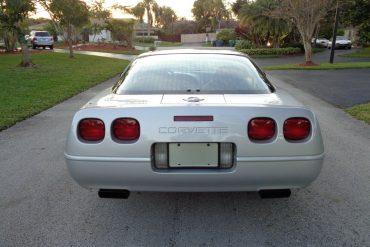
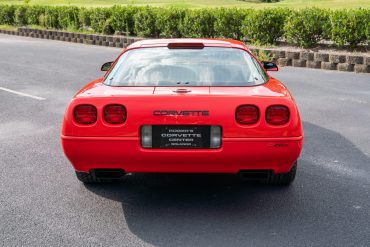
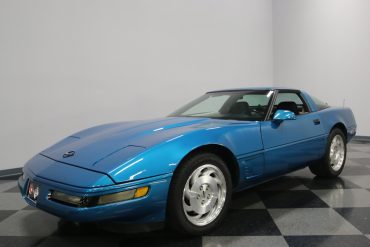


The C4s the site has listed for sale, newest first: owners’ cars, dealer stock and the auction consignments worth watching, with the asking price and what we make of it. The for-sale page has every Corvette the site is following and the auctions tag the results.
For a driver, a 1992–96 LT1 six-speed coupe: the 300-hp engine, the ZF gearbox, the airbag dash and, from 1994, the second airbag and standard leather, with 1995–96 adding the vented Optispark and the ZR-1’s brakes. For value, a 1989–91 L98 six-speed, the most durable engine of the generation with the 17-inch wheels and FX3 on the best cars. For a collectible, a ZR-1 (1990 for the first year, 1993–95 for 405 hp), a 1996 Grand Sport, or the 1988 35th and 1993 40th Anniversary cars.
If you want one answer: a documented 1996 LT4 six-speed in a standard color with Z51, the best-driving C4 that is not a ZR-1, at base-car money. The cheapest way in is any clean 1984–85 automatic; the one to avoid is a tired car of any year with a dark dash.
From about $4,000 for a running 1984 to $85,000 for a delivery-mileage 40th Anniversary ZR-1, which is why the price ladder on this page has five tiers. In the results the site tracked between late 2025 and October 2026, driver-grade L98 and LT1 cars ran $7,000 to $15,000; low-mileage six-speeds and the anniversary cars $15,000 to $30,000; Grand Sports, 405-hp ZR-1s and documented Callaways $30,000 to $55,000; and the unused ZR-1s above that. Classic.com’s C4 ZR-1 benchmark stood at $37,240 in October 2026.
Mileage sets the price more than the year: a 5,000-mile example of any year brings two or three times a 60,000-mile one. Use the year pages for each year’s current results, and check whether an auction figure includes the buyer’s premium.
Yes and yes. The C4 was the first fully redesigned Corvette since 1963, with a uniframe chassis, aluminum suspension, fiberglass springs and cornering grip that embarrassed exotics when new, and it was overlooked afterwards only because the C5, C6 and C7 that followed were so much better. It is still a highly capable car that road racers campaign, it looks more classically attractive every year, and in LT1 or LT5 form it is quick by any standard.
What it is not is refined by modern standards: the ride is stiff, the early digital dash is a period piece, the door sills are the widest of any Corvette and getting in and out is not graceful. Drive a 1984 and a 1996 back to back before deciding what you think of the generation.
The electronics and the rubber, not the body or the engine: the 1984–89 digital dash fading or going dark, the Optispark distributor on 1992–94 LT1s drowning behind the water pump, failed fuel-pump relays, the 4+3’s overdrive unit, FX3 shock actuators, VATS keys and decoders, ABS and airbag sensors, pop-up headlight motors stripping their gears, power antennas, Bose amplifiers, and weatherstrips and roof seals that let water onto all of it. Mechanically: L98 valve guides and TPI sensors, cooling-fan relays and coolant leaks, hub bearings, pre-1990 axle seals, and the LT5’s injectors, actuators and tensioners on a ZR-1.
All of them are known, documented and fixable at a known price, and the common-problems table above gives the fix and the cost for each. The common-issues posts for each year go deeper.
If you buy the engine, yes. The ZR-1 is a Lotus-designed, Mercury Marine-built 32-valve supercar with 375 or 405 hp, a ZF six-speed and FX3 for the price of a new economy car, 6,939 built, and the unused cars have doubled in a decade. The LT5 is reliable when looked after and expensive when it is not: sixteen injectors that clog when the car sits, a secondary-port actuator, timing-chain tensioners and a plenum-off plug change, with blocks and heads no longer made and a handful of specialists who know them.
Buy a car with an LT5 service file from a known shop before you consider the year or the color; the 1990 is the collector’s first-year car, 1993–95 have the 405-hp engine, 1991–92 are the value. Find the specialist before the car, budget a baseline service on anything without recent history, and read the C4 ZR-1 model page.
As the cheapest Corvette there is, yes, with eyes open. The 1984 has the all-new chassis and the looks for the price of a used economy car, and low-mileage, original examples are starting to be bought as the first C4 rather than as an old one. It also has every first-year fault: the Cross-Fire 350 with 205 hp, the harsh Z51 ride that half the cars have, the digital dash that fails and the 4+3 gearbox on the manual cars.
Buy a clean, original automatic with a working dash and a sorted fuel system, expect a relaxed car rather than a fast one, and know that a 1985 with the Tuned-Port L98 costs only a few thousand more. Cars converted to carburetors or later manifolds drive better and are worth less to collectors.
On the VIN and the paperwork, never on the paint. A Grand Sport has its own 600001-series VIN with a 5 in the eighth position, Z16 on the SPID label, paint 28 and trim 195 or 705; a blue car with a painted stripe and a 100001 VIN is a tribute. The 35th Anniversary is Z01 with paint 40/41 and trim 113; the 40th is Z25 with paint 68 and trim 793, and Ruby Red was not sold without it; the 1995 Pace Car is Z4Z with paint 05/10 and trim 194; the Collector Edition is Z15 with paint 13. A ZR-1 has a Z in the fourth position and the 800001 series; a Callaway has its own serial plate and a B2K line on the GM paperwork, and Callaway Cars will confirm it from its records.
Badges, plaques, decals, stripes and paint schemes are all reproduced, so the codes decide. The verification table above gives each year’s details and the year pages the full lists.
The coupe is stiffer, has the targa roof and the hatch, is the only body for Z51, Z07 and the ZR-1, and is the majority of cars; the convertible (1986 on) brings a premium in most years, adds the top and its leaks to the inspection, and is the better car on a summer evening. The ZF six-speed (1989–96) is worth a premium on every car and makes the LT1 and LT4 cars the drivers’ C4s; the 4+3 (1984–88) is an acquired taste whose overdrive is the generation’s least-loved component; the automatics are the majority, competent, and the value.
Buy the body for how you will use it and the gearbox for how you will drive it. A six-speed coupe is the enthusiast’s C4; a low-mileage automatic convertible is the one most people are happiest with.
For a standard car, $1,000 to $2,500 a year in parts and labor in owners’ experience, plus insurance (cheap on an agreed-value classic policy) and tires in standard sizes. Any shop can service an L98 or LT1 and parts are plentiful. For a ZR-1, several times that for anything inside the LT5, a specialist, and a baseline service of several thousand dollars on a car without recent history.
The big bills on any C4 are electronic and rubber: a rebuilt digital cluster, FX3 or F45 shocks done correctly, an ABS pump, a keyless-entry module, a full set of seals and on convertibles a top. Buy the car that has had them done, and budget tires, brakes, fluids and a battery on anything that has sat.
The for-sale section above and the site’s for-sale page gather the C4s we are following from owners, dealers and the auctions, newest first, with what we make of each asking price. The year pages carry the current tracked results for each year, the auctions tag has the sale-by-sale coverage, the Bargain Hunting series finds the cheapest clean cars by generation each month, and Bring a Trailer, Mecum, Barrett-Jackson, Hagerty, Cars & Bids and the Corvette Forum classifieds are where the cars change hands. Kelley Blue Book and Hagerty’s guide are useful for a local sanity check on a standard car.
Use completed sales, not asking prices: in autumn 2026 dealers were asking $49,900 for low-mileage 1995 Pace Cars while driven ones failed to sell at $19,000, and $59,999 for a 144-mile 1994 while 20,000-mile cars sold for $14,000 to $16,000.