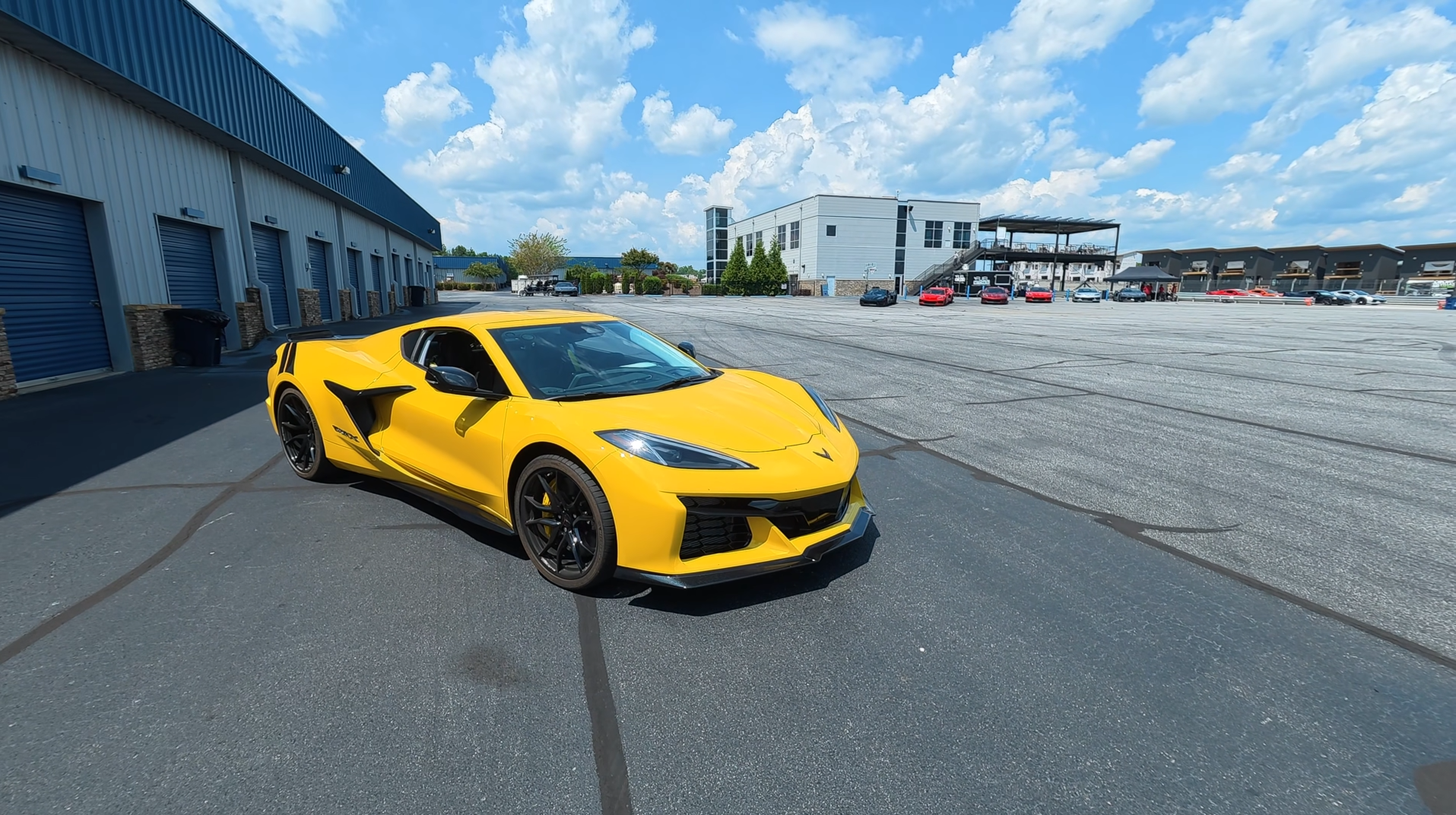
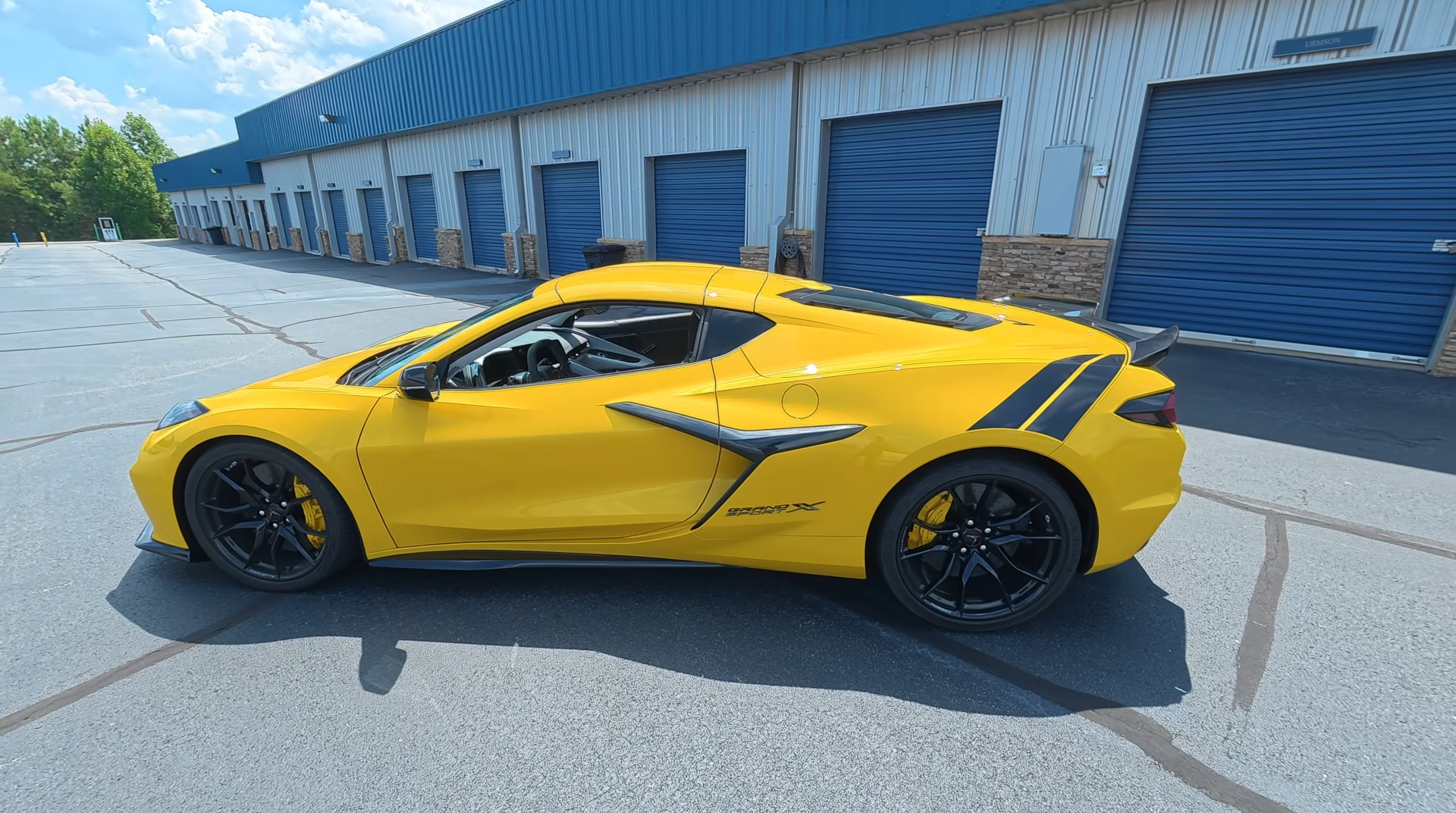
Brooks Weisblat of DragTimes puts Chevrolet’s newest Grand Sport variants through a demanding real-world performance evaluation, taking both the 721-horsepower Corvette Grand Sport X and the conventional 535-horsepower Grand Sport to Atlanta Motorsports Park in Dawsonville, Georgia. The comparison provides a revealing look at how power, weight, tires, and aerodynamics can dramatically influence a car’s performance on a technical road course.
The Grand Sport X is powered by Chevrolet’s naturally aspirated 6.7-liter LS6 V8, producing 535 horsepower at the rear wheels, supplemented by a front-mounted electric drive system derived from the ZR1X. The hybrid system contributes an additional 186 horsepower, bringing total system output to 721 horsepower. The electric hardware also enables a stealth driving mode, allowing the Corvette to operate solely on electric power at speeds of roughly 55 mph for short distances.
Straight-line performance is predictably impressive. Weisblat recorded a best 0–60 mph time of approximately 2.6 seconds without rollout, despite testing conditions registering a density altitude of around 3,800 feet. The conventional Grand Sport, meanwhile, managed approximately 3.27 seconds without rollout. The substantial acceleration advantage demonstrates the effectiveness of the Grand Sport X’s hybrid-assisted all-wheel-drive configuration.
The road-course comparison, however, produces a more nuanced result. Atlanta Motorsports Park’s approximately two-mile layout features significant elevation changes, blind crests, and technical corners, placing a premium on mechanical grip and cornering capability rather than outright acceleration.
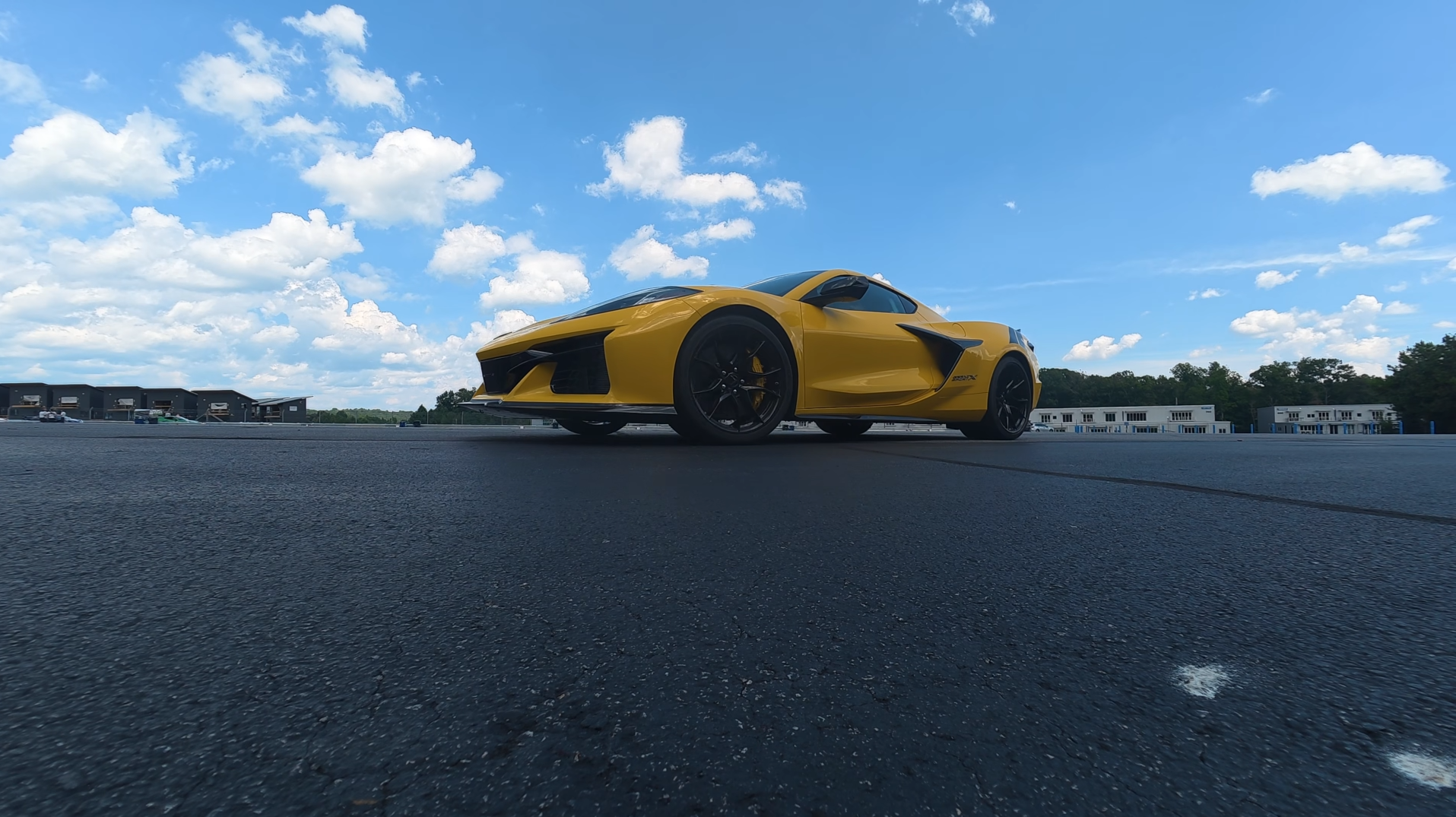
The Grand Sport X entered the track on Michelin Pilot Sport 4S tires without the aerodynamic package. The lighter 535-horsepower Grand Sport was equipped with the Aero package and substantially more aggressive Michelin Pilot Sport Cup 2 R tires. Despite giving away 186 horsepower, the standard Grand Sport proved quicker around the circuit. Its roughly 280-pound weight advantage and, most importantly, the Cup 2 R tires allowed Weisblat to carry considerably more speed through the corners.
The result illustrates an important performance principle: on a technical circuit with limited high-speed straights, tire grip and vehicle weight can outweigh a significant horsepower advantage. Weisblat improved his lap time from approximately 1:39 in the Grand Sport X to 1:36 in the lighter Grand Sport.
The comparison ultimately demonstrates that Chevrolet’s two Grand Sport configurations deliver distinctly different approaches to performance—one emphasizing explosive hybrid-assisted acceleration, the other maximizing lightweight agility and cornering grip.
Source: DragTimes