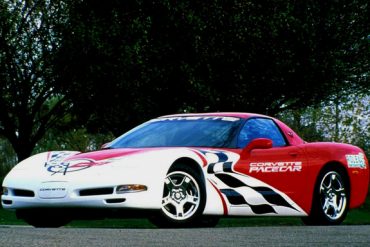
Chevrolet sent a near-stock 345-horsepower C5 to lead the field at Le Mans in 1999, the same year the C5-R debuted. The original press release and what was changed for pace duty.



C5 CORVETTE - 1999
The hardtop arrives: a fixed-roof convertible body with the six-speed and Z51 standard, black leather only and a $38,777 price under the coupe’s, 12 percent stiffer and the lightest C5, 4,031 sold. 33,270 built, the most since 1986.
Quick Nav: Story · Specials · Hardtop · C5-R · Price & Options · VIN · Specs · Technical · Pics & Videos · The Market · All · FAQs
Model & Gen: 1999 Corvette (C5)
Body Type: Two-door hatchback coupe with lift-off roof panel, two-door convertible and, new this year, the two-door fixed-roof hardtop (FRC): a convertible body with a fixed roof, a trunk, the six-speed and Z51 standard, black leather only
VIN: 1G1YY?2G?X5100001 – 1G1YY?2G?X5133283 (hardtops 1G1YY12…, coupes 1G1YY22…, convertibles 1G1YY32…; one shared sequence)
Original Price: $39,171.00 coupe; $45,579.00 convertible; $38,777.00 hardtop (all including the $580 destination charge)
Colors: 8 (Torch Red, Black, Light Pewter, Sebring Silver, Magnetic Red (new, $500), Arctic White, Navy Blue, Nassau Blue); hardtops in five of them with black interiors only; coupe/convertible interiors in Black, Light Gray, Light Oak and Firethorn Red
Engine: 346 ci (5.7 L) LS1 all-aluminum V-8, 345 hp and 350 lb-ft, now on 853 heads
Transmission: 4L60-E four-speed automatic standard on coupe and convertible (19,541 cars); Borg-Warner T56 six-speed $825 (MN6), standard and only on the hardtop; 13,729 six-speeds in all
Units Produced: 33,270 (18,078 coupes + 11,161 convertibles + 4,031 hardtops)
The third C5 body came from an idea that had been floated at the start of the program and then nearly killed in customer clinics: a cheaper, stripped Corvette with cloth seats, crank windows and smaller wheels. Buyers told the clinics a bargain Corvette would cheapen the badge, so Chevrolet turned the idea around and sold the stripped car as the performance model instead. The 1999 hardtop, announced on September 17, 1998 at $38,777 including destination, $394 under the coupe, used the convertible’s body with a fixed composite roof bonded to it, which made it 12 percent stiffer than the coupe with its panel in place and, at 3,174 pounds, the lightest C5, 56 pounds under a six-speed coupe. It came only with the six-speed, the 3.42:1 axle and the Z51 suspension, in Arctic White, Light Pewter, Nassau Blue, Black or Torch Red, with black leather base seats, manual adjustment, manual air and a four-speaker radio; the option list was a power driver seat, Active Handling, the Bose speaker package, the CD changer, a lighting package and body moldings. It kept the convertible’s trunk and lost about three-tenths of a second to nothing on the road: Car and Driver ran one 0–60 in 4.8 seconds against a coupe’s 4.9 and the quarter in 13.2 at 110 mph, and Chevrolet sold 4,031 in the first year, enough to keep it and, two years later, to make it the basis of the Z06.
The coupe and convertible got the year’s conveniences. The Head-Up Display (RPO UV6, $375) projected speed, revs, fuel, oil pressure, coolant temperature, turn signals and a selectable gauge onto the base of the windshield, adjustable for driver height and new to any Chevrolet; 19,034 buyers took it. A power telescoping steering column (N37, $350) added 20 mm of travel each way to the manual tilt, Twilight Sentinel (T82, $60) switched the headlamps on in the dark, and Magnetic Red Metallic tint-coat paint (86U, $500) was the first extra-cost color on a C5. The Active Handling System, a $500 mid-year option in 1998, went into 20,174 cars, six in ten, on its way to becoming standard in 2001. The power steering was recalibrated to cure the C5’s highway wander, the airbags became the lower-force next-generation type, and the LS1 moved to 12559853 heads and new block castings while keeping its 345 hp. Prices rose to $39,171 for the coupe and $45,579 for the convertible, the six-speed to $825, and Chevrolet dropped the Massachusetts/New York emissions package.
The year’s other debut was on track. Chevrolet returned to factory racing for the first time since Zora Arkus-Duntov’s day with the Corvette C5-R, built by Pratt & Miller around the production frame and engine block with a 6.0-liter Katech version of the LS1 making about 600 hp, a four-inch-wider carbon-fiber body and the stock windshield, taillights, power-steering pump and steering rack; two cars ran the Rolex 24 at Daytona on January 30–31, 1999, Ron Fellows, Chris Kneifel and John Paul Jr. finishing third in GT2 on the debut, and the program would win its class at Le Mans in 2001, 2002 and 2004. Production rose 2,186 to 33,270, 18,078 coupes, 11,161 convertibles and 4,031 hardtops, the most since 1986, and Car and Driver put the Corvette on its 10Best list for the third year, with Kiplinger’s and the Automobile Journalists Association of Canada singling out the hardtop. Today the hardtop is the 1999 collectors look for, $21,000 to $30,000 for good ones in 2026, while ordinary coupes trade between $13,000 and $25,000 and six-speeds carry the premium.
From its inception in 1953, the Chevy Corvette has always been recognized as a vehicle that was a “step above the common car.” Beginning with its earliest Motorama concept, to its first production models and beyond, the Corvette quickly became recognized and universally accepted as “America’s sports car” and, over time, became increasingly synonymous with the American dream - a dream in which every American could aspire to own a house, have 2.5 kids, and afford a sporty, two-seat, convertible coupe.
Even as it evolved through the 1960’s and 1970’s, Corvette had remained an attainable dream for many, though, as technology evolved and the cars became more sophisticated, more powerful, and, well, more sporty, so too did the price tag for the cars increase. Over time, the Corvette became a luxury item that fewer and fewer enthusiasts could readily afford to purchase. While this helped add an aura of exclusivity to the car, it also caused some within the General Motors corporation to question whether the Corvette franchise was headed down a path where increasing exclusivity might actually bring about an even greater decline in sales.
It was from this concern that actions were put into motion during the early planning phases of the C5 Corvette. Chevrolet had begun exploring the idea of creating a less-expensive, somewhat-stripped-down variant of the C5 coupe that could be marketed as a “budget-conscious” Corvette. This lower-cost “stripped” model would feature fewer amenities than its coupe and convertible counterparts. Early considerations included offering manual windows, cloth seats (versus the standard leather available on the other variants of the car), and even smaller wheels and tires.
During the course of the C5’s development, a few prototypes were manufactured that represented this “no-frills” version of the very successful C5 Corvette. Surprisingly, when these cars were submitted to GM research clinics and shared with potential customers in test markets, the overall response to this new Corvette was fairly negative. While a few responded that there was a market for a budget-oriented Corvette, most agreed that developing a “cheaper” version of the very successful C5 would not only hurt sales of the other, more expensive variants, but it would also adversely impact the public’s perception of the Corvette. It seemed that the exclusivity of Corvette ownership that many within GM feared would hurt sales numbers was actually the thing that helped promote them.
Despite this revelation about their flagship automobile, the concept of producing a “stripped-down” Corvette continued to be an appealing idea for the car’s development and marketing managers. While sales campaigns would have to be selectively tailored to properly reflect the added benefit of purchasing a no-frills Corvette, it was decided that, for the 1999 model year, Chevrolet would move forward with a new variant of the Corvette - one that would focus on eliminating otherwise “unnecessary” features in favor of producing a performance-enhanced, reduced-weight vehicle. It was with this notion that the C5 hardtop Corvette was born.
What would come to be known as the FRC Corvette (Fixed Roof Coupe), the 1999 hardtop was essentially a convertible with a fixed fiberglass roof. As was indicated during development, the FRC Corvette was cast as a Corvette for serious performance enthusiasts - and there was some truth to this marketing approach. The hardtop’s stockier construction made the car’s body 12 percent more rigid than the Coupe (even with the Coupe’s targa top in place).
Additionally, this new variant weighed 56 pounds less than a six-speed coupe on Chevrolet’s own specification sheet (3,174 lb against 3,230). This small, but significant, weight reduction combined with the stiffer overall structure of the body, did make the FRC more appealing to performance enthusiasts. What’s more, the FRC retained the convertible’s external trunk - a feature that many found both useful and appealing.
While GM’s marketing group was selective in advertising the FRC as a “less expensive” variant of the Corvette coupe, it actually was – although only by $394.00. While the price difference was not significant, it still offered a certain appeal, especially given the fact that the hardtop coupe still included the same 345 horsepower LS1 small-block V-8 engine. It was also fitted with the same six-speed manual transmission offered with both the coupe and convertible. While an optional upgrade on the other Corvettes, the six-speed gearbox was the only transmission available for the FRC, and was generally considered to be another price savings benefit when purchasing the hardtop. After all, the coupe and the convertible were only available with a six-speed when it was purchased as an upgrade (at an additional cost). Also included was the Z51 Performance Handling suspension, a $350.00 option on the coupe and convertible – with the $825.00 six-speed, $1,175.00 of equipment the hardtop buyer got for less than the coupe’s base price.
There were limitations to purchasing the FRC Corvette. First, the color choices were far more limited than on the other variants. The only exterior colors available on a hardtop were Arctic White, Light Pewter, Nassau Blue, Black and Torch Red. Moreover, only the base black leather seats were available, and these came installed without any power adjustments. Whether actually a cost savings approach or a genuine weight reducing decision, it was marketed as the latter. In addition to the seat motors, other weight increasing options were unavailable on the hardtop including Real-Time Damping suspension and a number of comfort-and convenience items.
Despite these limitations, the overall response to the hardtop Corvette was generally favorable, though the increased performance aspects of the FRC were debatable at best. In an automotive review performed by Car and Driver magazine, the hardtop’s 0-60 time was compared to that of the coupe, and the difference was 1/10th of a second between the coupe, which made the run in 4.9 seconds, and the hardtop which did in 4.8 seconds. The same was true for the quarter mile times with the coupe running the quarter mile in 13.3 seconds at a speed of 109 miles per hour compared to the hardtop running it in 13.2 seconds at a speed of 110 miles per hour. Additional tests demonstrated that the hardtop’s exterior was actually somewhat less aerodynamic than the targa coupe, resulting in a slightly lower top speed of 169 miles per hour to the coupe’s 171 miles per hour. However, even given the marginal variances between the two cars, Chevy still managed to sell 4,031 hardtops during the 1999 model year - a number that was considered respectable enough by GM to continue production of the FRC for a second year.
While the hardtop coupe was certainly a major focus of the 1999 model year, there were also a considerable number of new features presented for the targa-top coupe and convertible as well.
One of the most exciting new features offered in 1999 was the “Head-Up Display” (RPO UV6), a sophisticated and high-tech system that projected the instrument cluster readouts onto the windshield so that the driver could view a complement of readings - from speed to engine RPMs - without taking their eyes off of the road. The display appeared in the lower left-hand area of the windshield, right in line with the driver’s line-of-sight. The display was customizable and included a “check gauges” warning that would indicate when drivers needed to pay attention to a dashboard gauge that was not included as part of the heads up display. A relatively inexpensive option at $375.00, it quickly became a highly desirable option and was included on a number of 1999 coupes and convertibles.
Another convenience option that was made available on the coupes and convertibles was a Telescoping Steering Column (RPO N37) for an additional $350.00. This option offered drivers the ability to automatically extend or retract the steering column 20 millimeters of travel in either direction. This option operated independently of the standard tilt-steering wheel function which remained a manual operation controlled by engaging/disengaging a small lever located on the steering column. Also returning as an optional upgrade for the coupe and convertible were the Magnesium Wheels option (RPO N73) at an extra cost of $3,000.00. Lastly, automatic-engaging “Twilight Sentinel” headlamps (RPO T82) were offered, though neither these, the Magnesium Wheels nor the Telescoping Steering Column were made available when ordering a hardtop/fixed roof coupe.
All three variants of the 1999 C5 Corvette received modifications to the car’s magnetically variable power-steering system, which was implemented to make steering more sensitive and reduced the tendency for the car to “wander” when traveling at highway speeds. Other modifications for all 1999 variants included the introduction of a “next-generation” airbag system that deployed with less force than earlier versions, thereby reducing the severity of airbag-induced injuries sustained in collisions during deployment.
Recognizing the Corvette’s successes over the past three years, Chevrolet decided it was time for the Corvette to return to factory backed racing, from which it had been officially absent since the early 1960s. Competing as a production-based sports car, the new C5-R Corvette was developed to compete as a GTS-class race car that maintained the integrity of the production Corvette and shared a number of standard-issue components with it. These included the stock Corvette frame, engine block, windshield, taillights and marker lights, power steering pump, steering rack, alternator, water pump, and assorted suspension components. Despite these similarities, the C5-R was approximately four inches wider, had a carbon-fiber body that was only loosely based on the production C5’s body, and featured an engine that produced an additional 255 horsepower over the stock Corvette.
Still, the development of the C5-R race car was a significant milestone for Chevrolet. It declared unequivocally that the Corvette had found a renewed momentum - both in commercial sales and on the racetrack. At long last, after years of hardship and dwindling sales, America’s legendary sports car was thriving.
Total sales of the 1999 Corvette increased from the previous model year by 2,186 units, totaling 33,270 Corvettes in all. The Hardtop Coupe (FRC) Corvette certainly helped in this department, accounting for 4,031 of the total Corvettes sold that year. Priced at $38,777.00, the hardtop was the least expensive Corvette that year, though only by a few hundred dollars: the coupe listed at $39,171.00 and the convertible at $45,579.00. While Chevrolet’s focus continued to be to increase total units sold, 1999’s production run was certainly respectable - and promising that the Corvette’s long-term future looked increasingly optimistic. The final breakdown was coupes 18,078, Convertibles 11,161, Fixed Roof Coupes 4,031.
 The 1999 Hardtop Chevrolet Corvette (FRC or "Fixed Roof Coupe")
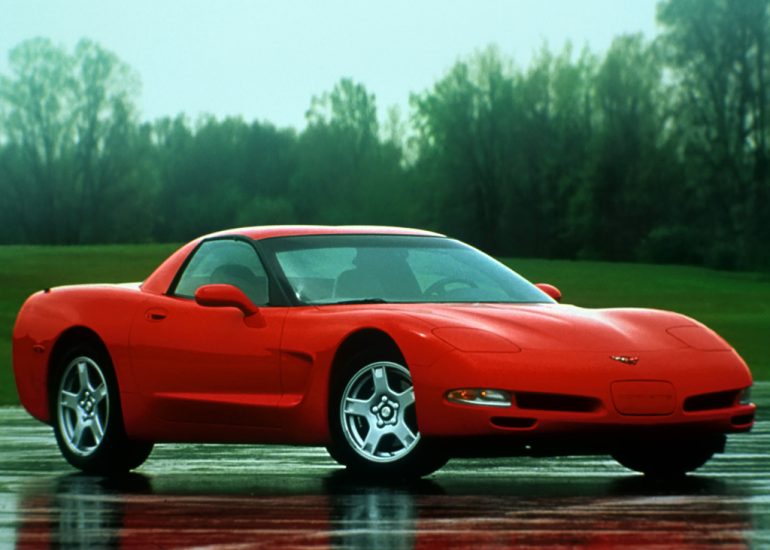 1999 Chevrolet Corvette Fixed Roof Coupe
 The 1999 Corvette featured a Heads-Up-Display (HUD) that allowed drivers to view speed (and other features) without taking their eyes off the road.
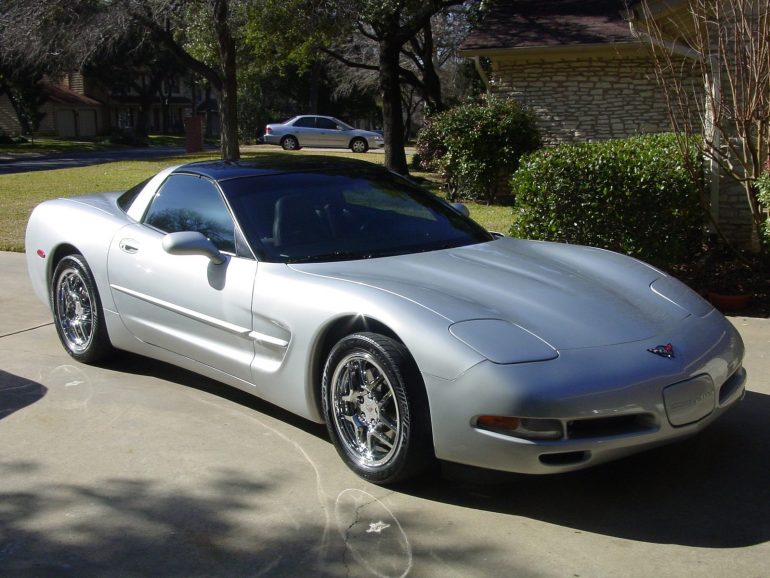
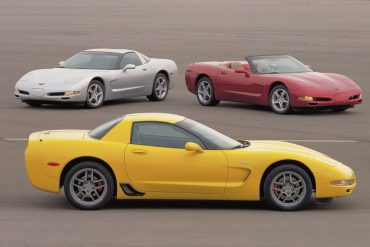
 The 1999 Corvette lineup included the Coupe, the Convertible and the Hard Top/Fixed Roof Coupe.
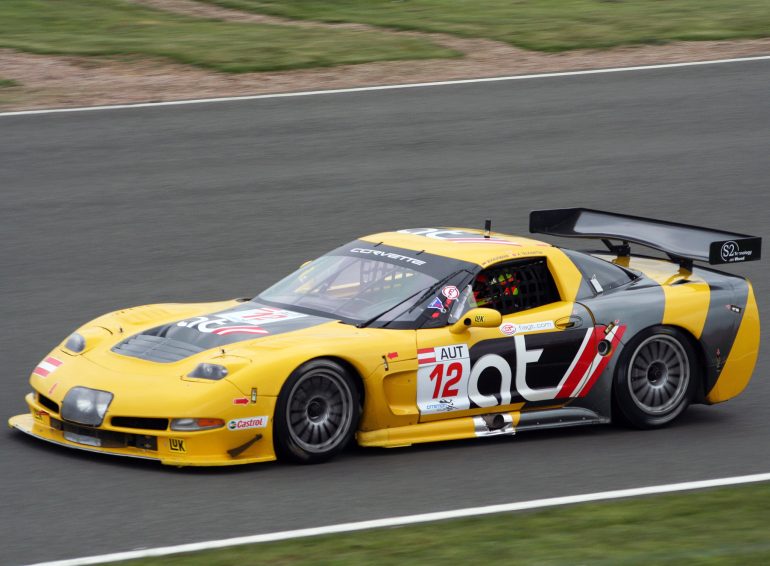 1999 Chevrolet Corvette C5-R
The hardtop was conceived as the cheap Corvette and sold as the serious one. The clinics that rejected the crank-window, cloth-seat prototype in the mid-1990s led Chevrolet to delete weight instead of equipment: no power seats, no Real Time Damping, no HUD, no telescoping column, no automatic, a four-speaker radio and five colors. Jim Campbell, the brand manager, said a typically optioned hardtop came in about $1,400 under a typically optioned coupe, and every one of the 4,031 left Bowling Green with the six-speed and the Z51 package that cost $1,175 on a coupe. The same body, with a 385-hp LS6 under it, became the 2001 Z06.
DID YOU KNOW
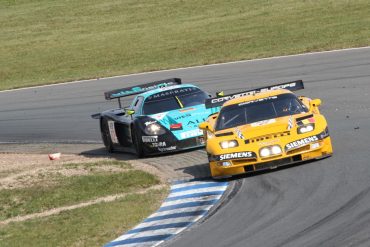
The hardtop and the C5-R have their own sections below. Also here: the Corvettes that paced the 1999 Rolex 24 at Daytona and the 24 Hours of Le Mans, and the Callaway C12.
Conceived as a stripped budget Corvette and sold as the performance one: the convertible body with a fixed composite roof bonded on, 12 percent stiffer than the coupe, 3,174 pounds, with the trunk, the six-speed, the 3.42:1 axle and the Z51 suspension standard, in Arctic White, Light Pewter, Nassau Blue, Black or Torch Red with black leather base seats, manual air and a four-speaker radio, at $38,777, $394 under the coupe. The option list was a power driver seat, Active Handling, the Bose package, the CD changer, a lighting package and moldings; 4,031 were built in 1999 and the body code 1 in the VIN’s sixth position is its only badge. Car and Driver ran one 0–60 in 4.8 and the quarter in 13.2 at 110 mph. Two years later the same shell, with the 385-hp LS6, became the Z06.
MORE: ALL 1999 HARDTOP POSTS

Chevrolet’s first factory racing program since the early 1960s. Built by Pratt & Miller around the production hydroformed frame and LS1 block, the C5-R ran a Katech 6.0-liter (later 7.0-liter) pushrod V-8 of about 600 hp under a carbon-fiber body four inches wider than the road car, sharing its windshield, taillights, marker lamps, power-steering pump, steering rack, alternator and water pump. Two cars debuted at the Rolex 24 at Daytona on January 30–31, 1999, Ron Fellows, Chris Kneifel and John Paul Jr. finishing third in GT2, and Corvette Racing went on to win Daytona overall in 2001 and its class at Le Mans in 2001, 2002 and 2004 before the C6.R replaced it.
MORE: THE C5-R STORY
Prices rose for 1999: the coupe to $39,171.00 and the convertible to $45,579.00, with the new hardtop slotted under both at $38,777.00, all three including the $580 destination charge (the figures without it, $38,591, $44,999 and $38,197, turn up in some references). The hardtop’s price bought the six-speed, the 3.42:1 axle and the Z51 suspension, $1,175 of options on a coupe, in exchange for a shorter list of everything else, and Chevrolet’s brand manager reckoned a typically equipped hardtop came in about $1,400 under a typically equipped coupe. 18,078 coupes, 11,161 convertibles and 4,031 hardtops were built.
The six-speed (MN6, now $825.00) went into 13,729 cars, 4,031 of them hardtops where it was the only transmission, so 9,698 coupe and convertible buyers chose it against 19,541 who took the automatic; 14,525 of the automatics had the $100.00 3.15:1 axle (G92). The Z51 package ($350.00) went on 10,244 cars including every hardtop, Real Time Damping (F45, $1,695.00) on 7,515 coupes and convertibles, and the Active Handling System (JL4, $500.00) on 20,174 cars, six in ten, in its first full year.
The new conveniences sold well: the Head-Up Display (UV6, $375.00) went into 19,034 coupes and convertibles, the power telescoping column (N37, $350.00) into 16,847 and Twilight Sentinel (T82, $60.00) into 18,895; Magnetic Red paint (86U, $500.00) was chosen for 2,733 cars and the Speedline magnesium wheels (N73, $3,000.00) for 2,029. Inside, sport seats (AQ9, $625.00) went into 24,573 cars, the power passenger seat (AG2, $305.00) into 27,089, the Memory Package (AAB, $150.00) into 23,829 and dual-zone air (CJ2, $365.00) into 25,672; the CD player (UN0, $100.00) into 20,442 and the changer (U1S, $600.00) into 16,997.
On the coupe the glass roof (CC3, $650.00) went on 5,235 cars and both panels (C2L, $950.00) on 6,307, leaving 6,516 with the body-color panel alone. The hardtop had its own short list: the power driver seat (AG1, $305.00, 3,716 cars), the Bose speaker package (UZ6, $820.00, 3,348), the lighting package (TR9, $95.00, 3,037), the CD changer (1,284), Active Handling (2,082) and body moldings; a few hundred late hardtops show up on the plant’s charts with fog lamps, dual-zone air or the HUD. Floor mats (B34, $25.00) went into 32,706 cars, fog lamps (T96, $69.00) 28,546, moldings (B84, $75.00) 19,348 and the plate frame (V49, $15.00) 17,742; California emissions (YF5, $170.00) 3,336.
A loaded F45 automatic coupe with the HUD, column and magnesium wheels listed at about $47,700; a hardtop with the power seat, Bose and Active Handling at $40,402.
MORE: PRICING, OPTIONS & COLORS / RPO CODES
| CODE | DESCRIPTION | QUANTITY | RETAIL PRICE |
|---|---|---|---|
| 1YY07 | Base Corvette Hatchback Coupe (345-hp LS1, 4L60-E automatic, body-color lift-off roof panel, leather seats, power driver seat, Delco cassette with Bose speakers, air conditioning, passive keyless entry, ABS and traction control, run-flat tires) | 18,078 | $39,171.00 |
| 1YY37 | Base Corvette Hardtop (fixed-roof convertible body with trunk; six-speed, 3.42 axle and Z51 standard; black leather manual seats, manual air, four-speaker radio; five colors) | 4,031 | $38,777.00 |
| 1YY67 | Base Corvette Convertible (as coupe, with manual top, glass rear window and trunk) | 11,161 | $45,579.00 |
| AR9 | Base Seats, leather (standard; the only hardtop seat) | 8,659 | no charge |
| FE1 | Base Suspension (coupe, convertible; standard) | 22,988 | no charge |
| 86U | Magnetic Red Metallic Tint Coat paint (coupe, convertible) | 2,733 | $500.00 |
| AAB | Memory Package (coupe, convertible; requires CJ2) | 23,829 | $150.00 |
| AG1 | Six-Way Power Driver Seat (hardtop; standard on coupe and convertible) | 3,716 | $305.00 |
| AG2 | Six-Way Power Passenger Seat (coupe, convertible) | 27,089 | $305.00 |
| AQ9 | Sport Seats, leather, with power bolsters and lumbar (coupe, convertible; requires AG2) | 24,573 | $625.00 |
| B34 | Front Floor Mats | 32,706 | $25.00 |
| B84 | Body Side Moldings | 19,348 | $75.00 |
| C2L | Dual Removable Roof Panels, body color and blue-tinted glass (coupe) | 6,307 | $950.00 |
| C60 | Manual Air Conditioning (standard; the hardtop system) | 7,560 | no charge |
| CC3 | Removable Roof Panel, blue-tinted glass (coupe) | 5,235 | $650.00 |
| CF7 | Removable Roof Panel, body color (coupe, standard) | 6,516 | no charge |
| CJ2 | Electronic Dual-Zone Air Conditioning (coupe, convertible) | 25,672 | $365.00 |
| D42 | Luggage Shade and Parcel Net (coupe) | 18,058 | $50.00 |
| F45 | Selective Real Time Damping (coupe, convertible; not with Z51) | 7,515 | $1,695.00 |
| G92 | Performance Axle Ratio, 3.15:1 (automatic only) | 14,525 | $100.00 |
| JL4 | Active Handling System | 20,174 | $500.00 |
| M30 | Four-Speed Automatic Transmission, 4L60-E (coupe, convertible; standard) | 19,541 | no charge |
| MN6 | Six-Speed Manual Transmission, Borg-Warner T56 (coupe, convertible; standard on hardtop, 4,031 of the total) | 13,729 | $825.00 |
| N37 | Power Telescoping Steering Column (coupe, convertible) | 16,847 | $350.00 |
| N73 | Magnesium Wheels, Speedline five-spoke (coupe, convertible) | 2,029 | $3,000.00 |
| T82 | Twilight Sentinel automatic headlamps (coupe, convertible) | 18,895 | $60.00 |
| T96 | Fog Lamps | 28,546 | $69.00 |
| TR9 | Lighting Package (hardtop) | 3,037 | $95.00 |
| U1S | Remote Compact 12-Disc CD Changer | 16,997 | $600.00 |
| UN0 | Delco AM/FM Stereo with CD (in place of cassette) | 20,442 | $100.00 |
| UV6 | Head-Up Display (coupe, convertible) | 19,034 | $375.00 |
| UZ6 | Bose Speaker Package (hardtop; standard on coupe and convertible) | 3,348 | $820.00 |
| V49 | Front License Plate Frame | 17,742 | $15.00 |
| YF5 | California Emissions | 3,336 | $170.00 |
| Z51 | Performance Handling Package (coupe, convertible; standard on hardtop, 4,025 of the total; not with F45) | 10,244 | $350.00 |
| CODE | EXTERIOR | COUPE | CONVERTIBLE | HARDTOP | TOTAL | INTERIOR |
|---|---|---|---|---|---|---|
| 70 | Torch Red | 4,382 | 2,734 | 1,245 | 8,361 | Black, Light Gray, Light Oak (hardtop: Black) |
| 41 | Black | 3,489 | 2,519 | 1,227 | 7,235 | Black, Light Gray, Light Oak, Firethorn Red (hardtop: Black) |
| 11 | Light Pewter Metallic | 3,325 | 1,799 | 1,040 | 6,164 | Black, Light Gray, Firethorn Red (hardtop: Black) |
| 13 | Sebring Silver Metallic | 2,321 | 1,189 | – | 3,510 | Black, Light Gray, Firethorn Red |
| 10 | Arctic White | 1,466 | 979 | 311 | 2,756 | Black, Light Gray, Light Oak, Firethorn Red (hardtop: Black) |
| 86 | Magnetic Red Metallic tint coat (new, $500.00) | 1,569 | 1,164 | – | 2,733 | Black, Light Gray, Light Oak |
| 28 | Navy Blue Metallic | 919 | 520 | – | 1,439 | Black, Light Gray, Light Oak |
| 23 | Nassau Blue Metallic | 587 | 245 | 202 | 1,034 | Black, Light Gray, Light Oak (hardtop: Black) |
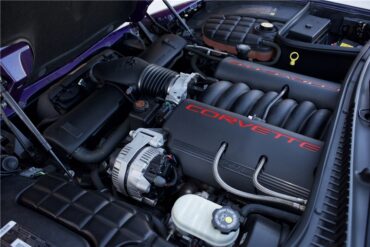
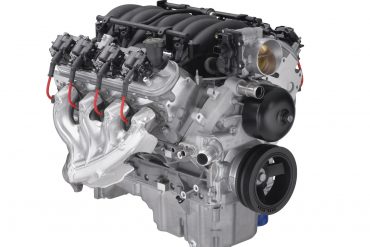
The LS1 (RPO LS1, VIN code G) kept its 345 hp at 5,600 rpm and 350 lb-ft at 4,400: 346 cubic inches from a 3.90-inch bore and 3.62-inch stroke, a deep-skirt cast-aluminum block with cast-in liners and six-bolt mains (castings 12559846 and 12550592 early in the year, then 12560621 and 12562174), new aluminum 12559853 heads, two valves per cylinder on hydraulic roller lifters, a composite intake, sequential injection, coil-near-plug ignition, electronic throttle control and 10.1:1 compression on premium fuel with a 6,000-rpm redline; engine suffixes were ZAA with the manual and ZAB with the automatic, all built in Romulus, Michigan.
The rear transaxle carried the 4L60-E automatic (3.06, 1.63, 1.00, 0.70) on a 2.73:1 axle or the $100 3.15:1 (5,016 and 14,525 cars), or the $825 Borg-Warner T56 six-speed (2.66, 1.78, 1.30, 1.00, 0.74, 0.50) with CAGS and a 3.42:1 axle, standard and only on the hardtop (13,691 cars on the 3.42). EPA figures were 17/25 mpg automatic and 18/28 manual.
Three bodies on one hydroformed frame: the coupe at 3,230 pounds with the six-speed (3,253 automatic) and 0.29 Cd, the convertible at 3,231 (3,254) and 0.34 with the top up, and the hardtop, the convertible body with a composite roof bonded on, at 3,174 pounds, 0.31 Cd and 12 percent stiffer than the coupe; cargo was 24.8 cubic feet in the coupe, 13.3 in the hardtop and 13.9 in the convertible top-up. Suspension was unchanged double wishbones on transverse composite springs with base FE1, Z51/FE3 (stiffer springs, bigger bars, large monotube shocks; standard on the hardtop) or F45 Real Time Damping on the other two bodies, with the magnetic variable-effort steering recalibrated against highway wander and the power telescoping column optional. Brakes were 12.8-inch vented front and 12.0-inch rear rotors with Bosch ABS and ASR, with Active Handling optional on all three bodies; wheels 17 x 8.5 and 18 x 9.5 inches in aluminum or Speedline magnesium on Goodyear Eagle F1 GS Extended Mobility P245/45ZR17 and P275/40ZR18 run-flats.
GM quoted 4.72 seconds to 60 mph (5.05 automatic), 13.36 at 109.4 mph, 172 mph, 0.93 g and 125 feet from 60 for every body. Motor Trend ran a hardtop 0–60 in 4.8, the quarter in 13.3 at 108.6, 116 feet from 60 and 0.90 g (September 1998) and timed one at 173.6 mph (July 1999); Road & Track got 5.3 and 13.6 at 107.3 (September 1998); Car and Driver’s hardtop ran 4.8 and 13.2 at 110 against a coupe’s 4.9 and 13.3 at 109, with top speeds of 169 and 171 mph; Corvette Quarterly claimed 4.7 and 175 mph.
MORE: FULL SPECIFICATIONS / ENGINE
| SPEC | 1999 CORVETTE |
|---|---|
| Engine, LS1 (RPO LS1, standard) | 346 ci (5.7 L) Generation III small-block V-8, VIN G: 3.90 x 3.62 in, deep-skirt cast-aluminum block (12559846 / 12550592 early, 12560621 / 12562174 later) with cast-in iron liners and six-bolt main caps, aluminum 12559853 heads, 2 valves per cylinder, hydraulic roller lifters, roller rockers, composite intake, coil-near-plug ignition, sequential injection, electronic throttle control, 10.1:1, premium fuel; 345 hp @ 5,600 rpm, 350 lb-ft @ 4,400 rpm; 6,000-rpm redline; suffix ZAA manual / ZAB automatic; built in Romulus, Michigan |
| Transmission | Rear-mounted transaxle via aluminum torque tube, limited-slip differential: 4L60-E four-speed automatic standard on coupe and convertible (RPO M30, 19,541 cars), ratios 3.06, 1.63, 1.00, 0.70; Borg-Warner T56 six-speed manual (RPO MN6, $825.00 on coupe and convertible, standard on the hardtop; 13,729 cars) with CAGS, ratios 2.66, 1.78, 1.30, 1.00, 0.74, 0.50 |
| Axle ratio | 2.73:1 automatic (5,016 cars), 3.15:1 with RPO G92 ($100.00; 14,525 cars); 3.42:1 manual (13,691 cars) |
| Bodies | Hatchback coupe with lift-off roof panel (24.8 cu ft cargo, Cd 0.29); convertible with manual top, glass rear window and trunk (13.9 cu ft top up, Cd 0.34); fixed-roof hardtop on the convertible body with bonded composite roof and trunk (13.3 cu ft, Cd 0.31), 12 percent stiffer than the coupe |
| Suspension | Double wishbones front and rear, forged/cast aluminum arms, transverse composite leaf springs, monotube shocks; FE1 base on coupe and convertible (22,988 cars), Z51/FE3 Performance Handling ($350.00 on coupe and convertible, standard on hardtop; 10,244 cars), F45 Selective Real Time Damping ($1,695.00, coupe and convertible; 7,515 cars) |
| Brakes, traction & stability control | Four-wheel vented discs, 12.8-in front and 12.0-in rear, Bosch ABS with ASR standard; Active Handling System (RPO JL4, $500.00; 20,174 cars) with competition mode |
| Steering | Rack and pinion, speed-sensitive magnetic variable-effort power assist, recalibrated for 1999; manual tilt, power telescoping column optional (RPO N37, $350.00, coupe and convertible) |
| Interior | Twin-cove cockpit, analog gauges; Head-Up Display optional (RPO UV6, $375.00, coupe and convertible; 19,034 cars); leather seats (sport seats AQ9 $625.00; hardtop AR9 base seats, manual, black only); Delco cassette with Bose speakers on coupe and convertible (hardtop four-speaker, Bose UZ6 $820.00), CD UN0 $100.00, changer U1S $600.00; next-generation dual airbags; manual air on hardtop, dual-zone CJ2 $365.00 on the others |
| Wheels & tires | Cast aluminum five-spoke 17 x 8.5 front, 18 x 9.5 rear; Speedline magnesium optional on coupe and convertible (RPO N73, $3,000.00, 2,029 cars); Goodyear Eagle F1 GS Extended Mobility P245/45ZR17 / P275/40ZR18 run-flats, tire-pressure monitor, no spare |
| Fuel tank | 19.1 gal, twin composite tanks |
| Wheelbase | 104.5 in |
| Overall length / width / height | 179.7 / 73.6 in; 47.8 in coupe, 47.7 convertible, 47.9 hardtop |
| Track, front / rear | 62.0 / 62.1 in |
| Curb weight | 3,230 lb coupe, 3,231 lb convertible (six-speed; 3,253 / 3,254 automatic); 3,174 lb hardtop |
| 0–60 mph | 4.72 sec manual, 5.05 automatic (GM); hardtop 4.8 (Motor Trend Sep 1998, Car and Driver), 5.3 (Road & Track Sep 1998), 4.7 (Corvette Quarterly); coupe 4.9 (Car and Driver) |
| Quarter mile | 13.36 sec @ 109.4 mph (GM); hardtop 13.3 @ 108.6 (Motor Trend), 13.2 @ 110 (Car and Driver), 13.6 @ 107.3 (Road & Track) |
| Top speed | 172 mph (GM); 173.6 mph hardtop (Motor Trend Jul 1999), 175 (Corvette Quarterly); 169 hardtop / 171 coupe (Car and Driver) |
| Braking / lateral acceleration | 125 ft from 60 mph, 0.93 g (GM); 116 ft and 0.90 g hardtop (Motor Trend), 0.91 g (Road & Track) |
| Fuel economy (EPA) | 17 / 25 mpg automatic; 18 / 28 mpg manual |
| Production | 33,270: 18,078 coupes, 11,161 convertibles, 4,031 hardtops; VIN sequence 100001–133283 |
| Assembly | Bowling Green, Kentucky; engines from Romulus, Michigan |
The 1999 VIN reads 1G1YY12G?X51xxxxx for a hardtop, 1G1YY22G?X51xxxxx for a coupe and 1G1YY32G?X51xxxxx for a convertible: 1 for the United States, G for General Motors, 1 for Chevrolet, Y for the Corvette car line, Y for the Corvette series, then the body in the sixth position, 1 for the new fixed-roof hardtop, 2 for the hatchback coupe, 3 for the convertible; 2 for active manual belts with driver and passenger airbags, G for the 5.7-liter LS1, a check digit in the ninth position, X for the 1999 model year and 5 for Bowling Green, Kentucky. All three bodies share one sequence from 100001 to 133283, 33,283 numbers for 33,270 production cars: this year the pilot and prototype cars were numbered within the series, which accounts for the thirteen extra numbers. A hardtop is the only 1999 the VIN itself identifies, by the 1 in the sixth position; the Z06 would inherit that body code in 2001 and add its own engine letter.
The engine pad carries the Romulus plant code, build date and suffix ZAA (six-speed) or ZAB (automatic), on 12559846 or 12550592 blocks early in the year and 12560621 or 12562174 later, all with the 12559853 heads that replaced the 806 castings. The VIN plate is on the left windshield pillar, repeated on the driver’s door certification label and the service parts identification label in the console, which lists the car’s RPOs: on a hardtop expect 1YY37, MM6, GU6, FE3/Z51 and AR9, with AG1, UZ6, TR9, JL4, U1S or B84 as the only additions; on a coupe or convertible the label settles claimed F45, Z51, JL4, UV6, N37, N73 and 86U. Paint codes are 10, 11, 13, 23, 28, 41, 70 and 86; interior trims 19I black (the only hardtop trim), 92I light gray, 67I light oak and 94I Firethorn Red; convertible tops 41T black, 67T light oak and 16T white.
MORE: VIN DECODER / PRODUCTION
| POSITION | MEANING |
|---|---|
| 1G1 (First through Third) | Country, maker, make: 1 = built in the USA, G = General Motors, 1 = Chevrolet |
| Y (Fourth) | Car line: Y = Corvette |
| Y (Fifth) | Series: Y = Corvette |
| 1, 2 or 3 (Sixth) | Body: 1 = fixed-roof hardtop (new for 1999); 2 = two-door hatchback coupe; 3 = two-door convertible |
| 2 (Seventh) | Restraint system: 2 = active manual belts with driver’s and passenger’s (next-generation) airbags |
| G (Eighth) | Engine: G = 346 ci (5.7 L) LS1, 345 hp; suffix ZAA manual, ZAB automatic |
| x (Ninth) | Check digit, calculated from the other sixteen characters |
| X (Tenth) | Model year: X = 1999 |
| 5 (Eleventh) | Assembly plant: 5 = Bowling Green, Kentucky |
| 100001–133283 (Twelfth through Seventeenth) | Production sequence number, one series for all three bodies: 33,283 numbers for 33,270 production cars (the pilot and prototype cars were numbered within the series this year) |
Eight colors: Torch Red (8,361), Black (7,235), Light Pewter (6,164), Sebring Silver (3,510), Arctic White (2,756), Magnetic Red (2,733, new, $500), Navy Blue (1,439) and Nassau Blue (1,034); hardtops in white, pewter, Nassau Blue, black and Torch Red only. Interiors in Black (20,892, the only hardtop trim), Light Oak (6,919), Light Gray (4,673) and Firethorn Red (748); convertible tops in Black (7,575), Light Oak (2,902) and White (672).
The 1999 market is three cars. The hardtop is the one with a following: the lightest and stiffest C5, six-speed and Z51 only, the body the Z06 was built on, and only 4,031 of them, so a clean one brings a few thousand dollars over a coupe of the same mileage and the Z06-style modifications many of them carry (LS6 intakes, Z06 wheels and brakes) help rather than hurt when they are done well. Convertibles sell for a little more than coupes, and the coupes sit with the 1998s and 2000s, priced by the six-speed, F45 or Z51, the HUD, the glass roof and mileage. The 1999 has a small edge on the 1998 as a driver: the recalibrated steering, the HUD and the telescoping column, and Active Handling on six cars in ten. Magnetic Red cars, the first extra-cost C5 color, and the 1,034 Nassau Blues are the ones that stand out at a show.
Classic.com results from October 2025 to October 2026. The convertible set the top price, a Mecum Fort Worth sale of an 18,000-mile automatic at $30,800 in October 2025, and a 3,000-mile automatic brought $29,700 at Mecum in September 2026. Low-mileage six-speeds: Bring a Trailer sold a 5,000-mile car for $24,000 in May, a 19,000-mile car for $23,250 in September and a 30,000-mile car for $24,000 in May, and a 38,000-mile modified six-speed for $25,251 in November 2025; Cars & Bids sold a 45,000-mile six-speed for $22,999 in June and a 49,000-mile car for $21,200 in March. A 138,000-mile hardtop sold for $21,000 on Bring a Trailer in October 2025, and a 15,000-mile automatic for $24,750 there in September 2026. Ordinary cars with 21,000 to 40,000 miles brought $13,900 to $19,000 (Mecum Indianapolis $16,500, Cars & Bids $17,300 and $18,000, GAA $17,000, Hagerty $19,000); 64,000- to 83,000-mile cars $12,250 to $18,000, and the high-mileage floor was $8,200 for 123,000 miles at Cars & Bids and $11,000 at Barrett-Jackson Palm Beach. No-sales were bid to $20,000 (33,000-mile six-speed, GAA), $18,000 (Cars & Bids), $15,000 (31,000-mile automatic, Mecum Kissimmee) and $9,000–$14,999 for others; dealers asked $13,950 to $28,212, with a hardtop at $26,578. Auction prices are hammer prices; add the buyer’s premium when comparing with asking prices.
Verifying a hardtop: a 1 in the sixth VIN position, 1YY37 on the service parts label with MM6, GU6 and FE3, the bonded roof with no panel seams, the trunk, black AR9 seats (power on the driver’s side only if AG1 is on the label) and one of the five hardtop colors; a Z06 look-alike with a 1 in the VIN and a G in the eighth position is a 1999 or 2000 hardtop, not a Z06 (which carries an S). On any 1999, the console label settles the six-speed, F45, Z51, JL4, UV6, N37, N73 and the $500 paint, and the HUD is easy to check from the driver’s seat. Build sheets and window stickers survive on many cars and are worth asking for.
The inspection list is the C5’s, with the 1997–98 first-year items behind it. The electronic column lock (recall 04V060) can lock the steering with the key out; most cars carry a bypass, so confirm which. Check the battery tray and the PCM beneath it for acid damage, the harmonic balancer for wobble, the rocker arms for needle-bearing noise and metal on the drain plug, and the front rotors for warp. ABS, traction and Active Handling lights point to wheel-speed sensors, the steering-wheel position sensor or the EBCM, and the HUD can dim or lose segments. Fuel senders read empty on high-sulfur fuel, window regulators and headlight bezel plugs fail, the roof panel and hardtop roof creak until their seals are greased, and the seats rock and split at the bolsters. On a hardtop, check that the Z51 Bilsteins have not been swapped for base shocks and that the car has not spent its life at autocrosses without a clutch; on a convertible, the top’s rear seal and the trunk drains. A sorted 1999 hardtop is the best-driving C5 before the Z06 and, at today’s prices, the best value in the generation.
MORE: THE MARKET
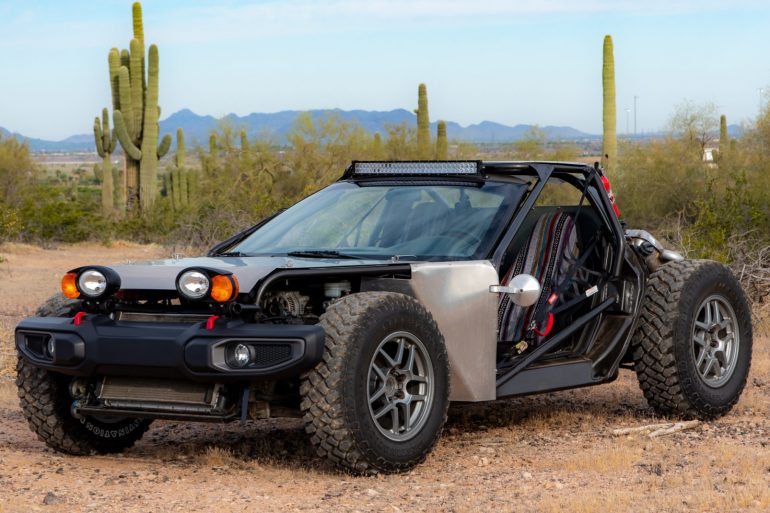
Chevrolet built 33,270 Corvettes for 1999 at Bowling Green, Kentucky, the most since 1986: 18,078 hatchback coupes, 11,161 convertibles and 4,031 of the new fixed-roof hardtops. 13,729 cars had the six-speed (every hardtop and 9,698 coupes and convertibles), 19,541 the automatic, 20,174 Active Handling, 19,034 the new Head-Up Display, 16,847 the telescoping column, 10,244 the Z51 package (including all the hardtops), 7,515 Real Time Damping, 2,733 Magnetic Red paint and 2,029 magnesium wheels.
Between October 2025 and October 2026, Classic.com tracked 1999 Corvettes selling from $8,200 (123,000 miles) to $30,800 (an 18,000-mile convertible at Mecum), with most clean coupes between $13,900 and $25,000, low-mileage six-speeds at $23,000 to $24,000, a 3,000-mile automatic at $29,700 and hardtops at $21,000 to $24,750. Dealers asked $14,000 to $28,000. The hardtop, the six-speed, mileage and documentation set the price.
The LS1, unchanged in output: 346 cubic inches (5.7 liters) of all-aluminum Generation III small-block, 3.90 x 3.62-inch bore and stroke, 10.1:1, sequential injection, coil-near-plug ignition and electronic throttle, 345 hp at 5,600 rpm and 350 lb-ft at 4,400 with a 6,000-rpm redline, built in Romulus, Michigan, now with 12559853 heads and new block castings. It drove the rear-mounted 4L60-E automatic or the $825 Borg-Warner T56 six-speed, which was the only transmission in the hardtop.
Eight: Torch Red (8,361), Black (7,235), Light Pewter (6,164), Sebring Silver (3,510), Arctic White (2,756), Magnetic Red Metallic (2,733, new, a $500 tint-coat), Navy Blue (1,439) and Nassau Blue (1,034). Hardtops came only in Arctic White, Light Pewter, Nassau Blue, Black and Torch Red with black leather; coupes and convertibles had Black, Light Gray, Light Oak or Firethorn Red interiors, and convertible tops were Black, Light Oak or White.
$39,171 for the coupe, $45,579 for the convertible and $38,777 for the hardtop, each including the $580 destination charge. The six-speed was $825 (standard on the hardtop), Real Time Damping $1,695, magnesium wheels $3,000, the dual-roof package $950, the glass roof $650, sport seats $625, the CD changer $600, Active Handling $500, Magnetic Red paint $500, the Head-Up Display $375, dual-zone air $365, the telescoping column $350, the Z51 package $350, a power seat $305 and Twilight Sentinel $60; on the hardtop the Bose package was $820 and the lighting package $95.
The third C5 body, announced September 17, 1998 and sold only in 1999 and 2000 before the Z06 took over the shell: a convertible body with a fixed composite roof bonded on, 12 percent stiffer than the coupe and 56 pounds lighter than a six-speed coupe at 3,174 pounds, with the convertible’s trunk. It came only with the six-speed, the 3.42:1 axle and the Z51 suspension, in five colors with black leather base seats, manual air and a four-speaker radio, at $38,777, $394 under the coupe; the options were a power driver seat, Active Handling, the Bose package, the CD changer, a lighting package and moldings. 4,031 were built in 1999, and the VIN carries a 1 in the sixth position.
The hardtop joined the coupe and convertible; the Head-Up Display ($375), power telescoping steering column ($350), Twilight Sentinel headlamps ($60) and $500 Magnetic Red paint were offered on the coupe and convertible; the steering was recalibrated to cure highway wander, next-generation lower-force airbags were fitted, the LS1 moved to 853 heads and new block castings, the six-speed went to $825 and Active Handling, a mid-1998 option, went into six cars in ten. Chevrolet also returned to factory racing with the Pratt & Miller C5-R, which debuted at the Rolex 24 at Daytona in January 1999.
1999 Corvette Advertisements / 1999 Corvette Colors / 1999 Corvette Common Issues / 1999 Corvette Engine / 1999 Corvette Factory Options / 1999 Corvette For Sale / 1999 Corvette FRC / 1999 Corvette Maintenance / 1999 Corvette Mods / 1999 Corvette Owners Manual / 1999 Corvette Performance / 1999 Corvette Posters / 1999 Corvette Pricing / 1999 Corvette Production / 1999 Corvette Recalls / 1999 Corvette Research / 1999 Corvette RPO Codes / 1999 Corvette Sales Brochures / 1999 Corvette Special Model Overview / 1999 Corvette Specifications / 1999 Corvette Technical Research / 1999 Corvette Service Bulletins / 1999 Corvette VIN Numbers