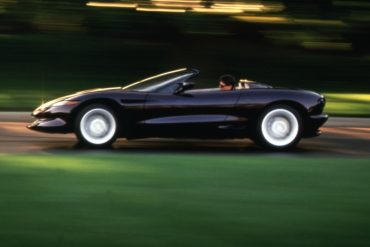
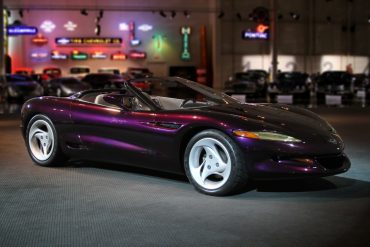
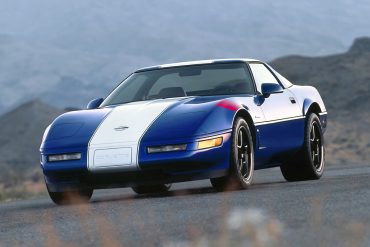
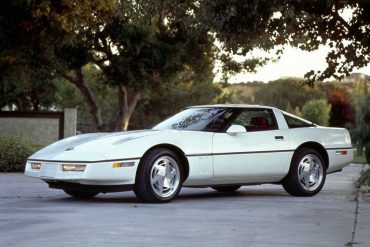
The 1992 Stingray III / California Stingray Concept was developed by John Schinella (and team) at GM's Advance Concept Center in Los Angeles. The 1992 concept is a world away from the C4. But the dominant motifs of a smooth rounded Corvette did come to production on the C5. This prototype looks distinctly upmarket, the rear shares a shocking similarity to the Jaguar XK8, without a flat surface in sight.
Quick Nav: Story · Specials · ZR-1 · Price & Options · VIN · Specs · Technical · Pics & Videos · The Market · All · FAQs
The Basics
Model & Gen: 1992 Corvette (C4)
Body Type: Two-door hatchback coupe with lift-off roof panel and two-door convertible; ZR-1 coupe (RPO ZR1)
VIN: 1G1YY23P6N5100001 – 1G1YY23P6N5119977 (LT1 coupes 1G1YY23P…, convertibles 1G1YY33P…); ZR–1: 1G1YZ23J…N5800001 – 800502
Original Price: $33,635.00 coupe; $40,145.00 convertible; ZR-1 $65,318.00 ($31,683.00 package)
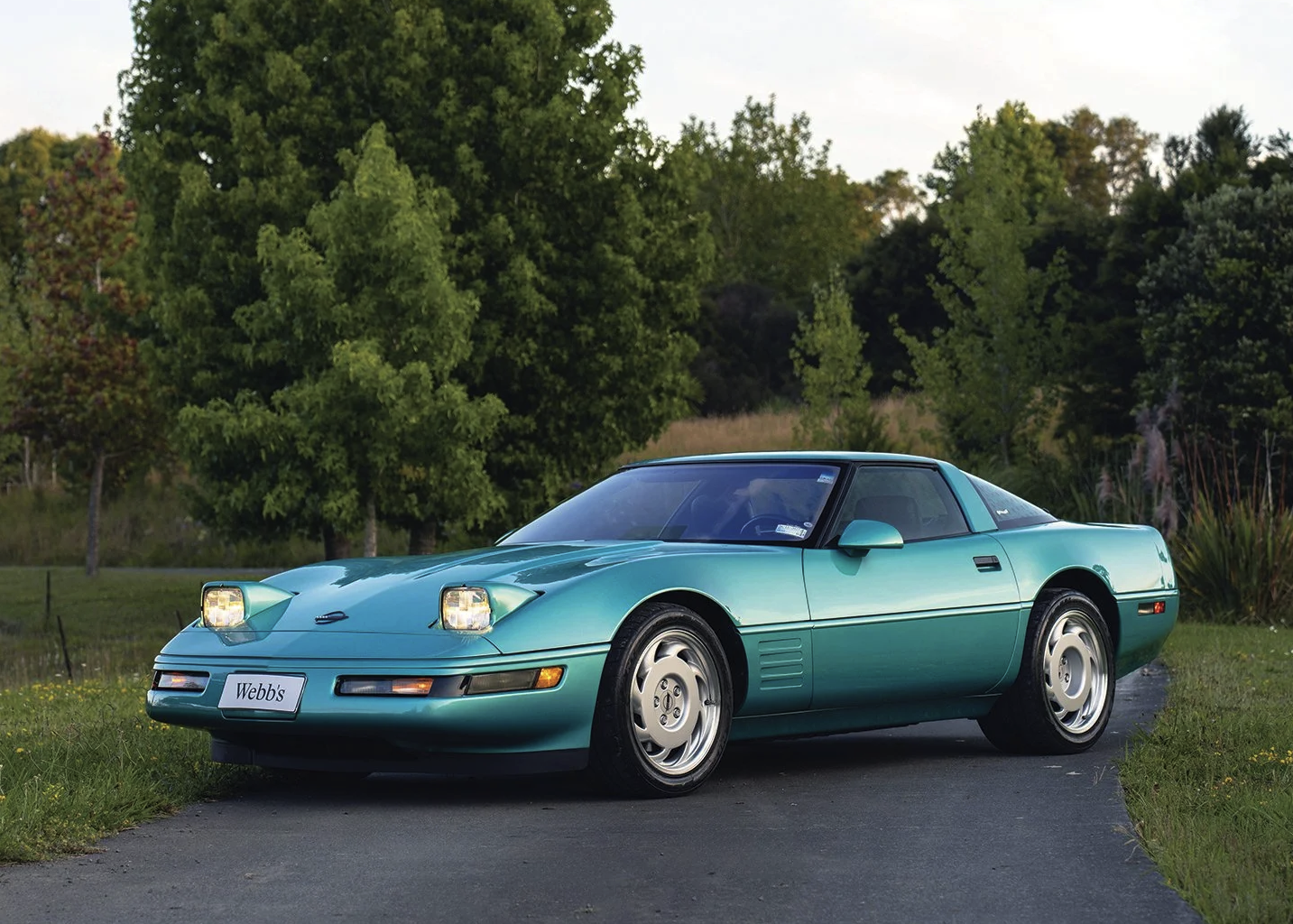
Colors: 9 solid colors, three of them new (Bright Aqua, Polo Green II, Black Rose); white and light gray leather new inside
Engine: New 350 ci LT1 small-block, 300 hp, with reverse-flow cooling and Mobil 1 factory fill; or the ZR-1’s 5.7 L LT5 32-valve V-8, 375 hp
Transmission: 4L60 four-speed overdrive automatic standard on LT1 cars; ZF six-speed manual (MN6) at no cost, 5,487 cars, standard on the ZR-1
Units Produced: 20,479 (14,604 coupes, of which 502 ZR-1s, + 5,875 convertibles); the 1,000,000th Corvette built July 2, 1992
The Overview
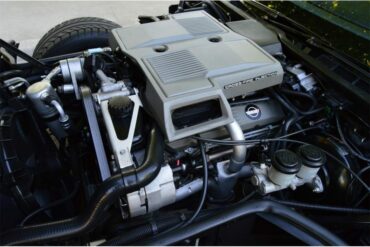
The 1992 Corvette is the LT1 year. Chevrolet replaced the L98 with a new 5.7-liter small-block that kept the 4.00 x 3.48-inch bore and stroke, the pushrods and the two valves per cylinder but changed nearly everything else: reverse-flow cooling that sent coolant to the heads first so the chambers ran cooler and the bores hotter, allowing 10.5:1 compression on premium fuel; new free-flowing aluminum heads and a new camshaft; a crank-driven Optispark distributor under the water pump for computer-controlled timing; sequential multiport injection with Multec injectors; cast-iron exhaust manifolds into a low-restriction system with two catalytic converters and two oxygen sensors; and Mobil 1 synthetic oil as the factory fill, which let Chevrolet drop the oil cooler from the options list. It was rated at 300 hp at 5,000 rpm and 330 lb-ft at 4,000, 55 more horsepower than the base L98, with a 5,850-rpm fuel cut, and Car and Driver’s six-speed coupe ran 0–60 in 5.0 seconds, the quarter in 13.6 at 104 mph and 157 mph flat out while returning 17/25 mpg. Every 1992 also got Acceleration Slip Regulation, Bosch traction control that used the ABS sensors to brake a spinning rear wheel and close the throttle, with a dash switch to turn it off, and new Goodyear Eagle GS-C asymmetric tires to go with it.
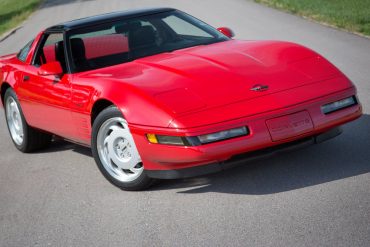
The visible changes were few: rectangular twin exhaust outlets on every car, ZR-1 badges on the front fenders of the ZR-1, the digital speedometer moved above the fuel gauge, all-black instrument faces and buttons in place of the 1990–91 gray-and-black, better door and tunnel insulation, improved weatherstrips, white and light gray leather and a light beige soft top on the color chart, and both power seats moved from standard to a $305 option (the driver’s came back as standard in 1993). Three new colors arrived, Bright Aqua, Polo Green II and Black Rose, and 9,186 of the 20,479 cars went out with black interiors. The ZR-1 was unchanged at 375 hp and now $65,318 before options, and the LT1 did to it what the critics had predicted: half a second slower to 60 and twenty miles an hour slower flat out for half the money, so only 502 were sold. The Z07 package ($2,045) went into 738 coupes, FX3 into 5,840 cars including the ZR-1s and Z07s, the six-speed into 5,487.
Two other things happened in 1992. In January Chevrolet showed the Sting Ray III at Detroit, John Schinella’s purple convertible from GM’s Advanced Concepts Center in California, with exposed headlights, a real trunk and a rear-mounted transmission, all of which the C5 would adopt, and a $20,000–$25,000 target price it never reached; John Cafaro’s Chevy 3 studio would shape the production C5 instead. And on July 2, 1992, with Zora Arkus-Duntov watching, the one-millionth Corvette, a white convertible with a red interior like the first 1953, came off the Bowling Green line and went into the National Corvette Museum across the road, where the 2014 sinkhole swallowed it and GM restored it. Production fell to 20,479, the fewest since 1962, as GM debated the car’s future and the C5 slipped to 1997. Today the 1992 is the first of the LT1 C4s and the best value among them: all the 1990–91 refinements with 300 hp and traction control, priced only a little above an L98 car, with the 502 ZR-1s the scarcest LT5 year after 1995 and the Callaway SuperNatural cars in a market of their own.
The 1992 Corvette Story
Late in 1991, it was decided by General Motors that an all-new generation of Corvette would have to be put on hold; it would not arrive until 1997. While the next generation of Corvette was originally anticipated to arrive in 1995, poor sales prevented General Motors from expending the budgets necessary to develop a new model. Despite this economic downturn, GM did unveil a new concept car in January, 1992.
Known as the Sting Ray III, the car was introduced to the world at the 1992 North American International Auto Show. The car’s origins reach as far back as 1989, when Chevy 3 studios had begun developing the first treatments of a possible next generation C5 Corvette concept. Although Chevy 3’s primary focus during that time was the development of the all-new F-body Camaro, John Cafaro, a designer with Chevy 3, felt that he should be given the opportunity to champion the new design. Charles Jordan, GM’s design chief during that time, completely disagreed, stating early on that he had not been impressed with Chevy 3’s C5 proposals.
After directing an extensive series of changes to the new Camaro, Jordan informed Cafaro (and the Chevy 3 team) that they needed to improve upon their initial effort or else he would find someone that could. Shortly thereafter, Jordan invited Advanced Concepts Center (ACC) in Newbury Park, California, and more directly John Schinella, to champion the design of the new C5 Corvette.
The car featured both a functional trunk and exposed headlights – both features that had been absent from regular production Corvettes since 1962. Interestingly, the purple car would, despite the mixed reactions it initially received from critics, serve as a guidepost for things to come on the eventual C5 Corvette.
In the spring of 1990, Schinella’s prototype made its first appearance. Painted in a black cherry paint, this concept convertible, nicknamed “the purple car”, was both sweet and sassy.
The functional trunk feature would reappear on the 1998 C5 convertible and the 1999 hardtop. The exposed headlights would be reintroduced a few years later with the introduction of the C6 Corvette in 2005. Even the transmission, which was mounted in the rear of this prototype, would find its way into future generations of the Chevy Corvette.
Did you know? The Corvette Americana Hall of Fame and Americana Museum, created by Dr. Allen Schery, was opened on July 31, 1992, in Cooperstown, New York. The museum included a unique display of 35 Corvettes. Schery's purpose behind opening the Hall of Fame was to show how the Corvette fit in the American culture and the exhibits included enough Americana to entertain men, women, children, Corvetters and non-Corvetters alike. The exhibits included celebrity collections from James dean, Elvis, the Beatles, Madonna, Marilyn Monroe and Bruce Springsteen. It also featured an Indy Room which featured several pace cars which had been driven at various Indianapolis 500 races.
While there were many within GM, and most especially within Chevy 3’s team of designers, that did not care for the purple car, which had been dubbed “Sting Ray III,” it was a huge hit with the public when it was unveiled in Detroit. Most people loved its fresh face, but even more loved the prospect of what the Sting Ray III represented financially. Where it had appeared that GM’s focus was on building prohibitively expensive Corvettes like the ZR-1, early estimates claimed that the Sting Ray III would sell in the $20,000 to $25,000 range, making the car far more affordable to consumers around the globe.
Unfortunately, this never came to fruition and the Sting Ray III disappeared into the annals of history like many prototypes before it. Interestingly though, in the year that would follow the Sting Ray III, it would ultimately be John Cafaro who would most directly impact the final design of the production C5 Corvette.
Just as GM had showcased the Sting Ray III as one of their concept cars at the 1992 Detroit Auto Show, so too did they showcase a new powertrain for the 1992 Corvette. In an effort to strike a happy medium between the moderately aggressive L98 and the incredibly powerful LT5 (found in every ZR-1 Corvette) Chevrolet decided to roll out a standard pushrod small-block engine that would increase horsepower in the Corvette for the 1992 model year. And increase horsepower it did. In all, the new LT1 small-block V-8 produced a significant boost in power – 55 horsepower over the base L98, to be exact.
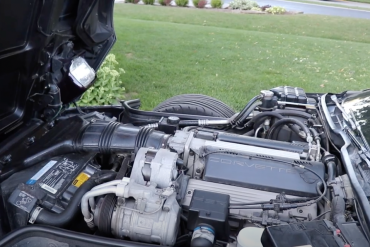
Now rated at a hearty 300 horsepower (at 5,000 rpm), with 330 lb-ft of torque (at 4,000 rpm), the LT1’s improved performance was the result of a number of improvements and refinements to the existing 5.7-liter V-8. Amongst these improvements was the introduction of computer-controlled engine timing, a new low-restriction exhaust system that utilized two catalytic converters and oxygen sensors (one for each cylinder bank), a new camshaft profile, a higher compression ratio (10.5:1), free-flow cylinder heads, and a revised multiport fuel-injection system. Cast iron exhaust manifolds were also introduced, replacing the previously used stainless-steel ones. This, along with other minor modifications, resulted in the LT1 weighing about 20 pounds more than its predecessor. To its credit, however, this engine was capable of providing impressive performance numbers even while operating on low octane gasoline.
The LT1 was also the first Chevrolet production engine to use “reverse-flow cooling”, a process in which the engine routed coolant directly to the cylinder heads, rather than sending through the engine block first.
The primary purpose of this revised cooling process was to allow higher bore temperatures and reduced ring friction, while also providing better cooling at key points. Additionally, General Motors introduced Mobil 1 synthetic oil as the factory fill for all LT1 (and LT5) engines. The concept of using synthetic oils in place of conventional motor oils had been pioneered by European automotive manufacturers (including Porsche), and it seemed only logical that as the Corvette’s performance factors continued to evolve, it should follow in the wake of some of the world’s greatest supercars. As an added benefit, the introduction of synthetic oil eliminated the need for an engine-oil cooler. For the 1992 model year, an engine oil cooler was no longer even offered as an option.
Beyond the engine, the 1992 Corvettes benefited from a new standard traction-control system called Acceleration Slip Regulation which was developed in conjunction with Germany’s Bosch company. It used the ABS sensors to detect rear-wheel slip and apply the brakes to the affected wheels and/or throttle back power to maintain traction. In some instances, it would even cause the brake pedal to push back against the driver’s foot, thereby letting them know that the system was engaged. During wet and slippery conditions, the ASR was a significant safety feature which allowed the Corvette to be driven notably faster (in less than ideal driving conditions) although it would also result in a significant increase in rear brake pad wear (due specifically to increased braking control). Whenever a driver wanted to take their Corvette to the track, a dashboard switch could be activated to disable the system.
Also new for 1992 was the addition of standard new directional/asymmetric-tread Goodyear GS-C tires. Their introduction was intended to work in conjunction with the Acceleration Slip Regulation system to regulate road slip and help the LT1 Corvette hug the road during even the most aggressive driving conditions.
While mechanically the 1992 Corvette was a major improvement over its predecessors, there were virtually no physical changes between it and any of its other C4 predecessors.
The ZR-1 Corvette received additional badges on its front fenders, and all Corvettes (base coupe, convertible and ZR-1 variants) received twin exhaust outlets that were rectangular in shape. For 1992, General Motors made the decision to reduce the formerly standard six-way power passenger seat to an extra-cost option. The decision was short-lived; it returned to the standard list in 1993.
The interior was also devoid of any real physical changes, although a number of subtle improvements were made. For 1992, the digital speedometer was relocated above the fuel gauge.
Additionally, the instrument face plates and buttons were changed from 1990 - 1991’s grey-black combination to an all-black color scheme. Other subtle, but significant, changes were made as well. An improvement was made to the weather sealing with the introduction of improved weatherstrip seals.
The introduction of improved insulation to the inside of the doors and the transmission tunnel cut down on road noise. Lastly, the power-delay feature (introduced in 1991 to let the radio and windows operate after the ignition was turned off) was modified so that the passenger door also cut power.
While there had been little doubt that the LT1 would be well received by the automotive critics, it did come as a surprise to Chevrolet that automotive reviewers would also declare that the LT1 and its 300 horsepower made the ZR-1, which offered an additional 75 horsepower for nearly double the price of an LT1 coupe, somewhat irrelevant.
The numbers spoke for themselves – there was only a half second difference (4.7 seconds versus 5.1 seconds) in the 0-60 times between the ZR-1 and the LT1 Corvettes. While the ZR-1 did offer a higher top speed over the standard coupe (179 miles per hour versus 161 miles per hour), few consumers could justify spending an extra $31,683 for a top speed few (if any) would ever reach. As a result, only 502 ZR-1 Corvettes would be sold in 1992.
Production Volumes
Falling sales numbers weren’t isolated to the ZR-1 Corvette alone. In all, General Motors sold a mere 20,479 Corvettes during the course of its 1992 model year, which resulted in the lowest sales output since 1962.
1-millionth Corvette
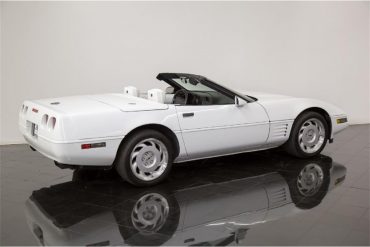
During the course of the 1992 production run, the 1-millionth Corvette rolled off the Bowling Green, Kentucky assembly line. This special Corvette convertible received individually stitched headrests that commemorated this milestone.
To celebrate the milestone, Zora Arkus-Duntov and other Chevrolet officials gave a thumbs-up to the 1-millionth Corvette as it was built on July 2, 1992, a white convertible with a red interior like the very first 1953 Corvette. It went to the National Corvette Museum, which opened across the road from the plant two years later, and has covered almost no miles since; it was one of the eight cars swallowed by the museum’s sinkhole in February 2014 and was restored by General Motors.

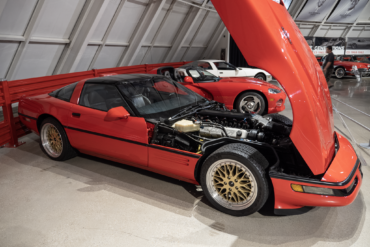
Cutaway View of the 1992 LT-1 Engine. (Image courtesy of GM Media.)
1,000,000th Corvette
Photo: corvettestory.com
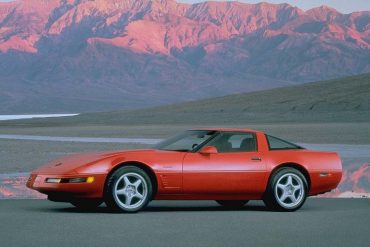
The 1992 ZR-1 Corvette received additional badges on it's front fenders.
The 1992 Corvette ZR1 Interior. (Note the all back face plates and buttons on the dashboard - they were one of the few cosmetic changes made to the 1992 Corvette.)
The Stingray IIIThe one-millionth Corvette was built on July 2, 1992, a white convertible with a red interior to match the first 1953, and driven straight into storage for the National Corvette Museum, which opened across the road two years later. In February 2014 the museum’s floor collapsed into a sinkhole and took the car down with it; General Motors restored it, and it is back on display with the pen and signature marks its builders left on it.
DID YOU KNOW
1992 Corvette ZR-1
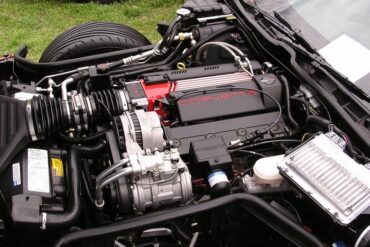
The third ZR-1 and the second-scarcest: unchanged at 375 hp with the LT5, the ZF six-speed, FX3, 13-inch brakes and 11-inch rear wheels under wider quarters, with new fender badges, a solar-control windshield and a price of $65,318. The new 300-hp LT1 in the standard car was half a second slower to 60 and twenty miles an hour slower flat out for half the money, and only 502 buyers chose the ZR-1. Today it is priced with the 375-hp 1990–91 cars rather than the 405-hp 1993–95s, mileage deciding: in the 2025–26 season 4,000-mile cars brought $40,500 and $78,500, a 79-mile car $66,000 and 40,000-mile cars $31,750–$33,000.
MORE: ALL 1992 ZR-1 POSTS
Price & Options
Core Features & Factory Options
The 1992 coupe listed at $33,635.00 and the convertible at $40,145.00, up $1,180 and $1,375, with the 300-hp LT1, the 4L60 automatic, ASR traction control, the airbag, ABS, VATS, 17-inch saw-blade wheels on Goodyear GS-C tires, air conditioning and power windows standard; 14,102 LT1 coupes and 5,875 convertibles were built. The ZR-1 package (RPO ZR1) stayed at $31,683.00, making the car $65,318 before options, and found only 502 buyers against the 300-hp standard car.
The Z07 Adjustable Suspension Package ($2,045.00), now with either transmission, went into 738 coupes and FX3 ($1,695.00) into 5,840 cars in all, so 4,600 ordinary coupes had it; the ZF six-speed (RPO MN6) was free and went into 5,487 cars, 4,985 of them LT1s; the 3.07:1 performance axle (G92, up to $50.00) into 2,283 automatics; California emissions (NN5, $100.00) onto 3,092.
The engine oil cooler was gone from the list, made unnecessary by the LT1’s synthetic factory fill.
Inside, both power seats became $305.00 options this one year: the driver’s (RPO AC3) went into 19,378 cars and the passenger’s (AC1) into 16,179. Leather came four ways: base seats in leather (AR9, $475.00, 10,565 cars) or new white leather (AR9, $555.00, 752), and sport seats in leather (AQ9, $1,100.00, 7,973) or white leather (AQ9, $1,180.00, 709), leaving 480 cars in black cloth; 9,186 cars had black interiors.
The Bose CD system (U1F, $1,219.00) went into 15,199 cars, the cassette Bose (UU8, $823.00) into 3,241, electronic air conditioning (C68, $205.00) into 18,460 and the tire-pressure warning (UJ6, $325.00) into 3,416. Coupe roof panels: blue-tinted glass (24S, $650.00) on 6,424, bronze (64S, $650.00) on 3,005, both panels (C2L, $950.00) on 3,739. Convertibles: the hardtop (CC2, $1,995.00) on 915, the luggage rack (V56, $140.00) on 845.
A typical LT1 coupe with leather, both power seats, the CD, electronic air and a tinted roof came to about $37,700, a hardtop convertible about $45,300, a Z07 six-speed coupe about $39,900 and a ZR-1 with a tinted roof panel about $66,000. The published color totals add up to 20,479 exactly.
MORE: PRICING, OPTIONS & COLORS / RPO CODES
| CODE | DESCRIPTION | QUANTITY | RETAIL PRICE |
|---|---|---|---|
| 1YY07 | Base Corvette Hatchback Coupe (300-hp LT1, 4L60 automatic, ASR traction control, driver airbag, ABS, VATS, 17-inch wheels on GS-C tires, cloth seats, lift-off roof panel, air conditioning, power windows) | 14,604 | $33,635.00 |
| 1YY67 | Base Corvette Convertible (as coupe, with manual soft top and reinforced structure) | 5,875 | $40,145.00 |
| AR9 | Base Seats, leather | 10,565 | $475.00 |
| AR9 | Base Seats, white leather (new) | 752 | $555.00 |
| 24S | Removable Transparent Roof Panel, blue tint (coupe) | 6,424 | $650.00 |
| 64S | Removable Transparent Roof Panel, bronze tint (coupe) | 3,005 | $650.00 |
| AC1 | Six-Way Power Passenger Seat (now optional; included with ZR1) | 16,179 | $305.00 |
| AC3 | Six-Way Power Driver Seat (now optional; included with ZR1) | 19,378 | $305.00 |
| AQ9 | Sport Seats, leather (included with ZR1) | 7,973 | $1,100.00 |
| AQ9 | Sport Seats, white leather (new) | 709 | $1,180.00 |
| C2L | Dual Removable Roof Panels, body-color and tinted (coupe) | 3,739 | $950.00 |
| C68 | Electronic Air Conditioning Control (included with ZR1) | 18,460 | $205.00 |
| CC2 | Removable Hardtop (convertible) | 915 | $1,995.00 |
| FX3 | Selective Ride and Handling, electronic (any coupe; included with ZR1 and Z07) | 5,840 | $1,695.00 |
| G92 | Performance Axle Ratio, 3.07:1 (automatic cars) | 2,283 | $50.00 |
| MN6 | ZF Six-Speed Manual Transmission with CAGS (standard on ZR1) | 5,487 | no charge |
| NN5 | California Emission Requirements | 3,092 | $100.00 |
| U1F | Delco-Bose AM-FM Stereo with Compact Disc, 200 watts (included with ZR1) | 15,199 | $1,219.00 |
| UJ6 | Low Tire Pressure Warning Indicator (included with ZR1) | 3,416 | $325.00 |
| UU8 | Delco-Bose AM-FM Stereo with Cassette, 200 watts | 3,241 | $823.00 |
| V56 | Luggage Rack (convertible) | 845 | $140.00 |
| Z07 | Adjustable Suspension Package (coupe, either transmission: heavy-duty springs, bushings and stabilizer bars, 13.0/12.0-inch rotors, heavy-duty cooling, plus FX3) | 738 | $2,045.00 |
| ZR1 | Special Performance Package (coupe: 375-hp LT5, ZF six-speed, FX3, Z51-type suspension, 13-inch front brakes, 3-inch-wider rear quarters, roof-mounted stop lamp, new fender badges, 17 x 11-inch rear wheels, power leather sport seats, Bose CD, low-tire-pressure warning, solar-control windshield) | 502 | $31,683.00 |
| CODE | EXTERIOR | TOTAL | SOFT TOP | INTERIOR |
|---|---|---|---|---|
| 81 | Bright Red | 4,466 | Black, Light Beige, White | Black, Light Beige, Light Gray, Red, White |
| 10 | White | 4,101 | Black, Light Beige, White, Blue | Black, Light Beige, Light Gray, Red, White |
| 41 | Black | 3,209 | Black, Light Beige, White | Black, Light Beige, Light Gray, Red, White |
| 45 | Polo Green II Metallic (new) | 1,995 | Black, Light Beige, White | Black, Light Beige, White |
| 43 | Bright Aqua Metallic (new) | 1,953 | Black, Light Beige, White | Black, Light Beige, Light Gray, White |
| 73 | Black Rose Metallic (new) | 1,886 | Black, Light Beige, White | Black, Light Beige, Light Gray, White |
| 75 | Dark Red Metallic | 1,148 | Black, Light Beige, White | Black, Light Beige, Light Gray, White |
| 80 | Quasar Blue Metallic | 1,043 | Black, Light Beige, White | Black, Light Beige, Light Gray, White |
| 35 | Yellow | 678 | White | Black, Light Beige, Light Gray, White |
Specifications & Performance
Engine & Transmission
The LT1 (RPO LT1, VIN code P) was a new Generation II small-block: 350 cubic inches from the familiar 4.00 x 3.48 inches, cast-iron block with a new water-pump and cooling layout, aluminum heads (casting 10128374) with revised ports and chambers, 10.5:1 compression, a new camshaft, roller lifters, sequential multiport injection with Multec injectors, and a crank-driven Optispark optical distributor mounted behind the water pump for computer-controlled timing.
Its reverse-flow cooling, Chevrolet’s first, sent coolant to the heads before the block, cooling the combustion chambers for more compression and letting the cylinder walls run hotter for less friction; cast-iron manifolds fed a low-restriction exhaust with two catalytic converters and two oxygen sensors through rectangular twin outlets, and Mobil 1 synthetic was the factory fill. It was rated at 300 hp at 5,000 rpm and 330 lb-ft at 4,000 with a 5,850-rpm fuel cut, weighed about 20 pounds more than the L98, and came with the 4L60 four-speed overdrive automatic (2.59:1 axle, 3.07:1 as G92) or the ZF six-speed (3.45:1).
Car and Driver’s six-speed coupe (December 1991) ran 0–60 in 5.0 seconds, 0–100 in 12.6, the quarter in 13.6 at 104 mph and 157 mph flat out, stopped from 70 in 166 feet, pulled 0.89 g and was rated 17/25 mpg. The LT5 in the ZR-1 was unchanged at 375 hp at 5,800 rpm and 370 lb-ft at 4,800 on its 10153558 block, six-speed only with a 3.45:1 axle, and also moved to Mobil 1.
Acceleration Slip Regulation, developed with Bosch, became standard on every 1992: it read the ABS wheel sensors, braked a spinning rear wheel and retarded the throttle, pushed back against the brake pedal to tell the driver, and could be switched off from the dash; Goodyear’s new Eagle GS-C directional, asymmetric-tread tires in P275/40ZR17 (P315/35ZR17 at the rear of the ZR-1) were developed alongside it.
The chassis was otherwise the 1991 car’s: forged-aluminum front arms and fiberglass monoleaf springs, Bilstein gas shocks, 13.0:1 steering, two-piston front calipers with Bosch ABS II, FX3 Selective Ride Control optional on any coupe, Z07 (heavy-duty springs, bushings and bars, 13.0/12.0-inch rotors and FX3) now available with either transmission, and the ZR-1 with its Z51-type suspension, FX3, 13-inch brakes, heavy-duty Dana 44 and 11-inch rear wheels under wider quarters. Wheelbase stayed at 96.2 inches and length at 178.5; curb weight was about 3,225 lb for the LT1 coupe, 3,270 for the convertible and 3,465 for the ZR-1.
MORE: FULL SPECIFICATIONS / ENGINE
| SPEC | 1992 CORVETTE |
|---|---|
| Engine, LT1 | 350 ci (5.7 L) Generation II small-block V-8, RPO LT1, VIN P, new: 4.00 x 3.48 in, cast-iron block, aluminum heads (casting 10128374), 10.5:1, roller lifters, new camshaft, reverse-flow cooling (heads first), crank-driven Optispark optical distributor, sequential multiport injection with Multec injectors, cast-iron manifolds, dual catalytic converters and oxygen sensors, Mobil 1 synthetic factory fill; 300 hp net @ 5,000 rpm, 330 lb-ft @ 4,000 rpm, 5,850-rpm fuel cut; about 20 lb heavier than the L98 |
| Engine, LT5 (RPO ZR1) | 5.7 L all-aluminum DOHC 32-valve 90-degree V-8 by Lotus and Mercury Marine, 11.25:1, sixteen-runner three-stage induction with valet lock-out; 375 hp @ 5,800 rpm, 370 lb-ft @ 4,800 rpm; block casting 10153558; Mobil 1 factory fill |
| Transmission | 4L60 four-speed automatic with overdrive and lock-up converter standard on LT1 cars; ZF S6-40 six-speed manual (RPO MN6, no charge, 5,487 cars) with CAGS skip-shift, standard on the ZR-1 |
| Axle ratio | 2.59:1 automatic, 3.07:1 with RPO G92 ($50.00, 2,283 cars), 3.45:1 with the six-speed on LT1 cars and in the ZR-1’s heavy-duty Dana 44; limited-slip standard |
| Traction control | Acceleration Slip Regulation (ASR) by Bosch standard on every car: brakes a spinning rear wheel and retards the throttle using the ABS sensors, pushes back on the brake pedal, switchable off from the dash |
| Suspension | Independent front with forged-aluminum control arms and transverse fiberglass monoleaf spring; independent five-link rear with fiberglass monoleaf spring; Delco-Bilstein gas shocks standard; FX3 Selective Ride Control (RPO FX3, $1,695.00, 5,840 cars incl. ZR-1 and Z07) on any coupe; Z07 Adjustable Suspension Package (RPO Z07, $2,045.00, 738 cars, coupe, either transmission): heavy-duty springs, bushings and bars, 13.0/12.0-in rotors, heavy-duty cooling, FX3 |
| Brakes | Four-wheel discs with Bosch ABS II; two-piston front calipers; 11.5-in rotors on base cars, 13.0-in front / 12.0-in rear on Z07 and ZR-1 |
| Safety & security | Driver’s airbag; VATS resistor key; alarm; power-delay circuit now cancelled by either door; solar-control laminated windshield on ZR-1 |
| Steering | Rack-and-pinion with power assist, 13.0:1; tilt-telescopic column |
| Body | 1991 facelift body: hatchback coupe with lift-off roof panel (blue-tinted glass RPO 24S or bronze 64S, $650.00; both panels RPO C2L, $950.00) and convertible (hardtop RPO CC2, $1,995.00, 915; luggage rack RPO V56, $140.00, 845); rectangular twin exhaust outlets new on every car; ZR-1 with wider rear quarters, roof-mounted stop lamp and new front-fender ZR-1 badges |
| Interior | Digital speedometer relocated above the fuel gauge, all-black instrument faces and buttons, improved door and tunnel insulation and weatherstrips; cloth base seats (480 cars), leather (RPO AR9, $475.00, 10,565) or white leather (AR9, $555.00, 752), leather sport seats (RPO AQ9, $1,100.00, 7,973) or white leather (AQ9, $1,180.00, 709); power driver seat (RPO AC3, $305.00, 19,378) and passenger seat (AC1, $305.00, 16,179), both optional this year only; Delco-Bose cassette (RPO UU8, $823.00, 3,241) or CD (RPO U1F, $1,219.00, 15,199); electronic air conditioning (RPO C68, $205.00, 18,460); low-tire-pressure warning (RPO UJ6, $325.00, 3,416) |
| Wheels & tires | 17 x 9.5-in saw-blade unidirectional alloys with new Goodyear Eagle GS-C P275/40ZR17 directional asymmetric tires; ZR-1 17 x 9.5-in front and 17 x 11-in rear with P275/40ZR17 and P315/35ZR17 GS-C |
| Fuel tank | 20 gal; premium unleaded recommended |
| Wheelbase | 96.2 in |
| Overall length / width / height | 178.5 in / 71.0 in / 46.7 in (LT1 coupe); ZR-1 73.1 in wide at the rear |
| Track, front / rear | 59.6 in / 60.4 in (LT1); ZR-1 rear 61.9 in |
| Curb weight | approx. 3,225 lb LT1 coupe; 3,270 lb convertible; 3,465 lb ZR-1 |
| 0–60 mph | LT1: 5.0 sec (Car and Driver, December 1991, six-speed coupe); ZR-1: about 4.7 sec |
| Quarter mile | LT1: 13.6 sec @ 104 mph (Car and Driver); ZR-1: 12.8–13.4 sec @ 108–111 mph |
| Top speed | LT1: 157 mph (Car and Driver); ZR-1: 175–179 mph |
| Lateral acceleration / braking | 0.89 g; 70–0 mph in 166 ft (Car and Driver, LT1) |
| Fuel economy | 17 mpg city / 25 highway (EPA, LT1 six-speed) |
| Production | 20,479: 14,604 coupes (502 ZR-1) and 5,875 convertibles; the fewest since 1962; 1,000,000th Corvette built July 2, 1992 |
| Assembly | Bowling Green, Kentucky; LT5 engines from Mercury Marine, Stillwater, Oklahoma |
Vehicle Identification Numbers (VIN)
20,479 (14,604 coupes, of which 502 ZR-1s, + 5,875 convertibles); the 1,000,000th Corvette built July 2, 1992 Cars, 1G1YY23P6N5100001 TO 1G1YY23P6N5119977 (LT1 coupes 1G1YY23P…, convertibles 1G1YY33P…); ZRTO1: 1G1YZ23J…N5800001 TO 800502
The 1992 Corvette carries two VIN series: 1G1YY23P6N5 for the LT1 coupe and 1G1YY33P6N5 for the convertible, with one sequence from 100001 to 119977 for the 19,977 LT1 cars, and 1G1YZ23J…N5 for the ZR-1, with its own sequence from 800001 to 800502 for the 502 ZR-1s. The 1 is the United States, G General Motors, 1 Chevrolet, Y (fourth) the Corvette car line, Y (fifth) the base series or Z the ZR-1, 2 (sixth) the hatchback coupe or 3 the convertible, 3 (seventh) the driver-airbag restraint system, P (eighth) the new LT1 or J the LT5, the ninth character a check digit that varies with the car, N the 1992 model year and 5 the Bowling Green plant. The VIN plate sits on top of the dash on the driver’s side, visible through the windshield; the body and trim plate on the left door-hinge pillar carries the build date, the paint code and the trim code.
The LT1’s engine pad carries the plant prefix, build date and a suffix on the block in front of the passenger-side head; the heads are 10128374 castings and the Optispark distributor sits behind the water pump at the front of the engine, which is the quickest way to tell an LT1 from an L98. The LT5 carries Mercury Marine’s build plate and the partial VIN on its 10153558 block, and a 1992 ZR-1 is identified by the Z in the fifth VIN position, the J in the eighth, the 800001-series sequence, the wider rear quarters, the roof-mounted stop lamp, the new fender badges and the valet key. Z07 and FX3 show on the build sheet, FX3 also by the console switch and the shock-rod motors. The one-millionth Corvette is a white convertible built July 2, 1992, in the National Corvette Museum.
MORE: VIN DECODER / PRODUCTION
| POSITION | MEANING |
|---|---|
| 1G1 (First through Third) | Country, maker, make: 1 = built in the USA, G = General Motors, 1 = Chevrolet |
| Y (Fourth) | Car line: Y = Corvette |
| Y or Z (Fifth) | Series: Y = Corvette (LT1); Z = ZR-1 |
| 2 or 3 (Sixth) | Body: 2 = two-door hatchback coupe (all ZR-1s); 3 = two-door convertible |
| 3 (Seventh) | Restraint system: 3 = manual belts with driver’s airbag |
| P or J (Eighth) | Engine: P = 350 LT1, 300 hp, new (replaces the L98’s 8); J = 5.7 L LT5 DOHC 32-valve, 375 hp (ZR-1) |
| x (Ninth) | Check digit, calculated from the other sixteen characters |
| N (Tenth) | Model year: N = 1992 |
| 5 (Eleventh) | Assembly plant: 5 = Bowling Green, Kentucky |
| 100001–119977 / 800001–800502 (Twelfth through Seventeenth) | Production sequence number: LT1 coupes and convertibles from 100001 (19,977 cars); ZR-1s in their own series from 800001 (502 cars) |
Pictures, Videos, Wallpapers & Galleries
Nine colors: Bright Red (4,466), White (4,101), Black (3,209), new Polo Green II (1,995), new Bright Aqua (1,953), new Black Rose (1,886), Dark Red (1,148), Quasar Blue (1,043) and Yellow (678). Convertible tops in black, white, light beige and a few blue; interiors in Black, Red, Light Beige, new Light Gray and new White leather, or black cloth, with black in 9,186 cars.
Market & Buying Guide
For Sale & What They Bring
The 1992 is where the LT1 C4s begin, and it is the value year among them: the 300-hp engine, traction control and the 1990–91 refinements without the 1993 keyless entry or the 1994 interior, priced only a little above a 1991 L98 and below the 1994–96 cars. Six-speed coupes bring the premium, Z07 cars more still, convertibles a little above coupes, and the three new colors, especially Black Rose and Bright Aqua, are the ones buyers look for; unused low-mileage automatics with the CD and leather set the top of the standard range. The 1992 ZR-1 is the scarcest LT5 year but one (502 built against 1995’s 448), and because it is a 375-hp car it is priced with the 1990–91s rather than the 405-hp 1993–95s, with mileage deciding everything: unused examples have brought nearly $80,000 while 40,000-mile cars sit in the low $30,000s. The Callaway SuperNatural conversions, naturally aspirated successors to the B2K, trade on documentation.
Results tracked by Classic.com from November 2025 through October 2026: Bring a Trailer sold 4,000-mile 1992 ZR-1s for $78,500 in December 2025 and $40,500 in January 2026, a 45,000-mile ZR-1 for $31,750 in July and a 40,000-mile ZR-1 for $33,000 in August, Barrett-Jackson a 79-mile ZR-1 for $66,000 at Scottsdale and GAA a ZR-1 for $12,500; a 39,000-mile ZR-1 was bid to $35,000 and not sold. LT1 cars: Mecum sold a 13,000-mile automatic coupe for $31,900 at Kissimmee, Barrett-Jackson 26,000- and 57,000-mile cars for $15,400 and $16,500 at Scottsdale and a 25,000-mile car for $13,200 at Las Vegas, Bring a Trailer a 34,000-mile six-speed for $20,000 and ordinary cars for $6,400 to $11,250, Hemmings a 23,000-mile six-speed for $15,500, GAA $13,500 and $10,000, Mecum $7,700 at Harrisburg; unsold high bids ran $5,500 to $14,000. Dealers’ last asking prices ran $12,900 to $29,900 (a 3,000-mile car) for coupes and $10,995 to $22,398 for convertibles, and in autumn 2026 standard cars were offered at $12,900 to $28,500 and convertibles at $10,995 to $29,900. Check whether a result includes the buyer’s premium (Mecum and Barrett-Jackson results do, Bring a Trailer bids do not), and treat asking prices and unsold high bids separately from completed sales.
Verification: on an LT1 car the eighth VIN character is a P, the sixth 2 for a coupe or 3 for a convertible, the sequence runs to 119977, and under the hood the Optispark distributor sits behind the water pump with the serpentine belt in front of it; the trim tag should carry a 1991 or 1992 build date and a matching paint code, and a white or light gray interior should match its trim code (103 or 143). Z07 shows on the build sheet and window sticker with FX3, and both parts of it should be present, since the heavy-duty springs and the FX3 switch and shock motors can be added to any coupe. A ZR-1 needs the Z and J in the VIN, the 800001-series sequence, the wide quarters, roof lamp, fender badges and valet key, and the LT5’s Mercury Marine plate and service history. A Callaway SuperNatural needs its Callaway serial and documentation.
The LT1 brought one new problem to the C4 and took several away. The Optispark distributor lives behind the water pump, where a leaking pump seal or a wet road can soak it, and a misfiring or stalling LT1 usually means a failed Optispark, a job that requires removing the water pump; the 1992–94 units have no vent and fail more often than the vented 1995–96 ones. Otherwise the engine is strong: the knock sensors, coolant sensors and injectors age, the intake gaskets leak coolant into the valley, and the water pump itself is a known weak point. The ASR system’s wheel-speed sensors and the ABS pump are expensive when they fail; the 1990–92 dash’s digital speedometer section still fails; VATS keys and decoders wear; FX3 shocks fail electrically and are often replaced with conventional Bilsteins; the ZF’s CAGS solenoid and shifter bushings wear; headlight motors strip their gears; the power antenna snaps; and the uniframe rusts under the battery tray and at the rear kick-ups. Convertibles add top fabric and pads, frame bushings and leaks at the rear corners; the white leather marks and discolors. The LT5 needs its specialist as before.
MORE: THE MARKET
FAQs
How many 1992 Corvettes were built?
Chevrolet built 20,479 Corvettes for 1992 at Bowling Green, Kentucky: 14,604 hatchback coupes, of which 502 carried the ZR-1 package, and 5,875 convertibles, the fewest since 1962. The one-millionth Corvette, a white convertible, was built on July 2, 1992. Of the cars, 19,378 had the power driver seat, 18,460 electronic air conditioning, 16,179 the power passenger seat, 15,199 the Bose CD system, 7,973 leather sport seats (709 more in white), 5,840 FX3 Selective Ride Control, 5,487 the ZF six-speed, 3,416 the tire-pressure warning, 915 the convertible hardtop and 738 the Z07 package.
How much is a 1992 Corvette worth today?
Between November 2025 and October 2026, 1992 LT1 coupes and convertibles sold at auction for $6,400 to $20,000 for ordinary cars, with a 13,000-mile automatic making $31,900 at Mecum Kissimmee; dealers were asking $12,900 to $29,900 in autumn 2026. 1992 ZR-1s sold for $12,500 to $33,000 for driven cars and $40,500 to $78,500 for 4,000-mile examples, with a 79-mile car at $66,000; the 1992 is the second-rarest ZR-1 year but priced with the 375-hp 1990–91 cars. Six-speed and Z07 cars bring the premium among LT1 1992s.
What engine did the 1992 Corvette have?
The new LT1, a 350-cubic-inch Generation II small-block with reverse-flow cooling, 10.5:1 compression, free-flowing aluminum heads, a new cam, sequential multiport injection, Optispark computer-controlled ignition, dual catalytic converters and Mobil 1 synthetic oil as the factory fill, rated at 300 hp at 5,000 rpm and 330 lb-ft at 4,000, 55 hp more than the L98 it replaced. Car and Driver’s six-speed coupe ran 0–60 in 5.0 seconds, the quarter mile in 13.6 at 104 mph and 157 mph. The ZR-1 kept the 375-hp LT5. The LT1 came with the 4L60 automatic or the no-cost ZF six-speed.
What colors did the 1992 Corvette come in?
Nine colors: Bright Red (4,466), White (4,101), Black (3,209), the new Polo Green II Metallic (1,995), new Bright Aqua Metallic (1,953), new Black Rose Metallic (1,886), Dark Red Metallic (1,148), Quasar Blue Metallic (1,043) and Yellow (678); the totals add up to 20,479 exactly. Convertible tops came in black, white, light beige and, on a few cars, blue. Interiors were Black (9,186 cars), Red, Light Beige, new Light Gray and new White in leather, or black cloth on 480 cars; white leather was a $555 or $1,180 option.
How much did the 1992 Corvette cost when new?
The coupe was $33,635.00, the convertible $40,145.00 and the ZR-1, as a $31,683.00 package on the coupe, $65,318.00. Leather sport seats were $1,100.00 ($1,180.00 in white), base leather $475.00 ($555.00 in white), each power seat $305.00 (optional this year only), the Bose CD system $1,219.00, FX3 $1,695.00, the Z07 package $2,045.00, the convertible hardtop $1,995.00 and a tinted roof panel $650.00; the ZF six-speed was free. A well-equipped LT1 coupe came to about $37,700, a hardtop convertible about $45,300 and a ZR-1 about $66,000.
What is the one-millionth Corvette?
A white 1992 convertible with a red leather interior, built at Bowling Green on July 2, 1992, with Zora Arkus-Duntov and Chevrolet officials watching, its colors chosen to echo the first 1953 Corvette. It was signed by the workers who built it and set aside for the National Corvette Museum, which opened across the road from the plant in 1994. On February 12, 2014, it was one of eight cars that fell into the sinkhole that opened under the museum’s Skydome; General Motors restored it, preserving the signatures, and it is back on display in Bowling Green.
What changed on the 1992 Corvette?
The 300-hp LT1 replaced the 245-hp L98 in every non-ZR-1 Corvette, bringing reverse-flow cooling, Optispark ignition, dual catalysts, Mobil 1 factory fill and the end of the oil-cooler option. Acceleration Slip Regulation traction control and Goodyear GS-C asymmetric tires became standard, every car got rectangular exhaust tips, the ZR-1 got fender badges, the digital speedometer moved, the instrument faces went all-black, insulation and weatherstrips improved, the power-delay circuit added the passenger door, both power seats became options, white and light gray leather and three new colors arrived, and the Sting Ray III concept and the one-millionth Corvette marked the year.
All The Research
1992 Corvette Advertisements / 1992 Corvette Colors / 1992 Corvette Common Issues / 1992 Corvette Engine / 1992 Corvette Factory Options / 1992 Corvette Falconer ZR-12 / 1992 Corvette For Sale / 1992 Corvette Maintenance / 1992 Corvette Mods / 1992 Corvette Owners Manual / 1992 Corvette Performance / 1992 Corvette Posters / 1992 Corvette Pricing / 1992 Corvette Production / 1992 Corvette Recalls / 1992 Corvette Research / 1992 Corvette RPO Codes / 1992 Corvette Sales Brochures / 1992 Corvette Special Model Overview / 1992 Corvette Specifications / 1992 Corvette Technical Research / 1992 Corvette Service Bulletins / 1992 Corvette VIN Numbers / 1992 Corvette ZR1