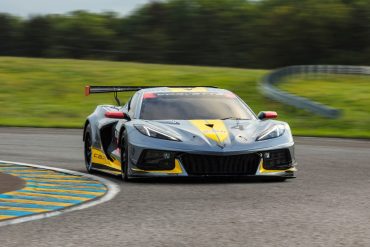
Chevrolet begins a new chapter in its storied racing legacy with the introduction of the new mid-engine Corvette race car, known as the C8.R. The C8.R will be Chevrolet’s first mid-engine race car to compete in IMSA’s GTLM class and the first clean sheet race car design since the C5.R debuted in 1999. It will make its racing debut at Rolex 24 at Daytona on Jan. 25, 2020. The C8.R is based on the strong foundation of the 2020 Corvette Stingray.
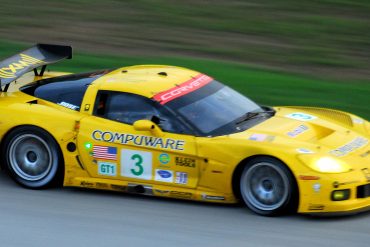
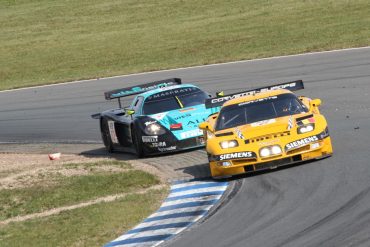
The Corvette C6-R race car debuted at the 12 Hours of Sebring in March 2005. The two-car, factory-backed Chevrolet sports car program competed in the production-based GT1 class (formerly GTS) of American Le Mans Series as well as the legendary 24 Hours of Le Mans in France. It was the most technically advanced sports car ever developed by GM, culling years of experience from the Corvette C5-R as well as the advancements brought forth from the next-gen Corvette C6 and Z06.
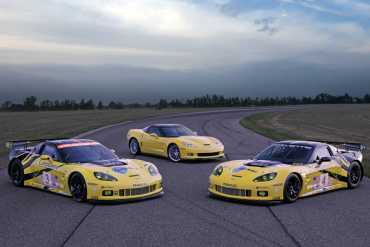
The C6.R ZR1 GT2, if you were to use its full name, was the model used in the last four years before the Corvette C7.R was introduced, and had a slick sequential manual operated by paddles that was combined with the rear differential to create a rear transaxle. This style of transaxle eventually made it into the road-going Corvette, especially the Grand Sport and ZR1 of the C7 generation.
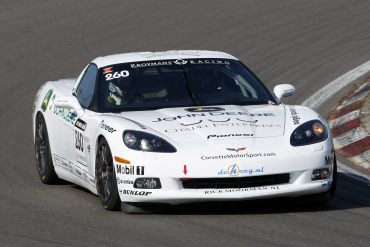
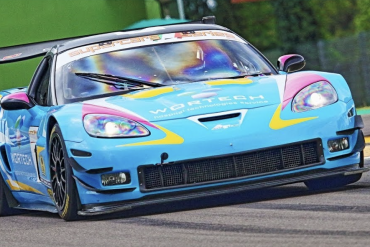
During the summer of 2005, a decision was made to transform selected Z06 road cars into a new breed of racer to compete in the world's top GT3 championships. The first series to introduce this new GT3 class was the SRO and FIA's GT3 Championship. Based on their racetrack test results, Team Carsport saw instant potential in the car. Hezemans contracted Callaway Competition in conjunction with Koos Pettinga, manager at Corvette Europe, to convert the street Z06 into a Z06R GT3.
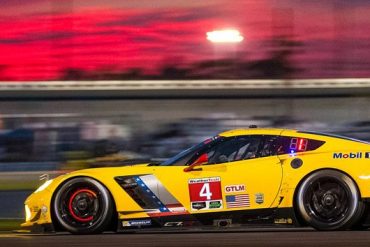
The C7.R Corvette by Pratt & Miller is one of the winningest race cars in modern history. Explore what makes this Corvette a winner on race day, and discover the connection between the C7.R and the seventh-generation Chevy Corvette Z06. At the core of the C7.R Corvette is a direct carry-over from its predecessor - the same 5.5 liter engine that was developed during the C6.R's successful tenure in both the American Le Mans series and at The 24 Hours of Le Mans.
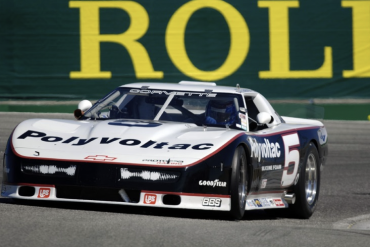
The story of this Chevrolet begins with Fords - specifically, the purpose-built IMSA Mustangs and SCCA Trans Am Mercury Capris that became major forces in those series in 1984-85. In 1985, a Mustang built by Jack Roush and chassis firm Protofab took a young John Jones to the IMSA GTO crown and a Roush Protofab Mercury Capri had done the same in the Trans Am championship.
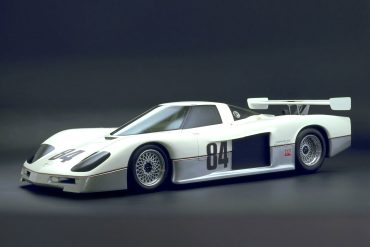
A Corvette in name only, the Corvette GTP (Grand Touring Prototype) was one of the fastest and most exotic race cars ever to wear a red Bowtie. Based on an English Lola T600 chassis and powered by an all-American turbocharged Chevy V6, the mid-engined racer was a rocketship. At full boost, the Corvette GTP's 3.4-liter (209ci) V6 pumped out more than 1,000 horsepower.
The Corvette C5-R was part of a plan by General Motors and their Chevrolet brand to create a factory team to participate in grand touring races not only in North America, but also elsewhere in the world, most notably at the 24 Hours of Le Mans. GM had previously been against approving factory support for Corvette racing programs, although the IMSA GT Championship's Corvette GTPs had seen some support until they ended competition in 1989.
No More Content