Become a premium member for just $35/year and get ad-free access!
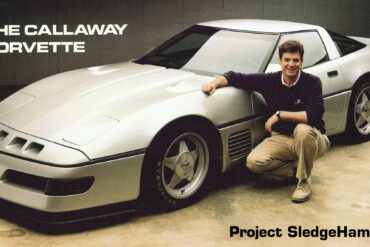
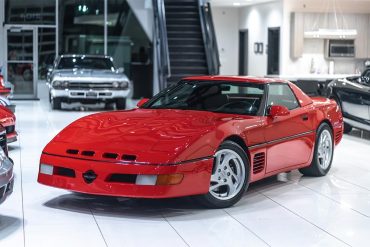
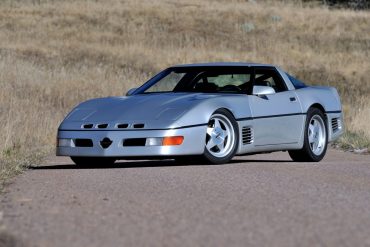
This Sledgehammer reached 254.76 mph at the Transportation Research Center (TRC) in Ohio and became the world’s fastest street-legal car for some time. It was built up by Reeves Callaway in Connecticut as an example of what was possible with the new ZR1 and and turbocharging its LT5 engine. The result was a 898 bhp coupe that still retained luxuries such as air conditioning and a radio. It got this power by using a NASCAR-spec block with Mahle pistons and a massive turbo.
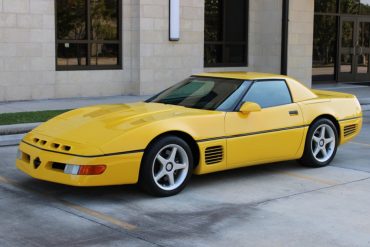
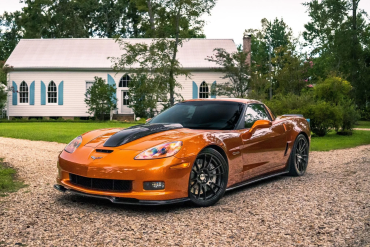
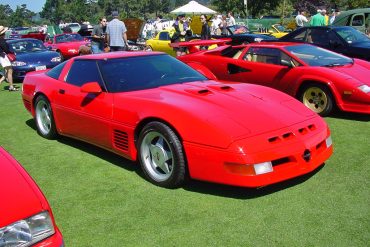
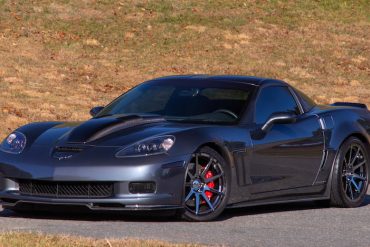
When Chevrolet changed gears to the LT1 engine, Callaway revealed their new SuperNatural line and the CR1 based on the ZR1’s LT5. Options for the CR1 included the radical Aerobody, German upholstery and special wheels, brakes and exhausts. The CR1 used a larger displacement to produce either 475 or 490 bhp.
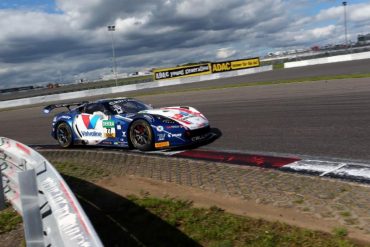
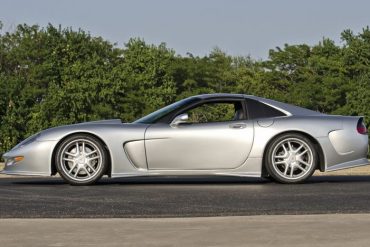
Reeves Callaway has always had a dream of competing a Corvette of his own at the 24 Hours of Le Mans, France. The idea begin with the body work for a street version, but one thing led to another, and a full race version was completed as well. The street version is almost identical to the race version because the hood, tail, rocker panels, and lower door halves, are all made of carbon fiber, just like the race version.
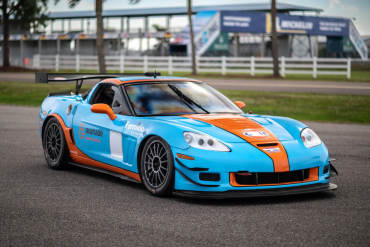
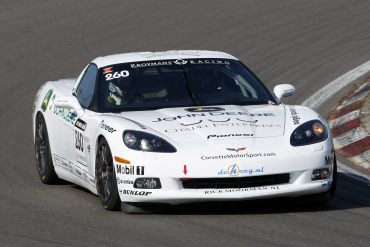
Corvette GT3 C6 Z06-R
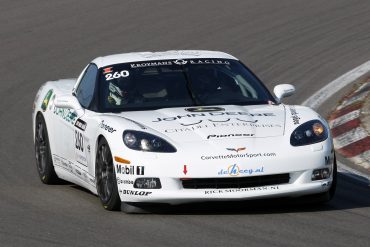
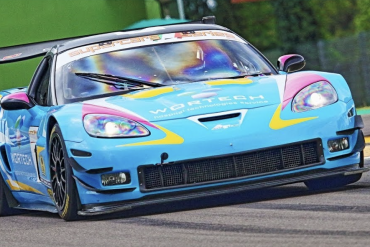
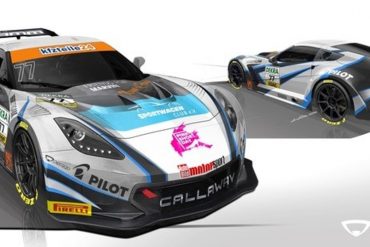
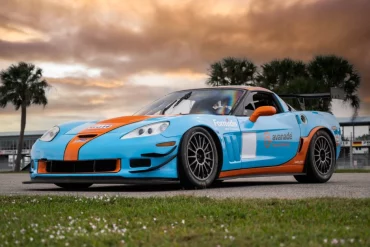
During the summer of 2005, a decision was made to transform selected Z06 road cars into a new breed of racer to compete in the world's top GT3 championships. The first series to introduce this new GT3 class was the SRO and FIA's GT3 Championship. Based on their racetrack test results, Team Carsport saw instant potential in the car. Hezemans contracted Callaway Competition in conjunction with Koos Pettinga, manager at Corvette Europe, to convert the street Z06 into a Z06R GT3.
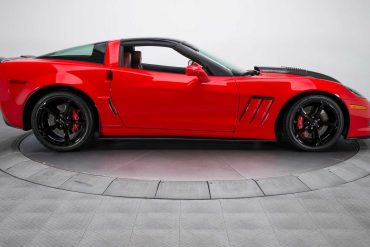
To commemorate its quarter-century milestone, Callaway Cars collaborated with Chevrolet, arranging a production run of 25 uniquely prepared 2012 Corvette Grand Sport coupes and convertibles. General Motors supplied special parts and procedures on the Bowling Green production line to facilitate final assembly at Callaway factories. Then, the performance and identity components are installed by Callaway. The 25th Anniversary Edition produced 620 bhp and 555 lb-ft of torque.
In the tradition of coach built shooting brakes, Callaway offers the AeroWagen for any version of the C7 Corvette Coupe. Its components can be fitted to the standard production C7, the Callaway SC627 Stingray or Grand Sport, or the Callaway SC757 Z06. The AeroWagen hatch assembly is a part-for-part replacement of the original equipment Corvette rear hatch, using the original hardware and latching mechanisms. It operates in an identical fashion.
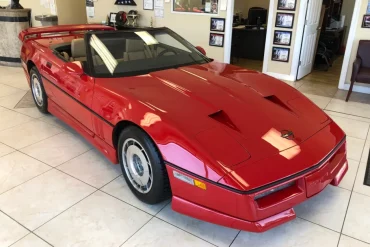
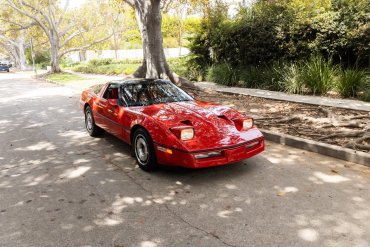
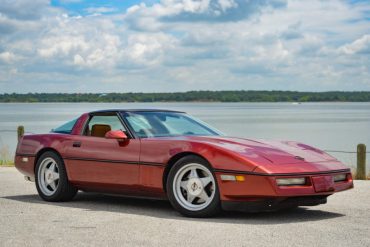
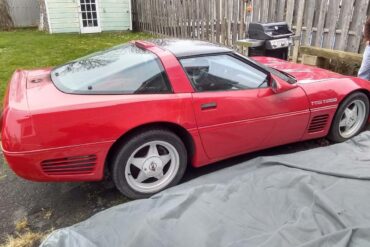
Offered from 1987 to 1991, the RPO-B2K upgrade was available from any Chevrolet dealer and also Callaway’s first major Corvette tuning program. Together, GM and Callaway made the upgrade package a Regular Production Order (RPO) which was the first time GM had outsourced such an option to a specialist manufacturer. It even had a factory back warranty. As the C4 updated, so did Callway’s program and by 1988, the B2K was pushing 382 bhp and 562 ft. lbs. of torque.
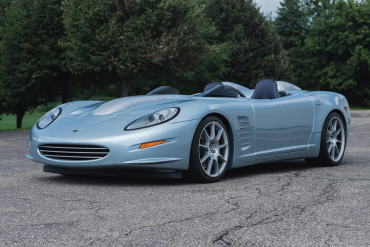
The offspring of collaboration between Corvette performance guru Reeves Callaway and designer Paul Deutschman, the Super Speedster LM is an astonishing step up on the original Speedster, taking full advantage of the ZR1’s Lotus-engineered, all-aluminum DOHC engine and 6-speed manual transmission. One of only three twin turbocharged and intercooled LT5 engines built by Callaway, it delivers a pavement-shredding 766 HP.
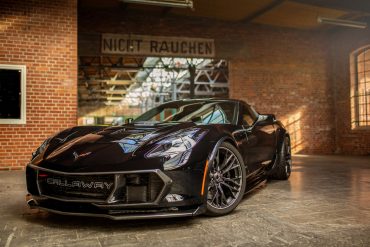
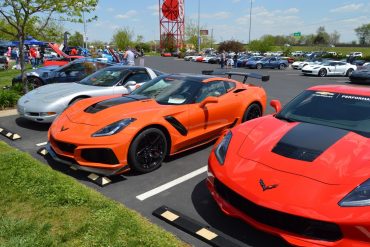
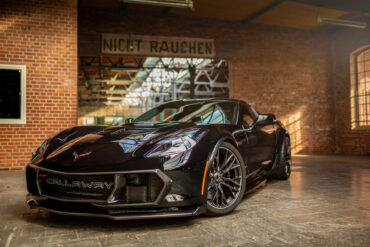
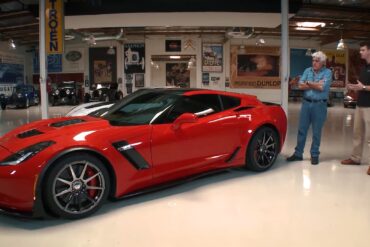
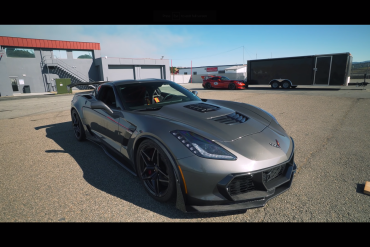
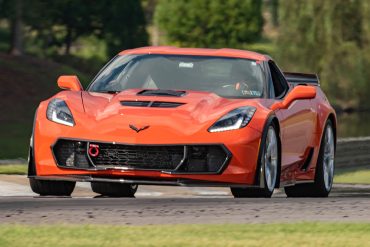
The 25th Anniversary Edition is a hardened up version of Callaway's Corvette SC757, which in turn is based on a C7-generation Corvette Z06. It features a supercharged V8 that pumps out 757-horsepower and 777 pound-feet of torque. The supercharger is a GenThree Callaway unit with the company's TripleCooled intercooler system. A high-flow intake system feeds that beast. Callaway's Level Two HD Cooling System also helps it avoid the overheating issues that plagued C7 Z06s.